Purepecha symbols carry the living soul of a fierce, deeply spiritual civilization that even the mighty Aztecs could never conquer. When you gaze upon these sacred designs, you are not just looking at art, you are connecting with a timeless language of fire, earth, and stars. For centuries, the Purépecha people of Michoacán, Mexico, used these symbols to weave their deepest psychological and cosmic truths into the fabric of daily life. By exploring their meaning, we embark on a profound journey into the human spirit and our universal quest for connection.
(Quick Answer) Purepecha Symbols
Purepecha symbols are sacred visual designs created by the indigenous Purépecha (Tarascan) civilization of Michoacán, Mexico. Representing powerful cosmic forces, elemental spirits, and ancestral wisdom, these symbols served as a visual language in architecture, pottery, and textiles, expressing the empire’s unique spiritual worldview and deep connection to the natural world.
Quick Facts About Purepecha Symbols
| Aspect | Information | Origin |
| Historical Significance | Represented a powerful, unconquered Mesoamerican empire | Michoacán, Western Mexico |
| Main Meaning | Cosmic balance, elemental forces, and ancestral protection | Ancient Purépecha cosmovision |
| Spiritual Meaning | The sacred fire of Curicaueri and the life-giving force of Kuerajperi | Traditional indigenous religion |
| Cultural Importance | Visual language of identity, resistance, and community pride | Pre-Hispanic and modern Michoacán |
| Modern Usage | Traditional textiles, regional festivals, tattoos, and activist art | Contemporary Mexico and global diaspora |
What Are Purepecha Symbols?
Purepecha symbols are the artistic and spiritual expressions of the Purépecha people, a major indigenous group centered in the volcanic highlands of Michoacán, Mexico. Historically known to outsiders as the Tarascans, this civilization created a massive empire that successfully defended its borders against the Aztec Empire. Because their language is a linguistic isolate (meaning it has no known relationship to any other language on Earth), their symbols developed in a unique cultural environment.
These symbols emerged from a deep observation of nature, the night sky, and the volcanic landscape that surrounded them. Instead of written books, the Purépecha carved their stories into stone, painted them on elegant pottery, and wove them into intricate clothing. Each line, curve, and color carried specific information about a person’s status, their relationship with the gods, and their duties to the community. Over time, these symbols evolved from purely religious icons into powerful markers of cultural survival and resistance.
Deep Symbolic Meaning of Purepecha Symbols
To truly understand these designs, we have to look at them through three distinct lenses: the spiritual, the psychological, and the cultural.
Spiritual Level
On a spiritual level, these symbols are direct channels to the sacred forces of the universe. The Purépecha did not see themselves as separate from nature. Instead, they believed that every mountain, lake, and animal was alive with spiritual energy.
Symbols like the sacred fire represent Curicaueri, the primary sun god, who required constant nourishment to keep the darkness at bay. To the ancient Purépecha, keeping the fire lit was not just a chore: it was a cosmic duty that maintained the balance of the universe.
Psychological Level
From a psychological perspective, these symbols act as archetypes of human transformation. They speak directly to our collective unconscious.
For example, the butterfly symbol represents the human soul on a journey of growth. It reminds us that change is inevitable and that beauty can emerge from the darkest times of struggle. By interacting with these symbols, people can access a deep sense of inner peace and resilience, finding strength in the wisdom of those who walked the earth before them.
Cultural Level
Culturally, these symbols serve as the glue that holds the community together. They represent a shared history of survival, unity, and pride.
During the Spanish conquest and the centuries of colonial rule that followed, these designs became secret codes of cultural preservation. Weaving a specific pattern into a traditional dress, known as a huanengo, was a quiet but powerful act of rebellion. It declared to the world that the Purépecha spirit could never be erased.
Purepecha Symbols and Meanings
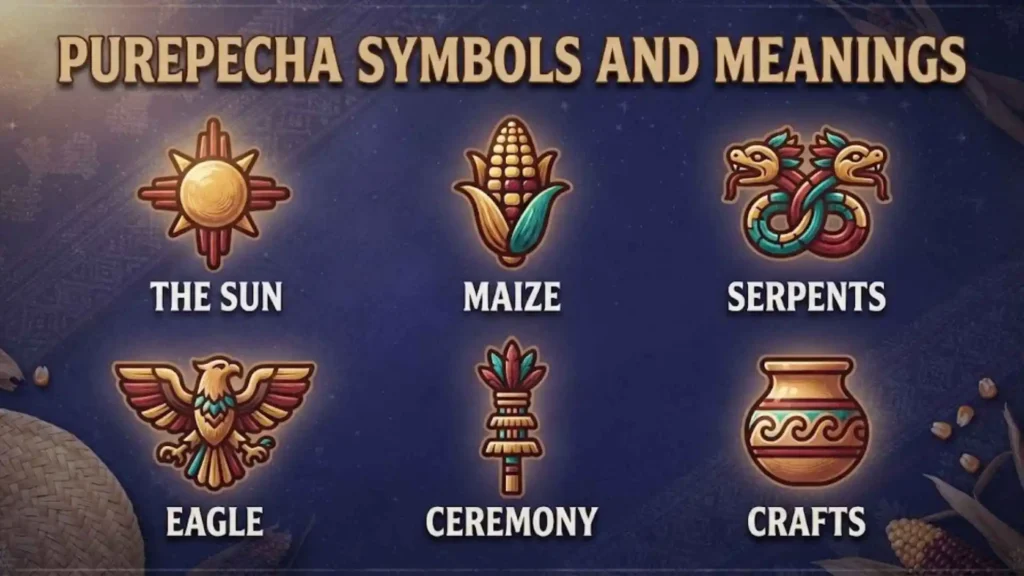
Purépecha symbols are closely connected with nature, spirituality, community, and the traditional worldview of the Purépecha people of Michoacán, Mexico. Common visual themes include the sun, moon, water, fire, stars, animals, geometric shapes, and representations of the natural landscape. Some motifs appear in traditional textiles and crafts, where their meanings can relate to the universe, fertility, water, family, and regional identity.
One important modern symbol is the Purépecha flag, which brings together representations of the four Purépecha regions. Its central imagery includes the Father Sun, fire, the four directions, obsidian, and a knife associated with the lineage of Curicaveri. The phrase Juchari Uinápikua, meaning “our strength,” is also associated with the flag.
Purepecha Symbols Tattoo
A Purépecha-inspired tattoo can draw from traditional motifs such as the sun, moon, stars, water patterns, geometric forms, or regional imagery. However, it is important to distinguish between historically documented Purépecha motifs and modern tattoo designs created in a generalized “tribal” style.
For a culturally respectful tattoo, consider researching the specific symbol and its traditional context before using it. Geometric designs found in Purépecha textiles, for example, have been interpreted in connection with elements of the universe, water, wind, stars, and cosmic directions.
Tribal Symbols With Meaning
Tribal symbols can represent ideas such as strength, protection, ancestry, nature, spirituality, identity, or community. However, “tribal symbol” is a broad modern category rather than the name of one specific cultural tradition.
If you are interested in Purépecha symbolism, it is better to identify individual motifs and their documented cultural context rather than treating every geometric or bold black design as a Purépecha symbol. Traditional Purépecha visual art includes distinctive textile patterns, natural imagery, and geometric elements that have been passed through artistic and community traditions.
Purepecha Art
Purépecha art includes textiles, embroidery, pottery, woodwork, jewelry, and other forms of traditional craftsmanship. Many pieces combine practical functions with cultural and symbolic meanings. Traditional clothing, for example, can contain geometric imagery connected with ideas about the universe and the natural world.
Water is another recurring theme in Purépecha artistic symbolism. The National Museum of Anthropology notes that shells, fish, waves, coral, and related aquatic imagery can refer to water and fertility within Purépecha cultural traditions.
Purépecha Gods
Traditional Purépecha religion included a group of important deities associated with natural and cosmic forces. Curicaveri, for example, was associated with the sun and fire and held an important position in the traditional state religion. Kwerawáperi was associated with the earth and aspects of creation, life, death, rain, and drought, while Xaraténga was connected with the moon and sea.
These figures should not simply be treated as generic “gods of symbols.” Their roles belonged to a broader Purépecha cosmological system in which the sky, earth, water, fire, and celestial bodies were interconnected.
Tattoos Michoacan Purepecha Symbols
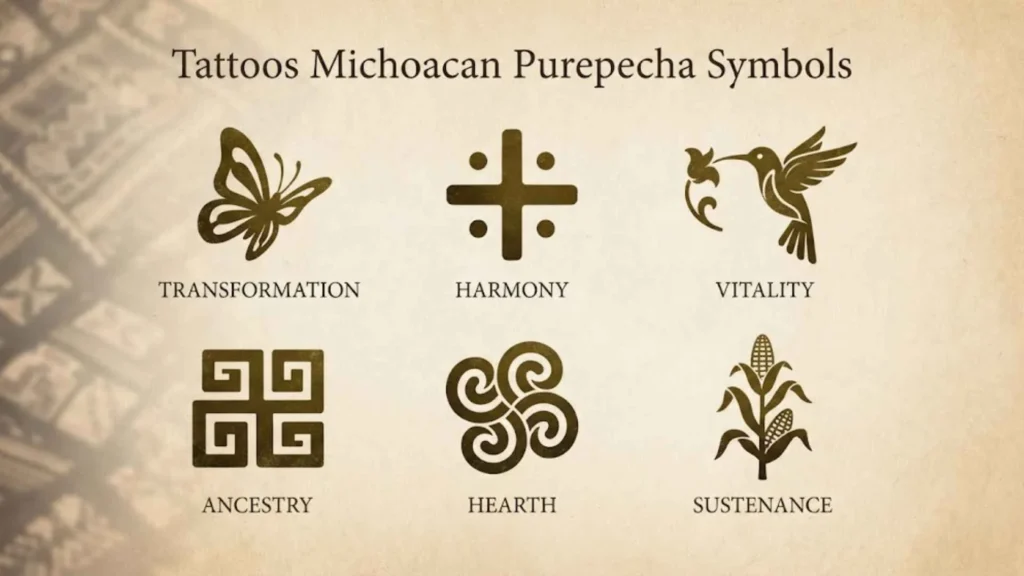
Tattoos inspired by Michoacán’s Purépecha heritage may incorporate imagery associated with the region’s traditional visual culture. Possible themes include the sun, moon, stars, water, mountains, deer, fire, and geometric patterns.
The Purépecha flag provides one example of modern cultural symbolism from Michoacán. Its design represents the four regions of the Purépecha area and includes the Father Sun, obsidian, fire, directional imagery, and other elements of cultural identity.
Tattoo Purepecha Symbols
A tattoo based on Purépecha symbolism can be meaningful when the design is connected to a specific documented motif. For example, the sun can be considered in relation to Purépecha traditions surrounding celestial imagery, while water-related motifs can reflect the importance of lakes, springs, fertility, and aquatic life.
Before getting such a tattoo, it is worth checking whether the design is genuinely associated with Purépecha culture or is simply a modern design marketed as “tribal.” This distinction helps avoid attaching invented meanings to traditional symbols.
Tarascan Tattoo Purepecha Symbols
“Tarascan” is a historical name that has been used for the Purépecha people, particularly in colonial and older English-language sources. Therefore, searches for “Tarascan tattoo” and “Purépecha tattoo” can overlap, but the terminology does not automatically make a modern tattoo historically authentic.
A design inspired by documented Purépecha imagery can use traditional themes such as celestial bodies, water, geometric patterns, animals, and regional landscapes. The meaning should be explained carefully because historical symbolism can have several interpretations.
Tarascan Purepecha Symbols
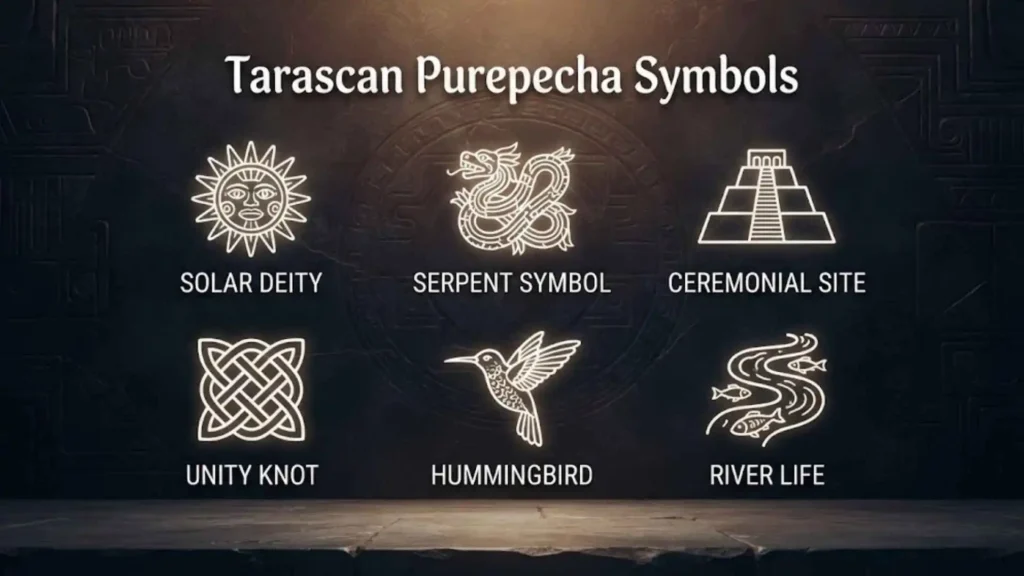
Tarascan and Purépecha symbolism is often discussed through archaeological evidence, historical records, traditional arts, and later Indigenous artistic traditions. Surviving colonial-period codices and painted documents from Michoacán contain information about migration, rituals, community organization, lineages, territories, and other aspects of Indigenous life.
Some traditional motifs also appear in textiles and other crafts. For example, zigzag and wavy lines have been interpreted in relation to water, serpents, or earth, while other geometric patterns have been connected with wind, clouds, stars, and cosmic directions.
Tattoo Michoacan Purepecha Symbols
Michoacán is central to Purépecha cultural identity, so a tattoo inspired by the region can combine traditional symbols with imagery from its landscape. Lakes, mountains, forests, volcanoes, deer, the sun, and geometric textile patterns can all provide design inspiration.
The Purépecha flag is particularly relevant to contemporary cultural identity. Its four colored sections represent the Ciénaga, Lake, Cañada, and Sierra regions, while the center brings these regions together through shared symbolism.
Strength Purepecha Symbols
Strength is especially visible in contemporary Purépecha symbolism through the phrase Juchari Uinápikua, translated by the National Museum of Anthropology as “our strength.” The phrase appears as part of the symbolism of the modern Purépecha flag and has been associated with community identity and collective unity.
For a strength-themed design, a person might therefore look toward symbols of the sun, fire, community, land, and cultural continuity. These ideas can create a meaningful design without claiming that a particular modern tattoo pattern was an ancient Purépecha “strength symbol” when historical evidence does not establish that connection.
Types and Variations of Purepecha Symbols
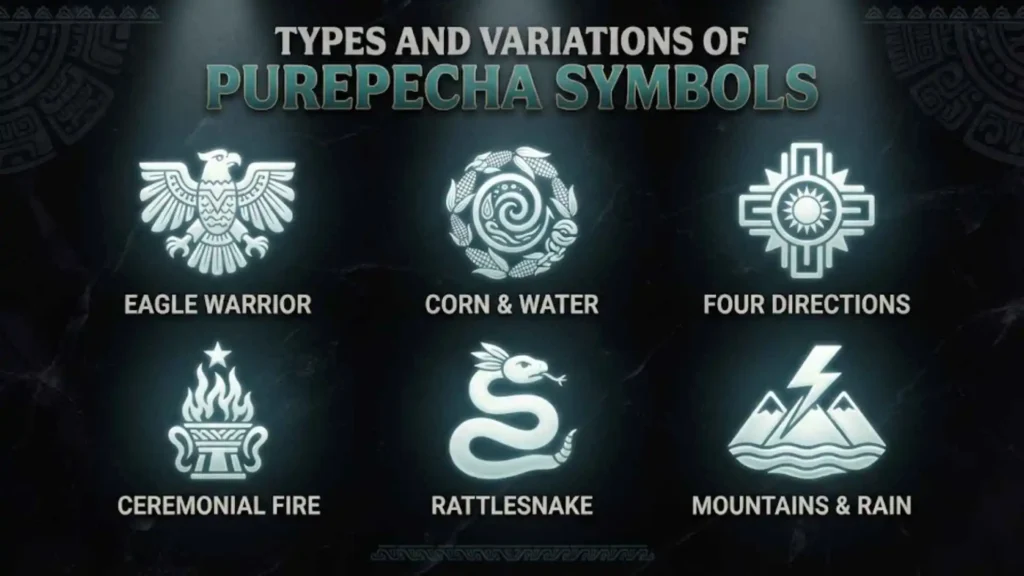
The Purépecha created a rich visual library, with each symbol carrying its own unique story and energy.
The Sacred Fire (Curicaueri)
- Visual Description: Stylized flames rising upward, often depicted in vibrant shades of red, orange, and yellow.
- Meaning: Divine light, heat, purification, and the life force of the sun.
- Symbolism: It represents the ultimate creator and the spark of consciousness within every human being.
- Cultural Connection: The holy fire was kept burning constantly in the temples of Tzintzuntzan, the empire’s ancient capital.
- Where It Appears: Ancient stone carvings, sacred ceremonial altars, and modern political emblems of indigenous rights.
The Monarch Butterfly (Parakata)
- Visual Description: A delicate, symmetrical butterfly with bold black and orange wings.
- Meaning: The return of ancestral spirits, transformation, and the cycle of life and death.
- Symbolism: It represents the souls of the deceased returning to comfort the living during the autumn harvest.
- Cultural Connection: Every year, millions of monarch butterflies migrate to the forests of Michoacán, arriving exactly during the Day of the Dead celebrations.
- Where It Appears: Traditional hand-woven textiles, hand-painted pottery, regional folk tales, and modern environmental murals.
The Yácata Pyramid
- Visual Description: A unique, T-shaped stepped structure that blends circular and rectangular architectural forms.
- Meaning: The intersection of the physical world, the underworld, and the heavens.
- Symbolism: It represents the bridge between humanity and the divine, acting as a spiritual portal.
- Cultural Connection: The five famous Yácatas of Tzintzuntzan overlook Lake Pátzcuaro, standing as monuments of engineering and faith.
- Where It Appears: Archaeological ruins, regional historical books, and local municipal seals.
The Hummingbird (Tzintzun)
- Visual Description: A small, fast bird with a long beak, often captured in mid-flight with shimmering feathers.
- Meaning: Messenger of the gods, speed, agility, and spiritual guardian.
- Symbolism: It represents the connection to the spirit world, carrying prayers from earth to the heavens.
- Cultural Connection: The name of the ancient capital, Tzintzuntzan, translates directly to “Place of the Hummingbirds” in the Purépecha language.
- Where It Appears: Fine lacquerware crafts, traditional jewelry, pre-Hispanic metalwork, and poetry.
Purepecha Symbols Across Different Cultures
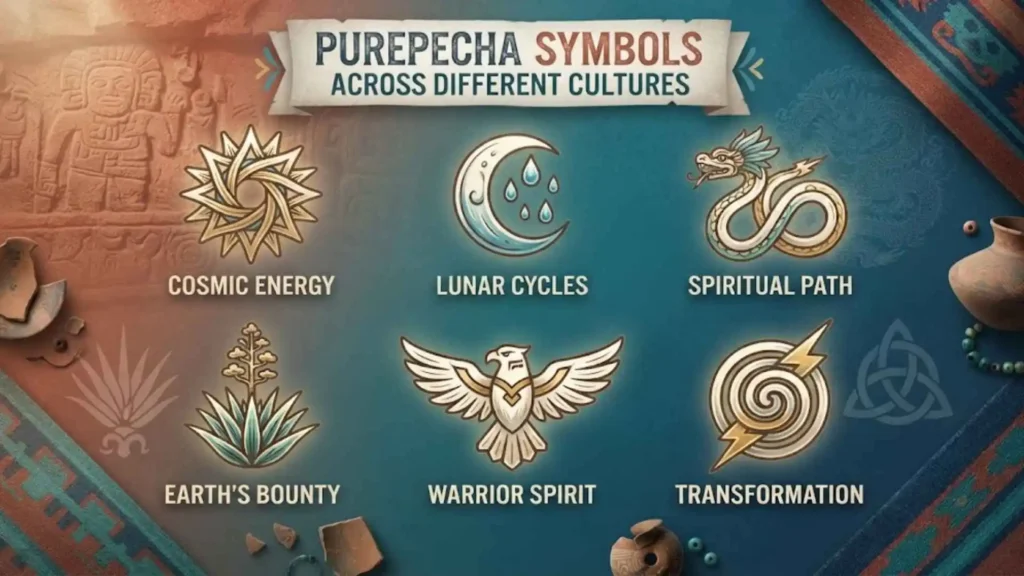
Human beings across the globe often use similar symbols to explain the mysteries of existence. Let us see how the core concepts of Purépecha symbolism compare to other major world traditions.
Ancient Egypt
Just as the Purépecha revered Curicaueri as the god of fire and the sun, the ancient Egyptians worshipped Ra, the sun god. Both cultures viewed the sun as the ultimate source of life and order. While the Purépecha used the butterfly to represent the soul’s journey, the Egyptians used the scarab beetle to symbolize rebirth and transformation.
Ancient Greece
The Purépecha belief in the sacred fire of Curicaueri matches the Greek myth of Prometheus bringing fire to humanity. In both cultures, fire is a symbol of intelligence, civilization, and divine connection. Furthermore, the Greek word psyche means both “soul” and “butterfly,” which perfectly mirrors the Purépecha belief that butterflies are the physical forms of visiting ancestral spirits.
Roman Culture
In Rome, the goddess Vesta was the guardian of the sacred hearth fire, which was never allowed to go out. This is incredibly similar to the Purépecha tradition of the Chupíri, the sacred flame tended by priests in the temples. For both empires, the survival of the state was directly tied to the preservation of this sacred spark.
Eastern Traditions
In Eastern philosophy, particularly Chinese Taoism, the concept of balancing opposing forces is represented by the Yin and Yang. This matches the Purépecha worldview of cosmic balance, where the male energy of the sun (Curicaueri) must balance with the female energy of the earth and moon (Kuerajperi) to maintain harmony on Earth.
Indigenous Traditions
Many Native American cultures of North America use the medicine wheel to represent the four cardinal directions and their associated colors. The Purépecha also organize their universe into four sacred quadrants, each marked by a specific color: blue, white, yellow, and red. Both traditions use this directional map to help humans find their physical and spiritual place in the cosmos.
Similar Symbols and Their Meanings
Because they lived close to other great civilizations like the Aztecs and the Maya, the Purépecha shared some general Mesoamerican concepts. However, their specific symbols had unique differences.
| Purepecha Symbol | Mesoamerican Equivalent | Key Similarity | Major Difference |
| Curicaueri (Sacred Fire) | Xiuhcoatl (Aztec Fire Serpent) | Both represent the immense power of fire and heat | Purépecha focus on the solar creator, while Aztecs saw it as a destructive weapon of war |
| Parakata (Butterfly) | Itzpapalotl (Aztec Obsidian Butterfly) | Both link the insect to death and the spirit world | Purépecha view it as a peaceful ancestor, while Aztecs often saw it as a fierce warrior goddess |
| Yácata Pyramid | Rectangular Stepped Pyramid (Maya/Aztec) | Both serve as raised ceremonial platforms | Yácatas use a unique circular-keyhole shape, while other cultures built sharp, angular shapes |
Purepecha Symbols in Mythology and Folklore
The stories of the Purépecha are filled with magic, lessons, and natural wonder. One of the most famous legends explains the creation of the monarch butterfly. According to the elders, the creator goddess Kuerajperi saw that her children on Earth were cold and sad during the gray winter months. To comfort them, she gathered the autumn leaves, breathed life into them, and transformed them into orange butterflies. She told the people that these winged messengers would return every year to remind them that warmth, beauty, and their loved ones would always return.
Another beloved story tells of the hummingbird, Tzintzun. It is said that when the first Purépecha ancestors were searching for a place to build their home, a giant hummingbird guided them through the mountains. The bird led them to the shores of Lake Pátzcuaro, where it hovered over a hill and sang a beautiful melody. Taking this as a divine sign, the people built their grand capital there and named it Tzintzuntzan, honoring the tiny bird that showed them the way.
Purepecha Symbols in Art, Literature, Movies and Pop Culture
Today, these ancient designs are experiencing a massive revival in modern culture, bridging the gap between the past and the present.
In the world of art, traditional lacquerware from Uruapan and delicate copper work from Santa Clara del Cobre keep these symbols alive. Artisans use natural pigments to paint hummingbirds and butterflies onto wooden plates, preserving techniques that have been passed down for generations.
In pop culture, these symbols are appearing more frequently in movies, television, and video games inspired by Mesoamerican folklore. Characters representing indigenous guardians often wear clothing adorned with Purépecha geometric patterns.
Furthermore, the tattoo industry has seen a rise in people of Mexican descent choosing Purépecha symbols, especially the Yácata and the Monarch Butterfly, as permanent badges of honor, identity, and personal transformation.
Spiritual and Dream Meaning of Purepecha Symbols
When these symbols appear in your dreams or meditation sessions, they often carry powerful messages from your subconscious.
- Dreaming of a Monarch Butterfly: This is a gentle sign that you are entering a period of deep personal transformation. It encourages you to let go of old habits and trust the process of growth. It can also mean that an ancestor is watching over you.
- Dreaming of Sacred Fire: Fire in a dream represents passion, creativity, and purification. It is a call to awaken your inner drive and burn away any doubts that are holding you back. However, if the fire is wild and out of control, it acts as a warning to manage your anger or stress.
- Dreaming of a Hummingbird: This joyful encounter suggests that you need to bring more light, playfulness, and swift energy into your life. It is a reminder to find joy in the small things and to keep moving forward with grace.
Positive and Negative Meanings of Purepecha Symbols
Like all great archetypes, these symbols contain a balance of light and shadow.
| Symbol | Positive Meaning (Light) | Negative Meaning (Shadow) |
| The Sacred Fire | Warmth, divine inspiration, community, and life | Destruction, anger, ego, and consuming greed |
| The Butterfly | Hope, rebirth, freedom, and spiritual evolution | Fragility, short-lived joy, and grief for the past |
| The Hummingbird | Speed, joy, healing, and divine messages | Restlessness, lack of focus, and anxious energy |
This balance reminds us that no force in nature is purely good or bad. Fire can cook our food and keep us warm, but it can also burn down a forest. The key to a happy life is finding the middle ground and keeping these powerful energies in balance.
Why Humans Are Attracted to Purepecha Symbols
Our attraction to these symbols goes deep into our evolutionary psychology. As humans, our brains are wired to recognize patterns and find meaning in the world around us. Geometric patterns, symmetrical wings, and organic curves appeal to our natural love for order and beauty.
On a deeper level, we crave a connection to something larger than ourselves. In our fast-paced, modern world, many people feel disconnected from nature and their ancestry. Purepecha symbols act as a spiritual anchor. They touch upon the collective memory of humanity, reminding us of a time when we lived in harmony with the seasons, respected the earth, and saw the divine in every living creature.
Modern Uses of Purepecha Symbols
In the twenty-first century, these ancient designs are finding new life in creative and surprising ways.
- Tattoos: People choose these symbols to tell their personal stories of survival, heritage, and growth.
- Jewelry: Silver and copper earrings shaped like hummingbirds or butterflies are popular choices for those wanting to wear a piece of sacred history.
- Fashion: Modern Mexican designers are collaborating with indigenous weavers to create high-fashion clothing that features traditional Purépecha geometric patterns.
- Branding and Logo Design: Businesses in Michoacán use stylized versions of the Yácatas or butterflies to show their pride in their regional roots.
- Home Decor: Hand-painted pottery and woven rugs featuring these symbols bring warmth, history, and spiritual energy into modern living spaces.
Interesting Facts About Purepecha Symbols
- Unconquered Heritage: The symbols remained largely free of Aztec influence because the Purépecha army successfully defeated the Aztec invasions multiple times.
- Linguistic Isolation: The Purépecha language has zero connection to neighboring languages, meaning their symbolic names are entirely unique.
- The Butterfly Highway: The monarch butterfly sanctuaries in Michoacán are considered sacred spaces where the physical and spiritual worlds meet.
- Copper Masters: The ancient Purépecha were master metallurgists, creating beautiful sacred bells and axes from copper, which was a rare skill in Mesoamerica.
- The Modern Flag: In 1980, the Purépecha people designed a modern flag containing their historic colors and a central symbol of a fist holding arrows, representing their ongoing fight for justice and cultural survival.
Frequently Asked Questions

What do Purépecha symbols represent?
They represent the connection between humanity, nature, and the spiritual universe. They show a worldview where fire, water, earth, and animals are sacred forces that keep the world in balance.
What is the meaning of the butterfly in Purépecha culture?
Known as Parakata, the monarch butterfly represents the souls of ancestors returning to visit their living relatives. They are symbols of transformation, hope, and the beautiful cycle of life and death.
Are the Purépecha related to the Aztecs?
No, they are a distinct indigenous group with their own unique language, culture, and symbols. They were fierce rivals of the Aztecs and successfully defended their independent empire from Aztec conquest.
How can I respect Purépecha symbols today?
You can show respect by learning about their history, supporting authentic indigenous artisans from Michoacán, and sharing their stories with appreciation rather than just using them as trendy decorations.
Conclusion
Purepecha symbols are far more than beautiful ancient designs: they are a living bridge to a world of deep wisdom, survival, and spiritual harmony. By understanding their meanings, we enrich our own lives with a greater appreciation for the natural world and the enduring power of human culture. Let these sacred symbols of fire, butterfly, and hummingbird inspire you to find your own balance, embrace personal transformation, and carry your unique light into the world.

Hello, I’m Rowan Sinclair, a passionate writer and lifelong admirer of the wisdom found in great quotes. I believe that words have the ability to inspire change, spark creativity, and connect people across cultures and generations.
I enjoy writing about motivational quotes, famous sayings, and lessons from history’s most influential thinkers. Every article I create is driven by my desire to help readers discover meaningful insights that they can apply to their own lives.
When I’m not writing, I spend my time reading biographies, exploring classic literature, and collecting memorable quotes that deserve to be shared with the world.
I am the author of Voices That Inspire and A Collection of Timeless Thoughts, two books that celebrate the enduring power of words and the stories behind them.
 Sienna Brooks