
Washing instruction symbols help you care for clothes correctly by showing how to wash, bleach, dry, iron, and professionally clean different fabrics. These small icons on clothing labels can prevent shrinking, fading, stretching, and other damage caused by incorrect laundry methods.
Understanding washing instruction symbols and meanings makes laundry easier. A washtub symbol explains washing conditions, a triangle relates to bleaching, a square provides drying instructions, an iron indicates ironing guidance, and a circle generally refers to professional textile cleaning. Small details, such as dots, crosses, and lines beneath an icon, can change its meaning.
This guide explains clothing washing instruction symbols, machine wash temperatures, UK and international care labels, and the meaning of common laundry symbols. You will also learn how to read clothing tags and identify instructions for delicate fabrics, everyday garments, and items that require special care.
Washing instruction symbols and meanings
Washing instruction symbols are visual guides printed on clothing care labels. They communicate the manufacturer’s recommended care method without requiring long written instructions.
The main categories are:
| Symbol | Category | Meaning |
| 🛁 | Washing | Indicates washing method and conditions |
| △ | Bleaching | Shows whether bleaching is permitted |
| □ | Drying | Indicates drying methods |
| ♨ | Ironing | Shows ironing requirements |
| ◯ | Professional cleaning | Indicates professional textile care |
These are simplified visual examples, not exact reproductions of every standardized care-label icon. Actual symbols usually contain additional shapes, dots, lines, or crosses.
Here is how to understand the main categories:
- Washing: A washtub with a number indicates the maximum recommended washing temperature in Celsius. A hand inside the tub means hand washing, while a crossed-out tub means do not wash.
- Bleaching: An empty triangle generally permits bleaching, while a crossed-out triangle means do not bleach. Additional markings can restrict the type of bleach.
- Drying: A square may contain a circle for tumble drying or lines indicating natural drying methods.
- Ironing: Dots inside the iron indicate temperature levels. More dots generally allow higher heat.
- Professional cleaning: A circle with letters or other markings provides instructions for professional cleaners.
Always read the complete label rather than focusing on one symbol. A garment may be washable but still require low-temperature drying or careful ironing.
How to read washing instruction symbols
Reading care labels becomes simple once you know the five main symbol categories. Start with the washing symbol, then check the instructions for bleaching, drying, ironing, and professional cleaning.
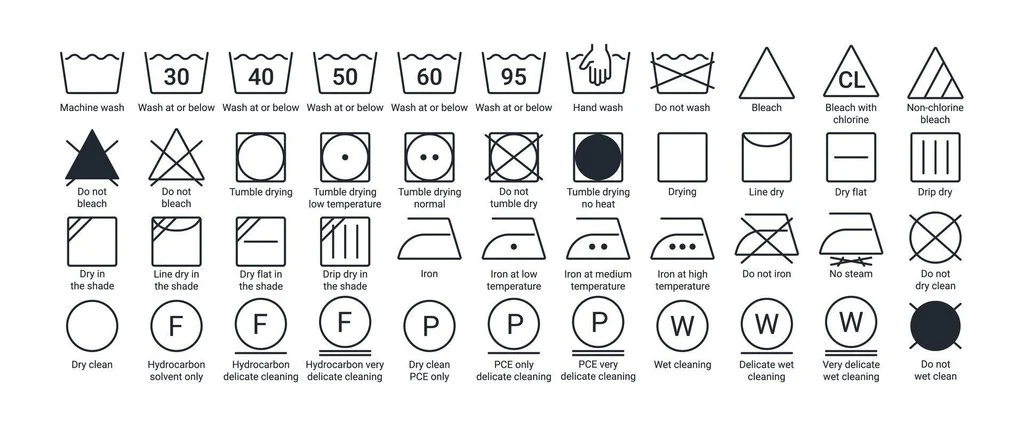
Follow these steps:
- Check the washtub: Look for a temperature number, hand symbol, or cross.
- Check the triangle: Find out whether bleach is allowed.
- Check the square: Identify whether the garment can be tumble-dried or should air-dry.
- Check the iron: Follow the temperature guidance shown by dots.
- Check the circle: Look for professional cleaning instructions if present.
What do dots and lines mean?
Dots commonly indicate heat levels. One dot usually means low heat, two indicate medium heat, and three indicate higher heat where the relevant symbol uses that system.
Lines beneath a washing tub usually indicate a gentler washing process. One line generally represents a mild process, while two lines indicate a very mild process.
A cross over a symbol generally means the corresponding treatment should not be used. The exact instructions depend on the symbol and the care-label standard.
For example, a shirt with a washtub marked 30°C, a crossed-out triangle, and a low-heat drying instruction should be washed at no more than the stated temperature, kept away from bleach, and dried according to the label.
What are the washing instruction symbols
Washing instruction symbols are standardized or standard-based pictograms that explain how to care for clothing and other textiles. They help people understand garment care even when the label does not use their preferred language.
The principal symbols cover five types of treatment:
- Washing: Machine washing, hand washing, and restrictions on washing.
- Bleaching: Whether bleach is permitted and which types are suitable.
- Drying: Tumble drying, line drying, flat drying, and drying in the shade.
- Ironing: Permitted ironing temperature and restrictions.
- Professional textile care: Dry cleaning and, where indicated, professional wet cleaning.
Care labels may also include written instructions such as “wash inside out,” “wash with similar colours,” or “reshape while damp.” These directions supplement the icons.
A care label describes the recommended treatment for the garment. If you are unsure about a delicate or expensive item, choose a gentler method or consult a professional cleaner.
Care label symbols and meanings
Care label symbols provide instructions for the complete life cycle of a garment, not just washing. They are particularly useful for clothing made from mixed fibres, where different materials may react differently to heat and moisture.
| Care label marking | General interpretation |
| Washtub with 30 | Wash at a maximum of 30°C |
| Washtub with hand | Hand wash |
| Crossed-out washtub | Do not wash |
| Empty triangle | Bleaching permitted under the applicable standard |
| Crossed-out triangle | Do not bleach |
| Square with circle | Tumble-drying instructions |
| Square with vertical line | Line drying |
| Square with horizontal line | Dry flat |
| Iron with one dot | Low-temperature ironing |
| Crossed-out iron | Do not iron |
| Circle with a letter | Professional cleaning information |
The precise design matters. For example, a square with a circle is not the same as a square with a vertical line. The first relates to tumble drying, while the second indicates a natural drying method.
Clothing washing instruction symbols
Clothing washing instruction symbols are designed to protect the appearance, fit, and useful life of garments. They are especially important for wool, silk, stretch fabrics, printed clothing, and garments with decorative details.
Before washing a garment, check:
- The recommended washing temperature.
- Whether a normal or gentle cycle is suitable.
- Whether bleach is allowed.
- Whether tumble drying is permitted.
- Whether ironing is safe.
- Whether professional cleaning is recommended.
A cotton T-shirt may tolerate a regular wash, but a wool sweater may shrink or lose its shape under the same conditions. Similarly, clothing with elastic, adhesive decorations, or printed designs may be damaged by excessive heat.
Sort clothes by colour and care requirements. Separate items that need gentle washing from sturdy everyday clothing, and avoid overloading the washing machine. Following the label helps reduce unnecessary wear and can keep clothes looking good for longer.
Washing instruction symbols on clothes
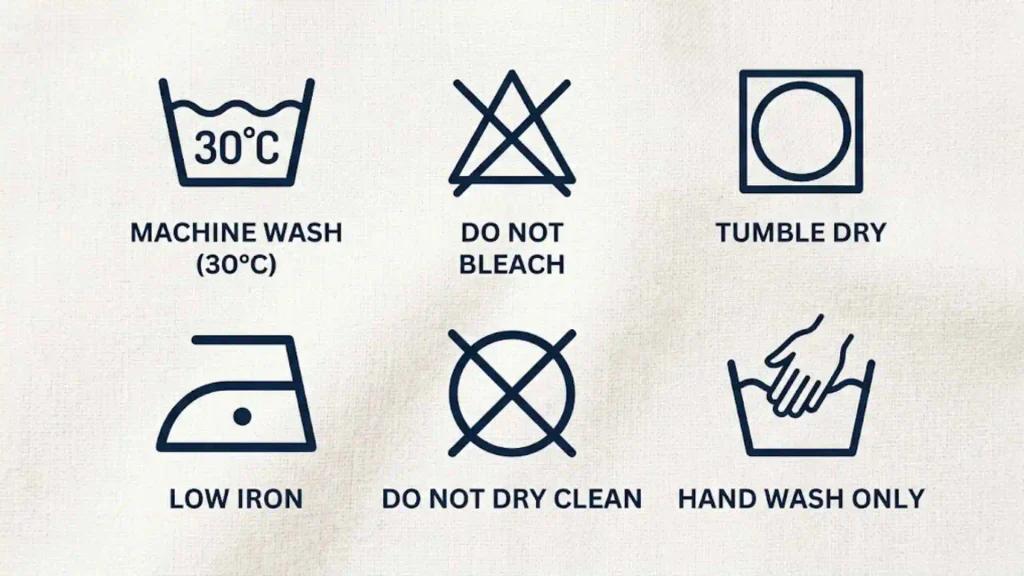
You will usually find washing instruction symbols on a small care label sewn into a garment. Common locations include the inside side seam, the back of the neckline, or the waistband of trousers and skirts.
The label may contain several rows of icons. Read them from left to right in their printed order, while remembering that labels can vary in layout.
For example:
- A washtub marked 40 indicates a maximum wash temperature of 40°C.
- A crossed-out triangle means do not bleach.
- A square with a crossed-out circle means do not tumble-dry.
- An iron with one dot indicates low-temperature ironing.
- A crossed-out circle indicates that the specified professional cleaning treatment is prohibited.
Some garments include extra written directions for washing inside out or fastening zippers before cleaning. These instructions can be just as useful as the symbols.
If a label is faded or missing, check the garment’s material composition and any manufacturer’s care information. When uncertain, use a conservative method rather than assuming that every fabric can be machine-washed.
Washing instruction symbols 30
The number 30 inside a washtub is one of the most common washing instructions. It indicates that the garment should be washed at a maximum temperature of 30°C, rather than at a hotter setting.
A 30°C wash is commonly suitable for many everyday garments, coloured clothing, and certain delicate fabrics, provided the manufacturer’s instructions allow it.
Here is how to interpret variations:
- Washtub with 30: Wash at a maximum of 30°C.
- Washtub with 30 and one line underneath: Use a mild washing process at the specified temperature.
- Washtub with 30 and two lines underneath: Use a very mild process where this symbol is part of the applicable care-label system.
- Hand inside a washtub: Hand washing is indicated, even if a temperature is shown.
- Crossed-out washtub: Do not wash using the indicated washing treatment.
A 30°C label does not automatically mean that a garment must be washed by hand or on a particular machine programme. Follow any additional lines or hand-washing markings.
Machine wash 30 symbol
The machine wash 30 symbol tells you to wash a garment at a maximum temperature of 30°C. In most modern washing machines, you can select a 30°C programme and then choose the appropriate cycle for the fabric.
For everyday clothes, a normal 30°C cycle may be suitable if the label does not specify a gentler process. Delicate items may need a dedicated delicate or wool programme, while heavily soiled clothing may require a different approach that remains within the manufacturer’s instructions.
Useful tips for washing at 30°C:
- Separate whites, dark colours, and bright colours.
- Use a suitable detergent and follow its dosing instructions.
- Select a cycle that matches the garment’s fabric and label.
- Avoid overloading the drum.
- Remove damp clothes promptly when the cycle finishes.
Washing at 30°C can reduce energy use compared with hotter cycles, depending on the machine and programme. However, temperature alone does not determine cleaning performance. Detergent, cycle length, soil level, and fabric type also matter.
Do not wash symbol
The do not wash symbol is a washtub with a cross over it. It indicates that the garment should not be washed using the treatment represented by that symbol.
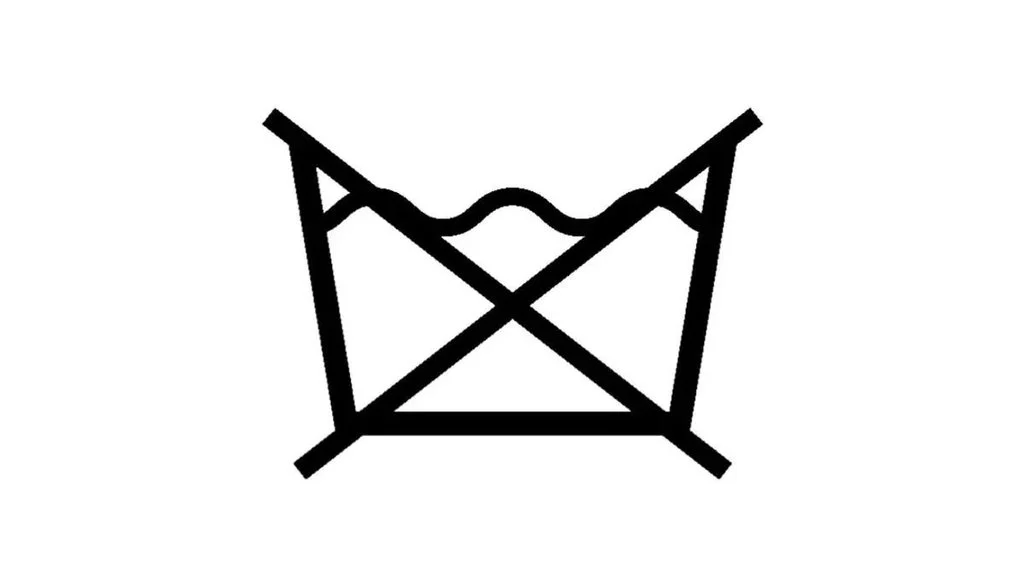
This instruction may appear on clothing made from materials or constructions that can be damaged by water or ordinary washing. Examples may include garments with special finishes, delicate structured pieces, or items whose components could be affected by immersion.
If you see this symbol:
- Do not put the garment through a normal washing-machine cycle.
- Do not assume that hand washing is safe.
- Check whether professional dry cleaning or another treatment is indicated.
- Follow any additional instructions on the label.
A do not wash symbol does not necessarily mean that the garment can never be cleaned. It means you should not wash it using the prohibited method. Professional care may be recommended, depending on the other symbols.
Washing instruction symbols uk
In the United Kingdom, clothing care labels commonly use internationally recognized textile-care pictograms based on standards such as ISO 3758. These symbols are designed to communicate washing, bleaching, drying, ironing, and professional-cleaning instructions.
UK labels may include the same familiar markings seen on clothing sold elsewhere in Europe and many international markets.
Common examples include:
- 30°C or 40°C washtub: Maximum washing temperature.
- Hand in a washtub: Hand washing.
- Crossed-out triangle: Do not bleach.
- Square with a circle: Tumble-drying instructions.
- Iron with dots: Permitted ironing temperature.
- Circle with letters: Professional-cleaning guidance.
The symbols generally do not change simply because a garment is sold in the UK. However, labels may include additional text, and products made for different markets can have different label layouts.
When buying clothes internationally, follow the actual care instructions rather than relying on assumptions about the country where the garment was manufactured.
Universal laundry symbols

Many laundry symbols are internationally recognized, but the term “universal” should be used carefully. Designs and conventions are standardized in relevant care-label systems, yet labels can differ by standard, market, and manufacturer.
The main symbols are widely understood:
- Washtub: Washing.
- Triangle: Bleaching.
- Square: Drying.
- Iron: Ironing.
- Circle: Professional textile cleaning.
Additional markings communicate more specific instructions. Dots commonly show heat levels, lines can indicate gentler processes, and crosses indicate that a treatment is prohibited.
These symbols are useful because they reduce reliance on written language. However, a reader still needs to understand the relevant markings, especially when a label includes several symbols or unusual combinations.
If a care label seems unclear, look for the garment manufacturer’s guidance rather than treating a simplified online chart as the final authority.
Tag washing instruction symbols
Tag washing instruction symbols are printed on small fabric labels attached to garments. They help you understand the safest recommended care method before putting clothes into the washing machine.
When checking a clothing tag, look for the full sequence of care icons rather than just the first one. A label may allow machine washing but prohibit bleaching or tumble drying.
If the tag includes a temperature, treat it as the maximum recommended washing temperature. If the washing tub has one or two lines underneath, select a gentler programme as appropriate.
For garments with complicated construction, such as lined jackets or embellished dresses, the tag may recommend professional cleaning. Follow that advice instead of experimenting with a wash cycle.
Clothing label washing instruction symbols
Clothing label washing instruction symbols are useful for understanding how different materials should be cleaned and maintained. The label may also identify the fabric composition, which can help you understand why a particular care method is recommended.
For example, wool and silk can be sensitive to heat and agitation, while cotton garments may have different washing requirements depending on their dyes, construction, and finish.
Use the label as your first guide, then consider the garment itself. A cotton shirt with a printed design may need more careful treatment than a plain cotton towel. Likewise, a synthetic sports garment may require low-temperature washing and avoidance of high heat.
Do not cut off a care label before checking its instructions. If you remove it for comfort, keep a photograph of the symbols so you can refer to them later.
Laundry washing instruction symbols
Laundry washing instruction symbols cover the entire cleaning process, from washing to drying and ironing. Knowing the basic categories can help you sort clothes correctly and avoid common laundry mistakes.
A practical laundry routine includes these steps:
- Read the care labels before sorting clothes.
- Separate items by colour, fabric, and washing requirements.
- Choose a suitable water temperature and washing cycle.
- Check the bleaching and drying symbols.
- Iron only when the label permits it.
Remember that a washing temperature is not the same as a drying temperature. A garment that can be washed at 40°C may still need to air-dry or be tumble-dried at low heat.
If several garments are washed together, choose settings that are appropriate for the most delicate item in the load. This can help prevent damage to fabrics that require extra care.
International washing instruction symbols
International washing instruction symbols are intended to make textile-care guidance easier to understand across languages and markets. Standards such as ISO 3758 provide a framework for the care symbols used on many clothing labels.
The most important international symbol groups are:
| Group | Main Purpose | Examples of Instructions |
| Washing | Water-based cleaning | Temperature, hand wash, gentle cycle |
| Bleaching | Bleach treatment | Bleach permitted or prohibited |
| Drying | Removing moisture | Tumble dry, line dry, dry flat |
| Ironing | Heat and pressing | Low, medium, or high heat |
| Professional cleaning | Specialist textile care | Dry cleaning or wet cleaning instructions |
A garment sold in another country may use familiar icons but include local language instructions as well. The label’s specific markings should always take priority over a general chart.
International standards can also be updated, so when exact compliance matters for textile manufacturing or commercial care labels, consult the relevant current standard rather than relying solely on informal illustrations.
Fabric washing instruction symbols
Fabric washing instruction symbols are especially important because different fibres respond differently to water, heat, and movement. The correct method depends on the material and the way the garment is made.
| Fabric | General Care Consideration |
| Cotton | Check temperature and colour-fastness instructions |
| Wool | Look for wool-specific or hand-wash guidance |
| Silk | Use the care method specified for the garment |
| Polyester | Avoid excessive heat when the label warns against it |
| Linen | Check for shrinkage and ironing guidance |
| Elastane blends | Avoid excessive heat that may damage stretch |
| Denim | Follow the label to help manage fading and shrinkage |
These are general considerations, not replacements for the manufacturer’s instructions. Cotton can shrink, wool can felt, and synthetic fabrics can be damaged by excessive heat.
For mixed-fibre clothing, follow the garment’s care label rather than choosing a method based only on its main fibre. Special coatings, linings, dyes, and decorations can change the recommended treatment.
Washing instruction symbols meaning
The meaning of a washing instruction symbol depends on its shape and any additional markings inside or around it. Understanding these details makes it easier to distinguish ordinary washing from more restricted care.
- Number inside a washtub: Maximum washing temperature in Celsius.
- Hand inside a washtub: Hand washing is required or recommended by the label.
- Cross over a washtub: Do not wash using the indicated treatment.
- One line below a washtub: Mild washing process.
- Two lines below a washtub: Very mild washing process.
- Dots inside an iron: Indicate ironing heat levels.
- Cross over a triangle: Do not bleach.
Do not confuse the square used for drying with the washtub used for washing. Similarly, a circle inside a square refers to tumble drying, while a circle on its own relates to professional cleaning.
What do washing instruction symbols mean
Washing instruction symbols explain how to clean and maintain a garment while reducing the risk of damage. They are instructions for the full care process, not simply a guide to choosing a washing-machine temperature.
A label might permit washing at 30°C but prohibit tumble drying. Another might allow a warmer wash while requiring a gentle cycle and low-temperature ironing.
The best way to interpret a label is to read each symbol separately and then consider the instructions together. Never assume that permission for one treatment automatically means every other treatment is safe.
When a label includes unfamiliar symbols, compare the shape and markings with a reliable textile-care reference. For valuable or delicate garments, ask the manufacturer or a professional cleaner if the instructions remain unclear.
What are washing instruction symbols
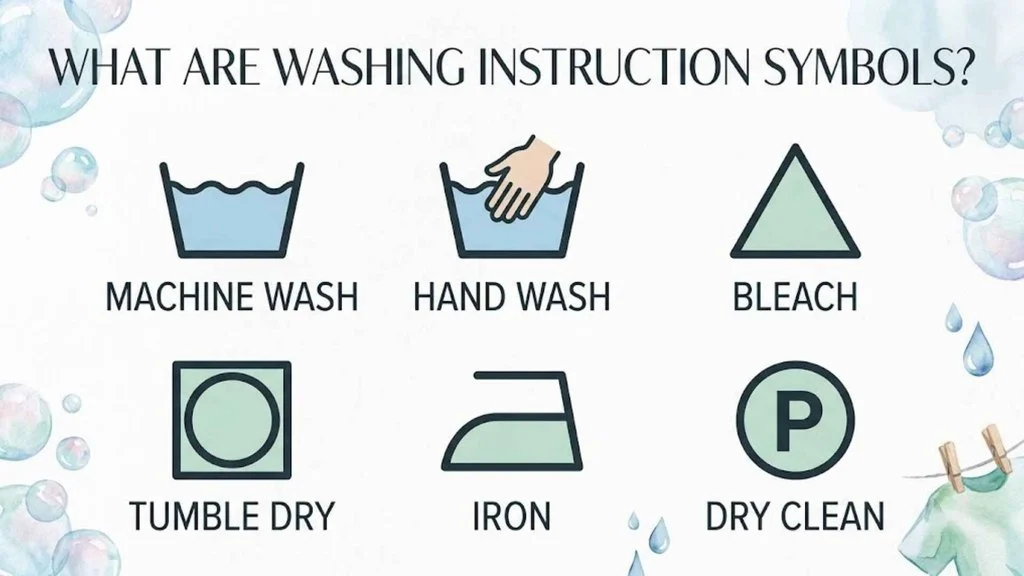
Washing instruction symbols are small care icons that tell you how a textile should be washed, bleached, dried, ironed, or professionally cleaned. They appear on clothing labels, towels, bedding, and other fabric products.
Their main purpose is to make garment care easier to understand without relying entirely on written language. This is particularly helpful when clothing is sold internationally.
The symbols also help prevent common problems such as shrinking, colour fading, damaged elastic, and misshapen garments. Following them can extend the useful life of clothing and reduce unnecessary replacement.
Washing instruction symbols p
If you searched for washing instruction symbols beginning with “p,” you may be looking for the professional-cleaning symbol that contains the letter P.
A circle containing the letter P is used in textile-care systems to communicate instructions for professional dry cleaning. Additional markings can specify restrictions or a gentler cleaning process.
This symbol is different from the washing tub, which provides washing instructions, and the square, which covers drying. The letter P is intended to guide professional cleaners, so it should not be interpreted as an ordinary home-washing setting.
If you find this symbol on a garment, check the complete care label and consult a professional cleaner when needed. The exact treatment permitted depends on the full symbol and applicable care-label standard.
Chinese washing instruction symbols
Clothing sold in China may display care symbols alongside Chinese-language washing instructions. Many of the pictograms resemble those used internationally, although the label format and accompanying text can vary.
You may encounter familiar icons for washing temperature, hand washing, bleaching, drying, ironing, and professional cleaning. A temperature such as 30°C generally indicates the maximum washing temperature, while a crossed-out symbol prohibits the associated treatment.
When reading a Chinese clothing label, focus on the symbols first if you do not read Chinese. If the garment has additional written instructions, use a reliable translation and compare it with the care icons.
Do not assume that every garment manufactured in China uses exactly the same label layout. Follow the instructions printed on the specific item.
Japanese washing instruction symbols
Japanese clothing labels may use familiar laundry-care pictograms together with Japanese text. The symbols help communicate how to wash and maintain garments, while the written instructions may provide additional details.
Common care icons include washing tubs, triangles, squares, irons, and circles. You may also see markings that indicate gentle washing, maximum temperatures, or restrictions on drying.
When buying clothing from Japan, check the whole label before choosing a washing method. If you cannot read the accompanying text, translate it carefully rather than relying on the symbols alone.
For delicate clothing, including wool garments and specialised fashion items, follow the precise instructions on the label. Similar-looking icons can have different meanings when they contain extra lines, dots, or crosses.
Clothes washing instruction symbols
Clothes washing instruction symbols help you decide how to clean shirts, trousers, dresses, jackets, underwear, and other everyday garments. Although many clothing labels use the same basic icons, the recommended treatment depends on the fabric and garment construction.
Before washing clothes, check the temperature, washing method, bleaching restrictions, drying guidance, and ironing instructions. Separate delicate garments from heavier items such as towels and denim, and close zippers or turn printed clothing inside out when appropriate.
If you are unsure about a garment, avoid high heat and aggressive washing. Following the label is usually the simplest way to protect its colour, shape, and finish.
Frequently Asked Questions
What is the symbol for machine washing at 30°C?
It is a washtub containing the number 30. This indicates a maximum washing temperature of 30°C, with any additional lines or markings providing further instructions.
What does a crossed-out washing tub mean?
A crossed-out washing tub means the garment should not be washed using the indicated washing treatment. Check the rest of the label for professional-cleaning guidance.
Can I tumble-dry clothes with a 30°C washing symbol?
Not necessarily. The 30°C marking specifies the washing temperature, not the drying method. Check the separate drying symbol before using a tumble dryer.
What do the lines under laundry symbols mean?
Lines beneath a washing tub generally indicate a gentler washing process. One line indicates a mild process, while two indicate a very mild process in the relevant care-label system.
Are washing instruction symbols the same in every country?
Many care symbols are internationally standardized, but labels and accompanying instructions can vary by country, manufacturer, and applicable standard. Always follow the complete garment label.
Conclusion
Washing instruction symbols make clothing care easier by explaining how to wash, bleach, dry, iron, and professionally clean different fabrics. Learning the main icons helps you avoid common mistakes and keep garments in better condition.
Pay particular attention to washing temperatures, crossed-out symbols, dots, and lines. A 30°C wash symbol, for example, sets a temperature limit, while separate drying instructions tell you whether tumble drying is suitable.
Before washing any garment, read the complete care label and choose a method that follows its instructions. This simple habit can help preserve the fit, colour, and quality of your clothes for longer.

Hi, I’m Sienna Brooks, and I believe that the right words can inspire, comfort, and empower people at every stage of life. For as long as I can remember, I’ve been drawn to meaningful quotes and the stories behind them. I love curating collections of inspirational, motivational, and heartfelt quotes that resonate with readers around the world.
Through my writing, I strive to help others find encouragement, whether they’re celebrating life’s happiest moments or navigating its biggest challenges. I believe that wisdom is timeless, and I’m passionate about sharing words that leave a lasting impact.
I am the author of Reflections in Words and The Journey of Inspiration, two books dedicated to exploring the beauty and power of timeless quotes.
 Rowan Sinclair Rowan Sinclair