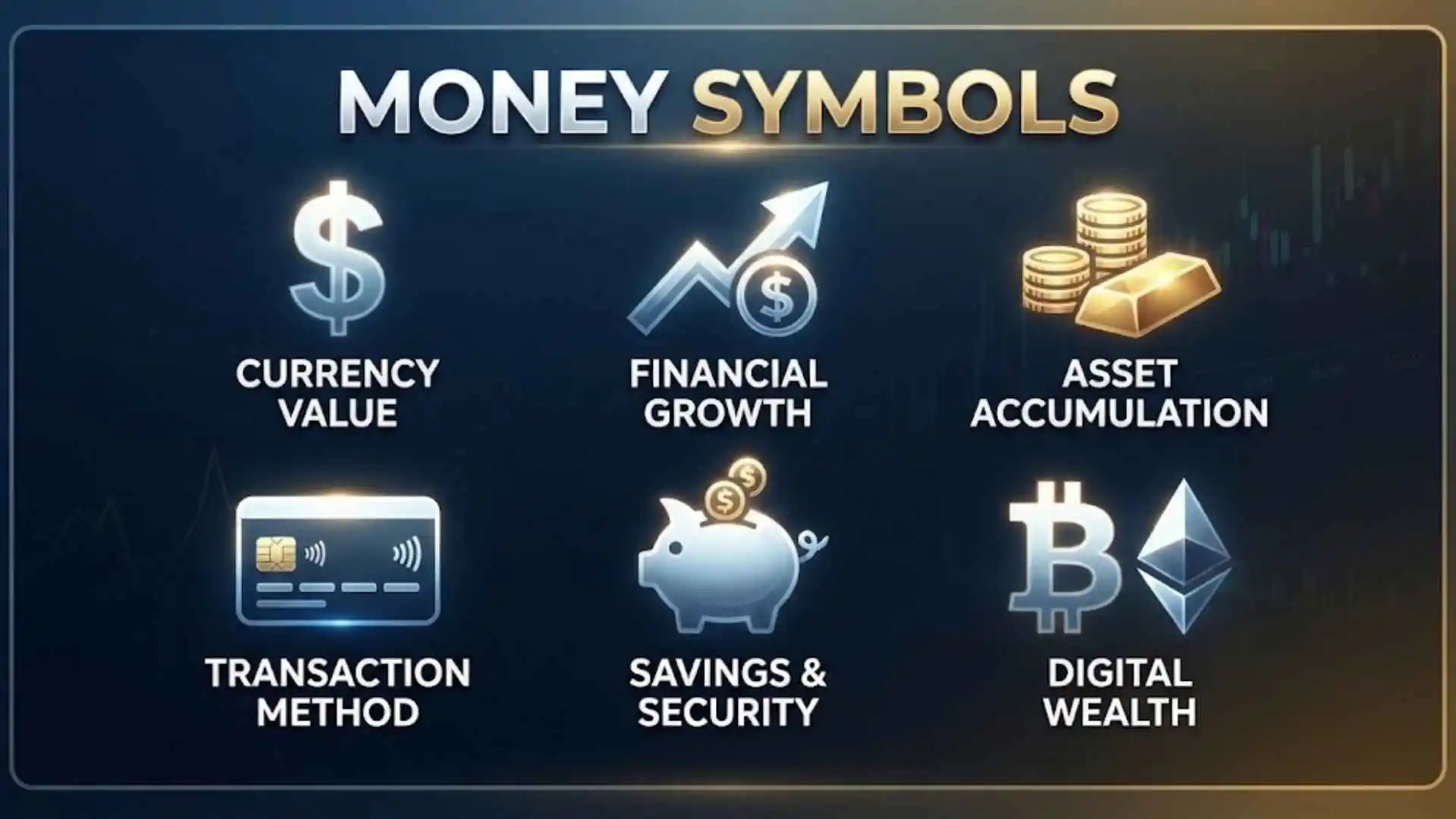
Money symbols are small characters that represent currencies in prices, financial documents, websites, receipts, advertisements, and everyday transactions. Some are instantly recognizable, such as $, €, and £, while others are less familiar, such as ₾, ₴, ₸, and ₲.
Understanding money symbols becomes more complicated when different currencies use similar or identical signs. For example, the $ symbol can represent several different dollar currencies, while ¥ may refer to either the Japanese yen or the Chinese yuan depending on the context.
This complete guide to money symbols explains common currency signs, their meanings, countries and regions of use, ISO currency codes, Unicode characters, copy-and-paste symbols, keyboard methods, formatting conventions, and confusing symbols. It is designed to help you identify a currency quickly and understand when a symbol alone is not precise enough.
Quick Money Symbols and Currency Codes Chart
The following table provides a quick reference for many commonly encountered money symbols.
| Symbol | Currency | Country or Region | ISO Code | Example |
| $ | United States dollar | United States | USD | $100 |
| € | Euro | Euro area | EUR | €100 |
| £ | Pound sterling | United Kingdom | GBP | £100 |
| ¥ | Japanese yen | Japan | JPY | ¥1,000 |
| ¥ / 元 | Chinese yuan | China | CNY | ¥1,000 |
| ₹ | Indian rupee | India | INR | ₹1,000 |
| Rs / ₨ | Pakistani rupee | Pakistan | PKR | Rs 1,000 |
| ₩ | South Korean won | South Korea | KRW | ₩10,000 |
| ₽ | Russian ruble | Russia | RUB | ₽1,000 |
| ₺ | Turkish lira | Türkiye | TRY | ₺1,000 |
| ₪ | Israeli new shekel | Israel | ILS | ₪100 |
| ฿ | Thai baht | Thailand | THB | ฿1,000 |
| ₱ | Philippine peso | Philippines | PHP | ₱1,000 |
| ₦ | Nigerian naira | Nigeria | NGN | ₦1,000 |
| ₴ | Ukrainian hryvnia | Ukraine | UAH | ₴1,000 |
| ₾ | Georgian lari | Georgia | GEL | ₾100 |
| ₸ | Kazakhstani tenge | Kazakhstan | KZT | ₸1,000 |
| ₮ | Mongolian tögrög | Mongolia | MNT | ₮1,000 |
| ₭ | Lao kip | Laos | LAK | ₭1,000 |
| ₲ | Paraguayan guaraní | Paraguay | PYG | ₲1,000 |
| ₡ | Colón | Costa Rica | CRC | ₡1,000 |
| ₫ | Vietnamese đồng | Vietnam | VND | ₫100,000 |
| ₼ | Azerbaijani manat | Azerbaijan | AZN | ₼100 |
| ؋ | Afghan afghani | Afghanistan | AFN | ؋1,000 |
A symbol is useful for everyday pricing, but an ISO currency code is usually better when you need to identify a currency unambiguously.
Money Symbols Copy and Paste
If you only need a symbol for a document, message, website, social media post, spreadsheet, or design, you can copy one from the lists below.
Common Money Symbols
$ € £ ¥ ₹ ₩ ₽ ₺ ₪ ฿ ₱ ₦ ₴ ₾ ₸ ₮ ₭ ₲ ₡ ₫ ₼ ؋
Dollar and Dollar-Related Symbols
$ C$ A$ NZ$ HK$ S$
The basic dollar sign does not always tell you which dollar currency is intended. In situations where several dollar currencies are possible, a country abbreviation or ISO code can provide greater clarity.
Rupee-Related Symbols and Abbreviations
₹ ₨ Rs
Different countries use currencies called rupee, so the symbol or abbreviation alone may not always provide enough information.
Other Useful Currency Characters
¤ ₠ ₢ ₣ ₤ ₥ ₦ ₧ ₨ ₩ ₪ ₫ ₭ ₮ ₯ ₰ ₱ ₲ ₳ ₴ ₵ ₶ ₷ ₸ ₹ ₺ ₻ ₼ ₽ ₾
Some of these characters represent historical currencies or specialized currency signs rather than the everyday currencies most people encounter.
What Is a Money or Currency Symbol?
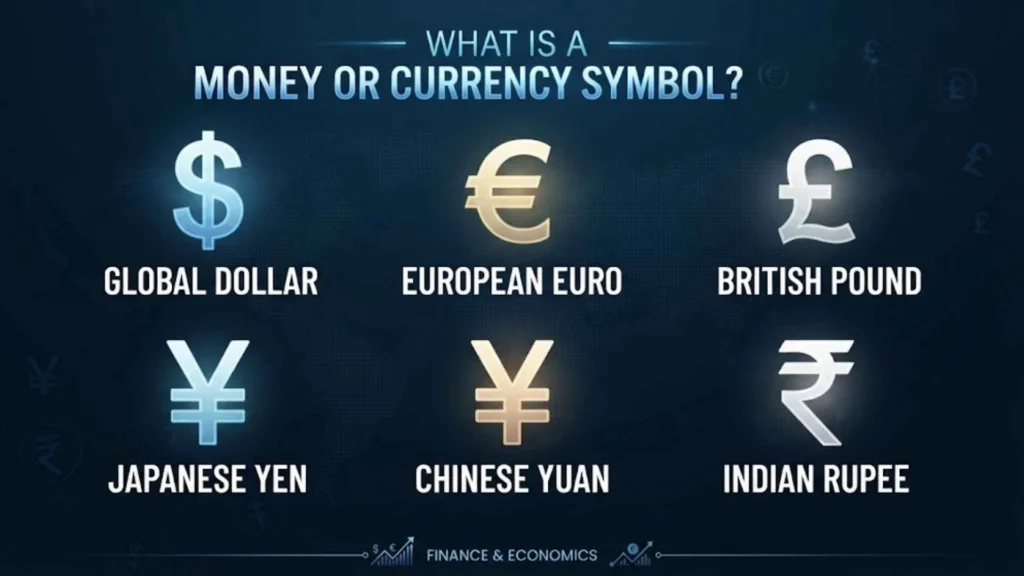
A money symbol, also called a currency symbol, is a character used to represent a monetary unit.
For example:
- $ represents a dollar currency in many contexts.
- € represents the euro.
- £ represents pound sterling in common modern usage.
- ₹ represents the Indian rupee.
- ₩ represents the won.
- ₺ represents the Turkish lira.
Currency symbols make prices shorter and easier to recognize.
Instead of writing:
100 United States dollars
a price tag can simply display:
$100
However, symbols are not always unique. The same symbol can be associated with more than one currency, which is why currency codes are important in international transactions.
Currency Symbol vs. Currency Name
A currency name is the written name of a currency.
For example:
- United States dollar
- Euro
- Japanese yen
- Indian rupee
- Pakistani rupee
A currency symbol is the compact character used to represent it.
For example:
- Dollar → $
- Euro → €
- Yen → ¥
- Indian rupee → ₹
The name is generally clearer in ordinary writing, while the symbol is more convenient for prices and amounts.
Currency Symbol vs. Currency Code
A currency symbol and a currency code serve different purposes.
For example:
- $ is a symbol.
- USD is the ISO code for the United States dollar.
- US dollar is the currency name.
Similarly:
- € → euro symbol
- EUR → euro code
- Euro → currency name
Currency codes are especially useful in banking, foreign exchange, accounting, international commerce, and computer systems because they reduce ambiguity.
Currency Symbol vs. Currency Abbreviation
An abbreviation is a shortened form of a currency name or commonly used monetary notation.
For example, people may write:
- Rs
- US$
- A$
- C$
- HK$
These forms can provide additional context when a single symbol such as $ could represent multiple currencies.
World Money Symbols and Their Meanings
There are many currency symbols in use around the world. Some are familiar internationally, while others appear primarily in their home countries or regions.
Dollar Symbol $
The $ is one of the most recognizable money symbols in the world.
It is commonly associated with the United States dollar, but other currencies also use dollar-related notation.
Examples include:
- United States dollar — USD
- Canadian dollar — CAD
- Australian dollar — AUD
- New Zealand dollar — NZD
- Singapore dollar — SGD
- Hong Kong dollar — HKD
Therefore, $100 does not automatically mean USD 100.
When precision matters, use a code such as USD 100, CAD 100, or AUD 100.
Euro Symbol €
The € symbol represents the euro.
The euro is used by countries that are members of the euro area.
Examples include:
- €10
- €50
- €100
- €1,000
The ISO currency code for the euro is EUR.
The symbol is normally placed before the amount in many English-language contexts, while other European languages may follow different conventions.
Pound Symbol £
The £ symbol is most commonly associated with pound sterling.
The ISO code for pound sterling is GBP.
Examples include:
- £10
- £50
- £100
The pound sign can also appear in historical or other currency contexts, so the code GBP is more precise when discussing international transactions.
Yen and Yuan Symbols ¥
The ¥ character is commonly associated with both the Japanese yen and the Chinese yuan.
For Japan:
- Symbol: ¥
- Currency: Japanese yen
- Code: JPY
For China:
- Symbol: ¥
- Currency: Chinese yuan
- Code: CNY
China may also use 元 in written prices.
This is a good example of why a currency symbol by itself may not provide enough information.
Rupee Symbol ₹
The ₹ symbol is the modern symbol for the Indian rupee.
Its ISO code is INR.
Examples include:
- ₹100
- ₹500
- ₹1,000
- ₹10,000
The Indian rupee should not automatically be confused with other currencies whose names also contain the word “rupee.”
Pakistani Rupee Symbol and Notation
The Pakistani rupee is the official currency of Pakistan.
Its ISO code is PKR.
In everyday Pakistani writing, prices are frequently expressed using forms such as:
- Rs 100
- Rs 500
- Rs 1,000
- PKR 1,000
The symbol ₨ may also be encountered in digital fonts and currency lists, although usage is not as universal as the written Rs abbreviation.
Won Symbol ₩
The ₩ symbol represents the won.
It is strongly associated with South Korea, whose currency has the ISO code KRW.
Examples include:
- ₩1,000
- ₩10,000
- ₩50,000
The symbol can appear without a space between the sign and amount.
Ruble Symbol ₽
The ₽ symbol represents the Russian ruble.
Its ISO code is RUB.
Examples include:
- ₽100
- ₽1,000
- ₽10,000
The symbol is visually different from the basic dollar sign and was introduced as a dedicated modern symbol for the Russian currency.
Turkish Lira Symbol ₺
The ₺ symbol represents the Turkish lira.
Its ISO code is TRY.
Examples include:
- ₺100
- ₺500
- ₺1,000
The symbol should not be confused with the pound sign even though both have a horizontal-line design.
Israeli New Shekel Symbol ₪
The ₪ symbol represents the Israeli new shekel.
Its ISO code is ILS.
Examples include:
- ₪50
- ₪100
- ₪500
The sign is often encountered in Israeli retail pricing and financial information.
Thai Baht Symbol ฿
The ฿ symbol represents the Thai baht.
Its ISO code is THB.
Examples include:
- ฿100
- ฿500
- ฿1,000
The baht symbol can sometimes be confused with other symbols because of its vertical-line design.
Philippine Peso Symbol ₱
The ₱ symbol represents the Philippine peso.
Its ISO code is PHP.
Examples include:
- ₱100
- ₱500
- ₱1,000
The additional horizontal line helps distinguish the Philippine peso sign from a simple letter P.
Nigerian Naira Symbol ₦
The ₦ symbol represents the Nigerian naira.
Its ISO code is NGN.
Examples include:
- ₦500
- ₦1,000
- ₦10,000
The naira sign resembles an N with horizontal lines.
Ukrainian Hryvnia Symbol ₴
The ₴ symbol represents the Ukrainian hryvnia.
Its ISO code is UAH.
Examples include:
- ₴100
- ₴500
- ₴1,000
The sign is distinct from the symbols used by many other European currencies.
Georgian Lari Symbol ₾
The ₾ symbol represents the Georgian lari.
Its ISO code is GEL.
Examples include:
- ₾10
- ₾50
- ₾100
The symbol is based on the Georgian currency’s written identity and is useful for distinguishing the lari from currencies using more familiar signs.
Kazakhstani Tenge Symbol ₸
The ₸ symbol represents the Kazakhstani tenge.
Its ISO code is KZT.
Examples include:
- ₸100
- ₸1,000
- ₸10,000
Mongolian Tögrög Symbol ₮
The ₮ symbol represents the Mongolian tögrög.
Its ISO code is MNT.
Examples include:
- ₮1,000
- ₮5,000
- ₮10,000
Lao Kip Symbol ₭
The ₭ symbol is associated with the Lao kip.
Its ISO code is LAK.
Examples include:
- ₭1,000
- ₭5,000
- ₭10,000
Paraguayan Guaraní Symbol ₲
The ₲ symbol represents the Paraguayan guaraní.
Its ISO code is PYG.
Examples include:
- ₲1,000
- ₲10,000
- ₲100,000
Colón Symbol ₡
The ₡ symbol is associated with currencies called the colón, particularly the Costa Rican colón.
The ISO code for the Costa Rican colón is CRC.
Examples include:
- ₡500
- ₡1,000
- ₡10,000
Vietnamese Đồng Symbol ₫
The ₫ symbol represents the Vietnamese đồng.
Its ISO code is VND.
Examples include:
- ₫10,000
- ₫50,000
- ₫100,000
Azerbaijani Manat Symbol ₼
The ₼ symbol represents the Azerbaijani manat.
Its ISO code is AZN.
Examples include:
- ₼10
- ₼50
- ₼100
Afghan Afghani Symbol ؋
The ؋ sign is associated with the Afghan afghani.
Its ISO code is AFN.
The symbol is particularly useful in references to prices denominated in Afghanistan’s currency.
Money Symbols by Country
Another convenient way to identify a money symbol is to begin with the country.
North America
Common currencies and symbols include:
- United States — $ — USD
- Canada — $ or C$ — CAD
- Mexico — $ — MXN
- Costa Rica — ₡ — CRC
Because several countries use dollar or peso notation, the ISO code is useful when displaying prices internationally.
South America
Examples include:
- Argentina — $ — ARS
- Brazil — R$ — BRL
- Chile — $ — CLP
- Colombia — $ — COP
- Paraguay — ₲ — PYG
- Uruguay — $ — UYU
The dollar sign can therefore represent substantially different currencies depending on the country.
Europe
Common examples include:
- Euro area — € — EUR
- United Kingdom — £ — GBP
- Russia — ₽ — RUB
- Ukraine — ₴ — UAH
- Georgia — ₾ — GEL
- Türkiye — ₺ — TRY
Europe contains both shared and country-specific currency systems, making currency codes useful for international readers.
Asia
Examples include:
- India — ₹ — INR
- Pakistan — Rs / ₨ — PKR
- Japan — ¥ — JPY
- China — ¥ / 元 — CNY
- South Korea — ₩ — KRW
- Thailand — ฿ — THB
- Philippines — ₱ — PHP
- Kazakhstan — ₸ — KZT
- Mongolia — ₮ — MNT
- Vietnam — ₫ — VND
- Laos — ₭ — LAK
Middle East
Examples include:
- Israel — ₪ — ILS
- Saudi Arabia — ر.س — SAR
- United Arab Emirates — د.إ — AED
- Qatar — ر.ق — QAR
- Jordan — د.ا — JOD
Not every currency uses a Latin-based symbol. Some monetary signs are based on Arabic writing systems.
Africa
Examples include:
- Nigeria — ₦ — NGN
- South Africa — R — ZAR
- Ghana — GH₵ — GHS
- Egypt — £ or E£ in some contexts — EGP
- Morocco — د.م. — MAD
Country context is particularly important when a symbol or abbreviation is shared by multiple currencies.
Oceania
Examples include:
- Australia — $ or A$ — AUD
- New Zealand — $ or NZ$ — NZD
- Fiji — $ or FJ$ — FJD
Adding a country or currency code helps prevent ambiguity.
Money Symbols That Are Easy to Confuse
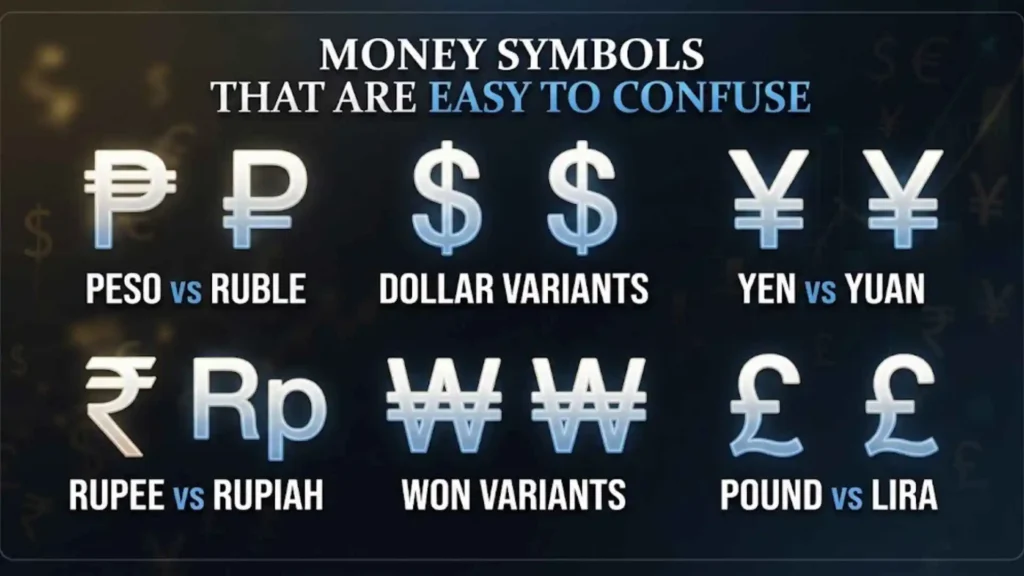
Some currency symbols look similar enough that readers can mistake one for another.
Dollar and Peso Symbols
The $ symbol can represent various dollar and peso currencies.
For example:
- USD — United States dollar
- CAD — Canadian dollar
- AUD — Australian dollar
- MXN — Mexican peso
- CLP — Chilean peso
- COP — Colombian peso
Therefore, context is essential.
A financial document might use USD 100 instead of simply $100 to make the intended currency unmistakable.
Yen and Yuan
The symbol ¥ can represent both Japanese yen and Chinese yuan.
Compare:
- ¥1,000 JPY
- ¥1,000 CNY
The amount looks similar, but the currencies are different.
For international content, using JPY and CNY is much clearer.
Rupee Symbols
Several countries use currencies called rupee.
For example:
- INR — Indian rupee
- PKR — Pakistani rupee
- LKR — Sri Lankan rupee
- NPR — Nepalese rupee
- MUR — Mauritian rupee
- SCR — Seychelles rupee
The Indian rupee has the dedicated symbol ₹, but a written abbreviation such as “Rs” may require additional country context.
Pound and Lira Symbols
The British pound uses:
£
The Turkish lira uses:
₺
The two signs can appear visually related, but they represent different currencies.
Their codes make the distinction easy:
- GBP — pound sterling
- TRY — Turkish lira
Currency Symbol and Generic Currency Sign
The character ¤ is called the currency sign or generic currency sign.
Unlike $, €, or ₹, it does not identify one particular currency.
It can be useful when the exact currency is unknown, unspecified, or intentionally generic.
Currency Symbols vs. ISO Currency Codes
Currency symbols are convenient, but they are not always precise enough for international use.
What Is ISO 4217?
ISO 4217 is the international standard associated with currency codes.
Three-letter codes are widely used to identify currencies.
Examples include:
- USD — United States dollar
- EUR — euro
- GBP — pound sterling
- JPY — Japanese yen
- CNY — Chinese yuan
- INR — Indian rupee
- PKR — Pakistani rupee
- CAD — Canadian dollar
- AUD — Australian dollar
- CHF — Swiss franc
These codes are especially useful in banking, finance, foreign exchange, accounting, software, and international commerce.
Why Currency Codes Are More Precise
Consider:
$500
This could refer to several currencies.
Now compare:
USD 500
The second format clearly identifies the United States dollar.
Likewise:
CAD 500
means Canadian dollars.
And:
AUD 500
means Australian dollars.
A good rule is to use the symbol for familiar everyday prices and the currency code when the reader could reasonably misunderstand the currency.
Common Currency Codes
| Currency | Symbol | ISO Code |
| United States dollar | $ | USD |
| Euro | € | EUR |
| Pound sterling | £ | GBP |
| Japanese yen | ¥ | JPY |
| Chinese yuan | ¥ / 元 | CNY |
| Indian rupee | ₹ | INR |
| Pakistani rupee | Rs / ₨ | PKR |
| Canadian dollar | $ / C$ | CAD |
| Australian dollar | $ / A$ | AUD |
| New Zealand dollar | $ / NZ$ | NZD |
| South Korean won | ₩ | KRW |
| Russian ruble | ₽ | RUB |
| Turkish lira | ₺ | TRY |
| Thai baht | ฿ | THB |
| Philippine peso | ₱ | PHP |
| Nigerian naira | ₦ | NGN |
| Ukrainian hryvnia | ₴ | UAH |
| Georgian lari | ₾ | GEL |
| Kazakhstani tenge | ₸ | KZT |
| Vietnamese đồng | ₫ | VND |
How to Type Money Symbols
Typing a currency symbol depends on the operating system, keyboard layout, application, and available input methods.
How to Type Money Symbols on Windows
Windows users can often enter currency characters through:
- Keyboard shortcuts
- The Character Map
- The emoji and symbols interface
- Unicode input methods supported by particular applications
If a shortcut does not work, the Character Map or system symbol picker is a useful alternative.
Keyboard shortcuts can vary by keyboard layout, so a shortcut that works on one system may not work on another.
How to Type Money Symbols on Mac
Mac users can use the built-in character viewer to search for currency symbols.
The character viewer can help locate symbols such as:
- €
- £
- ¥
- ₹
- ₩
- ₱
- ₺
This approach is useful when a dedicated keyboard shortcut is unknown.
How to Type Money Symbols in Microsoft Word
Microsoft Word provides several ways to insert currency characters.
You can:
- Copy and paste the symbol.
- Use the Insert Symbol feature.
- Use available keyboard shortcuts.
- Search the system character viewer or symbol interface.
For less common signs, searching by the currency name can be easier than trying to remember a keyboard combination.
How to Insert Money Symbols in Excel
Excel can display currency symbols through cell formatting or by entering the character directly.
For financial spreadsheets, it is often better to apply a consistent currency format rather than manually typing a symbol into every cell.
This allows numbers to remain numerical values that can still be calculated, sorted, and analyzed.
How to Type Money Symbols on Android and iPhone
Mobile keyboards commonly provide currency symbols through the symbols or numbers keyboard.
The exact layout can vary according to:
- Phone manufacturer
- Operating system
- Keyboard application
- Language
- Regional keyboard settings
For uncommon symbols, copy and paste is often the simplest option.
Money Symbols and Unicode
Unicode provides a standardized way of representing characters across digital systems.
Common Unicode Values
| Symbol | Currency | Unicode |
| $ | Dollar sign | U+0024 |
| £ | Pound sign | U+00A3 |
| ¥ | Yen sign | U+00A5 |
| ₩ | Won sign | U+20A9 |
| € | Euro sign | U+20AC |
| ₦ | Naira sign | U+20A6 |
| ₪ | New sheqel sign | U+20AA |
| ₫ | Dong sign | U+20AB |
| ₭ | Kip sign | U+20AD |
| ₮ | Tugrik sign | U+20AE |
| ₱ | Peso sign | U+20B1 |
| ₲ | Guarani sign | U+20B2 |
| ₴ | Hryvnia sign | U+20B4 |
| ₵ | Cedi sign | U+20B5 |
| ₸ | Tenge sign | U+20B8 |
| ₹ | Indian rupee sign | U+20B9 |
| ₺ | Turkish lira sign | U+20BA |
| ₽ | Ruble sign | U+20BD |
| ₾ | Lari sign | U+20BE |
| ₼ | Manat sign | U+20BC |
| ¤ | Currency sign | U+00A4 |
Unicode values are particularly useful for developers, designers, web publishers, and people working with character encoding.
Why Unicode Matters
A symbol that looks correct on your computer may not always display correctly everywhere.
Problems can occur when:
- A font does not contain the character.
- An application uses an incompatible encoding.
- A website does not properly handle Unicode.
- An old system lacks support for a newer character.
Using modern Unicode-compatible systems and fonts generally reduces these problems.
How to Use Money Symbols Correctly
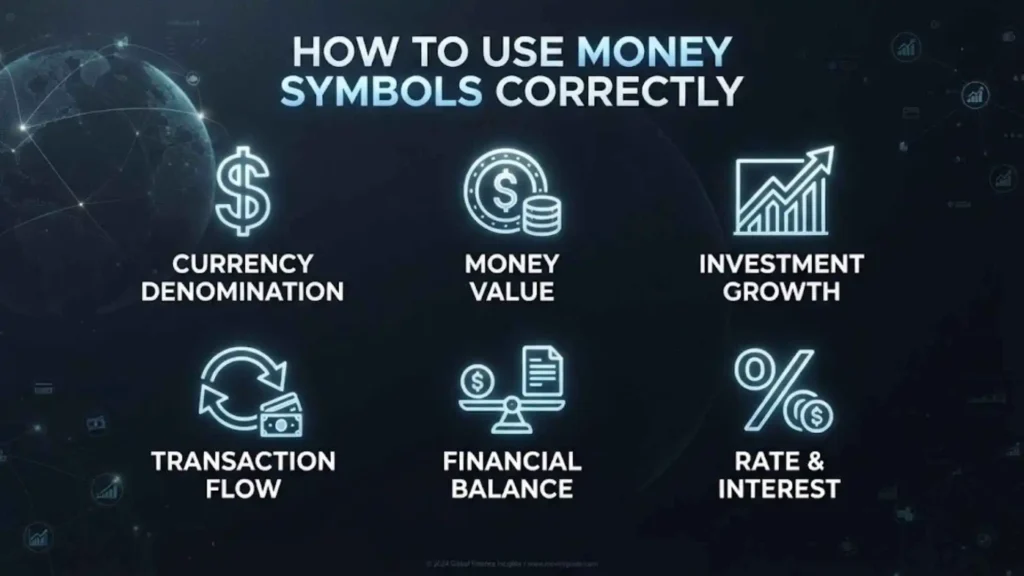
Using a symbol correctly involves more than choosing the right character.
Before or After the Number
Currency formatting differs between languages and regions.
Examples include:
- $100
- €100
- 100 €
- ₹1,000
There is no single formatting rule that applies identically to every language and country.
When writing for an international audience, follow the convention appropriate to the language and currency being discussed.
Should There Be a Space?
Some monetary formats place the symbol directly beside the number:
$100
Other conventions place the symbol after the number with a space:
100 €
The appropriate format depends on the currency, language, publication style, and regional convention.
Decimal and Thousands Separators
Number formatting also varies internationally.
For example, one region might write:
1,234.56
while another may use:
1.234,56
These can represent the same numerical amount but use different separators.
When publishing international financial information, make the intended formatting clear.
International Prices
When an article, online store, invoice, or financial document is aimed at an international audience, a symbol alone may create confusion.
Instead of:
$2,000
consider:
USD 2,000
when the currency needs to be unmistakable.
This is particularly useful when discussing exchange rates or comparing prices between countries.
Money Symbols in Websites and HTML
Currency symbols are frequently used on websites, ecommerce pages, financial dashboards, blogs, and web applications.
Unicode on Websites
Modern websites generally support Unicode characters, allowing symbols such as:
- €
- £
- ₹
- ¥
- ₩
- ₽
- ₺
to appear directly in text.
The page should use an appropriate character encoding, commonly UTF-8, and the selected font should contain the desired character.
HTML Character References
HTML provides character references that can represent special characters.
For developers, character references can be useful when directly inserting a symbol into source code is inconvenient.
Unicode code points can also help identify exactly which character is intended.
Font and Display Issues
A currency symbol may display as a box, missing glyph, or unexpected character when the selected font does not support it.
If a rare currency symbol is not displaying correctly:
- Check the Unicode character.
- Check the page encoding.
- Check the selected font.
- Test the symbol in another modern browser or application.
- Consider using the currency name or ISO code if the character remains unsupported.
Cryptocurrency Symbols vs. Traditional Currency Symbols
The term “money symbols” can sometimes include cryptocurrency symbols, but cryptocurrencies and national currencies are different categories.
Bitcoin Symbol
Bitcoin is commonly represented by:
₿
Its commonly used ticker is:
BTC
The symbol and ticker serve different purposes.
For example:
₿0.01
uses the Bitcoin symbol, while:
0.01 BTC
uses the ticker.
Not every cryptocurrency has a universally used symbol comparable to traditional currency signs. Ticker codes are often more important for identifying digital assets.
Cryptocurrency Tickers
Cryptocurrency platforms commonly identify assets using short codes such as:
- BTC
- ETH
- XRP
- LTC
These should not automatically be treated as standardized national currency symbols.
Historical Currency Symbols
Not every currency symbol you encounter represents a currency that is still in everyday circulation.
Historical currencies may have had their own symbols or specialized characters.
Examples of currencies with historical symbols or notation include:
- Italian lira
- French franc
- Spanish peseta
- German mark
- Portuguese escudo
Historical currency characters can be useful when reading:
- Old documents
- Historical books
- Museum materials
- Archival financial records
- Vintage advertisements
- Historical price lists
When dealing with historical monetary values, the date is just as important as the symbol because the purchasing power and monetary system may have changed.
Frequently Asked Questions
What is the most common money symbol?
The $ sign is one of the world’s most widely recognized currency symbols. However, it is not exclusive to one currency, so a currency code may be necessary to identify the exact currency.
What does the dollar symbol mean?
The $ symbol can represent the United States dollar and several other dollar currencies. It can also appear in some peso currencies. The surrounding country or currency code determines the intended meaning.
Why do multiple currencies use the dollar symbol?
The dollar sign is used by multiple currencies because currency symbols are not a globally unique identification system. For precise international identification, three-letter currency codes such as USD, CAD, and AUD are more useful.
Does ¥ mean yen or yuan?
It can mean either. JPY identifies the Japanese yen, while CNY identifies the Chinese yuan. Chinese prices may also use the character 元.
What does ₹ mean?
The ₹ symbol represents the Indian rupee. Its ISO currency code is INR.
What is the symbol for Pakistani rupees?
Pakistani rupees are commonly written as Rs, while ₨ may also appear in some digital contexts. The international currency code is PKR.
What is the difference between a currency symbol and a currency code?
A currency symbol is a visual character such as $, €, or ₹. A currency code is a standardized identifier such as USD, EUR, or INR. Codes are generally more precise for international financial communication.
How do I type a currency symbol?
You can usually type common currency symbols with keyboard shortcuts, a system character viewer, an application’s symbol-insertion tool, or copy and paste. The exact method depends on your operating system and keyboard layout.
Where can I copy currency symbols?
Common currency symbols can be copied from this guide, including $ € £ ¥ ₹ ₩ ₽ ₺ ₪ ฿ ₱ ₦ ₴ ₾ ₸ ₮ ₭ ₲ ₡ ₫.
Why are some currency symbols placed after the number?
Currency placement depends on the language and regional formatting convention. Some formats place the sign before the number, while others place it after the number.
What does ¤ mean?
¤ is the generic currency sign. Unlike a symbol such as € or ₹, it does not identify one specific currency.
Does every currency have its own symbol?
No. Some currencies share symbols, some use abbreviations more often than dedicated signs, and some are primarily identified by their names or standardized currency codes.
What is the difference between $ and USD?
$ is a currency symbol that can be ambiguous, while USD specifically identifies the United States dollar. In international financial writing, USD is more precise.
What is the difference between ₱ and P?
₱ is the dedicated peso sign commonly associated with the Philippine peso. A simple P can be an informal abbreviation and may not uniquely identify a currency.
What is the difference between ₺ and £?
₺ is the Turkish lira sign, while £ is commonly associated with pound sterling. Their ISO codes are TRY and GBP, respectively.
Is Bitcoin a currency symbol?
₿ is a commonly used Bitcoin symbol, while BTC is its ticker. Bitcoin is a cryptocurrency rather than a national fiat currency, so it is useful to distinguish cryptocurrency notation from traditional currency symbols.
Conclusion
Money symbols provide a quick and recognizable way to represent prices and currencies, but a symbol does not always identify a currency uniquely. The $ sign can refer to several dollar or peso currencies, while ¥ can be associated with both Japanese yen and Chinese yuan.
For everyday prices, familiar symbols such as $, €, £, ₹, ₩, and ₺ make amounts easy to understand. For international transactions, financial documents, websites, and currency comparisons, ISO codes such as USD, EUR, GBP, INR, JPY, CNY, and PKR provide much greater precision.

Hello, I’m Rowan Sinclair, a passionate writer and lifelong admirer of the wisdom found in great quotes. I believe that words have the ability to inspire change, spark creativity, and connect people across cultures and generations.
I enjoy writing about motivational quotes, famous sayings, and lessons from history’s most influential thinkers. Every article I create is driven by my desire to help readers discover meaningful insights that they can apply to their own lives.
When I’m not writing, I spend my time reading biographies, exploring classic literature, and collecting memorable quotes that deserve to be shared with the world.
I am the author of Voices That Inspire and A Collection of Timeless Thoughts, two books that celebrate the enduring power of words and the stories behind them.
 Sienna Brooks