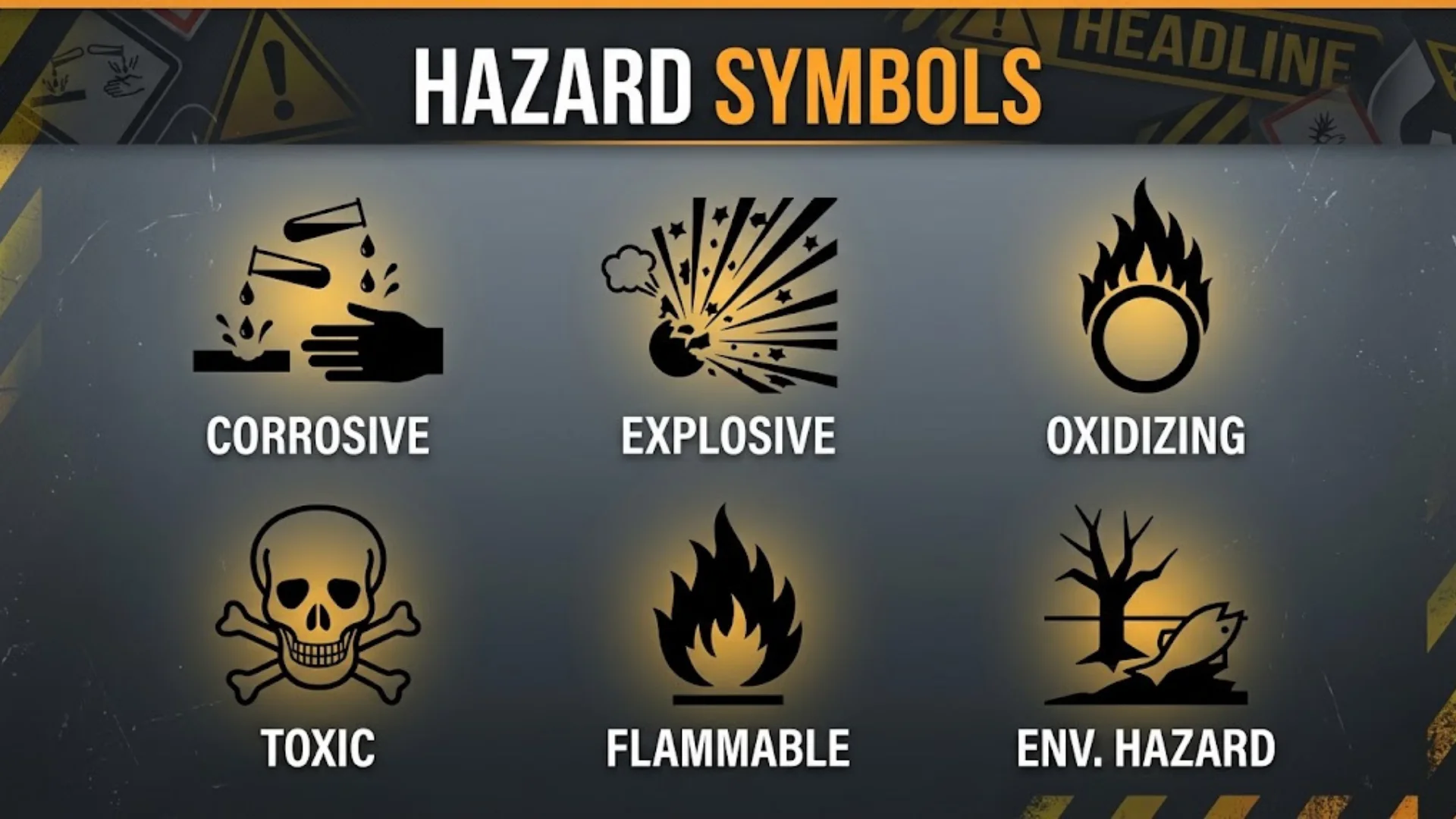
Hazard symbols help you recognize danger before an accident happens. You might see them on a bottle of household cleaner, a compressed gas cylinder, a chemical container, or a warning sign near industrial equipment. Although these symbols look simple, each one communicates important information about a potential risk and the precautions you should take.
Some hazard symbols warn about flammable materials that can catch fire easily. Others identify corrosive chemicals, toxic substances, radiation, biological hazards, or electrical dangers. Learning to recognize these signs can help you make safer decisions at home, at work, in laboratories, and in public spaces.
However, not all hazard symbols follow the same system. Chemical labels use standardized pictograms, while workplace warning signs, dangerous-goods labels, and radiation warnings follow their own rules. Understanding these differences helps you interpret each symbol correctly instead of relying on its appearance alone.
This guide explains common hazard symbols and their meanings, the risks they represent, where you might encounter them, and how to respond safely.
What Are Hazard Symbols?
Hazard symbols are visual signs or pictograms that warn people about specific dangers. They help you identify risks quickly without having to read a long explanation first.
For example, a flame symbol tells you that a substance may present a fire hazard. A skull and crossbones warns of severe acute toxicity, while a corrosion pictogram signals the potential for serious skin or eye burns or damage to metals.
Hazard symbols appear in several systems, including the Globally Harmonized System of Classification and Labeling of Chemicals (GHS), workplace safety signs, and dangerous-goods transport labels. Each system serves a different purpose.
Hazard Symbols vs. Pictograms and Warning Signs
These terms overlap, but they don’t always mean the same thing.
- Hazard pictograms communicate specific risks, especially on chemical labels.
- Warning signs alert people to dangerous conditions, such as high voltage or restricted areas.
- Safety labels combine symbols with written information, instructions, and product details.
- Transport hazard labels identify dangerous goods during shipping and handling.
In the United States, OSHA’s Hazard Communication Standard aligns chemical hazard communication with the GHS framework. It requires relevant hazard information on labels and safety data sheets for covered workplace chemicals.
Hazard Symbols and Their Meanings: Quick Reference Chart
The following table summarizes common chemical hazard pictograms and several other safety symbols. Remember that the same general-looking warning can have different meanings depending on the system in which it appears.
| Hazard symbol | Meaning | Where you might see it |
| Flame | Flammable or certain reactive substances | Solvent containers, chemical storage |
| Skull and crossbones | Severe acute toxicity | Containers of certain highly toxic chemicals |
| Corrosion | Serious skin or eye burns or metal corrosion | Strong acids and bases |
| Exploding bomb | Explosives and certain unstable substances | Specialized chemical settings |
| Flame over circle | Oxidizing substances that can intensify fire | Chemical laboratories |
| Gas cylinder | Gas under pressure | Compressed gas cylinders |
| Exclamation mark | Certain harmful effects, irritation, or other specified hazards | Chemical products |
| Health hazard silhouette | Certain serious or long-term health hazards | Chemical labels |
| Environmental hazard | Toxicity to aquatic life | Some chemical labels |
| Radiation trefoil | Ionizing radiation hazard | Controlled radiation areas |
| Biohazard | Certain biological hazards | Clinical waste containers and laboratories |
| Electrical warning | Electric shock or other electrical danger | Electrical rooms and equipment |
The first eight chemical pictograms listed above are required under OSHA’s Hazard Communication Standard when applicable. The environmental pictogram belongs to the broader GHS system but isn’t mandatory under OSHA’s standard.
The Nine GHS Hazard Pictograms Explained
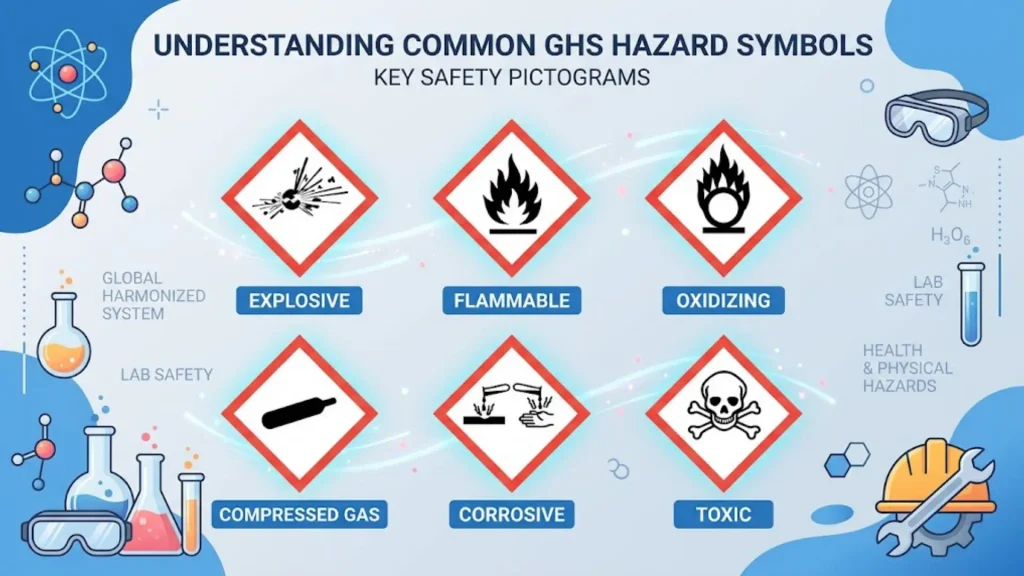
The GHS uses standardized pictograms to communicate chemical hazards across different countries and industries. Each pictogram represents one or more hazard classes rather than just one specific chemical.
On a typical GHS chemical label, the pictogram appears as a black symbol inside a white diamond with a red border. The label also includes written hazard information where required.
Flame Symbol: Flammable and Reactive Substances
Meaning: The substance may catch fire easily or present certain related chemical hazards.
The flame hazard symbol is one of the most recognizable chemical warnings. It may appear on products containing flammable liquids, gases, solids, or certain reactive substances.
Depending on the chemical classification, this pictogram can also identify self-reactive substances, pyrophoric materials, self-heating substances, and chemicals that release flammable gas when they contact water. Some organic peroxides also carry it.
Common examples include certain solvents, fuels, and industrial chemicals. The exact hazard depends on the product and its classification.
Safety precautions:
- Keep flammable products away from ignition sources when the label requires it.
- Follow instructions for ventilation and storage.
- Avoid smoking or using open flames near flammable materials.
- Keep containers closed when instructed.
- Use only the protective equipment specified by the product label and safety data sheet.
Don’t assume every product carrying a flame pictogram behaves identically. Read the hazard statements to learn the specific risk.
Skull and Crossbones: Severe Acute Toxicity
Meaning: The chemical may cause serious poisoning or death after certain forms of exposure.
The skull and crossbones is a warning about acute toxicity. Depending on the classification, exposure through swallowing, inhalation, or skin contact may cause severe harm.
Acute toxicity refers to harmful effects that can occur after a single exposure or multiple exposures over a short period. It differs from hazards that primarily concern long-term effects, such as carcinogenicity.
Certain highly toxic chemicals may carry this pictogram. However, you shouldn’t judge a substance’s toxicity from its appearance, smell, or the amount visible in a container.
Safety precautions:
- Never taste or directly smell an unknown chemical.
- Avoid contact with skin and eyes.
- Follow the required handling and protective-equipment instructions.
- Keep the substance away from children and unauthorized users.
- If exposure occurs, follow the label’s emergency instructions and seek appropriate medical or poison-control advice.
Treat this symbol seriously even if the product looks harmless.
Corrosion Symbol: Skin Burns, Eye Damage, and Metal Corrosion
Meaning: The substance may cause severe skin burns, serious eye damage, or corrosion of certain metals.
The corrosive hazard symbol shows liquid dripping from test tubes onto a hand and a metal surface. It communicates that a chemical can damage living tissue or attack certain materials.
Strong acids and bases are familiar examples of corrosive substances, although the precise classification depends on the chemical and its concentration. Some products can cause severe damage even when the exposure seems brief.
Safety precautions:
- Wear the protective equipment specified for the chemical.
- Avoid splashes and direct contact.
- Use appropriate containers and storage arrangements.
- Follow the product’s instructions for handling and dilution.
- If exposure occurs, follow the label and safety data sheet’s first-aid instructions immediately.
Never assume that rinsing with another chemical will neutralize a corrosive spill safely. An incorrect response can create heat, splashes, or additional hazards.
Exploding Bomb Symbol: Explosive and Unstable Substances
Meaning: Certain substances may explode or undergo dangerous reactions under specified conditions.
The exploding bomb pictogram identifies explosives and certain chemicals that can react violently. Depending on the classification, heat, impact, friction, or other conditions may contribute to an explosion.
This symbol is especially important in specialized industrial, laboratory, and chemical-handling environments. It doesn’t mean that every product displaying the symbol will explode under ordinary conditions. The actual risk depends on its classification and handling requirements.
Safety precautions:
- Never experiment with or tamper with suspicious explosive materials.
- Follow approved storage and handling procedures.
- Keep untrained people away from affected areas.
- Obey evacuation instructions if an explosion risk develops.
- Leave emergency response to trained personnel.
If you encounter an unknown object that may contain explosive material, don’t touch or move it.
Flame Over Circle Symbol: Oxidizing Substances
Meaning: The substance may cause or intensify a fire by supporting combustion.
The flame-over-circle pictogram identifies oxidizers. These substances can make fires burn more intensely, even if the oxidizer itself isn’t a conventional flammable fuel.
This distinction matters. A flammable liquid may act as fuel, while an oxidizer can help a fire develop or become harder to control. Mixing an oxidizer with incompatible materials can create serious hazards.
Safety precautions:
- Store oxidizers according to the applicable compatibility requirements.
- Keep them away from incompatible combustible materials.
- Follow temperature and contamination controls specified for the product.
- Never mix chemicals unless an approved procedure specifically permits it.
Read the label and safety data sheet before selecting a storage location.
Gas Cylinder Symbol: Gases Under Pressure
Meaning: The container holds gas under pressure.
The gas cylinder pictogram appears on labels for certain compressed, liquefied, refrigerated liquefied, or dissolved gases. A damaged or overheated cylinder may release gas dangerously or rupture under some conditions.
The hazard also depends on the gas itself. Some gases are flammable, some are toxic, and others can displace oxygen in the surrounding air. Refrigerated gases may cause cold burns or frostbite.
Safety precautions:
- Secure cylinders using approved equipment.
- Protect valves and fittings from damage.
- Store and use cylinders in suitable, ventilated areas when required.
- Keep them away from heat sources when instructed.
- Use regulators and connections designed for the specific gas.
Never try to repair a leaking cylinder valve yourself. Follow workplace emergency procedures and contact trained personnel.
Exclamation Mark Symbol: Irritation and Other Harmful Effects
Meaning: The chemical may cause certain harmful effects, including irritation or other specified health hazards.
The exclamation mark pictogram covers several hazard categories. Depending on the classification, it may indicate skin or eye irritation, skin sensitization, harmful acute toxicity, respiratory irritation, or drowsiness and dizziness.
It doesn’t mean that the chemical is safe or that every possible effect is mild. The symbol communicates specific categories of risk rather than providing a complete assessment of the product.
Safety precautions:
- Avoid direct contact with the product.
- Use gloves, eye protection, or ventilation when required.
- Follow instructions about washing after handling.
- Avoid breathing vapors, dust, or spray when the label warns against exposure.
- Seek medical advice if the label’s instructions or your symptoms indicate that you need it.
Always read the accompanying hazard statement to understand which effect applies.
Health Hazard Symbol: Serious or Long-Term Health Risks
Meaning: The substance may cause certain serious health effects.
The health hazard pictogram shows a human silhouette with a star-shaped mark on the chest. It identifies selected health hazards that can include carcinogenicity, respiratory sensitization, reproductive toxicity, germ-cell mutagenicity, specific target-organ toxicity, and aspiration hazards.
Some of these risks may develop after repeated or prolonged exposure. Others depend on a particular exposure event. The symbol alone doesn’t tell you the likelihood of harm or the conditions under which it may occur.
Safety precautions:
- Read the hazard and precautionary statements carefully.
- Follow exposure-control procedures.
- Use required protective equipment.
- Avoid breathing or contacting the substance through routes identified on the label.
- Obtain specialized training before handling chemicals with serious health hazards.
For workplace use, consult the relevant safety data sheet and follow the controls established for the specific chemical.
Environmental Hazard Symbol: Harmful Effects on Aquatic Life
Meaning: The substance may harm aquatic organisms or the aquatic environment.
The environmental pictogram depicts a dead tree and fish. It is associated with certain hazards to aquatic life, including some substances that can cause lasting environmental damage.
This symbol is part of the broader GHS framework. However, OSHA does not require it under its Hazard Communication Standard in the same way it requires the other eight workplace chemical pictograms. Other jurisdictions may have different requirements.
Safety precautions:
- Prevent spills from entering drains or waterways.
- Follow the product’s disposal instructions.
- Use the specified spill-control procedures.
- Keep contaminated materials contained until they can be handled properly.
- Follow local environmental rules for disposal.
Even a small spill can matter when a substance is highly toxic to aquatic organisms.
Other Important Hazard Symbols You Should Recognize
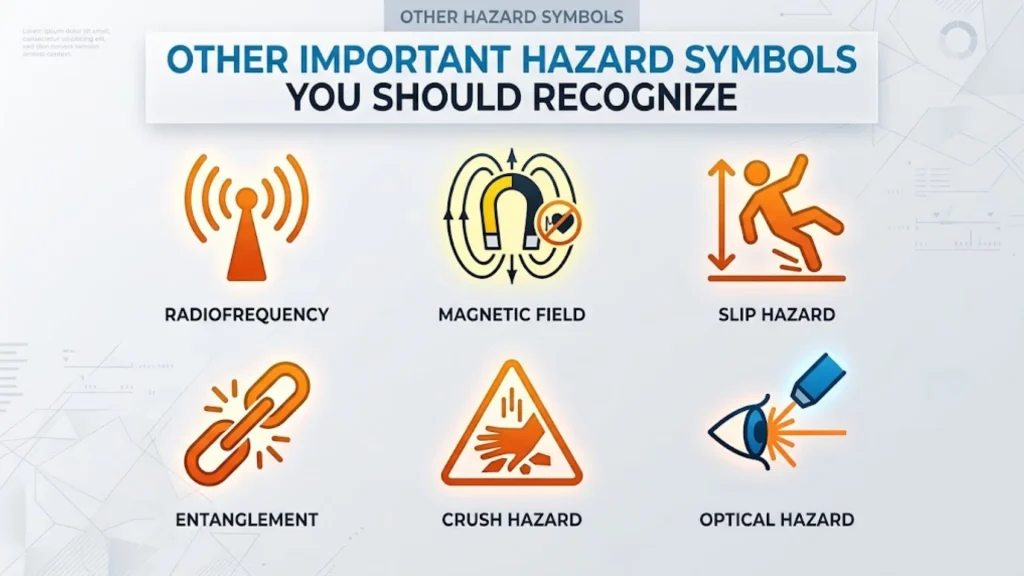
Chemical pictograms aren’t the only symbols that communicate danger. Several other safety signs warn about radiation, biological materials, electricity, and dangerous goods.
Radiation Symbol: Ionizing Radiation
Meaning: A designated area, material, or piece of equipment presents a radiation hazard.
The familiar radiation trefoil consists of three curved shapes around a central point. In the United States, the radiation warning symbol appears in magenta or black on a yellow background under specified conditions.
You may see it in medical facilities, research laboratories, industrial testing areas, and locations that contain certain radioactive materials.
Ionizing radiation carries enough energy to affect atoms and molecules. The level of risk depends on factors such as the type of radiation, exposure dose, and duration.
What should you do?
- Respect restricted-area signs and access controls.
- Don’t enter a marked radiation area without authorization.
- Never handle unidentified radioactive material.
- Follow instructions from trained radiation-safety personnel.
Biohazard Symbol: Biological Hazards
Meaning: Biological materials or areas may contain infectious agents or other biological hazards covered by the applicable safety rules.
The biohazard symbol is commonly found on regulated medical waste containers, certain specimen containers, and designated laboratory equipment or work areas.
In workplaces covered by OSHA’s relevant rules, biohazard labels identify specified biological hazards, including certain infectious materials. The symbol helps workers recognize the need for appropriate precautions.
Important precautions include:
- Never open an unfamiliar biohazard container.
- Follow required procedures for gloves and other protective equipment.
- Don’t handle potentially infectious waste without appropriate training.
- Follow approved cleanup and disposal procedures.
The symbol doesn’t identify a particular pathogen. You need the surrounding label and workplace procedures to understand the specific risk.
Electrical Hazard Symbol: Electric Shock
Meaning: The equipment or area may expose people to electrical danger.
A lightning bolt inside a warning triangle often signals electrical hazards. You may find this sign on electrical panels, substations, industrial machinery, and restricted utility areas.
Electrical hazards can cause burns, severe injury, or death. You don’t need to touch an exposed wire directly to be at risk in every situation; high-voltage equipment may create additional dangers.
Follow these precautions:
- Stay clear of exposed conductors and damaged equipment.
- Don’t open electrical panels unless you’re authorized and qualified.
- Keep water away from electrical equipment when relevant.
- Report damaged wiring or missing protective covers.
- Follow lockout/tagout and other required procedures during maintenance.
Treat warning signs as instructions to stop and assess the situation, not as decorations.
General Warning Symbol
A general warning sign often uses a black exclamation mark inside a yellow triangle. It tells you to pay attention to a potential danger, but the symbol alone may not explain the exact hazard.
Look for additional text such as “Caution,” “Warning,” “Moving Machinery,” or “Slippery Floor.” That wording provides the context you need.
Don’t confuse this sign with the GHS exclamation mark, which appears inside a red diamond on certain chemical labels and has specific hazard classifications.
Transport Hazard Symbols
Dangerous goods use specialized labels and placards during transportation. These markings help shipping workers, emergency responders, and carriers identify the broad class of material involved.
Common transport hazard classes include:
- Class 1: Explosives.
- Class 2: Gases.
- Class 3: Flammable liquids.
- Class 4: Certain flammable solids and substances that can react dangerously with water.
- Class 5: Oxidizing substances and organic peroxides.
- Class 6: Toxic and infectious substances.
- Class 7: Radioactive materials.
- Class 8: Corrosive substances.
- Class 9: Miscellaneous dangerous goods.
The specific label depends on the material and applicable transport rules. The US Department of Transportation’s provides additional information.
What Do Hazard Symbol Colors and Shapes Mean?
Color and shape can help you recognize a hazard sign quickly. However, you should never rely on either one alone.
Red Diamond Chemical Labels
GHS chemical pictograms generally use a black symbol on a white background surrounded by a red diamond. The pictogram represents a defined hazard category rather than a universal warning that the product is simply “dangerous.”
For example, the flame pictogram identifies certain fire and reactivity hazards, while the health hazard silhouette represents selected serious health effects.
Yellow Warning Triangles
Yellow triangles commonly communicate a warning in workplace and equipment signage. A lightning bolt may identify an electrical danger, while other pictograms can warn about machinery, obstacles, or environmental conditions.
The exact meaning depends on the sign and the applicable standard.
Other Colors and Shapes
Colors can carry different meanings across sign systems and jurisdictions. Red may appear in fire-related signs or dangerous-goods labels, while other colors help distinguish particular classes of transport hazards.
The safest approach is simple: read the symbol, the wording, and any accompanying instructions together.
How to Read a Chemical Hazard Label
A pictogram is only one part of a chemical label. The remaining information explains what the hazard means and how to reduce the risk.
Under OSHA’s Hazard Communication Standard, applicable shipped chemical labels include specified elements such as the product identifier, signal word, hazard statements, precautionary statements, pictograms, and supplier information.
Product Identifier
The product identifier tells you which chemical or mixture the label describes. It should correspond to the product information provided in the relevant safety data sheet.
Always check the identifier before using a chemical. Similar-looking containers may hold different substances.
Signal Word: Danger or Warning
A signal word communicates the relative severity of the classified hazard.
- Danger is used for more severe hazard categories.
- Warning is used for less severe categories where the standard specifies it.
A label uses the applicable signal word under the relevant rules. The absence of the word “Danger” doesn’t prove that a product is harmless.
Hazard Statements
Hazard statements describe the nature of the risk. Depending on the chemical, a statement might warn that the product is flammable, causes serious eye damage, or is toxic if swallowed.
These statements help you understand what the pictogram alone cannot tell you.
Precautionary Statements
Precautionary statements explain measures that help prevent or reduce harm. They may cover prevention, response, storage, or disposal.
For example, a label may instruct you to wear eye protection, avoid breathing vapors, or seek medical attention after a specified exposure.
Supplier Information
Shipped chemical labels also identify the responsible manufacturer, importer, or other party as required. This information can help you find additional product guidance.
Safety Data Sheets
A Safety Data Sheet (SDS) provides more detailed information about a hazardous chemical. OSHA’s required format contains 16 sections covering topics such as hazards, first aid, handling, exposure controls, physical properties, and disposal considerations.
Workers should know how to access the SDS for chemicals they use. Employers must also provide appropriate hazard information and training for covered workplace chemicals.
Where Are Hazard Symbols Commonly Found?
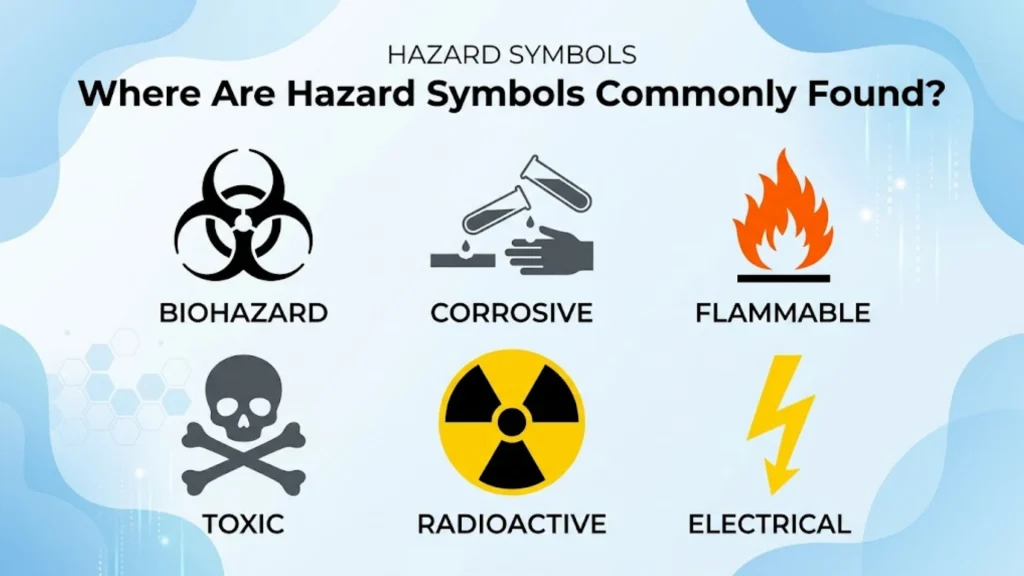
Hazard symbols appear wherever people need to identify and manage potential risks.
Household Cleaning Products
Some household cleaners, drain products, solvents, and concentrated chemicals carry hazard pictograms. Read the label before use, follow ventilation instructions, and never mix products unless the instructions explicitly permit it.
Laboratories and Schools
Laboratories use chemical labels, biohazard warnings, and radiation signs where applicable. Staff and students should follow local procedures and never handle unfamiliar substances without authorization.
Factories and Construction Sites
Industrial workplaces may display chemical pictograms, electrical warnings, machinery signs, and transport labels. Workers should understand the symbols relevant to their jobs before starting a task.
Hospitals and Healthcare Facilities
Healthcare settings may use biohazard labels, chemical hazard pictograms, and radiation warnings. Each sign indicates a different type of risk and may require different protective measures.
Warehouses and Transportation
Storage areas and shipments may display dangerous-goods labels or placards. These markings help workers identify hazards during loading, storage, and transport.
What Should You Do When You See a Hazard Symbol?
Recognizing a symbol is only the first step. Your response should depend on the hazard, the setting, and the instructions provided.
Use this checklist:
- Stop and identify the symbol. Don’t touch, open, or move an unfamiliar substance just to inspect it.
- Read the full warning. Check the wording, signal word, and precautions.
- Consult the SDS when appropriate. This is especially important when handling workplace chemicals.
- Use the required protective equipment. Follow the procedures established for the specific hazard.
- Avoid unsafe mixing or handling. Chemicals can react dangerously when combined.
- Report spills, leaks, or damaged containers. Follow the site’s emergency procedures.
- Get qualified help. If you don’t understand the risk, ask trained safety personnel rather than guessing.
If exposure occurs, follow the product’s emergency instructions and contact emergency services or poison control when appropriate. For an immediate threat, move away from the danger if you can do so safely and alert others according to the emergency plan.
Hazard Symbols vs. Warning Signs vs. Safety Labels
These terms are often used interchangeably in everyday conversation. In safety practice, however, they serve different roles.
| Feature | Hazard symbols | Warning signs | Safety labels |
| Main purpose | Identify a type of hazard | Alert people to a dangerous condition | Communicate product-specific risks and precautions |
| Typical format | Standardized pictogram | Sign with a symbol, text, or both | Pictograms, wording, and product details |
| Example | GHS corrosion pictogram | High-voltage warning sign | A chemical container label |
| Best next step | Identify the hazard category | Follow the posted warning | Read all instructions and precautions |
A single product or work area may use more than one of these. For example, a chemical container might carry GHS pictograms while the storage room displays separate warning signs.
Common Mistakes When Interpreting Hazard Symbols
Even familiar symbols can be misunderstood. Avoid these common errors.
Assuming Every System Uses the Same Symbols
GHS chemical pictograms, radiation warnings, electrical signs, and transport labels don’t form one universal set. Learn the system relevant to the product or environment.
Treating the Exclamation Mark as Harmless
The GHS exclamation mark can identify several harmful effects. Always read the accompanying hazard statement to understand which classification applies.
Confusing Flammable Materials With Oxidizers
Flammable materials can ignite, while oxidizers can intensify combustion. Some chemicals present more than one type of hazard, so their labels may contain multiple pictograms.
Ignoring Written Instructions
A symbol offers a quick visual warning, but it doesn’t provide every detail about safe use, exposure, storage, or disposal.
Assuming No Symbol Means No Risk
Not every hazard requires a pictogram in every context. A product may have other safety requirements, and some risks may not be communicated through the symbols you expect.
Using the Wrong Emergency Response
A response that works for one chemical may be dangerous for another. Don’t improvise spill cleanup, neutralization, or first aid. Follow the product instructions and established emergency procedures.
Frequently Asked Questions About Hazard Symbols
What are the most common hazard symbols?
Common chemical hazard pictograms include the flame, skull and crossbones, corrosion, exploding bomb, flame over circle, gas cylinder, exclamation mark, and health hazard silhouette. The environmental hazard pictogram is also used in the broader GHS system.
Other widely recognized safety symbols include the radiation trefoil, biohazard symbol, and electrical warning sign.
How many GHS hazard symbols are there?
The GHS uses nine hazard pictograms. OSHA’s Hazard Communication Standard requires eight of them where applicable and doesn’t mandate the environmental hazard pictogram.
The exact labeling requirements depend on the applicable jurisdiction and hazard classification.
What does the skull and crossbones symbol mean?
It warns of severe acute toxicity. Depending on the classification, exposure through swallowing, inhalation, or skin contact can cause serious harm or death.
What does the flame symbol mean?
The flame pictogram identifies flammable substances and certain other reactive chemicals. Read the label to determine the specific hazard and required precautions.
What does the corrosive symbol mean?
The corrosion pictogram indicates that a substance may cause severe skin burns, serious eye damage, or corrosion of certain metals.
What does the radiation symbol mean?
The radiation trefoil warns of ionizing radiation hazards in designated locations or around certain radioactive materials. Follow access restrictions and the instructions provided by radiation-safety personnel.
What is the difference between a hazard symbol and a warning sign?
A hazard symbol identifies a particular kind of risk, while a warning sign alerts people to a hazardous condition or required action. A chemical label may include a hazard symbol alongside several written warnings.
Conclusion: Recognize Hazard Symbols and Stay Safe
Hazard symbols make important safety information easier to recognize. The flame warns about certain fire and reactivity hazards, the skull and crossbones identifies severe acute toxicity, and the corrosion pictogram signals risks to skin, eyes, or metals. Other symbols warn about radiation, biological hazards, electricity, and dangerous goods.
Still, recognizing a symbol isn’t enough on its own. Read the complete label, follow the relevant safety instructions, and consult the safety data sheet when handling workplace chemicals. If you encounter an unfamiliar substance or a potentially dangerous situation, avoid contact and seek qualified assistance.

Hi, I’m Sienna Brooks, and I believe that the right words can inspire, comfort, and empower people at every stage of life. For as long as I can remember, I’ve been drawn to meaningful quotes and the stories behind them. I love curating collections of inspirational, motivational, and heartfelt quotes that resonate with readers around the world.
Through my writing, I strive to help others find encouragement, whether they’re celebrating life’s happiest moments or navigating its biggest challenges. I believe that wisdom is timeless, and I’m passionate about sharing words that leave a lasting impact.
I am the author of Reflections in Words and The Journey of Inspiration, two books dedicated to exploring the beauty and power of timeless quotes.
 Asher Monroe
 Rowan Sinclair Rowan Sinclair