Lorcana symbols can make a card feel like a page taken from an enchanted storybook, but every icon also carries practical information.
A tiny mark can reveal whether a card enters your inkwell, how much damage a character deals, or how rare the card may be.
These symbols connect Disney storytelling with the clear visual language used in modern trading card games.
Once you understand them, every Lorcana card becomes easier to read, play, collect, and appreciate.
(Quick Answer) lorcana symbols
Lorcana symbols are visual icons used in the Disney Lorcana Trading Card Game to communicate card costs, ink colors, combat statistics, lore value, rarity, card type, and gameplay actions. They help players understand cards quickly while reinforcing the game’s magical themes of ink, illumination, storytelling, and adventure.
Quick Facts About Lorcana Symbols
| Aspect | Information |
| Origin | Created for the Disney Lorcana Trading Card Game by Ravensburger and Disney |
| Historical Significance | Part of the visual language developed for Lorcana’s 2023 launch and expanded through later sets |
| Main Meaning | Communicates gameplay information through icons instead of lengthy text |
| Spiritual Meaning | Not an established spiritual system, although ink, light, imagination, and transformation can inspire symbolic interpretations |
| Cultural Importance | Combines Disney storytelling with modern trading card game design |
| Modern Usage | Card reading, deck building, collecting, tournament play, rarity identification, accessories, and fan content |
What Are Lorcana Symbols?
Lorcana symbols are the icons, colors, shapes, and graphic marks printed on Disney Lorcana cards and related game materials. They allow players to identify important information at a glance.
The symbols may tell you:
- How much ink a card costs
- Whether a card can be placed in the inkwell
- Which magical ink or inks it belongs to
- How strong or durable a character is
- How much lore a character gains while questing
- How rare a card is
- Whether an ability requires a character to exert
- What type of card you are looking at
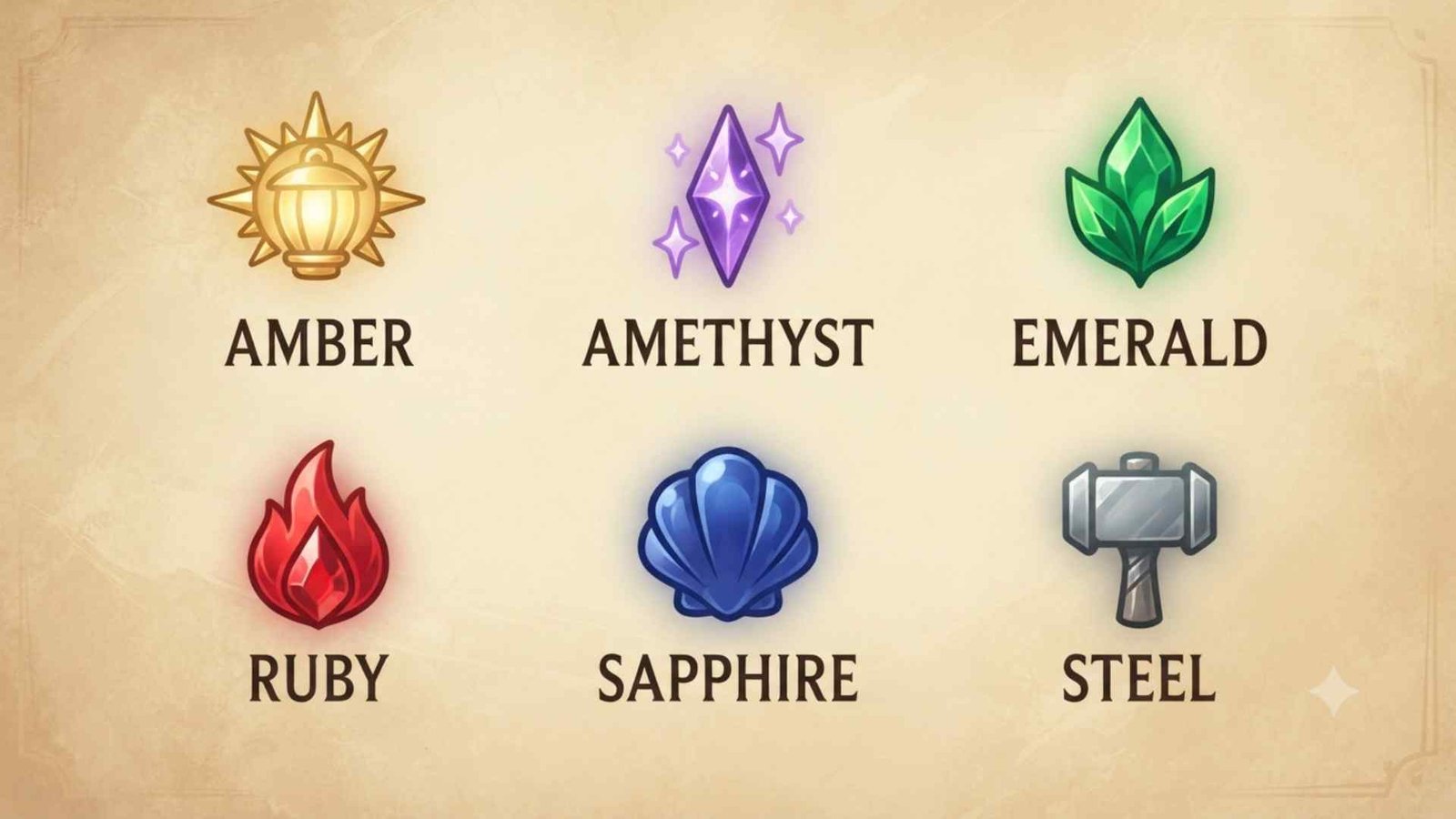
Disney Lorcana was created as a trading card game in which players act as Illumineers. They use magical ink to summon glimmers, which are story-born versions of Disney characters. The official game presents six main inks: Amber, Amethyst, Emerald, Ruby, Sapphire, and Steel. Ravensburger explains that each ink gives glimmers different qualities, but no ink is naturally good or evil.
This matters because Lorcana’s visual system does more than organize rules. It supports the game’s fictional world. Ink is both a resource used during play and a symbol of creative power.
The Most Important Lorcana Card Symbols
Ink Cost Symbol
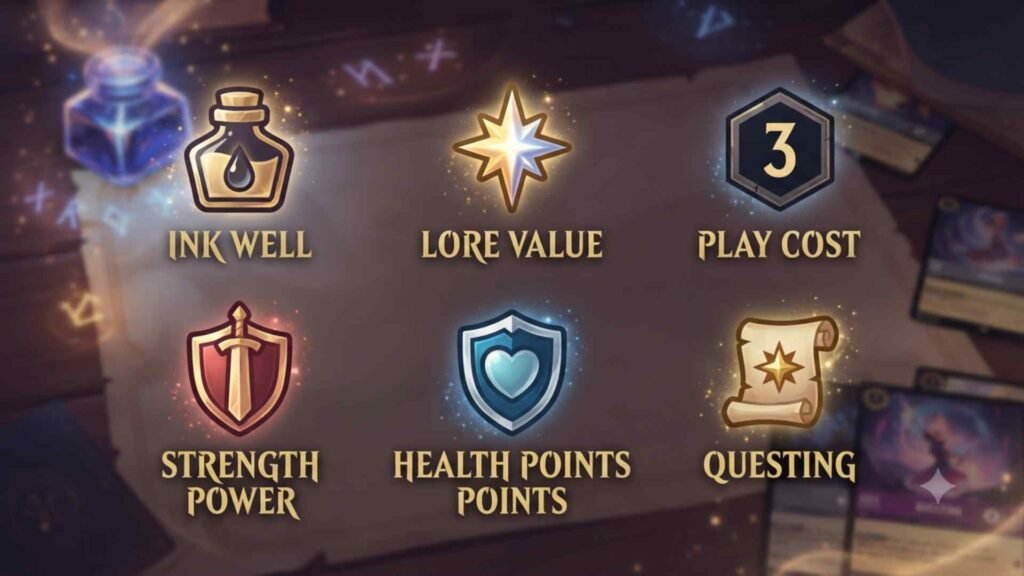
The number in the upper-left corner of a card shows its ink cost.
This number tells you how much available ink you must exert to play the card. A card with a cost of four normally requires four ready cards in your inkwell to be exerted.
The cost symbol represents more than price. It expresses the amount of magical energy needed to bring a glimmer, item, location, or action into the story.
Inkwell Symbol
Some cards display a decorative inkwell icon around or beneath their ink-cost area. This mark means the card can usually be placed face down into your inkwell during your turn.
A card without this icon is often called uninkable. You may play it normally, but you cannot usually turn it into ink.
This distinction creates one of Lorcana’s most important deck-building decisions. Powerful cards are tempting, but including too many uninkable cards may leave you without enough resources.
Exert Symbol
The exert symbol resembles a curved or rotating arrow. It tells you to turn a card sideways to show that it has been used.
Characters exert when they:
- Quest
- Challenge another character
- Use certain abilities
- Pay costs created by card effects
Exerting represents effort, attention, or commitment. A ready character still has the potential to act. An exerted character has already spent that energy.
Strength Symbol
A character’s Strength appears beside a stylized combat icon.
Strength determines how much damage that character deals during a challenge. A character with 4 Strength deals four damage when challenging or being challenged, unless another effect changes the amount.
Psychologically, the Strength icon represents outward force. It shows what the character can project into conflict.
Willpower Symbol
A character’s Willpower appears beside a shield-like icon.
Willpower measures how much damage the character can hold before being banished. If the damage on a character equals or exceeds its Willpower, the character is banished during the appropriate game-state check.
The word “Willpower” was carefully chosen. It fits Disney stories in which courage, endurance, loyalty, and emotional strength often matter as much as physical power.
Lore Symbol
The lore value is shown using a small diamond-shaped or star-like icon.
When a character quests, its controller gains the amount of lore shown beside this symbol. In a standard game, the first player to reach 20 lore wins.
Lore is one of the most meaningful Lorcana concepts. Instead of defeating an opponent through life-point damage, players gather pieces of story, memory, and discovery.
Move Cost Symbol
Location cards have a move cost. This number shows how much ink must be paid to move a character to that location.
The symbol reinforces the idea that locations are active parts of the game world. A character does not simply stand beside a place. The character enters it, occupies it, and may gain benefits from being there.
Lorcana Ink Symbols and Their Meanings
The six magical inks form the heart of Lorcana’s identity. Each ink has its own color, visual identity, mechanical tendencies, and emotional character.
Amber
Visual Description
Amber uses a warm golden-yellow color associated with sunlight, community, and protection.
Gameplay Meaning
Amber often supports cooperation, healing, cost reduction, character-focused strategies, and broad boards filled with helpful glimmers.
Symbolic Meaning
Amber represents belonging, hope, generosity, and shared purpose.
It may remind players of a welcoming lantern or a treasured object preserved through time. In psychological terms, Amber reflects the human need for connection and safety.
Where It Appears
Amber appears on cards featuring supportive leaders, families, musicians, protectors, and characters who work well with others.
Amethyst
Visual Description
Amethyst is represented by purple, a color long connected with mystery, magic, imagination, and royalty.
Gameplay Meaning
Amethyst commonly uses card draw, magical abilities, character movement, returning cards to hand, and unusual combinations.
Symbolic Meaning
Amethyst represents intuition, transformation, knowledge, and the unseen.
Although Lorcana’s Amethyst ink is not a spiritual doctrine, its color echoes older cultural associations. Purple dyes were historically expensive in Mediterranean societies, which helped connect the color with status, sacred authority, and mystery.
Where It Appears
Amethyst often appears on sorcerers, magical beings, dreamers, thinkers, and characters whose abilities reshape normal expectations.
Emerald
Visual Description
Emerald uses a vivid green color associated with nature, adaptability, growth, and cleverness.
Gameplay Meaning
Emerald frequently rewards flexible play, evasion, disruption, hand interaction, and difficult choices for opponents.
Symbolic Meaning
Emerald represents change, wit, survival, independence, and the ability to escape limitations.
Its shadow side can suggest manipulation or unpredictability. This makes Emerald suitable for characters who survive through charm, planning, or misdirection.
Where It Appears
Emerald appears on tricksters, explorers, charming rogues, agile characters, and figures who prefer strategy over direct confrontation.
Ruby
Visual Description
Ruby uses a powerful red color linked with passion, danger, action, courage, and desire.
Gameplay Meaning
Ruby is often associated with direct challenges, removing opposing characters, gaining momentum, and taking bold risks.
Symbolic Meaning
Ruby represents will, ambition, bravery, anger, and emotional intensity.
Red is one of the fastest colors for the human eye to notice. This makes Ruby feel immediate and energetic before the player even reads the card.
Where It Appears
Ruby frequently appears on warriors, adventurers, daring heroes, powerful villains, and characters driven by strong emotion.
Sapphire
Visual Description
Sapphire uses blue, a color associated with water, intelligence, calmness, structure, and discovery.
Gameplay Meaning
Sapphire often focuses on building the inkwell, using items, planning ahead, and gaining long-term advantages.
Symbolic Meaning
Sapphire represents knowledge, invention, patience, truth, and disciplined growth.
It reflects the archetype of the scholar or builder. Sapphire does not always seek immediate victory. It creates systems that become stronger over time.
Where It Appears
Sapphire appears on inventors, rulers, researchers, navigators, strategists, and characters connected with learning or technology.
Steel
Visual Description
Steel uses gray and metallic tones associated with armor, tools, machinery, and resilience.
Gameplay Meaning
Steel commonly emphasizes direct damage, strong defenses, durable characters, songs, and control through force.
Symbolic Meaning
Steel represents endurance, responsibility, protection, and the strength to withstand pressure.
Its positive side is dependable courage. Its darker side can be emotional hardness or excessive control.
Where It Appears
Steel often appears on soldiers, guardians, powerful creatures, leaders, and characters prepared to confront danger directly.
Dual Ink Symbols
Some Lorcana cards display two ink colors instead of one. These are known as dual-ink cards.
Dual-ink cards combine qualities normally associated with both inks. Ravensburger notes that these cards can create combinations of abilities that would otherwise be impossible, although a deck must match both ink types to use them.
For example, an Amber and Sapphire card may combine community support with resource growth. A Ruby and Steel card may join aggressive action with durability.
Symbolically, dual ink represents a mixed identity. A character is not limited to one emotional or strategic role. This reflects Disney storytelling, where a figure can be brave and thoughtful, gentle and powerful, or clever and loyal at the same time.
Lorcana Rarity Symbols
A rarity symbol normally appears near the bottom center of a Lorcana card. It identifies the card’s printed rarity category, not necessarily its current market value or gameplay strength.
Common
Common cards are the most frequently found cards in standard booster products.
Their symbol has a simple, clear design. Common cards often establish the basic mechanics and themes of a set.
Uncommon
Uncommon cards appear less often than commons and may offer more specialized effects.
They often help connect basic deck ideas with more advanced strategies.
Rare
Rare cards are harder to pull and are marked with a distinct rarity symbol.
They may feature stronger abilities, popular characters, or more focused deck-building possibilities.
Super Rare
Super Rare cards are less common than Rare cards.
They frequently have memorable artwork, powerful effects, or important roles within specific strategies.
Legendary
Legendary cards traditionally rank above Super Rare in the standard rarity structure.
The term suggests great importance, exceptional power, or a major character moment. However, a Legendary card is not automatically better than every lower-rarity card.
Enchanted
Enchanted cards are special alternate-art collectibles with premium visual treatments. Ravensburger describes them as extremely rare cards featuring alternate artwork and distinctive presentation.
Their rarity symbol separates them from standard cards in the set.
Epic
Epic rarity was introduced as an additional premium category beginning with the Fabled era. Epic cards feature frameless artwork, rainbow foil effects, holofoil symbols, and tinted text. They are rarer than Legendary cards but more common than Enchanted cards.
Iconic
Iconic cards sit at an exceptionally high collectible level. Ravensburger states that only two Iconic cards appear in each applicable set and that they are significantly rarer than Enchanted cards. Their special features include full-card art, a lore-star foil pattern, and three-dimensional hot stamping.
Quick Lorcana Rarity Comparison
| Rarity | General Availability | Main Purpose |
| Common | Most available | Basic mechanics and deck foundations |
| Uncommon | Moderately available | Supporting strategies and combinations |
| Rare | Less available | Specialized or notable cards |
| Super Rare | Scarcer | Strong effects and desirable characters |
| Legendary | Very scarce | Major characters and premium effects |
| Epic | Premium rarity | Frameless art and enhanced foil treatment |
| Enchanted | Extremely scarce | Alternate artwork and collector appeal |
| Iconic | Exceptionally scarce | Elite full-art collectible treatment |
Rarity does not always equal monetary value. Character popularity, tournament demand, condition, artwork, print availability, and collector interest can all influence price.
Lorcana Card-Type Symbols and Labels
Character Cards
Character cards represent Disney glimmers summoned into play.
They usually include:
- Strength
- Willpower
- Lore value
- Character classifications
- Abilities
- Ink cost
Characters can quest, challenge, and use abilities after they are ready and their ink has dried.
Action Cards
Action cards create an effect and then go to the discard pile.
They often represent a specific event, decision, spell, or story moment.
Song Cards
Songs are a special type of action. Some characters can exert to sing a song instead of paying its full ink cost, provided they meet the card’s requirements.
The musical identity of songs reflects Disney’s storytelling tradition. Music often marks emotional change, revelation, determination, or connection.
Item Cards
Items remain in play and provide continuing or repeatable benefits.
They may represent magical objects, inventions, tools, treasures, or familiar objects from Disney films.
Location Cards
Locations represent places within the Lorcana world. They have Willpower, lore values, and move costs rather than normal character Strength.
A location turns setting into strategy. The place itself becomes part of the story rather than a passive background.
Classification Symbols and Text
Many Lorcana characters include classifications such as:
- Hero
- Villain
- Princess
- Prince
- Sorcerer
- Captain
- Ally
- Dreamborn
- Floodborn
- Storyborn
These classifications are usually written as text rather than represented by separate icons. Card effects may refer to them, making classifications important for deck synergy.
Storyborn
Storyborn glimmers are generally close to the familiar versions of characters known from their original stories.
Dreamborn
Dreamborn glimmers present imaginative variations shaped by creative possibilities.
Floodborn
Floodborn glimmers often show dramatically transformed versions of characters. They may appear in new roles, clothing, or circumstances and are closely associated with the Shift mechanic.
These categories symbolize three ways people remember stories: as they were told, as they might be imagined, and as they can be transformed.
Deep Symbolic Meaning of Lorcana Symbols
Spiritual Level
Lorcana symbols do not come from an ancient religion, sacred tradition, or established spiritual system. Claims that they possess universal mystical powers would be misleading.
However, players may still find personal symbolism in them.
Ink can represent creative potential. Light can suggest awareness. Glimmers can symbolize memories, imagined selves, or different versions of one identity. Lore can represent the wisdom gathered through experience.
Viewed this way, an Illumineer’s journey resembles the creative process. An empty page becomes filled with characters, choices, conflicts, and discoveries.
Psychological Level
Lorcana’s symbols work because the human mind processes visual information quickly.
A red Ruby card feels active before its rules text is read. A shield-like Willpower icon suggests protection. A curved exert arrow suggests motion and change.
This follows basic principles of visual cognition:
- Color creates emotional expectation
- Repeated shapes improve recognition
- Icons reduce reading effort
- Placement builds habit
- Rarity marks create anticipation and reward
The six inks can also resemble archetypal personality patterns. Amber suggests the caregiver. Amethyst resembles the magician. Emerald reflects the trickster. Ruby evokes the warrior. Sapphire represents the scholar. Steel resembles the guardian.
These are interpretive comparisons, not official definitions, but they help explain why players may feel naturally drawn to one ink.
Cultural Level
Lorcana symbols belong to modern fan and gaming culture.
They connect several communities:
- Disney fans
- Trading card game players
- Collectors
- Artists
- Competitive players
- Families learning games together
A simple ink icon can become a sign of identity. A player may describe themselves as a “Sapphire player” because they enjoy planning and resource building. Another may prefer Ruby because bold action feels exciting.
In this way, game symbols become social language.
Lorcana Symbols Meaning
Disney Lorcana symbols are visual marks that help players understand different aspects of the game and its cards. Some symbols identify card rarity, while others are part of the game’s visual identity or indicate specific card information. The exact meaning depends on where the symbol appears on the card.
Lorcana Symbols Rarity
Lorcana uses different symbols to indicate the rarity of cards. These rarity marks help collectors and players quickly identify how frequently a card appears in booster packs. Common, Uncommon, Rare, Super Rare, Legendary, Enchanted, and Fabled are among the rarity levels associated with Disney Lorcana cards.
Lorcana Iconic Cards
Iconic cards are memorable Disney Lorcana cards that stand out because of their characters, artwork, gameplay value, or popularity among collectors. Some cards become especially recognizable because they feature major Disney characters or have unique versions with distinctive artwork and rarity.
Lorcana Card Rarity List
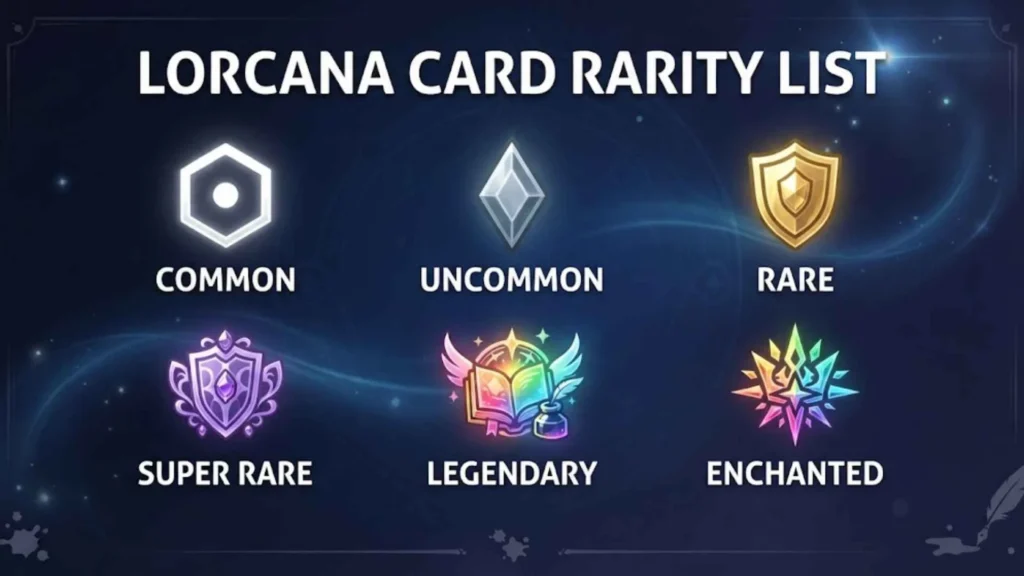
A Lorcana card rarity list generally includes the game’s different rarity categories. Depending on the set and its release, these can include Common, Uncommon, Rare, Super Rare, Legendary, Enchanted, and Fabled. Rarity affects how frequently cards are found and can also influence their collector interest.
Lorcana Rarity Pull Rates
Lorcana rarity pull rates refer to how often cards from different rarity categories appear in booster packs. Common and Uncommon cards generally appear more frequently, while higher-rarity cards are less common. Pull rates can vary by product, set, and release, so collectors should check the information for the specific Lorcana set they are opening.
Lorcana Rarity Epic
Epic is not generally one of the standard rarity categories used across Disney Lorcana’s official card rarity system. Lorcana has used established rarity levels such as Common, Uncommon, Rare, Super Rare, Legendary, Enchanted, and Fabled. If you see the term “Epic” used with Lorcana cards, it may refer to a fan description, a special context, or information from a particular source rather than the standard rarity symbol.
Disney Lorcana Symbols
Disney Lorcana uses several types of symbols throughout its cards and branding. These can represent rarity, gameplay information, card classifications, or the Lorcana visual identity. Understanding where a symbol appears is important because the same general idea of a “Lorcana symbol” can refer to different marks.
Disney Lorcana Symbols Meaning
The meaning of a Disney Lorcana symbol depends on its location and design. Symbols near the bottom of a card can provide information about the card’s set, collector number, language, or other details, while rarity symbols help identify how difficult a card is to find. The Lorcana logo itself is primarily part of the game’s branding.
Logo Lorcana Symbols
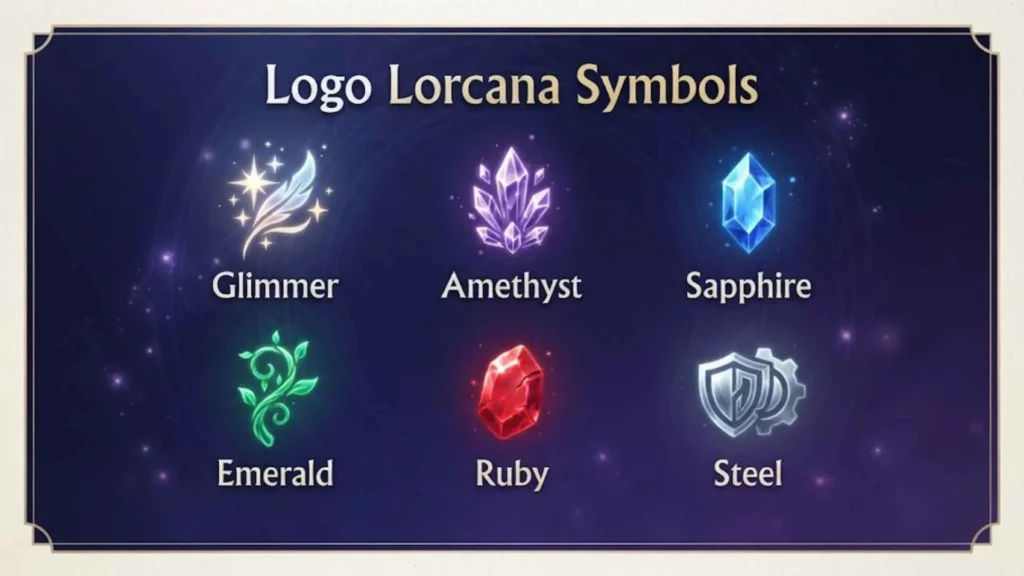
The Disney Lorcana logo is one of the most recognizable visual elements associated with the trading card game. Its lettering and decorative design are used to establish the game’s fantasy-inspired Disney identity. The logo should be distinguished from the smaller symbols printed on individual cards, which can have specific gameplay or collecting purposes.
Lorcana Symbols on Bottom of Card
The symbols and numbers along the bottom of a Lorcana card can provide useful collecting information. Depending on the card and set, this area may include the card’s collector number, set information, copyright details, language information, or other identifying marks. These details can help collectors organize cards and distinguish cards from different releases.
Lorcana Symbols List
A Lorcana symbols list can include rarity marks, ink symbols, card-information icons, and branding elements. Rarity symbols are particularly useful for collectors because they help identify the relative rarity of a card. Other symbols can relate to the game’s mechanics or provide information about the card’s classification.
Rarity Lorcana Symbols
Rarity Lorcana symbols are small visual indicators used to identify a card’s rarity. Instead of relying only on written rarity names, collectors can often recognize the category from the symbol associated with the card. These symbols are especially helpful when sorting large collections or checking cards quickly.
Lorcana Symbols on Cards
Symbols appear in different places on Disney Lorcana cards and may serve different purposes. Some communicate gameplay information, while others identify rarity or provide collector details. When examining a card, consider the symbol’s position as well as its shape before deciding what it represents.
Disney Lorcana Symbols Explained
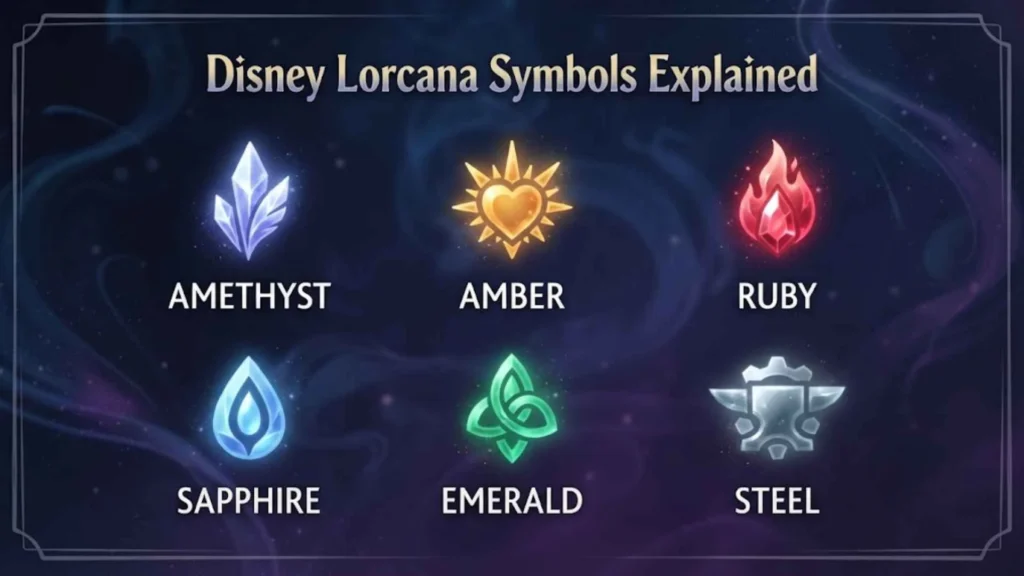
Disney Lorcana symbols become easier to understand when they are grouped by purpose. Rarity symbols tell collectors how scarce a card is within the game’s rarity system. Other icons and markings provide information about the card itself, while the Lorcana logo and decorative elements contribute to the game’s visual branding.
Fabled Lorcana Symbols
Fabled is a rarity category associated with certain Disney Lorcana releases. Fabled cards use a distinctive rarity symbol that allows collectors to identify them. Because Fabled cards are positioned at the higher end of the rarity system, their symbols can be particularly useful when sorting and checking a collection.
Lorcana Symbols Rare
The Rare rarity in Disney Lorcana has its own identifying symbol. Rare cards are generally less frequently found than Common and Uncommon cards, making the rarity mark useful when organizing cards. However, rarity alone does not determine a card’s gameplay strength or collector value.
New Lorcana Symbols
New Lorcana symbols may appear as the game introduces additional sets, special products, or new card treatments. Collectors should check the official information associated with each release because new symbols or visual variations may have a specific purpose. Comparing the symbol with the set’s documentation can help prevent confusion.
Symbol Logo Lorcana Symbols
The Lorcana logo and the symbols printed on Lorcana cards serve different purposes. The logo represents the Disney Lorcana brand, while smaller symbols can communicate information about rarity, gameplay, or the card’s identification. Keeping these categories separate makes it easier to understand the markings found on Lorcana products.
Lorcana Symbol Meanings
Lorcana symbol meanings vary according to the symbol’s location and function. A rarity mark can tell you how frequently a card is found, while an icon connected to gameplay can communicate a specific card feature. Collector information printed around the card can also contain symbols and numbers that identify the card within its set.
Lorcana Common Symbol
The Common rarity symbol identifies cards that belong to the Common category. Common cards are generally easier to obtain than cards in higher rarity categories. The symbol is useful when sorting a collection because it allows players to identify the card’s rarity without relying entirely on the written card information.
Lorcana Symbols Across Different Cultures
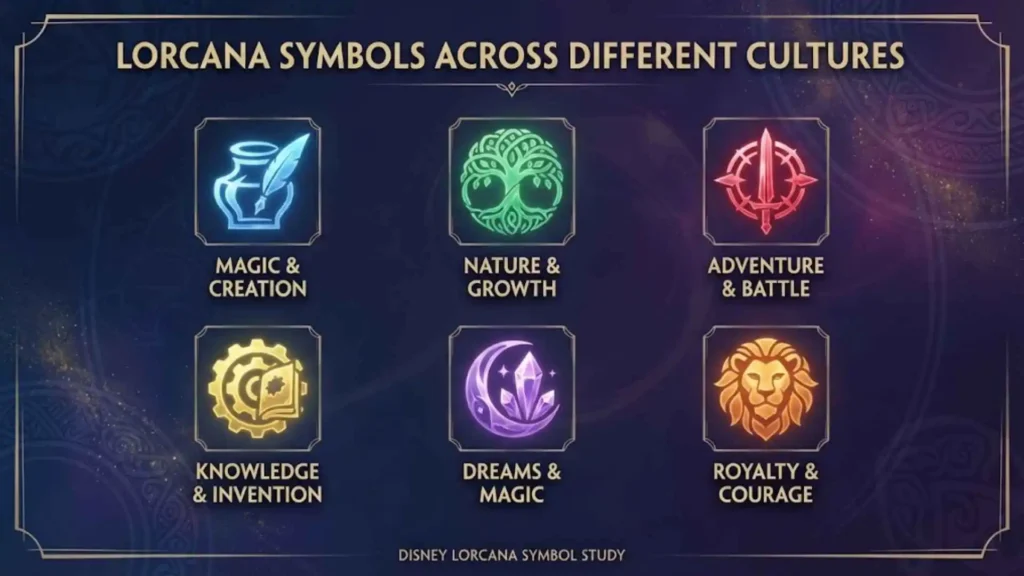
Lorcana did not exist in ancient civilizations, so its symbols should not be presented as artifacts from Egypt, Greece, Rome, or Indigenous cultures. Still, some of its visual ideas can be compared carefully with older symbolic traditions.
Ancient Egypt
Egyptian writing combined images and language to communicate identity, action, status, and sacred ideas.
Lorcana icons serve a different purpose, but both systems show how a small visual sign can carry complex information. The comparison is structural, not historical.
Ancient Greece
Greek mythology often explored transformation, fate, heroism, and changing identity.
Dreamborn and Floodborn glimmers can remind modern audiences of mythological transformations, although they belong to Disney Lorcana’s own fictional setting.
Roman Culture
Roman military symbols communicated rank, unity, loyalty, and authority.
Steel ink carries some similar emotional associations through armor, order, defense, and endurance. There is no direct historical connection.
Eastern Traditions
Across many Asian artistic traditions, color may communicate rank, emotion, natural forces, or moral qualities.
Lorcana also uses color as a fast emotional language. However, each ink’s official meaning comes from the game’s design rather than from one Eastern philosophy.
Indigenous Traditions
Indigenous cultures contain diverse and distinct visual traditions. Their symbols should never be treated as one universal system.
Lorcana’s use of storytelling, memory, place, and transformation may feel broadly relatable, but it should not be presented as borrowing sacred Indigenous meanings without clear evidence.
Modern Interpretation
Modern logos, traffic signs, app icons, emojis, and game interfaces all rely on instant recognition.
Lorcana symbols continue this visual tradition. They turn complex rules into a language players can understand across a table.
Similar Symbols and Their Meanings
| Lorcana Symbol | Similar Visual Concept | Shared Idea | Key Difference |
| Ink symbol | Element or faction icon | Identity and strategy | Lorcana inks are not natural elements |
| Exert arrow | Tap or rotation symbol | A resource has been used | Exact rules depend on Lorcana |
| Willpower shield | Defense icon | Durability and protection | Willpower measures damage capacity |
| Lore icon | Victory-point symbol | Progress toward winning | Lore is tied to storytelling |
| Rarity mark | Collectible grading symbol | Scarcity | Rarity is set by printing category |
| Inkwell icon | Resource marker | Card can become energy | The card is placed face down as ink |
A common mistake is assuming that similar-looking symbols work the same way in every trading card game. Each game has its own official rules, even when the visual language feels familiar.
Lorcana Symbols in Mythology and Folklore
There are no ancient myths specifically about Lorcana symbols because the game is modern.
However, the fictional ideas behind the game draw on long-standing story patterns:
- Magical writing that brings things to life
- Artists whose creations become real
- Mirrors that reveal alternate identities
- Books that preserve memory
- Names that carry power
- Light used as a symbol of knowledge
- Transformation through imagination
Stories about living images appear in many traditions. The Greek tale of Pygmalion, for example, centers on a crafted figure becoming alive. Folklore around enchanted books often treats writing as a bridge between ordinary reality and a hidden world.
Lorcana gives this pattern a playful form. Ink does not merely describe a character. It helps summon a glimmer into the game.
Lorcana Symbols in Art, Movies, and Pop Culture
Lorcana’s visual identity draws strength from Disney’s long history of animation, illustration, music, and character design.
Card Art
Each card combines game information with narrative artwork. The frame, ink color, nameplate, symbols, and illustration work together to create emotional meaning.
Literature
Lorcana uses concepts associated with books and storytelling, including lore, chapters, quests, ink, and transformed versions of familiar characters.
Movies and Television
The characters come from Disney and Pixar stories, but Lorcana often places them in new visual or narrative contexts.
Fashion and Accessories
Ink icons and card artwork appear on playmats, deck boxes, sleeves, apparel, pins, and fan-made accessories.
Tattoos
Some fans may choose ink icons, lore stars, or character imagery as tattoos. Such designs usually express personal fandom, a favorite play style, or a connection to a Disney story rather than an established spiritual belief.
Social Media
Players use ink icons and rarity symbols in deck discussions, collection posts, trade lists, set reviews, and tournament content.
Spiritual and Dream Meaning of Lorcana Symbols
Dreaming about Lorcana cards or symbols does not have one fixed meaning. Dreams are influenced by memory, emotion, recent activity, and personal concerns.
Possible interpretations include:
- Ink: creativity waiting to be expressed
- An empty inkwell: feeling unprepared or emotionally drained
- A full inkwell: growing resources or confidence
- Lore symbols: searching for meaning or recognition
- A rare card: desire for achievement, uniqueness, or validation
- Exerted characters: tiredness or overcommitment
- Floodborn imagery: personal change or an unfamiliar side of oneself
- Multiple inks: balancing different qualities or responsibilities
These interpretations are reflective possibilities, not predictions or supernatural facts.
Positive and Negative Meanings of Lorcana Symbols
| Positive Meaning | Negative or Cautionary Meaning |
| Creativity | Escaping too deeply into fantasy |
| Strategic thinking | Overanalyzing every decision |
| Community | Comparing collections or status |
| Imagination | Losing sight of practical limits |
| Transformation | Fear of changing identity |
| Achievement | Obsession with rarity or value |
| Storytelling | Controlling the narrative unfairly |
| Competition | Frustration, pride, or conflict |
The same symbol can hold light and shadow. A rare-card symbol may create joy and wonder, but it may also encourage unhealthy comparison. Ruby can represent courage, yet uncontrolled intensity may become aggression.
Context gives symbols their emotional direction.
Why Humans Are Attracted to Lorcana Symbols
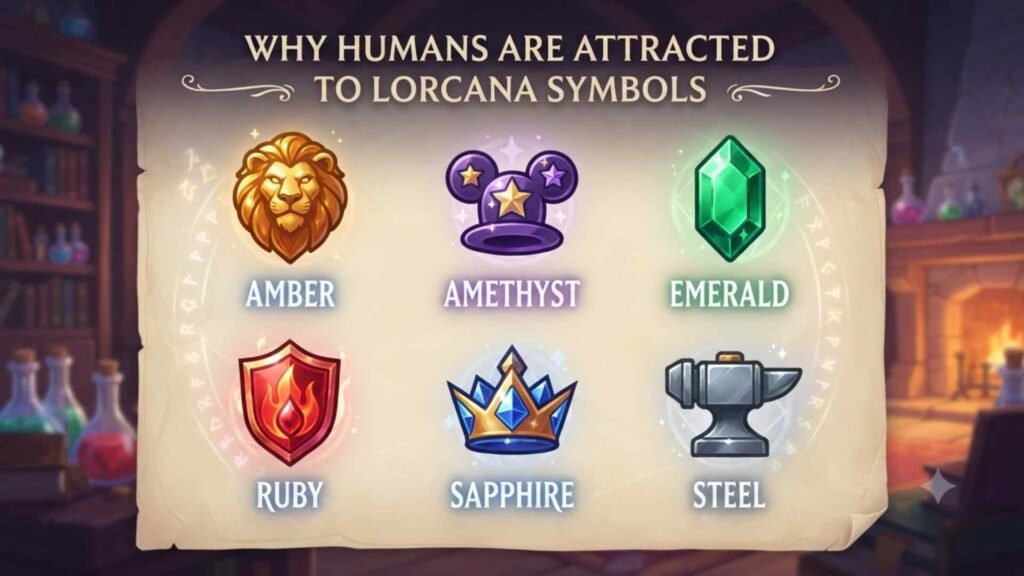
Humans naturally search for patterns.
We remember pictures faster than long explanations, especially when those pictures repeat in the same place. Lorcana’s symbols make a complex game feel manageable because they create predictable visual landmarks.
Collectors are also drawn to rarity icons because scarcity creates anticipation. Opening a booster pack becomes a small story with suspense, discovery, and emotional reward.
Disney characters add another layer. A card may connect a player to childhood memories, family traditions, favorite songs, or meaningful films. The symbol does not stand alone. It becomes attached to memory.
This is why one small ink icon can feel personal. It represents not only a mechanic but also the kind of stories and decisions a player enjoys.
Modern Uses of Lorcana Symbols
Gameplay
Symbols help players calculate costs, resolve challenges, quest for lore, and understand abilities.
Deck Building
Ink colors, inkwell icons, classifications, costs, and statistics help players build legal and reliable decks.
Collecting
Rarity symbols help collectors sort cards and understand their printed categories.
Competitive Play
Fast symbol recognition reduces mistakes and helps players evaluate the board more efficiently.
The official resources page provides updated comprehensive rules, quick-start materials, tournament documents, and other references as the game evolves.
Branding
The ink colors and lore imagery give Lorcana a recognizable identity separate from other trading card games.
Personal Expression
Players may choose accessories, deck themes, and favorite inks that reflect their personalities.
Education
Because symbols reduce text dependence, Lorcana can help newer players practice pattern recognition, planning, reading comprehension, probability, and decision-making.
Common Lorcana Symbol Mistakes
Confusing Cost With Lore
The top-left number is the card’s ink cost. The lore value appears in the character’s statistics and tells you how much lore it gains when questing.
Assuming Every Card Can Become Ink
Only cards with the appropriate inkwell symbol can normally be placed into the inkwell.
Treating Willpower Like Armor
Willpower is not damage prevention. It represents how much marked damage a character or location can withstand before being banished.
Assuming Rarity Means Strength
A Common card can be strategically useful, while a Legendary card may fit only certain decks.
Thinking Ink Colors Represent Good and Evil
The official Lorcana description states that no ink is inherently good or evil. Heroes and villains may appear in every ink.
Using Old Rarity Information
Early guides often list only six rarities. Later Lorcana products introduced Epic and Iconic rarity categories, so updated sources are essential.
Interesting Facts About Lorcana Symbols
- Lore replaces the traditional life-point race. Players normally win by collecting 20 lore rather than reducing an opponent’s health total.
- Ink is both a resource and a theme. It powers cards mechanically while representing creative energy within Lorcana’s world.
- The inkwell mark affects deck consistency. Players must balance flexible inkable cards with powerful uninkable options.
- No ink belongs only to heroes or villains. Every ink can include morally different Disney characters.
- Dual-ink cards combine identities. Their design allows abilities and themes from two inks to appear together.
- Rarity icons have evolved. Lorcana’s collectible structure expanded beyond its original rarity categories.
- Iconic cards are designed as major chase cards. Ravensburger describes them as much rarer than Enchanted cards.
- The official Companion App helps players identify cards. It includes a card database, collection tools, deck features, learning resources, and a lore counter.
- Location cards turn settings into active game pieces. Players can move characters to them and gain strategic advantages.
- The symbols create a shared language. Experienced players can understand much of a card’s function before reading every word.
Frequently Asked Questions
What do the symbols on Lorcana cards mean?
They identify important card information such as ink cost, inkability, Strength, Willpower, lore value, rarity, and actions such as exerting.
How can I tell if a Lorcana card is inkable?
Look for the decorative inkwell symbol around the card’s ink-cost area. Cards without that symbol cannot normally be placed into your inkwell.
What does the diamond or star symbol mean in Lorcana?
It usually represents lore. When a character quests, you gain the amount of lore shown beside that symbol.
What does the shield symbol mean on a Lorcana card?
The shield-like icon represents Willpower. It shows how much damage a character or location can withstand before being banished.
What is the rarest Lorcana symbol?
Iconic is among the highest officially announced rarity categories and is designed to be rarer than Enchanted. Availability may vary by set and product.
Do Lorcana ink symbols have spiritual meanings?
They have no official religious or supernatural meaning. Players may interpret them personally through themes such as creativity, courage, wisdom, transformation, community, and resilience.
Conclusion
Lorcana symbols transform complicated rules into a clear language of color, shape, and story.
They reveal how cards are played, how characters behave, and how collections are organized.
Beyond gameplay, they reflect powerful themes of creativity, memory, transformation, courage, and imagination.
Once you learn their meanings, every card feels less like a puzzle and more like an open doorway into Lorcana.
Hi, I’m Sienna Brooks, and I believe that the right words can inspire, comfort, and empower people at every stage of life. For as long as I can remember, I’ve been drawn to meaningful quotes and the stories behind them. I love curating collections of inspirational, motivational, and heartfelt quotes that resonate with readers around the world.
Through my writing, I strive to help others find encouragement, whether they’re celebrating life’s happiest moments or navigating its biggest challenges. I believe that wisdom is timeless, and I’m passionate about sharing words that leave a lasting impact.
I am the author of Reflections in Words and The Journey of Inspiration, two books dedicated to exploring the beauty and power of timeless quotes.
 Rowan Sinclair Rowan Sinclair