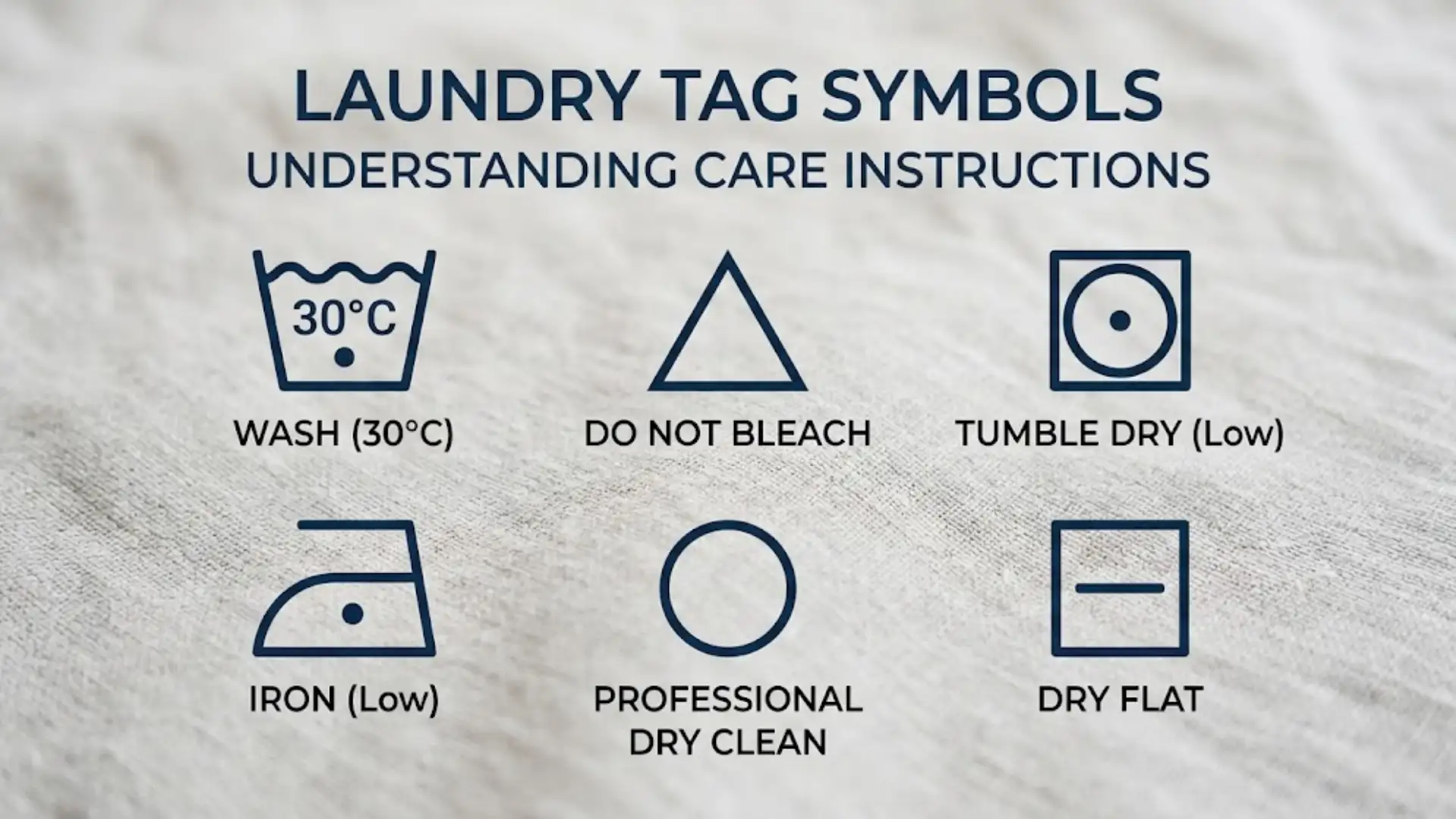
Laundry tag symbols can look confusing at first, especially when a single shirt has several tiny icons on its care label. However, these symbols provide important instructions for washing, drying, ironing, bleaching, and professional cleaning. Understanding them helps you choose the right cleaning method and avoid common problems, such as shrinking clothes, fading colors, stretching fabric, or causing heat damage.
This laundry symbol guide explains the most common laundry symbols and meanings, including washing symbols, drying symbols, ironing symbols, bleaching symbols, and professional cleaning symbols. You’ll also learn how to read dots, lines, and crossed-out icons on clothing care labels.
Whether you’re washing everyday clothing, bedding, delicate materials, or specialty garments, knowing what the symbols mean can make laundry day easier.
What Are Laundry Tag Symbols?
Laundry tag symbols are small pictures printed on clothing care labels. They tell you how to clean and maintain a garment according to its care requirements.
You’ll usually find these symbols on a clothing tag sewn into a side seam, neckline, waistband, or another discreet area. Towels, sheets, blankets, and other household linens may also include fabric care instructions.
Instead of writing a long set of instructions, manufacturers use standardized or widely recognized icons to communicate important garment care information.
For example:
- A wash tub tells you how to wash the garment.
- A triangle provides instructions about bleaching.
- A square explains drying methods.
- An iron indicates ironing instructions.
- A circle identifies professional textile care instructions.
These clothing care symbols help you understand the recommended cleaning methods before you put a garment in the washing machine.
However, not every fabric responds to cleaning in the same way. Cotton, wool, silk, synthetic fibers, and blended materials can have different temperature and handling requirements. Always check the complete care label rather than relying on the fabric name alone.
Laundry Symbols and Meanings Chart
Use this quick-reference chart to identify common laundry icons and understand their basic meanings.
| Symbol or feature | Meaning |
| Wash tub | Washing instructions |
| Wash tub with a temperature number | Maximum recommended washing temperature in Celsius in the international system |
| Hand inside a wash tub | Hand washing |
| Crossed-out wash tub | Do not wash using that method |
| One line beneath a wash tub | Reduced mechanical action or a gentler wash process |
| Two lines beneath a wash tub | Very gentle washing process |
| Square | Drying instructions |
| Circle inside a square | Tumble drying |
| Dots inside a dryer symbol | Dryer temperature level |
| Square with a horizontal line | Dry flat |
| Square with a vertical line | Line drying |
| Triangle | Bleaching instructions |
| Triangle with two diagonal lines | Non-chlorine or oxygen bleach only, where this symbol system applies |
| Crossed-out triangle | Do not bleach |
| Iron | Ironing instructions |
| Dots inside an iron | Ironing temperature level |
| Crossed-out iron | Do not iron |
| Crossed-out steam lines | Do not use steam, where shown |
| Circle | Professional textile care |
| Circle with a letter | Professional cleaning process or solvent guidance |
| Crossed-out circle | Do not use the indicated professional cleaning method |
Important: The exact meaning of a symbol can depend on the care-label system and the icon’s details. In particular, a dot does not mean the same thing in every symbol. Check which icon contains the dot before deciding on a temperature.
How to Read Laundry Symbols on Clothing Care Labels
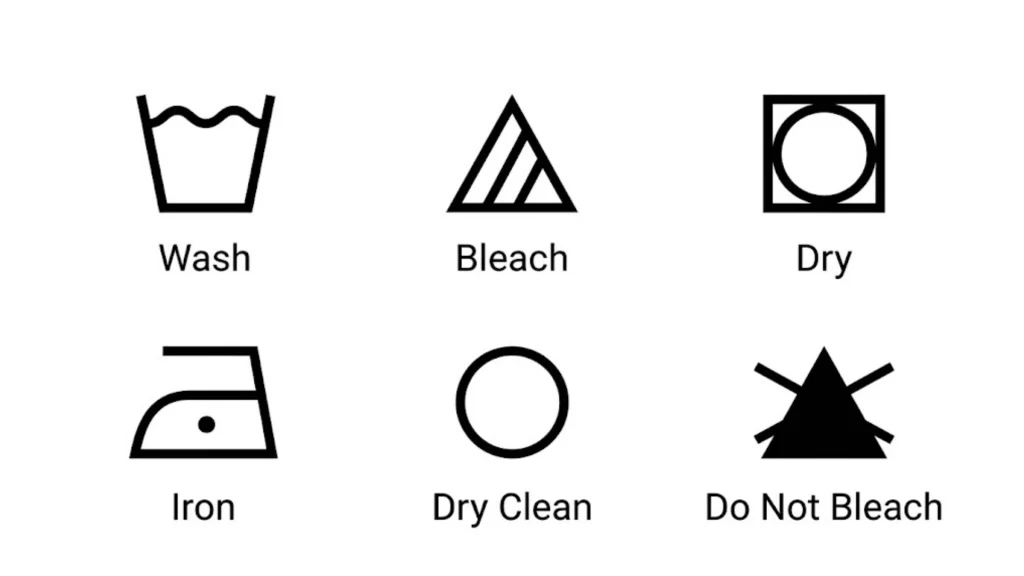
Learning how to read laundry symbols is easier when you recognize the five main categories. In the international care-label system, these categories usually appear in the following order:
- Washing
- Bleaching
- Drying
- Ironing
- Professional textile care
Each symbol answers a different question about garment maintenance.
For example, a shirt might allow machine washing but prohibit tumble drying. Another garment might require gentle washing and low-temperature ironing. Following each instruction helps protect the fabric’s appearance and performance.
Here are three basic rules to remember:
- Look at the main shape. A tub means washing, a triangle means bleaching, a square means drying, an iron means ironing, and a circle generally means professional care.
- Check for additional details. Dots, lines, letters, and crosses can change the instructions.
- Read every symbol. A garment that can be washed in a machine might still need to air-dry or avoid bleach.
International care symbols are associated with the ISO 3758 standard. GINETEX also explains the international textile care labeling system and its symbols. However, labels and conventions can vary by country, so don’t assume every label uses precisely the same design.
Washing Symbols and Their Meanings
Washing symbols tell you whether a garment can be washed, which washing method to use, and how gently you should treat it.
The main washing icon is a bucket-shaped container, commonly called the wash tub symbol.
Machine Wash Symbol
The machine wash symbol looks like a tub filled with water. Depending on the label, it may contain a number, dots, or lines underneath.
A plain wash tub generally indicates that washing is permitted under the conditions specified by the care label. A number inside the tub usually identifies the maximum washing temperature in degrees Celsius under the international system.
For example, a wash tub marked 30 indicates a maximum temperature of 30°C. It doesn’t mean you must wash the garment at that temperature every time, but you should not exceed the stated limit.
Some garments can tolerate a standard machine cycle, while others need a reduced or gentle cycle. Always check the additional marks under the tub.
Hand Wash Symbol
The hand wash symbol usually shows a hand reaching into a wash tub.
This icon indicates that you should hand-wash the garment according to the label’s instructions rather than using an ordinary machine cycle.
Hand washing can be suitable for delicate materials such as certain wool or silk garments. However, the symbol doesn’t mean you should scrub the fabric aggressively.
Follow these steps when hand washing:
- Fill a basin with water at the recommended temperature.
- Add an appropriate amount of suitable detergent.
- Submerge the garment and gently move it through the water.
- Avoid twisting or stretching the fabric.
- Rinse carefully if the product instructions require it.
- Remove excess water gently and dry the garment as directed.
Some modern washing machines have a hand-wash or wool cycle. Use one only when the garment’s care instructions permit that method.
Do Not Wash Symbol
A wash tub crossed out with an X means do not wash using the indicated washing method.
This instruction may appear on garments that require professional cleaning or specialized care. Washing them at home could damage their structure, surface, color, or shape.
If the label also includes a professional cleaning symbol, follow that guidance. Don’t assume that hand washing is automatically safe when machine washing is prohibited.
Water Temperature Symbols
Water temperature symbols help you choose an appropriate washing temperature. In the international system, a number inside the wash tub usually indicates the maximum temperature in Celsius.
| Temperature marking | General guidance |
| 30°C | Cool or cold wash |
| 40°C | Warm wash |
| 50°C | Higher-temperature wash, if permitted |
| 60°C | Hotter wash, if permitted |
| 95°C | Very high-temperature wash for suitable items |
These are examples of international temperature markings, not universal recommendations for every garment. The correct temperature depends on the care label and the item’s fabric and construction.
A cold water wash can help reduce energy use and may limit color fading for suitable garments. Hotter water may be appropriate for some items, but it can also increase the risk of shrinking, color loss, or other damage.
What Do Lines Underneath Washing Symbols Mean?
Lines underneath a wash tub indicate that the garment needs gentler treatment.
- One line: Use a reduced or mild mechanical-action process.
- Two lines: Use a very gentle process with even less mechanical action.
- No line: Follow the other washing instructions without the additional reduced-action requirement indicated by an underline.
These lines don’t simply tell you to lower the water temperature. They refer to the washing process, including how much agitation the garment should receive.
Choose a suitable gentle or delicate cycle when the label calls for reduced mechanical action. Avoid overloading the machine, and follow the detergent instructions.
Drying Symbols and Their Meanings
Drying symbols explain whether a garment can go in a dryer or should air-dry. They can also indicate the appropriate dryer heat level or a specific natural drying method.
The square is the main shape used for drying instructions in the international symbol system.
Tumble Dry Symbol
A square containing a circle indicates tumble drying.
If the symbol isn’t crossed out, tumble drying is generally permitted according to any temperature or other restrictions shown inside it.
Dots inside the circle indicate the permitted dryer heat level. More dots generally indicate a higher permitted temperature.
| Dryer symbol detail | General meaning |
| Circle inside a square | Tumble drying permitted |
| One dot inside the circle | Low heat |
| Two dots inside the circle | Medium heat |
| Three dots inside the circle | Higher heat |
| Crossed-out tumble dryer symbol | Do not tumble dry |
The exact symbol set may vary by labeling system. Always check the actual icon on the garment.
Low, Medium, and High Dryer Heat
Choosing the right dryer heat setting helps prevent heat-related fabric damage.
Low heat is often appropriate for heat-sensitive garments when tumble drying is permitted. Medium heat suits some everyday items, while high heat should be used only when the label allows it.
Excessive heat can contribute to shrinking, weakened fibers, elastic damage, and changes in garment shape. It can also affect printed designs and certain synthetic materials.
If the label says not to tumble dry, don’t assume that using low heat makes the dryer safe. Choose an approved air-drying method instead.
Do Not Tumble Dry Symbol
A crossed-out square containing a circle means do not tumble dry.
Some garments can lose their shape or suffer damage inside a heated dryer. Delicate materials, structured garments, and items with particular finishes may need a different drying method.
Instead, check whether the label permits line drying, drip drying, or laying the garment flat.
Air Drying Symbols
Air drying allows moisture to leave the garment without using a tumble dryer. However, different air-drying symbols describe different methods.
Common air drying symbols include:
- Line drying: A square with a vertical line indicates hanging the garment to dry.
- Drip line drying: A square with multiple vertical lines indicates line drying without wringing, according to the applicable symbol system.
- Dry flat: A square with a horizontal line indicates laying the garment flat to dry.
- Drip flat drying: A square with multiple horizontal lines indicates flat drying without wringing.
- Dry in the shade: A diagonal line in the square indicates shade drying in the international system.
The precise number and arrangement of lines matter, so look at the complete icon rather than just the square.
What Does the Lay Flat to Dry Symbol Mean?
The lay flat to dry symbol typically shows a horizontal line inside a square.
It means you should place the garment flat on a suitable drying surface instead of hanging it vertically.
This method can help garments retain their shape when hanging would cause them to stretch. It is especially useful for certain knits and other shape-sensitive materials.
To dry an item flat:
- Remove excess water gently without twisting the garment.
- Place it on a clean, dry towel or suitable drying rack.
- Arrange it in its intended shape.
- Keep it away from direct heat unless the label allows it.
- Turn or reposition it if needed to help it dry evenly.
Always follow the garment’s specific instructions.
Bleaching Symbols and Their Meanings
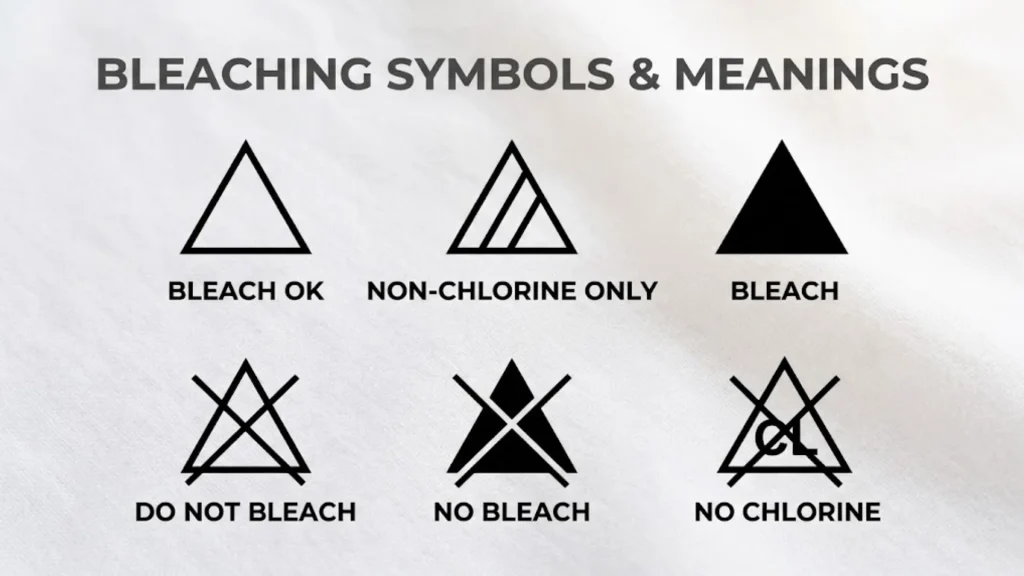
Bleaching symbols tell you whether you can use bleach on a garment and which type is permitted.
The triangle is the main bleach symbol. Bleach can help remove certain stains and brighten suitable fabrics, but using the wrong product can cause permanent discoloration or fiber damage.
Empty Triangle
An empty triangle generally means that bleaching is permitted under the applicable international care-label system.
However, it doesn’t mean every bleach product is suitable for every garment. Follow the product label and any additional instructions on the clothing tag.
Triangle With Two Diagonal Lines
A triangle with two diagonal lines indicates that only non-chlorine or oxygen-based bleach should be used under the international symbol system.
This is sometimes called the non-chlorine bleach symbol.
Chlorine bleach can damage or discolor certain fabrics and dyes. If the label restricts bleaching to non-chlorine products, don’t substitute chlorine bleach.
Before using a bleaching product, check its directions and confirm that it is suitable for the fabric.
Crossed-Out Triangle
A crossed-out triangle means do not bleach.
Avoid chlorine bleach and other bleaching products when the label prohibits bleaching. Even products marketed as color-safe should not be used against a clear do-not-bleach instruction.
Instead, choose a suitable detergent and follow the garment’s washing directions.
How Bleaching Instructions Protect Fabric
Bleaching instructions help prevent unwanted color changes and protect fabric fibers. Ignoring them can lead to faded patches, weakened material, or permanent stains.
If a stain doesn’t come out during the first wash, don’t automatically reach for a stronger chemical. Check the garment’s care label, identify the stain, and use a treatment that is suitable for the fabric.
Ironing Symbols and Their Meanings
The iron-shaped icon provides ironing instructions. Dots inside the iron indicate the permitted temperature level in the international care-label system.
Following these instructions can help prevent scorching, shine marks, and heat damage.
What Do the Dots Inside an Iron Symbol Mean?
The number of dots indicates the maximum ironing temperature level.
| Iron symbol detail | General temperature guidance |
| One dot | Low temperature, commonly up to 110°C |
| Two dots | Medium temperature, commonly up to 150°C |
| Three dots | Higher temperature, commonly up to 200°C |
| Crossed-out iron | Do not iron |
These temperature levels describe the international symbol system. Always use the care label as your guide, and check your iron’s settings before pressing the garment.
Low-Temperature Ironing
One dot generally indicates low-temperature ironing. This setting is useful for materials that can be damaged by high heat.
Use a gentle approach and test an inconspicuous area when appropriate. If the garment’s instructions permit it, a pressing cloth can provide an additional layer of protection.
Medium- and High-Temperature Ironing
Two dots generally allow a medium ironing temperature, while three dots permit a higher temperature.
However, you should never choose a high setting simply because a garment looks thick or sturdy. Fabric blends, coatings, prints, and trims can have different heat tolerances.
Use the lowest effective setting within the label’s permitted range.
What Does the Crossed-Out Steam Symbol Mean?
A crossed-out steam symbol indicates that you should not use steam where that symbol appears.
Some fabrics, finishes, and structured garments can be affected by steam. If the label prohibits steaming, use another approved care method.
Don’t confuse the crossed-out steam lines with a crossed-out iron. One restricts steaming; the other prohibits ironing altogether.
Professional Cleaning and Dry Cleaning Symbols
Professional cleaning symbols help you understand whether a garment requires specialized cleaning rather than ordinary home washing.
The circle is the main symbol for professional textile care in the international system. Letters inside the circle provide information about the permitted cleaning process or solvent. Additional lines can indicate a more restricted or gentler professional treatment.
What Does a Circle on a Laundry Label Mean?
A circle generally indicates professional cleaning instructions.
It doesn’t automatically mean that every garment with a circle must undergo the same dry-cleaning process. Check the letters, lines, and any other details within the symbol.
If you don’t understand the label, show it to a professional cleaner before proceeding.
Dry Cleaning Symbols
Dry cleaning symbols can include letters such as P or F. These letters communicate information intended for professional cleaners about the permitted cleaning process.
Their exact technical meanings should be interpreted within the applicable care-label standard. Don’t use them as instructions to buy or apply a household chemical.
Professional cleaners can assess the garment’s fabric, lining, construction, and decorative details before selecting a suitable method.
Do Not Dry Clean Symbol
A crossed-out circle generally indicates that the specified professional dry-cleaning method is prohibited.
This doesn’t necessarily mean the garment can safely be washed at home. Check the washing and other care symbols before choosing an alternative.
If the garment has complicated construction, delicate trim, or an unclear label, ask a professional cleaner for advice.
Professional Cleaning Versus Standard Washing
Home washing is convenient for many everyday garments. Professional cleaning can be appropriate for items that require specialized handling or solvent-based processes.
Consider professional advice for:
- Structured jackets and suits
- Garments with delicate embellishments
- Certain silk or wool items
- Clothing with complicated linings
- Specialty fabrics with specific care requirements
The care label should guide your decision. Neither home washing nor dry cleaning is automatically the best choice for every fabric.
Are Laundry Symbols Universal Around the World?
International laundry symbols are designed to make clothing care instructions easier to understand across languages. The ISO 3758 system provides an international framework for textile care symbols.
However, laundry symbols are not perfectly universal in every detail. Countries and manufacturers may use different label conventions, and some labels include written instructions alongside the icons.
Temperature conventions and symbol designs can also differ. For example, the international wash tub commonly uses a temperature in degrees Celsius, while a US label may communicate washing instructions differently.
To avoid mistakes:
- Read the entire care label, including any written instructions.
- Check whether temperature markings use Celsius or another convention.
- Don’t assume that dots mean the same thing in washing, drying, and ironing symbols.
- Follow the most restrictive applicable instruction.
- Ask the manufacturer or a professional cleaner if the label is unclear.
The goal is to understand the care instructions, not to memorize every symbol variation.
How Laundry Symbols Help Prevent Fabric Damage
Following laundry care instructions can help maintain clothing quality and reduce unnecessary wear. Incorrect cleaning methods may damage fabric fibers or change a garment’s appearance.
Here’s how care labels help with common laundry problems.
Preventing Shrinking Clothes
Excessive heat can shrink some fabrics, particularly when combined with unsuitable washing or drying methods.
Check the maximum washing temperature and drying instructions before cleaning a garment. If the label prohibits tumble drying, choose an approved alternative.
Reducing Fading and Discoloration
High temperatures, unsuitable bleach, and harsh cleaning conditions can affect certain dyes and fabrics.
Follow the label’s washing and bleaching instructions. Separate garments by color when appropriate, and use a detergent suitable for the items you’re washing.
Maintaining Garment Shape
Some fabrics stretch or lose their shape when they’re twisted, hung while wet, or exposed to excessive mechanical action.
Gentle washing and flat drying can help protect shape-sensitive garments when the label recommends those methods.
Protecting Delicate Materials
Silk, wool, fine knits, and garments with decorative finishes may need special care.
Look for hand-wash instructions, reduced-action lines, lower heat settings, or professional cleaning guidance. Never assume that a delicate fabric can tolerate the same process as a durable cotton garment.
Extending Clothing Lifespan
Correct garment care can help reduce unnecessary damage and preserve the appearance of clothing over time.
It also helps you avoid preventable mistakes, such as using prohibited bleach or ironing a garment at an excessive temperature.
How to Build an Everyday Laundry Routine Around Care Labels
An effective everyday laundry routine starts before you load the washing machine. A few simple checks can help you clean clothes more efficiently and protect your fabrics.
Check Labels Before Sorting
Read the care tags when you buy new clothing or prepare an unfamiliar item for washing.
Separate items according to color, fabric needs, and cleaning instructions. Keep garments that require hand washing or special treatment apart from ordinary machine-washable clothes.
Choose the Right Washing Cycle
Match the washing cycle to the label’s requirements.
Use a gentle cycle when the care label indicates reduced mechanical action. Check the maximum permitted water temperature, and avoid assuming that every garment should be washed using the same settings.
Measure Detergent Correctly
Use the amount of detergent recommended for your product, load size, and water conditions.
Too much detergent may leave residue, while too little may not clean the load effectively. Follow the product label rather than adding extra detergent automatically.
Select an Approved Drying Method
Before transferring wet clothes to the dryer, check the drying symbol.
If tumble drying is permitted, select an appropriate heat setting. If the garment requires line drying or flat drying, use that method instead.
Iron Only When Necessary
Check the ironing symbol before using an iron or steamer.
Choose a permitted temperature and avoid direct heat on areas that could be damaged. Some garments may need little or no ironing if you reshape them and dry them correctly.
Laundry Detergent Tablets and Eco-Friendly Laundry Products
Laundry detergent tablets offer a pre-measured alternative to liquid or powdered detergent. They can make measuring more convenient, but they don’t replace the need to follow clothing care labels.
When choosing laundry detergent tablets, consider the type of detergent, the manufacturer’s directions, the size of your load, and the cleaning requirements of your garments.
Using Blueland Laundry Detergent Tablets
Blueland is a brand associated with household cleaning products, including laundry detergent tablets. If you’re considering Blueland Laundry Detergent Tablets, check the current product label for directions, ingredient information, and any relevant usage limitations.
Don’t assume that every detergent tablet works the same way. Product formulas and instructions can change, so rely on the packaging for current guidance.
For any detergent tablet:
- Follow the directions for the product you purchased.
- Use the recommended amount for the load and conditions.
- Keep tablets away from children and pets.
- Store them according to the packaging instructions.
- Follow the garment’s care label, even when using a product marketed as convenient or eco-friendly.
Do Eco-Friendly Laundry Products Replace Care Instructions?
No. An eco-friendly product doesn’t automatically make every washing method suitable for every fabric.
Choose products that meet your cleaning needs and follow both the garment label and the detergent instructions. You can also reduce unnecessary laundry impacts by washing full, appropriate loads and avoiding higher temperatures when the label permits cooler washing.
Convenient products can support an efficient laundry routine, but the correct care method still depends on the garment.
Common Laundry Symbol Mistakes to Avoid
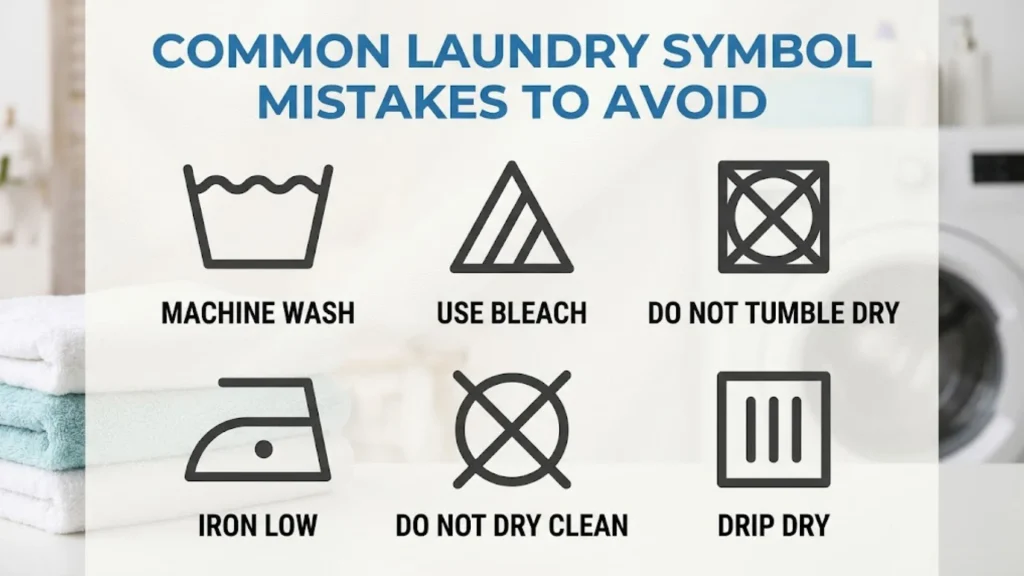
Even familiar laundry icons can be easy to misread. Avoid these common mistakes to protect your clothing.
Assuming Every Dot Means the Same Thing
Dots inside a wash tub, dryer symbol, and iron have different roles.
A dot inside an international wash tub can indicate a temperature level in systems that use dots, while a number inside the tub can specify a temperature in Celsius. Dots inside a dryer or iron indicate the permitted heat level for that process.
Always identify the main symbol before interpreting the dots.
Ignoring Lines Under Washing Symbols
Underlines beneath a wash tub indicate reduced or very gentle mechanical action.
Ignoring these lines and using an aggressive cycle may expose delicate fabrics to unnecessary wear.
Using Bleach Without Checking the Triangle
An empty triangle, a triangle with diagonal lines, and a crossed-out triangle don’t mean the same thing.
Check whether bleach is permitted and whether the label restricts the type. When bleaching is prohibited, don’t use a different bleach product in the hope that it will be safe.
Putting Every Garment in the Dryer
Not all machine-washable garments can be tumble dried.
Check the drying symbol before choosing a dryer setting. A crossed-out tumble-dryer icon means you should use an approved alternative.
Ironing at the Highest Setting
A high setting can scorch fabric, leave shine marks, or damage synthetic fibers and decorative finishes.
Follow the iron’s dot markings and use a suitable temperature. If ironing is prohibited, don’t iron the garment.
Treating Dry-Cleaning Letters as Home-Cleaning Instructions
Letters inside professional cleaning symbols are intended to communicate cleaning requirements, not to tell you which household chemical to use.
If the meaning isn’t clear, consult a professional cleaner.
Assuming Every Country Uses Identical Symbols
International systems help standardize garment care, but label designs and conventions can vary.
Read any accompanying text and check the complete set of symbols before deciding how to clean an unfamiliar garment.
Frequently Asked Questions About Laundry Tag Symbols
What do laundry symbols mean?
Laundry symbols explain how to wash, bleach, dry, iron, and professionally clean a garment. Additional details, such as dots, lines, letters, and crosses, provide more specific instructions or restrictions.
What are the five categories of laundry symbols?
The five main categories in the international care-label system are washing, bleaching, drying, ironing, and professional textile care.
What do dots mean on laundry symbols?
Dots generally indicate a temperature or heat level, but their meaning depends on the main symbol. Inside a dryer icon, they indicate dryer heat. Inside an iron, they indicate ironing temperature. Always interpret dots in context.
What does one dot mean on a laundry label?
One dot commonly indicates a low heat level inside a dryer symbol or a low ironing temperature inside an iron symbol. Don’t apply this meaning automatically to every symbol.
What do two dots mean on laundry symbols?
Two dots commonly indicate a medium temperature level inside dryer and iron symbols. Check the complete icon and the label’s symbol system before choosing a setting.
What do three dots mean on laundry symbols?
Three dots commonly indicate a higher permitted heat level in dryer and iron symbols. The appropriate temperature still depends on the garment and the applicable care-label standard.
What do lines underneath laundry symbols mean?
One or two lines underneath a wash tub indicate reduced or very gentle mechanical action. Other lines inside a square may describe natural drying methods, so their placement matters.
What does an X over a laundry symbol mean?
A crossed-out symbol generally means you should not use the method shown. For example, a crossed-out triangle means do not bleach, while a crossed-out tumble-dryer symbol means do not tumble dry.
What is the hand wash symbol on clothing?
The hand-wash symbol usually shows a hand inside a wash tub. It indicates that the garment should be hand-washed according to the label’s instructions rather than put through an ordinary machine cycle.
What do drying symbols mean on clothes?
Drying symbols explain whether tumble drying is permitted and which heat level or air-drying method to use. A square is the main drying shape in the international system.
What does the air drying symbol mean?
Air-drying symbols show which natural drying method is recommended. A vertical line inside a square generally indicates line drying, while a horizontal line generally indicates flat drying.
What are professional cleaning symbols?
Professional cleaning symbols usually feature a circle, sometimes with letters or additional marks. They provide guidance about professional textile care, including applicable dry-cleaning processes.
What do ironing symbols mean on clothing labels?
An iron symbol indicates ironing instructions. Dots inside it identify the permitted temperature level, while a crossed-out iron means the garment should not be ironed.
What does the crossed-out steam symbol mean?
A crossed-out steam symbol indicates that steam should not be used where the symbol applies. Follow the rest of the garment’s care instructions for suitable alternatives.
What does the triangle bleach symbol mean?
The triangle provides bleaching instructions. An empty triangle generally permits bleaching, a triangle with two diagonal lines restricts bleaching to non-chlorine products in the international system, and a crossed-out triangle means do not bleach.
What does a triangle with two diagonal lines mean on a laundry label?
In the international care-label system, a triangle with two diagonal lines indicates that only non-chlorine or oxygen-based bleach should be used. Follow the product instructions and the garment’s care label.
What does a crossed-out triangle mean on clothes?
A crossed-out triangle means do not bleach the garment. Avoid bleaching products, even if the item has a stain that seems difficult to remove.
Are laundry symbols universal around the world?
Many international laundry symbols follow common standards, including ISO 3758. However, some designs and conventions differ by country, so check the complete label and any written instructions.
Why are laundry symbols important to follow?
Laundry symbols help you select appropriate washing, drying, bleaching, and ironing methods. Following them can reduce the risk of shrinking, fading, stretching, discoloration, and heat-related damage.
How do laundry symbols help prevent fabric damage?
They identify temperature limits, gentle washing requirements, prohibited cleaning methods, and suitable drying options. Following these instructions helps protect fabric fibers and maintain garment shape.
How can you protect delicate fabrics when washing clothes?
Read the care label first. Use the permitted temperature and washing method, choose a gentle cycle when indicated, avoid prohibited bleach, and follow the recommended drying instructions. For garments that require professional care, consult a suitable cleaner.
Conclusion
Understanding laundry tag symbols makes it easier to care for clothing correctly. The wash tub explains washing requirements, the triangle covers bleaching, the square identifies drying methods, the iron shows ironing instructions, and the circle provides professional cleaning guidance.
Dots, lines, letters, and crossed-out icons add important details. Their meanings depend on the main symbol and the labeling system, so always check the complete clothing care label.
By following these laundry symbols and meanings, you can choose appropriate washing temperatures, avoid prohibited cleaning methods, protect delicate fabrics, and reduce preventable clothing damage. Build the habit of checking labels before washing, drying, or ironing. A few seconds of attention can help your clothes stay in better condition for longer.

Hi, I’m Asher Monroe, a writer who believes that meaningful words have the power to inspire change and bring people closer to their dreams. I have always been fascinated by the beauty of quotes and the way a simple message can provide motivation, hope, and comfort.
I enjoy creating content around inspirational quotes, life lessons, success stories, and positive thoughts that help readers find encouragement in their everyday lives. My goal is to share words that connect with people and remind them of their inner strength.
Through my writing, I explore the ideas of personal growth, confidence, and the importance of staying inspired through every chapter of life.
I am the author of Words That Move the Soul and The Path of Endless Inspiration, two books focused on the power of wisdom, positivity, and meaningful thoughts.
 Sienna Brooks
 Rowan Sinclair Rowan Sinclair