The periodic table is a quick reference for the chemical elements, showing each element by its name, symbol, atomic number, and position. This guide brings the complete list of 118 elements into one easy-to-read resource.
You can use the lists below to find element names and symbols, check atomic numbers and atomic masses, or prepare a clean reference sheet for school, teaching, revision, and chemistry practice.
The article also includes the elements from 1 to 30, the complete 1-to-118 list, printable-friendly information, and PDF-related resources. The tables are designed to make finding a particular element as simple as possible.
118 elements and their symbols
There are currently 118 officially recognized chemical elements. Each element has a unique name and a chemical symbol consisting of one or two letters.
The first letter of an element symbol is always uppercase. If there is a second letter, it is lowercase. For example, H represents hydrogen, while He represents helium.
| No. | Element | Symbol |
| 1 | Hydrogen | H |
| 2 | Helium | He |
| 3 | Lithium | Li |
| 4 | Beryllium | Be |
| 5 | Boron | B |
| 6 | Carbon | C |
| 7 | Nitrogen | N |
| 8 | Oxygen | O |
| 9 | Fluorine | F |
| 10 | Neon | Ne |
| 11 | Sodium | Na |
| 12 | Magnesium | Mg |
| 13 | Aluminium | Al |
| 14 | Silicon | Si |
| 15 | Phosphorus | P |
| 16 | Sulfur | S |
| 17 | Chlorine | Cl |
| 18 | Argon | Ar |
| 19 | Potassium | K |
| 20 | Calcium | Ca |
| 21 | Scandium | Sc |
| 22 | Titanium | Ti |
| 23 | Vanadium | V |
| 24 | Chromium | Cr |
| 25 | Manganese | Mn |
| 26 | Iron | Fe |
| 27 | Cobalt | Co |
| 28 | Nickel | Ni |
| 29 | Copper | Cu |
| 30 | Zinc | Zn |
| 31 | Gallium | Ga |
| 32 | Germanium | Ge |
| 33 | Arsenic | As |
| 34 | Selenium | Se |
| 35 | Bromine | Br |
| 36 | Krypton | Kr |
| 37 | Rubidium | Rb |
| 38 | Strontium | Sr |
| 39 | Yttrium | Y |
| 40 | Zirconium | Zr |
| 41 | Niobium | Nb |
| 42 | Molybdenum | Mo |
| 43 | Technetium | Tc |
| 44 | Ruthenium | Ru |
| 45 | Rhodium | Rh |
| 46 | Palladium | Pd |
| 47 | Silver | Ag |
| 48 | Cadmium | Cd |
| 49 | Indium | In |
| 50 | Tin | Sn |
| 51 | Antimony | Sb |
| 52 | Tellurium | Te |
| 53 | Iodine | I |
| 54 | Xenon | Xe |
| 55 | Caesium | Cs |
| 56 | Barium | Ba |
| 57 | Lanthanum | La |
| 58 | Cerium | Ce |
| 59 | Praseodymium | Pr |
| 60 | Neodymium | Nd |
| 61 | Promethium | Pm |
| 62 | Samarium | Sm |
| 63 | Europium | Eu |
| 64 | Gadolinium | Gd |
| 65 | Terbium | Tb |
| 66 | Dysprosium | Dy |
| 67 | Holmium | Ho |
| 68 | Erbium | Er |
| 69 | Thulium | Tm |
| 70 | Ytterbium | Yb |
| 71 | Lutetium | Lu |
| 72 | Hafnium | Hf |
| 73 | Tantalum | Ta |
| 74 | Tungsten | W |
| 75 | Rhenium | Re |
| 76 | Osmium | Os |
| 77 | Iridium | Ir |
| 78 | Platinum | Pt |
| 79 | Gold | Au |
| 80 | Mercury | Hg |
| 81 | Thallium | Tl |
| 82 | Lead | Pb |
| 83 | Bismuth | Bi |
| 84 | Polonium | Po |
| 85 | Astatine | At |
| 86 | Radon | Rn |
| 87 | Francium | Fr |
| 88 | Radium | Ra |
| 89 | Actinium | Ac |
| 90 | Thorium | Th |
| 91 | Protactinium | Pa |
| 92 | Uranium | U |
| 93 | Neptunium | Np |
| 94 | Plutonium | Pu |
| 95 | Americium | Am |
| 96 | Curium | Cm |
| 97 | Berkelium | Bk |
| 98 | Californium | Cf |
| 99 | Einsteinium | Es |
| 100 | Fermium | Fm |
| 101 | Mendelevium | Md |
| 102 | Nobelium | No |
| 103 | Lawrencium | Lr |
| 104 | Rutherfordium | Rf |
| 105 | Dubnium | Db |
| 106 | Seaborgium | Sg |
| 107 | Bohrium | Bh |
| 108 | Hassium | Hs |
| 109 | Meitnerium | Mt |
| 110 | Darmstadtium | Ds |
| 111 | Roentgenium | Rg |
| 112 | Copernicium | Cn |
| 113 | Nihonium | Nh |
| 114 | Flerovium | Fl |
| 115 | Moscovium | Mc |
| 116 | Livermorium | Lv |
| 117 | Tennessine | Ts |
| 118 | Oganesson | Og |
Periodic table of elements with names and symbols and atomic mass and atomic number
The atomic number identifies an element by the number of protons in its nucleus. Atomic mass, commonly shown on periodic tables as a standard atomic weight for many elements, represents the element’s naturally occurring isotopic composition where applicable.
Here is a compact reference for all 118 elements. The atomic masses below are standard atomic weights rounded for convenient reference; elements without a standard atomic weight are commonly represented by the mass number of a selected or longest-lived isotope in square brackets.
| No. | Element | Symbol | Approx. atomic mass |
| 1 | Hydrogen | H | 1.008 |
| 2 | Helium | He | 4.003 |
| 3 | Lithium | Li | 6.94 |
| 4 | Beryllium | Be | 9.012 |
| 5 | Boron | B | 10.81 |
| 6 | Carbon | C | 12.011 |
| 7 | Nitrogen | N | 14.007 |
| 8 | Oxygen | O | 15.999 |
| 9 | Fluorine | F | 18.998 |
| 10 | Neon | Ne | 20.180 |
| 11 | Sodium | Na | 22.990 |
| 12 | Magnesium | Mg | 24.305 |
| 13 | Aluminium | Al | 26.982 |
| 14 | Silicon | Si | 28.085 |
| 15 | Phosphorus | P | 30.974 |
| 16 | Sulfur | S | 32.06 |
| 17 | Chlorine | Cl | 35.45 |
| 18 | Argon | Ar | 39.948 |
| 19 | Potassium | K | 39.098 |
| 20 | Calcium | Ca | 40.078 |
| 21 | Scandium | Sc | 44.956 |
| 22 | Titanium | Ti | 47.867 |
| 23 | Vanadium | V | 50.942 |
| 24 | Chromium | Cr | 51.996 |
| 25 | Manganese | Mn | 54.938 |
| 26 | Iron | Fe | 55.845 |
| 27 | Cobalt | Co | 58.933 |
| 28 | Nickel | Ni | 58.693 |
| 29 | Copper | Cu | 63.546 |
| 30 | Zinc | Zn | 65.38 |
| 31 | Gallium | Ga | 69.723 |
| 32 | Germanium | Ge | 72.630 |
| 33 | Arsenic | As | 74.922 |
| 34 | Selenium | Se | 78.971 |
| 35 | Bromine | Br | 79.904 |
| 36 | Krypton | Kr | 83.798 |
| 37 | Rubidium | Rb | 85.468 |
| 38 | Strontium | Sr | 87.62 |
| 39 | Yttrium | Y | 88.906 |
| 40 | Zirconium | Zr | 91.224 |
| 41 | Niobium | Nb | 92.906 |
| 42 | Molybdenum | Mo | 95.95 |
| 43 | Technetium | Tc | [98] |
| 44 | Ruthenium | Ru | 101.07 |
| 45 | Rhodium | Rh | 102.906 |
| 46 | Palladium | Pd | 106.42 |
| 47 | Silver | Ag | 107.868 |
| 48 | Cadmium | Cd | 112.414 |
| 49 | Indium | In | 114.818 |
| 50 | Tin | Sn | 118.710 |
| 51 | Antimony | Sb | 121.760 |
| 52 | Tellurium | Te | 127.60 |
| 53 | Iodine | I | 126.904 |
| 54 | Xenon | Xe | 131.293 |
| 55 | Caesium | Cs | 132.905 |
| 56 | Barium | Ba | 137.327 |
| 57 | Lanthanum | La | 138.905 |
| 58 | Cerium | Ce | 140.116 |
| 59 | Praseodymium | Pr | 140.908 |
| 60 | Neodymium | Nd | 144.242 |
| 61 | Promethium | Pm | [145] |
| 62 | Samarium | Sm | 150.36 |
| 63 | Europium | Eu | 151.964 |
| 64 | Gadolinium | Gd | 157.25 |
| 65 | Terbium | Tb | 158.925 |
| 66 | Dysprosium | Dy | 162.500 |
| 67 | Holmium | Ho | 164.930 |
| 68 | Erbium | Er | 167.259 |
| 69 | Thulium | Tm | 168.934 |
| 70 | Ytterbium | Yb | 173.045 |
| 71 | Lutetium | Lu | 174.967 |
| 72 | Hafnium | Hf | 178.49 |
| 73 | Tantalum | Ta | 180.948 |
| 74 | Tungsten | W | 183.84 |
| 75 | Rhenium | Re | 186.207 |
| 76 | Osmium | Os | 190.23 |
| 77 | Iridium | Ir | 192.217 |
| 78 | Platinum | Pt | 195.084 |
| 79 | Gold | Au | 196.967 |
| 80 | Mercury | Hg | 200.592 |
| 81 | Thallium | Tl | 204.38 |
| 82 | Lead | Pb | 207.2 |
| 83 | Bismuth | Bi | 208.980 |
| 84 | Polonium | Po | [209] |
| 85 | Astatine | At | [210] |
| 86 | Radon | Rn | [222] |
| 87 | Francium | Fr | [223] |
| 88 | Radium | Ra | [226] |
| 89 | Actinium | Ac | [227] |
| 90 | Thorium | Th | 232.038 |
| 91 | Protactinium | Pa | 231.036 |
| 92 | Uranium | U | 238.029 |
| 93 | Neptunium | Np | [237] |
| 94 | Plutonium | Pu | [244] |
| 95 | Americium | Am | [243] |
| 96 | Curium | Cm | [247] |
| 97 | Berkelium | Bk | [247] |
| 98 | Californium | Cf | [251] |
| 99 | Einsteinium | Es | [252] |
| 100 | Fermium | Fm | [257] |
| 101 | Mendelevium | Md | [258] |
| 102 | Nobelium | No | [259] |
| 103 | Lawrencium | Lr | [262] |
| 104 | Rutherfordium | Rf | [267] |
| 105 | Dubnium | Db | [270] |
| 106 | Seaborgium | Sg | [269] |
| 107 | Bohrium | Bh | [270] |
| 108 | Hassium | Hs | [277] |
| 109 | Meitnerium | Mt | [278] |
| 110 | Darmstadtium | Ds | [281] |
| 111 | Roentgenium | Rg | [282] |
| 112 | Copernicium | Cn | [285] |
| 113 | Nihonium | Nh | [286] |
| 114 | Flerovium | Fl | [289] |
| 115 | Moscovium | Mc | [290] |
| 116 | Livermorium | Lv | [293] |
| 117 | Tennessine | Ts | [294] |
| 118 | Oganesson | Og | [294] |
For radioactive elements that do not have a standard atomic weight, the bracketed value is not an ordinary average atomic mass. It indicates a mass number associated with a representative isotope.
Periodic table of elements With names and symbols printable
A printable periodic table should be clear enough to read after it is placed on paper. For regular study, a one-page landscape sheet can be convenient because the complete table is wide.
When preparing a printable version, consider including:
- Element name
- Chemical symbol
- Atomic number
- Atomic mass
- Group and period
- Clear spacing between element boxes
For students, a black-and-white version can be useful for writing notes directly on the page. A color version can help distinguish categories such as metals, nonmetals, metalloids, halogens, noble gases, and transition metals.
Periodic table of elements with names and symbols 1 to 30
The first 30 elements are especially useful for beginners because they frequently appear in introductory chemistry exercises.
| Atomic number | Element | Symbol |
| 1 | Hydrogen | H |
| 2 | Helium | He |
| 3 | Lithium | Li |
| 4 | Beryllium | Be |
| 5 | Boron | B |
| 6 | Carbon | C |
| 7 | Nitrogen | N |
| 8 | Oxygen | O |
| 9 | Fluorine | F |
| 10 | Neon | Ne |
| 11 | Sodium | Na |
| 12 | Magnesium | Mg |
| 13 | Aluminium | Al |
| 14 | Silicon | Si |
| 15 | Phosphorus | P |
| 16 | Sulfur | S |
| 17 | Chlorine | Cl |
| 18 | Argon | Ar |
| 19 | Potassium | K |
| 20 | Calcium | Ca |
| 21 | Scandium | Sc |
| 22 | Titanium | Ti |
| 23 | Vanadium | V |
| 24 | Chromium | Cr |
| 25 | Manganese | Mn |
| 26 | Iron | Fe |
| 27 | Cobalt | Co |
| 28 | Nickel | Ni |
| 29 | Copper | Cu |
| 30 | Zinc | Zn |
Some symbols do not look like abbreviations of the modern English element name. Sodium is Na, potassium is K, iron is Fe, copper is Cu, silver is Ag, tin is Sn, antimony is Sb, tungsten is W, gold is Au, and mercury is Hg. These symbols come from historical or Latin-derived names.
Elements name 1 to 118
The complete sequence begins with hydrogen at atomic number 1 and ends with oganesson at atomic number 118.
For quick revision, the sequence can be divided into smaller groups:
1–10: Hydrogen, Helium, Lithium, Beryllium, Boron, Carbon, Nitrogen, Oxygen, Fluorine, Neon.
11–20: Sodium, Magnesium, Aluminium, Silicon, Phosphorus, Sulfur, Chlorine, Argon, Potassium, Calcium.
21–30: Scandium, Titanium, Vanadium, Chromium, Manganese, Iron, Cobalt, Nickel, Copper, Zinc.
31–40: Gallium, Germanium, Arsenic, Selenium, Bromine, Krypton, Rubidium, Strontium, Yttrium, Zirconium.
41–50: Niobium, Molybdenum, Technetium, Ruthenium, Rhodium, Palladium, Silver, Cadmium, Indium, Tin.
51–60: Antimony, Tellurium, Iodine, Xenon, Caesium, Barium, Lanthanum, Cerium, Praseodymium, Neodymium.
61–70: Promethium, Samarium, Europium, Gadolinium, Terbium, Dysprosium, Holmium, Erbium, Thulium, Ytterbium.
71–80: Lutetium, Hafnium, Tantalum, Tungsten, Rhenium, Osmium, Iridium, Platinum, Gold, Mercury.
81–90: Thallium, Lead, Bismuth, Polonium, Astatine, Radon, Francium, Radium, Actinium, Thorium.
91–100: Protactinium, Uranium, Neptunium, Plutonium, Americium, Curium, Berkelium, Californium, Einsteinium, Fermium.
101–110: Mendelevium, Nobelium, Lawrencium, Rutherfordium, Dubnium, Seaborgium, Bohrium, Hassium, Meitnerium, Darmstadtium.
111–118: Roentgenium, Copernicium, Nihonium, Flerovium, Moscovium, Livermorium, Tennessine, Oganesson.
This grouping makes memorization easier than trying to learn all 118 names at once.
Elements name 1 to 118 with symbol
For quick copy-and-reference use, the complete name-and-symbol list is shown below.
| No. | Element name | Symbol |
| 1 | Hydrogen | H |
| 2 | Helium | He |
| 3 | Lithium | Li |
| 4 | Beryllium | Be |
| 5 | Boron | B |
| 6 | Carbon | C |
| 7 | Nitrogen | N |
| 8 | Oxygen | O |
| 9 | Fluorine | F |
| 10 | Neon | Ne |
| 11 | Sodium | Na |
| 12 | Magnesium | Mg |
| 13 | Aluminium | Al |
| 14 | Silicon | Si |
| 15 | Phosphorus | P |
| 16 | Sulfur | S |
| 17 | Chlorine | Cl |
| 18 | Argon | Ar |
| 19 | Potassium | K |
| 20 | Calcium | Ca |
| 21 | Scandium | Sc |
| 22 | Titanium | Ti |
| 23 | Vanadium | V |
| 24 | Chromium | Cr |
| 25 | Manganese | Mn |
| 26 | Iron | Fe |
| 27 | Cobalt | Co |
| 28 | Nickel | Ni |
| 29 | Copper | Cu |
| 30 | Zinc | Zn |
| 31 | Gallium | Ga |
| 32 | Germanium | Ge |
| 33 | Arsenic | As |
| 34 | Selenium | Se |
| 35 | Bromine | Br |
| 36 | Krypton | Kr |
| 37 | Rubidium | Rb |
| 38 | Strontium | Sr |
| 39 | Yttrium | Y |
| 40 | Zirconium | Zr |
| 41 | Niobium | Nb |
| 42 | Molybdenum | Mo |
| 43 | Technetium | Tc |
| 44 | Ruthenium | Ru |
| 45 | Rhodium | Rh |
| 46 | Palladium | Pd |
| 47 | Silver | Ag |
| 48 | Cadmium | Cd |
| 49 | Indium | In |
| 50 | Tin | Sn |
| 51 | Antimony | Sb |
| 52 | Tellurium | Te |
| 53 | Iodine | I |
| 54 | Xenon | Xe |
| 55 | Caesium | Cs |
| 56 | Barium | Ba |
| 57 | Lanthanum | La |
| 58 | Cerium | Ce |
| 59 | Praseodymium | Pr |
| 60 | Neodymium | Nd |
| 61 | Promethium | Pm |
| 62 | Samarium | Sm |
| 63 | Europium | Eu |
| 64 | Gadolinium | Gd |
| 65 | Terbium | Tb |
| 66 | Dysprosium | Dy |
| 67 | Holmium | Ho |
| 68 | Erbium | Er |
| 69 | Thulium | Tm |
| 70 | Ytterbium | Yb |
| 71 | Lutetium | Lu |
| 72 | Hafnium | Hf |
| 73 | Tantalum | Ta |
| 74 | Tungsten | W |
| 75 | Rhenium | Re |
| 76 | Osmium | Os |
| 77 | Iridium | Ir |
| 78 | Platinum | Pt |
| 79 | Gold | Au |
| 80 | Mercury | Hg |
| 81 | Thallium | Tl |
| 82 | Lead | Pb |
| 83 | Bismuth | Bi |
| 84 | Polonium | Po |
| 85 | Astatine | At |
| 86 | Radon | Rn |
| 87 | Francium | Fr |
| 88 | Radium | Ra |
| 89 | Actinium | Ac |
| 90 | Thorium | Th |
| 91 | Protactinium | Pa |
| 92 | Uranium | U |
| 93 | Neptunium | Np |
| 94 | Plutonium | Pu |
| 95 | Americium | Am |
| 96 | Curium | Cm |
| 97 | Berkelium | Bk |
| 98 | Californium | Cf |
| 99 | Einsteinium | Es |
| 100 | Fermium | Fm |
| 101 | Mendelevium | Md |
| 102 | Nobelium | No |
| 103 | Lawrencium | Lr |
| 104 | Rutherfordium | Rf |
| 105 | Dubnium | Db |
| 106 | Seaborgium | Sg |
| 107 | Bohrium | Bh |
| 108 | Hassium | Hs |
| 109 | Meitnerium | Mt |
| 110 | Darmstadtium | Ds |
| 111 | Roentgenium | Rg |
| 112 | Copernicium | Cn |
| 113 | Nihonium | Nh |
| 114 | Flerovium | Fl |
| 115 | Moscovium | Mc |
| 116 | Livermorium | Lv |
| 117 | Tennessine | Ts |
| 118 | Oganesson | Og |
The symbols in this list are the standard chemical symbols, so they are useful for copying into notes, study sheets, assignments, and chemistry references.
Periodic table PDF
A periodic table PDF can be made in several formats depending on how you plan to use it. A compact version may show only atomic numbers, names, and symbols, while a detailed version can also include atomic masses, groups, periods, and element classifications.
For printing, check the page size before saving. A full periodic table can become difficult to read if it is reduced too much, so a landscape page or larger paper size may be preferable.
What to check before printing
Make sure:
- Every element from 1 through 118 is included.
- Element symbols use the correct capitalization.
- Atomic numbers are easy to distinguish from atomic masses.
- The lanthanides and actinides are clearly connected to the main table.
- Small text remains readable at the selected print size.
full size periodic table of elements with names and symbols
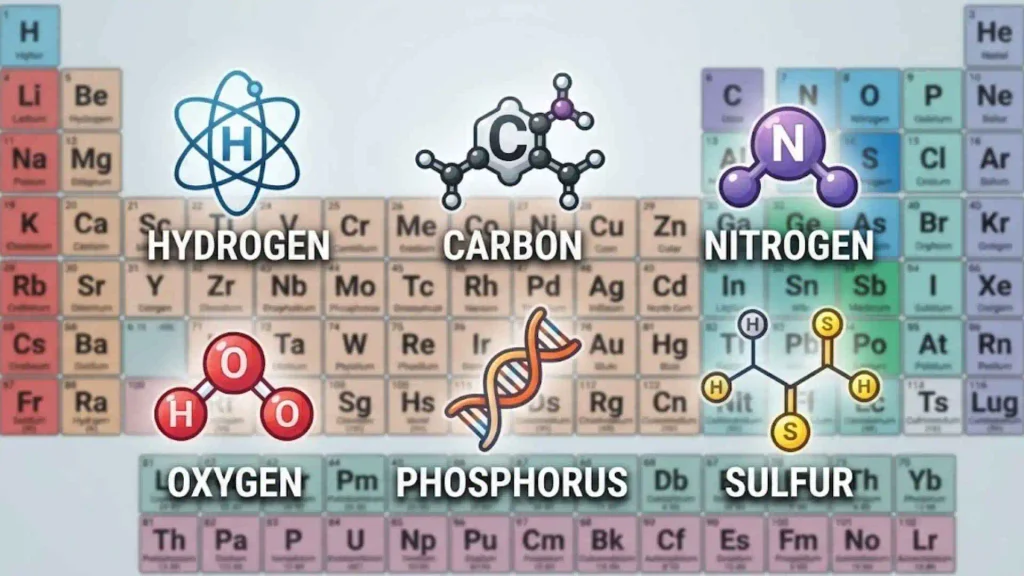
A full-size periodic table gives each element enough space for its name, symbol, and atomic number. It is particularly useful when the reader wants to see the complete layout rather than a simple alphabetical list.
The traditional layout places elements into periods and groups. The two rows commonly displayed underneath the main body contain the lanthanides and actinides, which are associated with periods 6 and 7.
A larger table can also make element families easier to identify. For example, the noble gases appear at the far right, while the alkali metals appear in the first group.
When creating a full-size printable chart, avoid making the element boxes so small that two-letter symbols or longer element names become difficult to read.
printable periodic table of elements with names and symbols
A printable periodic table works best when the information is organized visually. The most useful basic version contains the atomic number, symbol, and element name inside each element box.
For a study sheet, you can also leave some space around the table for handwritten notes. A version without background colors can save ink, while a categorized version can help students recognize element families.
Useful information to include
A practical printable chart may contain:
- Atomic number: The number of protons in the nucleus.
- Symbol: The standard one- or two-letter chemical abbreviation.
- Name: The full name of the element.
- Atomic mass: A value used for comparing the masses of atoms.
- Group: The vertical column in the periodic table.
- Period: The horizontal row.
Remember that the chemical symbol is case-sensitive. Co means cobalt, while CO is not the standard symbol for cobalt. Similarly, Ca is calcium, while CA is not its chemical symbol.
FAQ
How many elements are in the periodic table?
There are 118 officially recognized chemical elements, numbered from hydrogen at 1 to oganesson at 118.
What is the difference between an element name and its symbol?
The element name is the full word, such as oxygen, while its chemical symbol is O. Symbols are standardized abbreviations used throughout chemistry.
What is the first element on the periodic table?
Hydrogen is the first element. Its atomic number is 1 and its chemical symbol is H.
Which element has the symbol Au?
Au is the symbol for gold. The symbol comes from the Latin name aurum.
Why do some element symbols seem unrelated to their English names?
Several symbols come from historical or Latin names. For example, iron is Fe from ferrum, sodium is Na from natrium, and potassium is K from kalium.
Conclusion
The periodic table of elements with names and symbols provides a compact way to identify all 118 known elements. Atomic numbers, symbols, names, and atomic masses make the table useful for everything from basic memorization to everyday chemistry reference.
For students, the 1-to-30 list is a practical starting point, while the complete 1-to-118 tables provide a convenient reference for more advanced study. Printable and PDF versions can also make revision easier away from a computer.
When using chemical symbols, pay close attention to capitalization and similar-looking abbreviations. Keeping the correct symbol, element name, and atomic number together helps prevent mistakes when studying formulas, equations, and chemistry problems.

Hi, I’m Sienna Brooks, and I believe that the right words can inspire, comfort, and empower people at every stage of life. For as long as I can remember, I’ve been drawn to meaningful quotes and the stories behind them. I love curating collections of inspirational, motivational, and heartfelt quotes that resonate with readers around the world.
Through my writing, I strive to help others find encouragement, whether they’re celebrating life’s happiest moments or navigating its biggest challenges. I believe that wisdom is timeless, and I’m passionate about sharing words that leave a lasting impact.
I am the author of Reflections in Words and The Journey of Inspiration, two books dedicated to exploring the beauty and power of timeless quotes.
 Rowan Sinclair Rowan Sinclair