Kentucky state symbols are far more than dusty legislative decrees or simple icons printed on a map. They are the living, breathing soul of the Commonwealth, serving as a vibrant tapestry woven from centuries of rugged history, natural wonder, and deep cultural pride. When you look closely at these emblems, you uncover a beautiful story of resilience, unity, and a wild, unbridled spirit that defines the heart of America.
Quick Answer
Kentucky state symbols are the official emblems chosen by the Kentucky General Assembly to represent the state’s rich history, diverse ecology, and cultural heritage. Ranging from the brilliant Northern Cardinal to the legendary Thoroughbred, these symbols celebrate the unique identity and enduring spirit of the Bluegrass State.
Quick Facts About Kentucky State Symbols
| Aspect | Information |
| Origin | Established by the Kentucky General Assembly starting with the State Seal in 1792. |
| Historical Significance | Reflects the transition from a rugged frontier wilderness to a deeply unified commonwealth. |
| Main Meaning | Unyielding unity, natural abundance, and a fierce, independent spirit. |
| Spiritual Meaning | Harmony with nature, renewal, and the sacred bond of human fellowship. |
| Cultural Importance | Anchors local traditions, from horse racing to bluegrass music and outdoor heritage. |
| Modern Usage | Used in official government seals, tourism branding, educational curriculums, and local pride apparel. |
What Are Kentucky State Symbols?
At their core, state symbols are official icons designated by law to represent the values, geography, and history of a state. In Kentucky, this tradition began just months after the state was admitted to the Union as the fifteenth state on June 1, 1792. The very first official symbol was the State Seal, commissioned by the first Governor, Isaac Shelby, to establish a formal identity for the brand-new commonwealth.
Over the centuries, the list has grown to include animals, plants, minerals, and even an official state soft drink. Each addition represents a moment in time when Kentuckians paused to honor a specific piece of their home that brought them pride, joy, or economic prosperity.
Kentucky State Symbols List: Official Symbols and Emblems
Kentucky has many official state symbols that represent its wildlife, natural resources, history, and cultural traditions. These emblems help explain what makes the Commonwealth unique.
| State Symbol | Official Designation |
| State bird | Northern Cardinal |
| State flower | Goldenrod |
| State horse | Thoroughbred |
| State wild animal game species | Eastern Gray Squirrel |
| State butterfly | Viceroy Butterfly |
| State gemstone | Kentucky Agate |
| State motto | United We Stand, Divided We Fall |
| State song | My Old Kentucky Home |
| State flag | Kentucky State Flag |
| State seal | Seal of the Commonwealth of Kentucky |
These symbols represent different aspects of Kentucky’s identity. The Northern Cardinal represents the state’s birdlife, goldenrod highlights its natural beauty, and the Thoroughbred reflects its famous horse-racing tradition. The state flag and seal represent Kentucky’s history and government, while the official motto emphasizes unity and cooperation.
Kentucky State Symbols Images
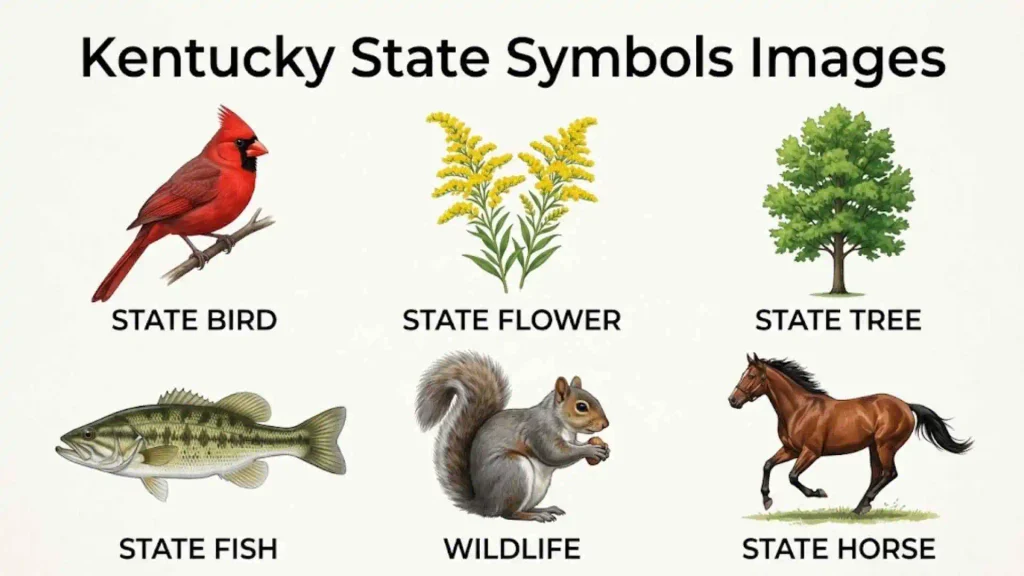
Images help readers recognize Kentucky’s official symbols quickly. A useful image collection can include the state flag, state seal, Northern Cardinal, goldenrod, Thoroughbred horse, and Viceroy Butterfly.
When adding Kentucky state symbols images to an article, use clear, accurate pictures and place a short caption beneath each image. For example, label a cardinal photograph “Kentucky State Bird” and a goldenrod photograph “Kentucky State Flower.”
For official emblems such as the state flag and seal, use reliable sources and check image licensing requirements before publishing. Accurate captions also help readers distinguish official state symbols from popular cultural icons.
Deep Symbolic Meaning of Kentucky State Symbols
Spiritual Level
On a spiritual level, many of Kentucky’s symbols reflect a deep connection to the earth and the cycle of life. The vibrant yellow Goldenrod, blooming late in the season, represents enduring hope and warmth even as winter approaches. The Northern Cardinal, with its brilliant red feathers, is often viewed in various spiritual traditions as a messenger of warmth, vitality, and a reminder that loved ones are never truly gone.
Psychological Level
Psychologically, Kentucky’s primary symbols tap into powerful archetypes of human connection. The State Seal, featuring two men embracing and shaking hands, acts as a profound representation of the Union archetype.
It speaks to the psychological need for community, reconciliation, and mutual support. The state’s famous motto, “United we stand, divided we fall,” serves as a collective psychological anchor, reminding individuals that strength is found in shared vulnerability and cooperation.
Cultural Level
Culturally, these symbols foster a fierce sense of place and belonging. Whether it is the soulful melody of the state song or the thundering hooves of the Thoroughbred, these emblems unite people across deep divides. They celebrate a shared heritage of survival, hard work, and hospitality that is uniquely Kentuckian.
Types and Variations of Kentucky State Symbols
Kentucky boasts an incredibly diverse array of official symbols. Here are some of the most prominent, categorized by their distinct roles.
The State Seal and Flag
- Visual Description: The seal features two men, a frontiersman in buckskin and a statesman in a frock coat, standing face-to-face, shaking hands and embracing. The flag places this seal on a field of deep navy blue, wreathed by goldenrod.
- Meaning & Symbolism: The ultimate symbol of unity. The frontiersman represents the rugged, pioneering spirit of early settlers, while the statesman represents diplomatic leadership and governance.
- Where It Appears: Government buildings, official documents, and flying proudly outside schools and historic sites.
Kentucky State Flag Meaning
The Kentucky state flag features a dark blue background with the state seal in the center. The seal includes two men clasping hands, the words “Commonwealth of Kentucky,” and the official state motto.
The two figures represent a frontiersman and a statesman, symbolizing Kentucky’s frontier heritage and civic leadership. Their handshake emphasizes unity, friendship, and cooperation. Goldenrod branches surrounding the seal connect the flag to Kentucky’s official state flower.
Together, these elements make the flag an important emblem of Kentucky’s history, government, and identity. It represents the idea that a strong Commonwealth depends on people working together.
The State Flower: Goldenrod (Solidago gigantea)
- Visual Description: Tall, elegant stalks topped with dense, feathery clusters of bright yellow wildflowers.
- Meaning & Symbolism: Resilience and adaptability. Goldenrod thrives in almost any soil condition, mirroring the stubborn, hardy nature of Kentuckians.
- Where It Appears: Fields, roadsides, and artistic designs across the state during late summer.
Kentucky State Tree: What Is Kentucky’s Official Tree?
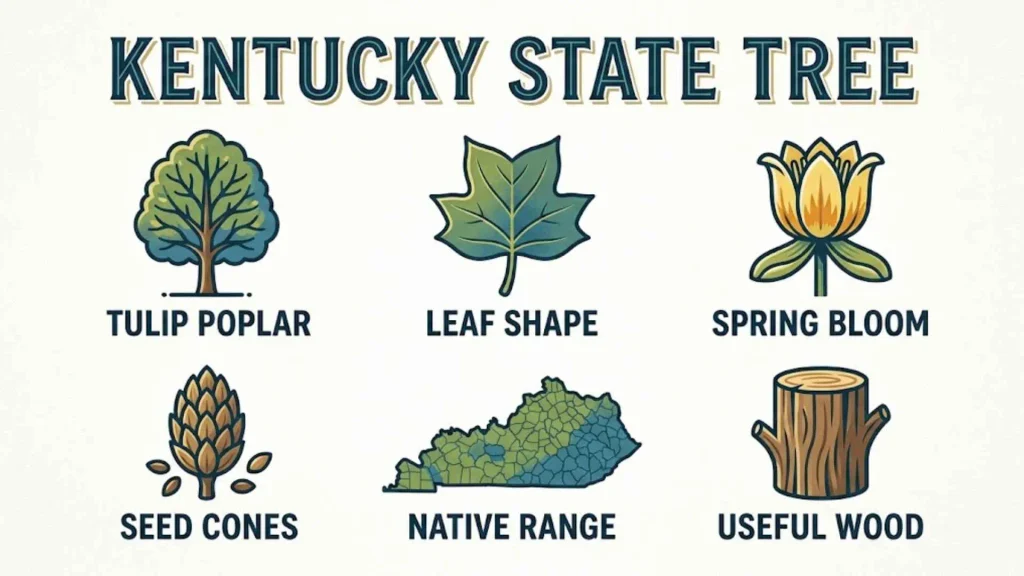
The tulip poplar (Liriodendron tulipifera), also known as the yellow poplar or tulip tree, is commonly associated with Kentucky’s forests. It is a tall native tree recognized for its distinctive leaves, straight trunk, and yellow-green flowers that resemble tulips.
Tulip poplars are valued for their wood and their role in the natural landscape. They provide habitat for wildlife and contribute to the beauty of wooded areas throughout the eastern United States, including Kentucky. When researching Kentucky’s official state tree, check the current state statutes to confirm its legal designation.
The State Bird: Northern Cardinal (Cardinalis cardinalis)
- Visual Description: The male is a striking, brilliant red with a black face mask and a prominent crest; the female is a soft, elegant warm brown.
- Meaning & Symbolism: Joy, focus, and year-round loyalty, as the cardinal does not migrate and stays to brighten Kentucky’s snowy winters.
- Where It Appears: Gardens, forests, state park logos, and local art.
The State Horse: Thoroughbred (Equus caballus)
- Visual Description: A sleek, powerful, and majestic horse bred for incredible speed and stamina.
- Meaning & Symbolism: Grace, power, freedom, and the state’s world-renowned equestrian heritage.
- Where It Appears: The rolling green pastures of Lexington, the Kentucky Derby, and the state’s coin designs.
What Is the State Animal of Kentucky?
What Is the State Animal of Kentucky?
Kentucky has several official animal designations, so it is important to distinguish between them. The Eastern Gray Squirrel is designated as Kentucky’s state wild animal game species, while the Thoroughbred is the official state horse.
Other animals are recognized in specific categories, including the Treeing Walker Coonhound as the state dog and the Eastern Hellbender as the state amphibian. These designations celebrate Kentucky’s wildlife, outdoor traditions, and equestrian heritage.
Rather than identifying one species as Kentucky’s only official state animal, readers should consider the particular category being discussed. This distinction makes it easier to understand Kentucky’s different animal symbols and their meanings.
Kentucky Symbols Across Different Cultures
While these symbols are officially American, the concepts they represent echo throughout global history and ancient civilizations:
+——————+————————————+——————————————+
| Culture | Related Symbol | Shared Meaning |
+——————+————————————+——————————————+
| Ancient Egypt | The Nile Lotus | Renewal and resilience (like Goldenrod) |
| Ancient Greece | Clasped Hands (Dextrarum Iunctio) | Concord, loyalty, and political alliance |
| Roman Culture | Pax (Goddess of Peace) | Civic harmony and strength in unity |
| Eastern Beliefs | Red Crowned Crane | Longevity and loyalty (like the Cardinal)|
| Indigenous | The Tulip Poplar | The “Canoe Wood,” representing survival |
+——————+————————————+——————————————+
Similar Symbols and Their Meanings
Sometimes, Kentucky’s symbols are confused with those of neighboring states. Let’s look at how they compare.
The Cardinal vs. Other State Birds
While Kentucky shares the Northern Cardinal with six other states, its meaning here is deeply tied to the land’s musical heritage. It acts as a natural soprano to the state’s rich history of folk and bluegrass music.
Goldenrod vs. Bluegrass
Many visitors assume Kentucky’s state flower must be bluegrass. However, bluegrass is actually a grass, and the state legislature famously chose the Goldenrod to represent the state’s floral beauty because of its striking visual presence in the autumn landscape.
Kentucky Hand Sign: What Does It Mean?
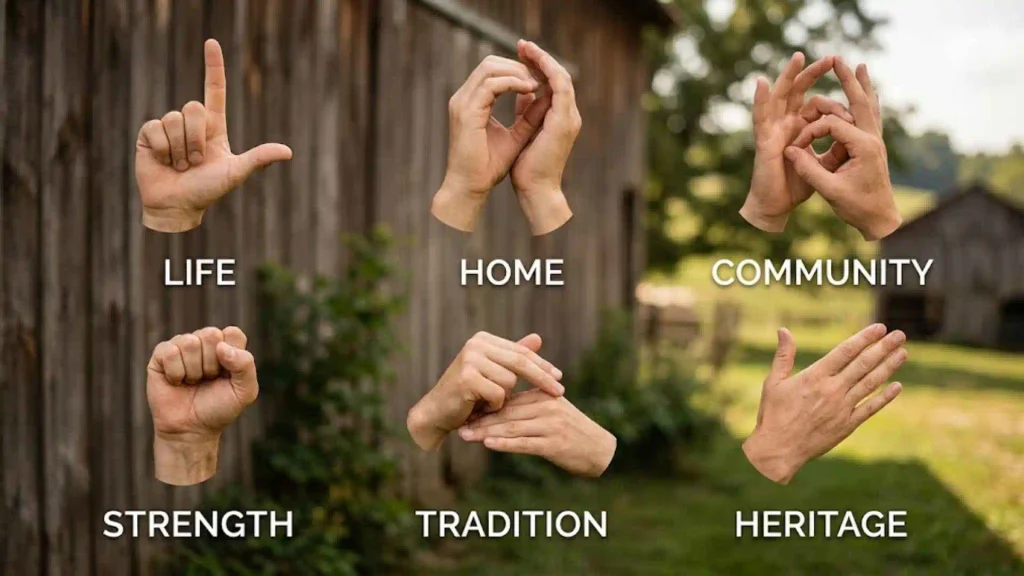
The phrase “Kentucky hand sign” may refer to gestures used by University of Kentucky Wildcats fans to express school spirit. Supporters sometimes use team-related gestures, chants, and signs at basketball games and other sporting events.
These gestures are different from Kentucky’s official state symbols, such as the state seal, flag, and motto. University hand signs represent a sports community, while official state emblems represent the Commonwealth itself.
When researching a Kentucky hand sign, check whether the reference concerns University of Kentucky athletics or an official state emblem. The context determines what the gesture means and whom it represents.
Kentucky Symbols in Art, Literature, and Pop Culture
The symbols of Kentucky have long captured the imaginations of artists and storytellers.
- Music: Stephen Foster’s legendary ballad “My Old Kentucky Home” serves as the official state song, evoking deep, emotional imagery of the state’s landscape.
- Beverages: Kentucky is the only state to honor a regional, historic ginger-and-citrus soda, Ale-8-One, as its official soft drink, showcasing the state’s quirky and beloved culinary pop culture.
- Literature: The rugged frontiersman of the State Seal has been romanticized in countless novels and tall tales about Daniel Boone and the taming of the American wilderness.
Things That Represent Kentucky
Kentucky is associated with many things beyond its official state symbols. Thoroughbred horse racing, bluegrass music, bourbon heritage, Appalachian traditions, and the rolling pastures of the Bluegrass region all contribute to the state’s identity.
The Kentucky Derby is one of its best-known sporting events, while “My Old Kentucky Home” is an important part of its musical heritage. The state flag and seal represent its civic identity, and the Northern Cardinal and goldenrod highlight its natural environment.
These symbols and traditions help explain why Kentucky is known as the Bluegrass State. However, not every famous Kentucky tradition is an official symbol designated by state law. Keeping that distinction clear helps readers understand the difference between legal state emblems and cultural associations.
Positive and Negative Meanings of Kentucky Symbols
Even the most beautiful symbols carry a balance of light and shadow.
| Positive Meaning | Negative Meaning (The Shadow) |
| The Handshake: Cooperation, friendship, and peace. | The Handshake: Historical political compromise and hidden agendas. |
| Goldenrod: Wealth, sunshine, and natural beauty. | Goldenrod: Frequently misidentified as the cause of seasonal hay fever allergies. |
| The Thoroughbred: Nobility, beauty, and athletic grace. | The Thoroughbred: Association with high-stakes gambling and class divisions. |
Why Humans Are Attracted to Kentucky State Symbols
Psychologically, humans are hardwired for pattern recognition and storytelling. We seek out symbols because they condense massive, complex ideas, like historical struggle, freedom, and community pride, into simple, visual anchors.
When a Kentuckian sees a red cardinal in a snowdrift or hears the opening chords of “My Old Kentucky Home,” it triggers a profound emotional response. It taps into a shared cultural memory, offering a deep sense of belonging and reminding us of where we come from and what we stand for.
Interesting Facts About Kentucky State Symbols
- The Goldenrod’s Victory: The Goldenrod was chosen as the state flower in 1926, replacing bluegrass, which legislators realized was not technically a flower!
- The Changing Seal: Early versions of the State Seal were incredibly creative. Some showed the two men in full, dramatic hugs, while others wore top hats or cloaks. It wasn’t until 1962 that the modern handshake design was finalized.
- A Real Gem: The official state gemstone is the rare and beautiful Kentucky Agate, known for its stunning, swirling bands of red, blue, and yellow.
- The Flying Mimic: The official state butterfly is the Viceroy, which looks almost identical to the Monarch butterfly to trick predators into thinking it is toxic.
- The Unofficial Grass: Despite being universally known as the “Bluegrass State,” Kentucky has never actually passed a law making bluegrass an official state symbol!
Frequently Asked Questions
What is the official state bird of Kentucky?
The official state bird of Kentucky is the Northern Cardinal (Cardinalis cardinalis), adopted in 1926. It is beloved for its bright red color and sweet song, and it stays in Kentucky all year round.
Why are there two men on the Kentucky State Seal?
The two men on the seal, a frontiersman and a statesman, represent the union of Kentucky’s rugged pioneers and its political leaders. Their handshake symbolizes the state’s motto: “United we stand, divided we fall”.
Is Kentucky bluegrass the official state flower?
No, the official state flower is the Goldenrod. Bluegrass is a grass and was replaced by the Goldenrod in 1926 because the state wanted a true, blooming wildflower to represent them.
What is Kentucky’s official state horse?
The official state horse is the Thoroughbred, designated in 1996. Kentucky is world-famous for its horse farms, and over thirty percent of all Thoroughbred births in the United States happen within the state.
Conclusion
Kentucky state symbols are far more than mere political designations; they are the heart and history of the Commonwealth made visible. From the quiet resilience of the goldenrod to the fierce determination of the pioneers on the state seal, these icons remind us of the power of unity and the beauty of the natural world. They invite us to look closer at the land we walk upon, urging us to stand united, run fast, and live with an unbridled spirit.

Hello, I’m Rowan Sinclair, a passionate writer and lifelong admirer of the wisdom found in great quotes. I believe that words have the ability to inspire change, spark creativity, and connect people across cultures and generations.
I enjoy writing about motivational quotes, famous sayings, and lessons from history’s most influential thinkers. Every article I create is driven by my desire to help readers discover meaningful insights that they can apply to their own lives.
When I’m not writing, I spend my time reading biographies, exploring classic literature, and collecting memorable quotes that deserve to be shared with the world.
I am the author of Voices That Inspire and A Collection of Timeless Thoughts, two books that celebrate the enduring power of words and the stories behind them.
 Sienna Brooks