Gaming symbols are far more than mere decorations on a plastic controller or glowing icons on a screen. They are the universal language of modern storytelling, bridging the gap between cold computer code and deep human emotion. Every time you press a glowing button or follow a cryptic emblem on a map, you are interacting with a rich tapestry of history, psychology, and art that connects players across the globe.
Quick Answer: What Are Gaming Symbols?
Gaming symbols are visual icons, glyphs, and button layouts used in video games and hardware to communicate actions, status, and narrative meaning. From PlayStation’s iconic geometric shapes to the universal health heart, these symbols bypass language barriers to instantly trigger psychological responses, guide player behavior, and build massive cultural communities.
Quick Facts About Gaming Symbols
| Aspect | Information |
| Origin | Early arcade cabinets (1970s) and early console controllers like the NES (1980s). |
| Historical Significance | Revolutionized user interface (UI) design, transforming complex commands into intuitive, global visual shortcuts. |
| Main Meaning | Direct action, agency, choices, and navigation within virtual environments. |
| Spiritual Meaning | The journey of the hero, rebirth (respawning), trial by fire, and the pursuit of mastery. |
| Cultural Importance | Serves as a unifying global dialect for billions of gamers, transcending spoken language. |
| Modern Usage | Streetwear fashion, professional esports branding, tattoos, interface design, and mainstream pop culture. |
What Are Gaming Symbols?
At their core, gaming symbols are simplified visual representations designed to communicate complex information instantly. In the early days of video games, developers faced a massive challenge: limited screen space and hardware memory. They could not write out long instructions, so they turned to iconography.
The birth of the modern gaming symbol began in earnest with early arcade machines and home consoles. When Nintendo launched the NES in the 1980s, the simple “A” and “B” buttons established a foundational syntax for play. Over the decades, as games evolved from flat pixels to cinematic 3D worlds, these symbols evolved too. They became highly sophisticated graphic systems.
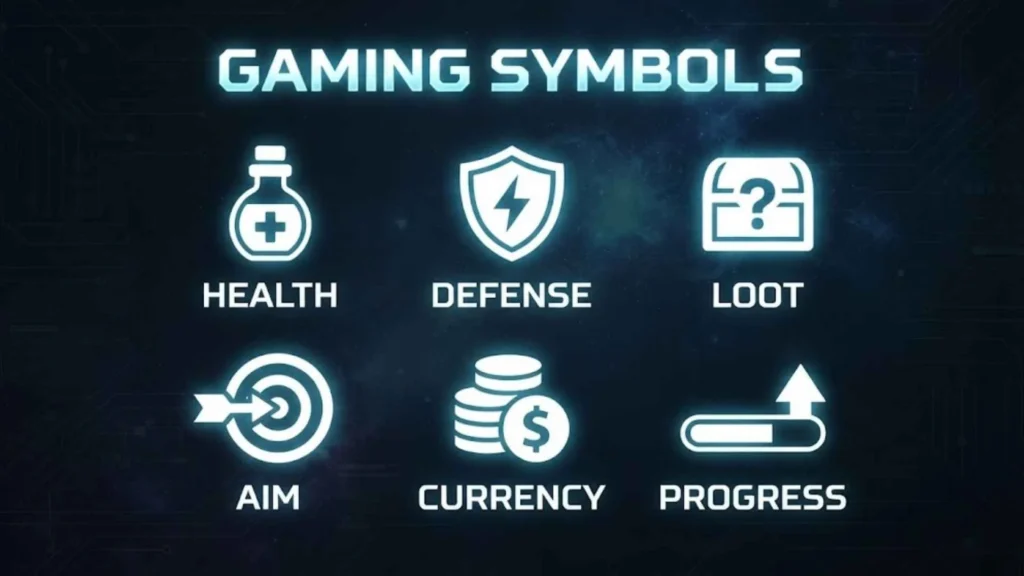
Today, gaming symbols encompass controller buttons, head-up display (HUD) icons, faction crests, and character logos. They are crucial because they make games intuitive. Without them, a player would have to read a manual just to figure out how to open a door or check their health. By replacing text with universally understood visuals, gaming symbols created a frictionless language of play.
Deep Symbolic Meaning of Gaming Symbols
Behind every simple crosshair or glowing symbol lies a deeper layer of human meaning that resonates on multiple levels.
Spiritual Level
On a spiritual level, gaming symbols mirror the ancient “Hero’s Journey.” The “Respawn” symbol, for example, is a modern metaphor for reincarnation and endless resilience. It teaches us that failure is not the end, but a necessary step toward enlightenment and mastery. The health bar or glowing heart represents the vital life force, resembling the spiritual concept of Prana or Qi (the energy that flows through all living things). When we play, we undergo an inner transformation, testing our focus, patience, and resolve against digital trials.
Psychological Level
Psychologically, gaming symbols tap directly into Jungian archetypes. The legendary Triforce from The Legend of Zelda is a perfect example. It is a psychological map of the self, balancing Power (the Shadow/Id), Wisdom (the Anima/Super-ego), and Courage (the Ego).
These icons trigger deep emotional attraction because they offer a sense of control and clarity that the real world often lacks. In a game, a simple symbol tells you exactly where to go or what you need to heal. This satisfies our psychological desire for order, achievement, and safety.
Cultural Level
Culturally, these symbols act as modern tribal markers. Wearing a shirt emblazoned with the Horde crest from World of Warcraft or the Alliance lion is a social signal. It tells the world about your values, your community, and your shared history. These symbols foster deep bonds of belonging, allowing two strangers from completely different continents to instantly connect over a shared digital heritage.
Types and Variations of Gaming Symbols
▲ (Triangle) – Perspective / Movement
█ █ (Square) – Map / Document / Options
● (Circle) – Cancel / Back / Action
✖ (Cross) – Confirm / Jump / Select
The PlayStation Controller Shapes
- Visual Description: A green triangle, a red circle, a blue cross (X), and a pink square.
- Meaning: Teiyu Goto, the designer of the original PlayStation controller, assigned specific meanings to each shape. The Triangle represents a viewpoint or direction (pointing forward). The Square represents a sheet of paper (menus or documents). The Circle and Cross represent “Yes” and “No” decisions (though their meanings were swapped in Western markets).
- Symbolism: Balance, decision-making, and structured spatial navigation.
- Cultural Connection: This is arguably the most recognizable set of symbols in entertainment history, representing the global rise of 3D gaming.
- Where It Appears: Consoles, merchandise, television shows, and pop culture apparel.
The Health Heart
- Visual Description: A simple, usually red, pixelated or stylized heart icon.
- Meaning: Represents a player’s remaining life force or hit points (HP).
- Symbolism: Vitality, vulnerability, love, and survival.
- Cultural Connection: Derived from traditional card suits, popularized by The Legend of Zelda (1986).
- Where It Appears: Retro art, mainstream health tracking apps, and gaming interfaces worldwide.
The Mana/Magic Bottle
- Visual Description: A small glass vial filled with glowing blue liquid.
- Meaning: Represents the resource needed to cast spells or perform special abilities.
- Symbolism: Hidden potential, mental energy, and mystical knowledge.
- Cultural Connection: Rooted in ancient alchemy and fantasy literature, solidified by early role-playing games like Ultima and Diablo.
- Where It Appears: Fantasy RPGs, tabletop games, and digital fantasy art.
The Save Floppy Disk
- Visual Description: A small, square 3.5-inch plastic computer diskette.
- Meaning: The command to save progress in a game or application.
- Symbolism: Preservation, memory, and safety from loss.
- Cultural Connection: An amazing example of a “skeuomorph” (a digital icon that mimics a physical object that is now obsolete). Many younger gamers have never seen a physical floppy disk, yet they instantly know what the symbol means.
- Where It Appears: PC games, retro titles, and office software suites.
Gaming Symbols Aesthetic
Gaming symbols aesthetic designs ko visually attractive aur unique banane ke liye use kiye jate hain. In mein stars, swords, crowns, skulls, lightning bolts, shields, arrows aur decorative Unicode characters shamil ho sakte hain. Gamers in symbols ko usernames, profiles, bios, clan names aur gaming posts mein use karte hain.
Kuch popular aesthetic gaming symbols include:
- ⚔️ Sword symbols
- ♛ Crown symbols
- ★ Star symbols
- ☠ Skull symbols
- ⚡ Lightning symbols
- 〆 Decorative name symbols
- 『 』 Bracket-style symbols
- ツ Japanese-style decorative characters
Gaming Symbols for Free Fire
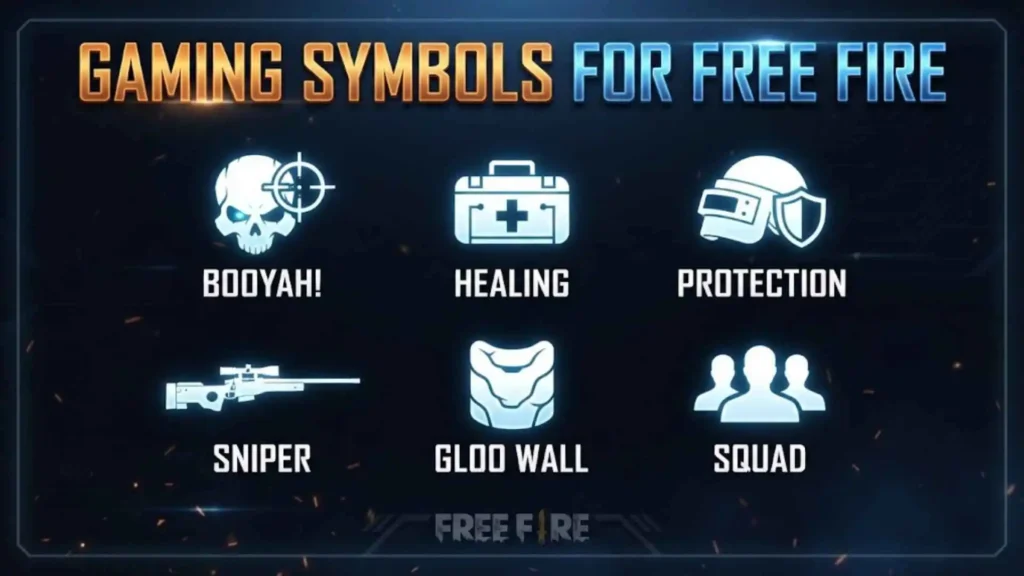
Free Fire players aksar stylish symbols ko usernames aur squad names ko different look dene ke liye use karte hain. Common choices mein crowns, swords, stars, skulls, arrows aur special Unicode characters shamil hain.
Examples include:
- 亗
- 〆
- ꧁༺༻꧂
- ★
- 乂
- メ
- 彡
- ♛
- ⚔
- ☠
Har symbol game ke andar equally supported nahi hota, is liye username set karne se pehle check karna useful hota hai.
Gaming Symbols for PUBG
PUBG mein gaming symbols usernames, clan names aur profile descriptions ko customize karne ke liye popular hain. Players aksar military-style, competitive aur aggressive-looking characters choose karte hain.
Popular PUBG-style symbols include:
- 么
- 乂
- 〆
- 彡
- 『』
- ★
- ♛
- ⚔
- ☠
- ➳
Aap in symbols ko letters ke saath combine karke ek personalized gaming name bana sakte hain.
Gaming Symbols Text Generator
A gaming symbols text generator ek tool hota hai jo normal text ko stylish gaming text ya decorative symbols mein convert karne mein madad karta hai. Ye tools usernames, clan names, bios aur social media profiles ke liye different Unicode characters generate kar sakte hain.
For example, a simple name can be decorated with characters such as 亗, 〆, ★, メ, 彡, ꧁, ꧂ and similar symbols. Generated text ko copy karke kisi supported game ya platform par paste kiya ja sakta hai.
Iconic Gaming Symbols
Kuch gaming symbols itne recognizable hain ke woh gaming culture ka part ban chuke hain. Swords, crowns, skulls, shields, controllers, crosshairs, lightning bolts aur stars commonly gaming themes ko represent karte hain.
For example, a sword can suggest combat, a crown can represent victory or status, while a shield can suggest defense. Their meaning can change depending on the game, community or design.
Cool Gaming Symbols
Cool gaming symbols usernames aur profiles ko distinctive appearance dene ka simple way hain. Players apni preferred gaming style ke according aggressive, futuristic, mysterious ya minimal symbols select kar sakte hain.
Some examples are:
- ⚡
- ⚔
- ☠
- ♛
- ★
- ✦
- 乂
- 〆
- 彡
- メ
- 『』
- 亗
In symbols ko letters, numbers aur other decorative characters ke saath combine karke different username styles create kiye ja sakte hain.
Gaming Symbols Text
Gaming symbols text usually refers to decorative Unicode characters that can be combined with ordinary letters and numbers. Unlike standard keyboard letters, these characters can give usernames and gaming profiles a more distinctive appearance.
For example, simple text such as PRO GAMER can be decorated with symbols around it, creating styles such as ★ PRO GAMER ★ or 『PRO GAMER』. The exact appearance depends on the device, game and font support.
Fortnite Gaming Symbols
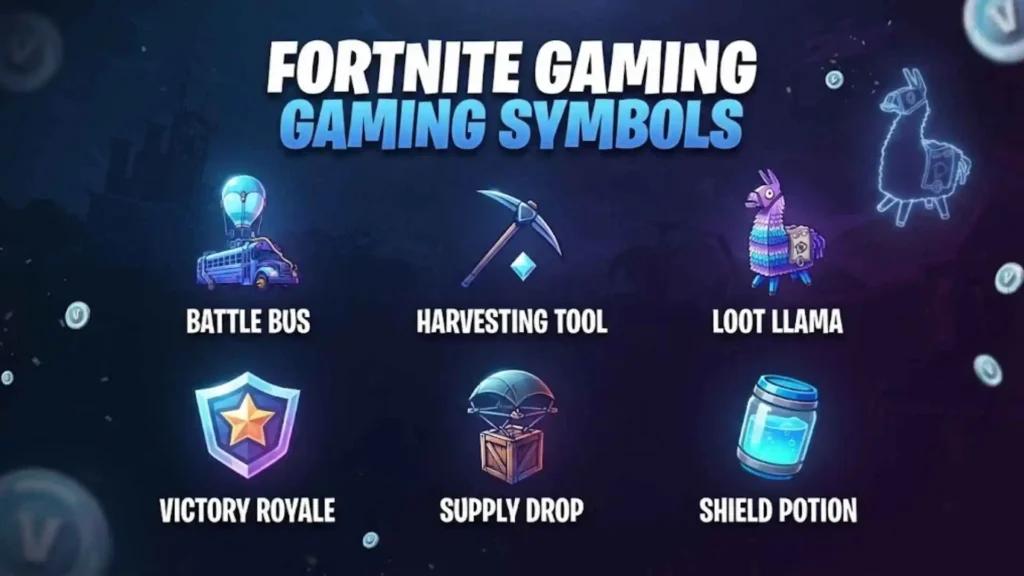
Fortnite players gaming symbols ko usernames, display names, social profiles aur creative gaming content mein use kar sakte hain. Stars, lightning bolts, crowns, arrows and geometric symbols are common choices for a modern gaming aesthetic.
Examples include:
- ★
- ✦
- ⚡
- ♛
- ➤
- ✧
- 〆
- 乂
- 『』
- ツ
Because Fortnite and other platforms can have restrictions on supported characters, some decorative symbols may not work everywhere.
Popular Gaming Symbols
Popular gaming symbols include characters associated with competition, power, victory and gaming culture. Some of the most frequently used choices are swords, crowns, skulls, stars, shields and lightning bolts.
A few popular options are:
- ⚔ — combat or battle
- ♛ — victory or status
- ☠ — danger or toughness
- ★ — achievement or popularity
- ⚡ — speed or energy
- 🛡 — defense
- 🎮 — gaming
- 🎯 — accuracy or competition
Logo Gaming Symbols
Logo gaming symbols are graphic or Unicode characters that can complement a gaming brand, team name or personal identity. Common visual ideas include shields, crowns, swords, controllers, lightning bolts and geometric shapes.
For professional logos, symbols are usually designed as custom graphics rather than simple Unicode characters. However, Unicode gaming symbols can work well for usernames, social media bios, team descriptions and informal branding.
10 Boost Hot Felix Gaming Symbols Highest Pay
The phrase “10 boost hot felix gaming symbols highest pay” appears to combine several unrelated search terms. For an article about gaming symbols, it is more useful to focus on symbols that represent boosts, rewards, power and high-level gaming.
Examples include:
- ⚡ — boost or energy
- 🚀 — rapid progress
- 🔥 — high performance or popularity
- 💎 — premium rewards
- 👑 — high rank
- 🏆 — achievement
- ⭐ — rating or success
- 🎯 — precision
- 💰 — rewards or earnings
- ⚔ — competition
These symbols can be used decoratively in gaming content, although their meaning depends on the context in which they appear.
Video Gaming Symbols
Video gaming symbols can represent different aspects of gaming, including controllers, competition, combat, achievements and strategy. Some symbols are literal, while others are decorative.
Common examples include:
- 🎮 — video gaming
- 🕹 — arcade or classic gaming
- 🏆 — achievement
- 🎯 — target or accuracy
- ⚔ — combat
- 🛡 — defense
- 👾 — arcade gaming
- 💎 — rewards
- ⚡ — speed or power
- 🔥 — excitement or performance
Gaming Symbols and Logos
Gaming symbols and logos are often used together to create a recognizable visual identity. A gaming logo might combine a symbol such as a shield, sword, skull, crown or controller with a team or player name.
Unicode symbols are useful for quick text-based designs, while custom logos provide more control over colors, shapes, fonts and branding. This makes custom logos particularly useful for esports teams, gaming channels and gaming communities.
Japanese Gaming Symbols
Japanese characters and Japanese-inspired symbols are popular in gaming because they can create a distinctive visual style. Characters such as ツ, 乂, 々, 〆 are frequently seen in usernames and decorative gaming names.
It is important to distinguish actual Japanese characters from decorative symbols. For example, ツ is a Japanese katakana character representing the sound “tsu,” while some other commonly used gaming characters may simply be Unicode symbols rather than Japanese words.
Tattoo Gaming Symbols
Gaming symbols can also inspire tattoo designs for people who want to represent their connection with video games. Popular ideas include controllers, game-specific icons, swords, shields, pixel art, crowns and recognizable symbols from favorite games.
A gaming tattoo can be minimal, such as a small controller outline, or more detailed, combining several gaming elements into one design. Before choosing a symbol from a particular game, it is worth understanding its original meaning and how recognizable it is within that game’s community.
Bullets and Bounty Hacksaw Gaming Symbols List
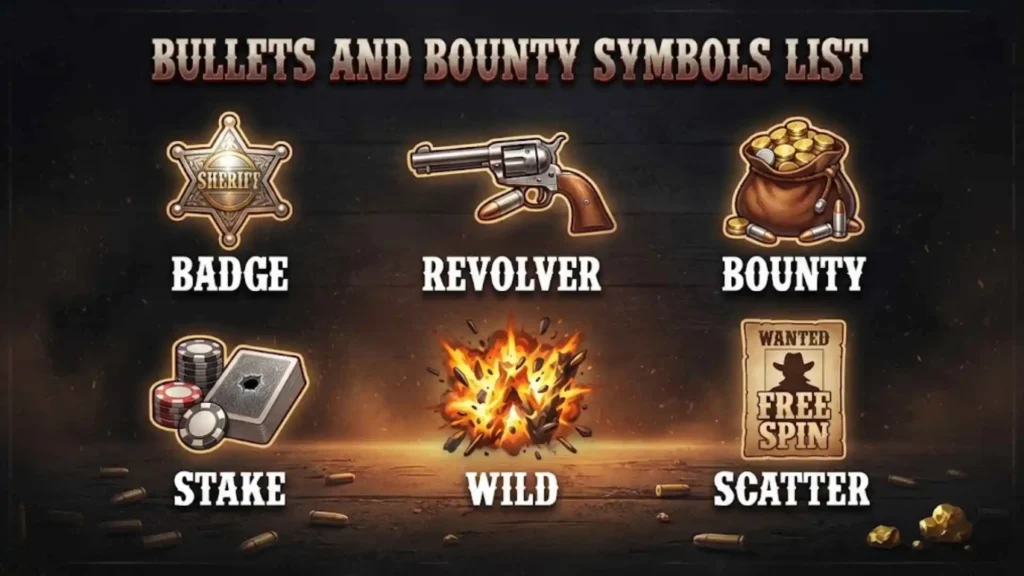
Bullets and Bounty and Hacksaw Gaming are names associated with gaming content, while “symbols list” can refer to the visual symbols used within a particular game or gaming theme. If you are discussing gaming symbols generally, bullets, weapons, rewards, shields and target-style icons are common visual motifs.
Examples of text-friendly symbols include:
- • — bullet point
- ◉ — target-like symbol
- ➤ — directional arrow
- ⚔ — combat
- 🛡 — defense
- 🎯 — target
- ★ — reward or achievement
- ⚡ — speed or power
Specific in-game symbols can vary by title, so they should be identified according to the particular game being discussed.
Chinese Gaming Symbols
Chinese characters are sometimes used in gaming usernames and designs because they can provide a distinctive visual style. Characters with meanings related to strength, victory, speed or power may be selected for decorative purposes.
For example, 龙 means “dragon,” 王 means “king,” and 战 is associated with “battle” or “war.” These are actual Chinese characters rather than random decorative symbols. Players should use them accurately because combining characters without understanding their meanings can produce an unintended phrase.
Gaming Symbols Across Different Cultures
Gaming symbols did not emerge in a vacuum. They are deeply influenced by ancient human iconography and cultural traditions.
Ancient Egypt
The concept of “Extra Lives” and “Respawns” heavily mirrors the ancient Egyptian obsession with the afterlife and the journey of the soul. The Ankh, the ancient symbol of life, is frequently used in modern games to represent healing, resurrection, or divine protection.
Ancient Greece
Many video game studios and symbol designs borrow directly from Greek mythology. The Omega symbol ($\Omega$), the last letter of the Greek alphabet, is famously used as the logo for the God of War series. In this context, it symbolizes the ultimate end, destruction, and the wrath of Kratos.
Roman Culture
Roman military standards and laurels are widely used in strategy and competitive games. The laurel wreath symbol, which represented victory and honor in ancient Rome, is still the universal gaming symbol for achievements, high scores, and tournament wins.
Eastern Traditions
The influence of Eastern philosophy is massive in gaming iconography. The concept of Yin and Yang (balance) is often coded into character design and faction symbols. Japanese gaming companies also brought traditional cultural symbols to the global stage, such as the Tomoe (a comma-like pattern representing water and cosmic energy) seen in many anime-style games.
Indigenous Traditions
Many adventure and survival games incorporate symbols inspired by Native American, Celtic, and Norse runic traditions. These symbols are used to represent connection to nature, elemental magic, and ancestral wisdom, giving game worlds a deep, grounded sense of ancient history.
Modern Interpretations
In our globalized world, modern gaming symbols have become a culture of their own. They have evolved past regional differences. A gamer in Tokyo, a gamer in Nairobi, and a gamer in New York all understand the meaning of a yellow exclamation mark floating above a character’s head: an adventure awaits.
Similar Symbols and Their Meanings
To truly understand gaming symbols, it is helpful to see how they compare to older, traditional symbols.
| Gaming Symbol | Traditional Equivalent | Similarities | Differences | Common Misconception |
| D-Pad (Directional Pad) | Compass Rose | Both guide movement and indicate direction. | The D-Pad is mechanical and tactile; the compass is geographical and magnetic. | People think the D-Pad was designed just for movement, but it was also created to fit comfortably in a pocket. |
| Inventory Bag | Cornucopia / Satchel | Both represent wealth, resources, and carrying capacity. | The inventory bag is often infinite and mathematically managed on a screen. | Gamers often mistake the icon for a simple backpack, when it actually represents the player’s entire strategic utility. |
| The Red Cross | Caduceus / Rod of Asclepius | Both represent healing, medicine, and recovery. | The Red Cross in games is a simplified, highly visible icon for instant health. | Many games had to change their red cross symbols to red crosses on white backgrounds, or green crosses, to avoid violating the Geneva Conventions. |
Gaming Symbols in Mythology and Folklore
The symbols we see on our screens are often digital versions of ancient myths. Consider the Ouroboros (a snake eating its own tail), which appears in games like The Elder Scrolls Online. This ancient mythological symbol of infinity and eternal return perfectly matches the endless cycle of online gaming worlds, where players log in, defeat monsters, collect loot, and repeat the cycle forever.
Similarly, Norse runes are frequently carved into the stone walls of virtual ruins in games like Assassin’s Creed Valhalla or Hellblade. These symbols are not just decorative; they carry the weight of real-world folklore, signaling to the player that they are stepping into a realm of magic, fate, and cosmic struggle. By using these ancient symbols, game developers tap into centuries of storytelling, making their virtual worlds feel instantly deep and mysterious.
Gaming Symbols in Art, Literature, and Pop Culture
Gaming symbols have successfully broken out of the virtual world and entered mainstream culture.
- Tattoos: Millions of people have permanently inked gaming symbols onto their skin. The Half-Life lambda symbol ($\lambda$), the Assassin’s Creed crest, or the simple PlayStation buttons are incredibly popular. These tattoos represent a deeply personal connection to a story that shaped their lives.
- Fashion and Design: High-end fashion houses and streetwear brands regularly collaborate with gaming franchises. Symbols like the Cyberpunk 2077 samurai logo or the Minecraft creeper face are used to create bold, modern aesthetic statements.
- Television and Movies: Hit shows like Squid Game famously used the circle, triangle, and square symbols on the masks of the guards. While these are basic geometric shapes, their arrangement instantly recalled the visual language of gaming controllers, adding an eerie, gamified feel to the story.
Spiritual and Dream Meaning of Gaming Symbols
Because we spend so much time interacting with these icons, they frequently show up in our dreams. Dreaming of gaming symbols can be a fascinating window into our subconscious mind.
- Dreaming of a Health Bar: If you dream of a draining health bar, it is often a psychological warning. Your mind might be telling you that you are burning out, feeling exhausted, or neglecting your physical and emotional well-being in your waking life.
- Dreaming of a Save Icon: Seeing a save icon in a dream suggests a deep-seated need for security, stability, or a desire to pause a chaotic situation in your life and evaluate your options.
- Positive Messages: Dreaming of leveling up or receiving a trophy symbol represents self-confidence, personal growth, and the feeling that you are successfully overcoming challenges.
- Cautionary Messages: Seeing a constant “Game Over” screen or a locked symbol in your dreams can point to feelings of helplessness, fear of failure, or a sign that you are approaching a problem in your life with the wrong strategy.
Positive and Negative Meanings of Gaming Symbols
Gaming symbols often carry a dual nature, representing both light and shadow depending on the context of the experience.
| Positive Meaning (The Light) | Negative Meaning (The Shadow) |
| Connection: Brings players together across borders, fostering friendships and teamwork. | Isolation: Overuse of digital spaces can lead to social withdrawal and loneliness. |
| Empowerment (Level Up): Inspires personal growth, learning, and the pursuit of goals. | Addiction (The Grind): Endless reward symbols can trap players in repetitive, unhealthy loops. |
| Resilience (Respawn): Teaches that failure is temporary and we can always try again. | Escapism: Using virtual worlds to completely run away from real-world responsibilities. |
Why Humans Are Attracted to Gaming Symbols
Our attraction to gaming symbols is hardwired into human psychology. Humans are naturally pattern-seeking creatures. From the dawn of time, we looked at the stars and drew constellations to make sense of the night sky. Gaming symbols do the exact same thing for a digital landscape. They organize chaos into recognizable patterns.
Furthermore, these symbols tap into our collective memory. We are drawn to them because they offer a sense of agency. In a world where we often feel powerless over our jobs, relationships, or the future, pressing a button with a clear symbol produces an instant, predictable result. This micro-dose of control and accomplishment releases dopamine, making the symbolic world of gaming incredibly satisfying and comforting.
Modern Uses of Gaming Symbols
Today, gaming symbols are used in creative ways far beyond the screen:
- Branding and Marketing: Tech companies and lifestyle brands use clean, gaming-inspired icons to appear modern, dynamic, and youth-oriented.
- Home Decor: Glowing LED neon lights of the PlayStation symbols or the Pac-Man ghosts have become staples of modern interior design, transforming bedrooms and offices into creative spaces.
- Social Media: Streamers and content creators use custom gaming symbols and emotes to build unique brands and interact live with millions of viewers.
- Contemporary Spirituality: Some modern practitioners of mindfulness use the concept of “leveling up” or “mana replenishment” as creative visualization techniques to manage daily anxiety and energy levels.
Interesting Facts About Gaming Symbols
- The Wi-Fi Style Loading Bar: The loading icon we see today was inspired by traditional physical progress indicators, but games turned them into interactive mini-games to make waiting fun.
- The Origin of the D-Pad: Gunpei Yokoi, a legendary Nintendo designer, invented the D-Pad for the Game & Watch handheld version of Donkey Kong in 1982 because a joystick was too bulky to fold up.
- The Hidden Meaning of “X”: In Japan, the “X” symbol on a controller traditionally meant “Cancel” or “No,” while the “O” meant “OK” or “Yes.” This is why early PlayStation games import designs often had reversed button actions for Western players.
- The Red Ring of Death: One of the most infamous gaming symbols was never designed by an artist. The glowing red ring on the Xbox 360 power button became a terrifying symbol of hardware failure for millions of players.
- The Golden Ratio: Many iconic game symbols, like the Half-Life logo and the Commodore 64 mark, were designed using the Golden Ratio to ensure they are visually pleasing to the human eye.
Frequently Asked Questions
What do the symbols on the PlayStation controller mean?
The green Triangle represents a camera viewpoint or direction. The pink Square represents a map, menu, or document. The red Circle and blue Cross represent “Yes” (confirm) and “No” (cancel) choices, though these functions were often swapped in Western video games.
why do video games use symbols instead of words?
Symbols are processed by the human brain much faster than text. They break down language barriers, allowing game developers to sell their games globally without needing to translate every single button prompt or interface icon.
What is the origin of the health heart symbol in gaming?
The health heart symbol was popularized by The Legend of Zelda on the NES in 1986. Shigeru Miyamoto and his team used hearts to give players a clear, emotional representation of their life force and vulnerability.
Why is the floppy disk still used as a save symbol?
The floppy disk is a “skeuomorph,” a design feature that mimics a real-world object. Even though floppy disks are obsolete, the symbol is so deeply ingrained in global culture that changing it would confuse users.
Conclusion
Gaming symbols have evolved from simple pixels designed out of technical necessity into a profound global language. They connect our ancient mythological past with our digital future, offering us comfort, identity, and a sense of triumph. The next time you pick up a controller or look at a game menu, take a moment to appreciate the incredible history and psychology resting right beneath your fingertips.

Hi, I’m Sienna Brooks, and I believe that the right words can inspire, comfort, and empower people at every stage of life. For as long as I can remember, I’ve been drawn to meaningful quotes and the stories behind them. I love curating collections of inspirational, motivational, and heartfelt quotes that resonate with readers around the world.
Through my writing, I strive to help others find encouragement, whether they’re celebrating life’s happiest moments or navigating its biggest challenges. I believe that wisdom is timeless, and I’m passionate about sharing words that leave a lasting impact.
I am the author of Reflections in Words and The Journey of Inspiration, two books dedicated to exploring the beauty and power of timeless quotes.
 Rowan Sinclair Rowan Sinclair