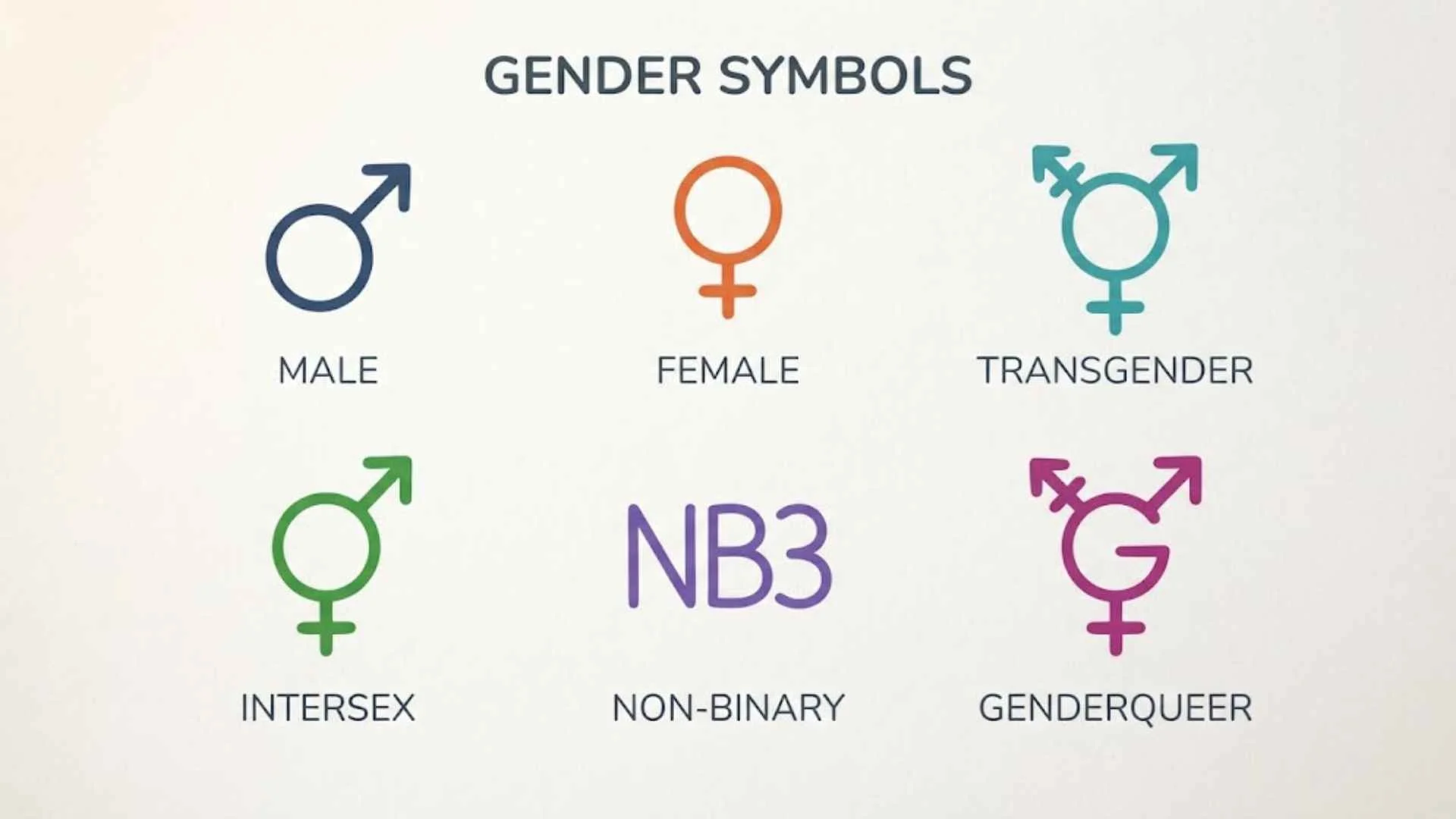
Gender symbols are familiar signs used to represent male, female, gender identity, and related concepts. You may see them on bathrooms, forms, clothing, websites, apps, games, and social media.
The most recognizable examples are the male symbol ♂ and female symbol ♀, but there are many other symbols connected with nonbinary, transgender, intersex, and LGBTQ+ identities. Some are official Unicode characters, while others are graphic symbols rather than standard text characters.
This guide explains the meanings and origins of common gender symbols, provides copy-and-paste characters, and looks at how gender signs are used in bathrooms, games such as Pokémon and Planet Zoo, and modern LGBTQ+ contexts.
Female Gender Symbols
The most widely recognized female gender symbol is ♀.
♀ — Female symbol
This symbol is traditionally associated with women and the female sex. It is commonly seen on signs, charts, forms, medical information, and other contexts where a female designation is needed.
The female symbol is also used in combinations such as:
♂ ♀ — Male and female symbols
The symbol itself is available as a Unicode character, so it can generally be copied and pasted as ordinary text.
Gender Symbols And Meanings
Gender symbols can represent biological sex, gender identity, or a combination of cultural and social meanings depending on the context.
Some commonly encountered symbols include:
♂ — Male symbol
♀ — Female symbol
⚧ — Transgender symbol
⚥ — Intersex symbol
The meanings should not always be treated as interchangeable. A symbol used on a bathroom sign may identify a facility traditionally designated for men or women, while a symbol used in an identity-related context may communicate something about gender identity.
Gender Symbols Text
Several gender-related symbols can be used directly as text:
♂ ♀ ⚧ ⚥
The male and female symbols are especially common in ordinary text. The transgender symbol ⚧ is also a Unicode character and can be copied into many digital documents.
Examples:
- ♂ Male
- ♀ Female
- ⚧ Transgender
- ⚥ Intersex
Some gender symbols found online are actually images, logos, or custom graphics. Those should not be confused with Unicode text characters.
Gender Symbols Copy Paste
Here are several commonly used gender-related characters that you can copy:
♂
♀
⚧
⚥
You can copy the symbols directly from this page and paste them into messages, documents, profiles, captions, or other text fields.
A symbol may appear slightly different depending on the font or operating system. If a character does not display correctly, an image or graphic version may be more suitable.
All 72 Gender Symbols
The phrase “72 gender symbols” is commonly used online for collections of symbols associated with different gender identities. However, there is no official Unicode list called “the 72 gender symbols.”
This distinction is important. Unicode contains individual characters, while online lists often combine Unicode symbols, identity-related icons, flags, emoji, combinations of characters, and decorative graphics.
For example, a list may include:
- Male and female signs
- Transgender symbol
- Intersex-related symbols
- Nonbinary symbols
- Gender identity combinations
- Pride-related symbols
- Custom gender icons
Therefore, a claim that there are exactly 72 official gender Unicode symbols would be misleading. The number depends on what the particular list chooses to count.
Boy Gender Symbol
The traditional symbol associated with boys or males is:
♂
The male symbol is commonly used to represent men and boys in charts, signs, forms, diagrams, and other visual contexts.
For example:
♂ Boy
♂ Male
The same symbol can refer to male sex or male gender depending on the context. In everyday use, people often understand it simply as the male or masculine symbol.
Pokemon Gender Symbols
The Pokémon games use gender indicators to distinguish male and female Pokémon when a species can have different genders.
The familiar symbols are:
♂ — Male
♀ — Female
In Pokémon-related information, the symbol is normally displayed next to a Pokémon’s name or gender information.
For example:
Pikachu ♂
Pikachu ♀
Not every Pokémon species has both genders, and some species are genderless. Therefore, the absence of a male or female symbol does not necessarily mean that a game or website has made an error.
Bathroom Gender Symbols
Bathroom signs commonly use male and female pictograms to indicate facilities traditionally designated for men and women.
The simplest text equivalents are:
♂ — Male
♀ — Female
Actual restroom signs usually use pictograms rather than the Unicode characters alone. A sign may show a simplified human figure, clothing shape, or another visual design.
Modern restroom signage can also use more inclusive wording or symbols, depending on the building, local requirements, and purpose of the facility.
It is useful to distinguish between Unicode gender symbols and real-world restroom pictograms. They may communicate a similar idea without being the same graphic.
Male Female Gender Symbols
The two most familiar gender symbols are:
♂ — Male
♀ — Female
They are often displayed together:
♂ ♀
These signs have been used in many areas, including biology, medicine, public signage, forms, and popular culture.
Their familiar shapes are also connected historically with symbols associated with Mars and Venus, which helped establish their use as male and female signs.
Gender Symbols Male Female
The male and female symbols are among the oldest and most recognizable gender-related signs in common use.
Male: ♂
Female: ♀
The male symbol consists of a circle with an arrow extending upward and to the right. The female symbol consists of a circle with a small cross beneath it.
In modern digital communication, these symbols are often used because they are short, visually recognizable, and available as text characters.
What Do The Gender Symbols Mean
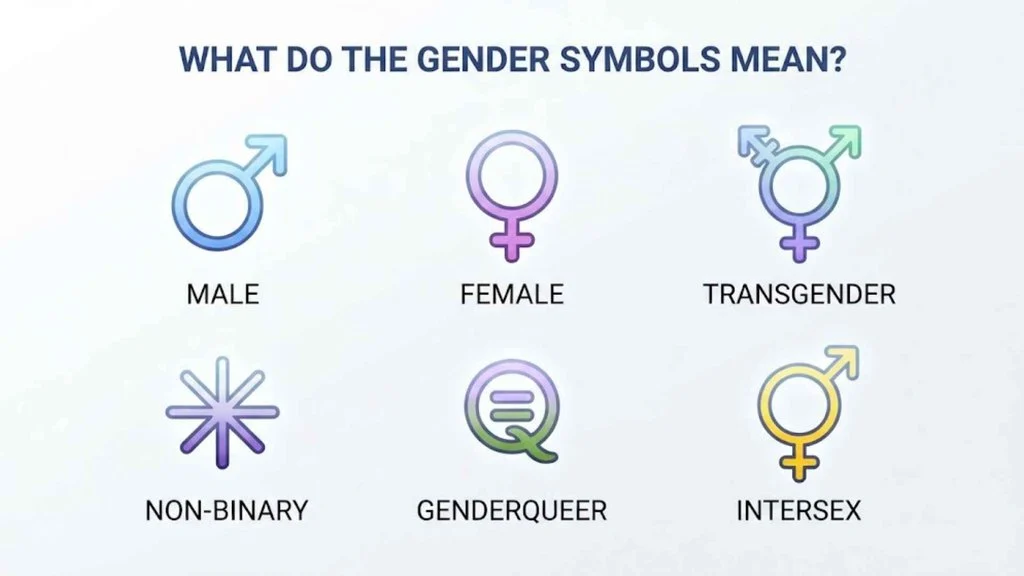
The meaning depends on which symbol is being used and the context.
♂ commonly represents male or masculine identity and is also traditionally used for the male sex.
♀ commonly represents female or feminine identity and is also traditionally used for the female sex.
⚧ is commonly used as a transgender symbol.
⚥ is associated with intersex or combined male-and-female symbolism in contexts where that meaning is intended.
A symbol does not automatically define a person’s identity. Context matters, particularly when symbols are used in modern discussions of gender.
LGBT Gender Symbols
LGBTQ+ communities use many different symbols, colors, flags, and visual designs. Not all of these are specifically gender symbols.
Some relevant Unicode characters include:
⚧ — Transgender symbol
♂ — Male symbol
♀ — Female symbol
There are also numerous pride flags and identity-specific graphics that are commonly used online. These are usually emoji sequences or images rather than simple gender characters.
It is useful to keep the categories separate: a gender symbol can represent a gender identity or sex category, while a pride symbol may represent a community, movement, or sexual orientation.
Gender Symbols Text
Gender symbols can be used in plain text when a Unicode character exists for the intended symbol.
For quick copying:
♂ ♀ ⚧ ⚥
Examples in text include:
- Male ♂
- Female ♀
- Transgender ⚧
- Intersex ⚥
When using these characters online, font support can affect their appearance. A text symbol may look different across devices even though the underlying character is the same.
Where Did The Gender Symbols Come From
The modern male and female symbols have historical connections with the symbols of Mars and Venus.
The symbol ♂ is traditionally associated with Mars, while ♀ is associated with Venus. These associations were later used in scientific classification, particularly in biology, to distinguish male and female organisms.
The symbols became increasingly familiar outside astronomy and biology and are now widely recognized as male and female signs.
Their historical development does not mean that every modern use has exactly the same meaning. Today, they can appear in scientific, social, medical, cultural, and identity-related contexts.
Non Binary Gender Symbols
There is no single universally required Unicode character that represents every nonbinary identity.
One symbol sometimes used in nonbinary contexts is:
⚧
The transgender symbol is broader than nonbinary identity and should not automatically be interpreted as meaning nonbinary.
Nonbinary people may also use identity-specific graphics, flags, or combinations of symbols. These can be useful visually, but many are not standardized Unicode characters.
For accurate digital use, it is better to use the specific symbol or flag associated with the identity being discussed rather than assuming one character represents everyone.
Nonbinary Gender Symbols
Nonbinary gender symbols can take several forms because nonbinary is an umbrella term covering different gender identities.
The transgender symbol ⚧ is sometimes used in broad gender-diversity contexts, but it is not a universal replacement for every nonbinary symbol.
Other nonbinary representations may appear as:
- Custom graphic symbols
- Pride flag imagery
- Typography-based designs
- Community-created icons
- Unicode character combinations
Because these designs vary, a visual symbol found on one website should not automatically be described as an official Unicode character.
All 72 Gender Symbols
Online searches for “all 72 gender symbols” often lead to long collections containing many different identity labels and visual icons.
These lists can be useful for discovering terminology, but they should be read carefully. There is no official Unicode standard defining exactly 72 gender symbols.
A long online list might combine:
- Standard Unicode characters
- Emoji
- Text combinations
- Pride symbols
- Identity flags
- Custom graphics
- Symbols created for particular websites or communities
For copy-and-paste purposes, the safest approach is to identify whether the item is an actual Unicode character or an image before describing it as a text symbol.
Boy And Girl Gender Symbols
The traditional symbols used for boys and girls are:
♂ — Boy / male
♀ — Girl / female
They are frequently used in educational materials, family charts, sports statistics, games, and simple visual labels.
For children, schools, and family-related graphics, designers may instead use pictograms of people rather than the traditional gender symbols. Both approaches can communicate a male/female distinction, but their visual styles are different.
72 Gender Symbols
The number 72 is not a fixed Unicode classification for gender symbols.
Different websites may create their own lists containing 72 items by combining standard characters with gender identities, pride icons, flags, and decorative symbols.
When using such a list, check each item individually. A character that can be typed from a keyboard is different from an image-based symbol, and an identity flag is different from a Unicode gender character.
This distinction helps prevent inaccurate claims about what Unicode officially contains.
LGBTQ Gender Symbols
LGBTQ+ symbolism includes many different forms of representation. Some symbols relate specifically to gender, while others represent sexual orientation or broader community identity.
The transgender symbol is one of the most recognizable gender-related examples:
⚧ — Transgender symbol
Male and female symbols may also appear in discussions of gender:
♂ ♀
Beyond these, many LGBTQ+ identities are commonly represented through flags rather than individual Unicode characters.
For social media, profiles, messages, and artwork, flags and emoji combinations may therefore be more recognizable than standalone text symbols.
All Gender Symbols
There is no universally agreed list containing every gender symbol. Gender-related representation exists across Unicode, emoji, typography, community-created graphics, signage, and identity flags.
Common text characters include:
♂ — Male
♀ — Female
⚧ — Transgender
⚥ — Intersex-related symbol
Other symbols may only exist as images or specialized designs.
If your goal is copy and paste, Unicode characters are the easiest option because they can be inserted directly into text. If you need a particular identity flag or custom gender icon, an image may be required instead.
Gender Symbols Meaning
Gender symbols communicate different meanings depending on where they appear.
The traditional signs have straightforward common uses:
- ♂ — male
- ♀ — female
- ⚧ — transgender or gender diversity in many contexts
- ⚥ — commonly associated with intersex or combined-sex symbolism
These meanings are not interchangeable. A transgender symbol should not automatically be labeled as a nonbinary symbol, and a male/female symbol should not automatically be interpreted as describing someone’s personal gender identity.
Using the correct term alongside the symbol makes communication clearer.
What Are The Gender Symbols
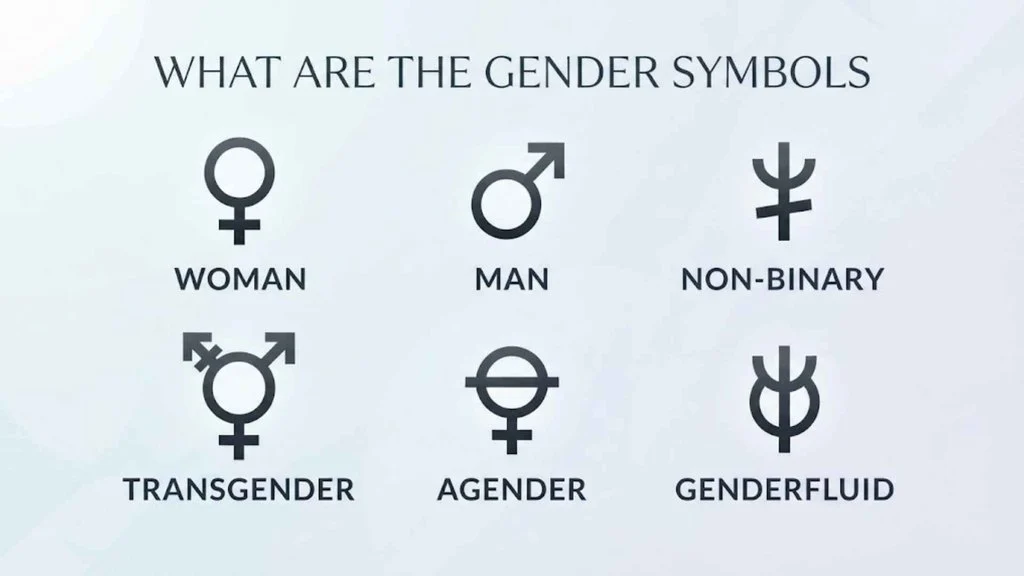
Gender symbols are visual characters or designs used to communicate information about sex, gender, or gender identity.
The best-known examples are:
♂ ♀
Other recognized Unicode characters include:
⚧ ⚥
There are also many gender-related symbols that exist only as graphics, icons, flags, or custom combinations.
The important distinction is between Unicode characters and visual symbols. Unicode provides standardized text characters, while many modern identity symbols are represented through artwork or combinations of existing characters.
Gender Symbols And Meanings
Gender symbols can be simple signs, but their meanings can become more specific depending on the setting.
For quick reference:
♂ — Male or masculine
♀ — Female or feminine
⚧ — Transgender or gender diversity
⚥ — Intersex or combined-sex symbolism in relevant contexts
These characters can be useful in text, but they should not replace clear language when precision matters. In a form, for example, a written label may communicate more information than a single symbol.
The most useful approach is to treat gender symbols as visual shorthand and check the context before assigning a specific meaning.
Frequently Asked Questions
What Is The Most Common Gender Symbol?
The most familiar gender symbols are ♂ for male and ♀ for female. They are widely recognized in scientific, cultural, and everyday contexts.
Is There A Unicode Symbol For Nonbinary?
There is no single universal Unicode character that represents all nonbinary identities. The transgender symbol ⚧ may be used in broader gender-diversity contexts, but it should not automatically be treated as the universal nonbinary symbol.
Can I Copy And Paste Gender Symbols?
Yes. Common Unicode characters such as ♂, ♀, ⚧, and ⚥ can be copied and pasted directly as text. Their visual appearance may vary by font and device.
Why Are Male And Female Symbols Linked To Mars And Venus?
The male symbol ♂ is historically associated with Mars, while the female symbol ♀ is associated with Venus. These associations later became common in scientific classification and broader symbolic use.
Are There Really 72 Official Gender Symbols?
No. There is no official Unicode category defining exactly 72 gender symbols. Online collections using the number 72 may combine Unicode characters, identity symbols, flags, emoji, and custom graphics.
Conclusion
Gender symbols range from familiar signs such as ♂ and ♀ to newer and more specialized representations connected with transgender, nonbinary, intersex, and LGBTQ+ identities. Understanding the difference between these symbols makes them easier to use correctly.
For copy-and-paste purposes, Unicode characters are the most convenient because they work as text rather than requiring an image. However, many identity-related symbols and flags are visual graphics rather than individual Unicode characters.
The key is to consider both the symbol and its context. A simple sign can have a long history, while a modern identity symbol may carry a more specific meaning. Using accurate names and descriptions helps keep gender-related communication clear and respectful.

Hi, I’m Sienna Brooks, and I believe that the right words can inspire, comfort, and empower people at every stage of life. For as long as I can remember, I’ve been drawn to meaningful quotes and the stories behind them. I love curating collections of inspirational, motivational, and heartfelt quotes that resonate with readers around the world.
Through my writing, I strive to help others find encouragement, whether they’re celebrating life’s happiest moments or navigating its biggest challenges. I believe that wisdom is timeless, and I’m passionate about sharing words that leave a lasting impact.
I am the author of Reflections in Words and The Journey of Inspiration, two books dedicated to exploring the beauty and power of timeless quotes.
 Rowan Sinclair Rowan Sinclair