Devil symbols have fascinated, frightened, and intrigued humanity for thousands of years, acting as powerful mirrors of our deepest fears, moral boundaries, and cultural taboos. When we look at these ancient marks, we are not just examining spooky drawings. We are exploring the long story of how human societies tried to explain the presence of pain, temptation, and the dark side of human nature. These visual signs have traveled from ancient temple walls to modern movie screens, changing their shapes while holding onto a strange and lasting pull.
(Quick Answer) Devil Symbols
Devil symbols are visual representations of malevolence, chaos, and temptation found across various religious, mythological, and cultural traditions. Common examples include the pentagram, the goat head, horns, and the trident. Throughout history, these signs have helped communities define moral limits, understand the darker parts of the human mind, and express rebellion or forbidden knowledge.
Quick Facts About Devil Symbols
| Aspect | Information |
| Origin | Ancient Near Eastern, Greco Roman, and early Judeo Christian traditions |
| Historical Significance | Used to represent opposing forces of good and evil, political enemies, and spiritual trials |
| Main Meaning | Rebellion, chaos, temptation, and the shadow self |
| Spiritual Meaning | Tests of faith, spiritual awakening through shadow work, and the unknown |
| Cultural Importance | Serves as a universal shorthand for danger, taboo, and counterculture |
| Modern Usage | Heavy metal music fashion, tattoo art, fantasy literature, and psychological exploration |
What Are Devil Symbols?
Devil symbols are recognizable signs, shapes, and figures that cultures use to represent destructive forces, spiritual opposition, and chaos. Their origins stretch back to ancient times, long before the modern concept of the devil took final shape. Early humans looked at the dangerous forces of nature, such as storms, predators, and disease, and gave them faces and signs.
Over time, these early fears mixed with religious beliefs. As major religions grew, they took older pagan gods, such as the horned god Pan or the goat footed fauns, and reinterpreted them as figures of evil. This evolution turned neutral or nature based symbols into clear warnings of moral danger. They became important because every society needs a way to talk about what is harmful, forbidden, or socially unacceptable.
Deep Symbolic Meaning of Devil Symbols
Spiritual Level
On a spiritual level, devil symbols represent the great cosmic struggle between light and dark, order and chaos. They are not always seen as pure evil in every tradition. Instead, they often act as necessary tests of faith and spiritual strength. In esoteric studies, confronting these symbols represents facing one’s inner darkness and achieving true spiritual growth through self awareness.
Psychological Level
Psychologically, these signs connect deeply to what Carl Jung called the shadow self. This is the part of the human mind that holds repressed emotions, anger, and desires that society tells us to hide. When people feel drawn to these dark signs, it is often a subconscious desire to acknowledge and understand their own hidden flaws and wild impulses rather than pretending they do not exist.
Cultural Level
Culturally, devil symbols act as boundary markers for communities. They show people what happens when they step outside accepted social rules. At the same time, they give rebels and outsiders a way to express their independence. By wearing or displaying these signs, individuals can push back against strict traditions and start conversations about freedom and identity.
Types and Variations of Devil Symbols
- The Inverted Pentagram
- Visual Description: A five pointed star pointing downward, often containing a goat head inside a circle.
- Meaning: Rebellion, the triumph of material desires over spiritual control, and nonconformity.
- Symbolism: Inversion of divine order, human independence, and the shadow side of existence.
- Cultural Connection: Modern Satanism, horror movies, and occult subcultures.
- Where It Appears: Heavy metal album covers, occult books, and modern jewelry.
- The Horned Head or Baphomet
- Visual Description: A humanoid figure with the head of a goat, large horns, wings, and various alchemical symbols.
- Meaning: The union of opposites, secret knowledge, and the balance of good and evil.
- Symbolism: Fertility, ancient nature worship, and the totality of the universe.
- Cultural Connection: Nineteenth century occultism and contemporary philosophical groups.
- Where It Appears: Statues, esoteric art, and philosophical publications.
- The Trident
- Visual Description: A three-pronged spear.
- Meaning: Sovereignty over water, the underworld, and threefold destruction.
- Symbolism: Power, dominance, and the tool of traditional underworld rulers.
- Cultural Connection: Ancient Greek mythology tied to Poseidon, later adopted into Christian folklore as the pitchfork of the devil.
- Where It Appears: Classical paintings, cartoons, and traditional folklore illustrations.
- The Number 666
- Visual Description: Three repeating digits usually written in numeric form.
- Meaning: The number of the beast, systemic corruption, and human limitation.
- Symbolism: The imperfection of man compared to the perfection of seven, ultimate worldly greed.
- Cultural Connection: Christian eschatology and modern pop culture shock value.
- Where It Appears: Tattoos, rock music lyrics, and horror films.
Symbols of Rebellion in History
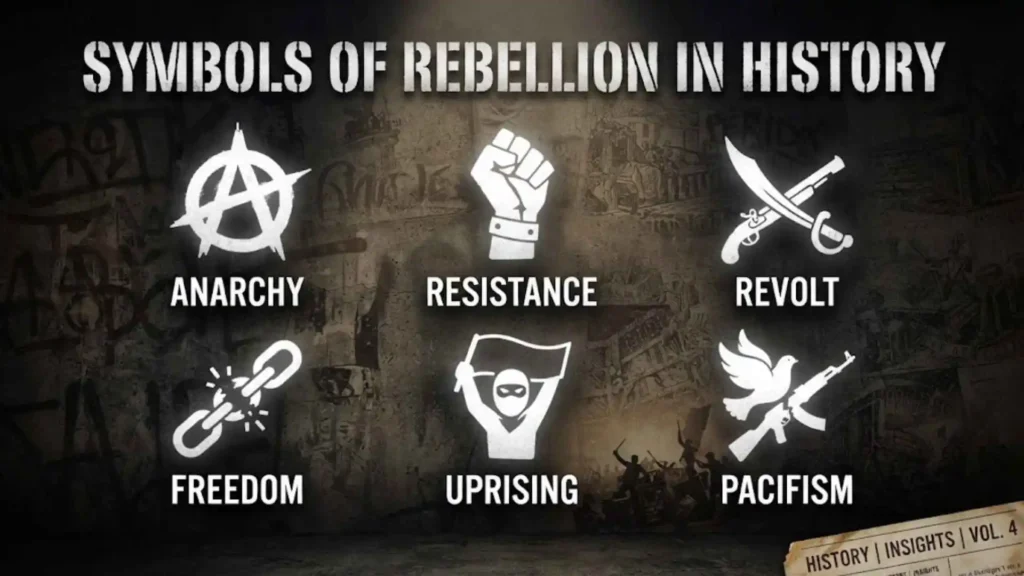
Throughout history, people have used symbols to express resistance, independence, and opposition to authority. A raised fist, broken chain, black flag, and certain revolutionary emblems have appeared in different movements and historical periods. The meaning of a rebellion symbol depends heavily on the culture and circumstances in which it was used. Some symbols represented political resistance, while others stood for freedom, social change, or rejection of established rules.
Symbols of Rebellion in Literature
Rebellion is a common theme in literature, so writers often use symbols to represent characters who challenge authority or social expectations. A broken chain may suggest freedom, while a storm can symbolize conflict and resistance. Fire is another recurring image because it can represent destruction, passion, transformation, or the beginning of a revolution. In dystopian and fantasy literature, particular objects, colors, or emblems may become symbols of resistance against an oppressive system.
Symbols of Rebellion Tattoo
Rebellion tattoos can represent independence, personal freedom, resistance, or a desire to challenge conventional expectations. Popular ideas include broken chains, raised fists, rebellious slogans, skulls, flames, arrows, and black flags. Some people choose these designs simply for their bold appearance, while others connect them with a personal experience of overcoming restrictions or standing up for themselves.
Symbol of Rebellion Meaning
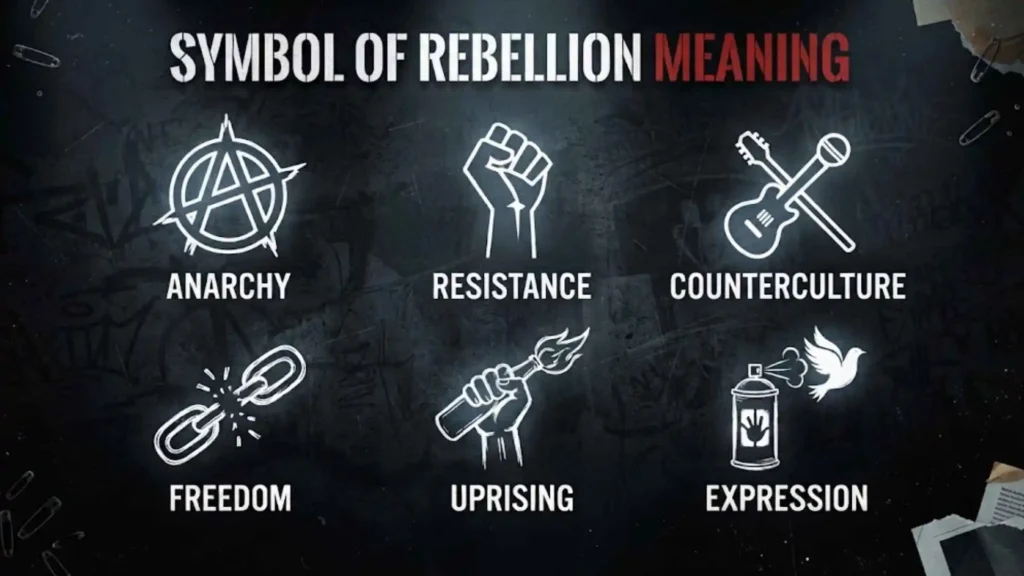
A symbol of rebellion generally represents resistance to control, authority, tradition, or an established system. Its meaning is not always negative. In many contexts, rebellion can represent courage, independence, freedom, and the willingness to question accepted ideas. The same symbol can have different meanings depending on the culture, historical period, and person using it.
Symbol of Rebellion Star Wars
In Star Wars, the Rebel Alliance symbol represents resistance against the Galactic Empire. The emblem is commonly associated with freedom, opposition to authoritarian rule, and the struggle of the Rebel Alliance. Because of its distinctive design, it has also become a recognizable symbol in popular culture and is frequently used by fans on clothing, artwork, accessories, and tattoos.
Rebellious Symbols
Rebellious symbols are visual signs associated with resistance, independence, nonconformity, or opposition to authority. Examples include broken chains, raised fists, black flags, crossed-out authority symbols, flames, and certain revolutionary emblems. Their interpretations can vary considerably, so the surrounding context is important when determining what a particular rebellious symbol means.
Famous Symbols of Rebellion
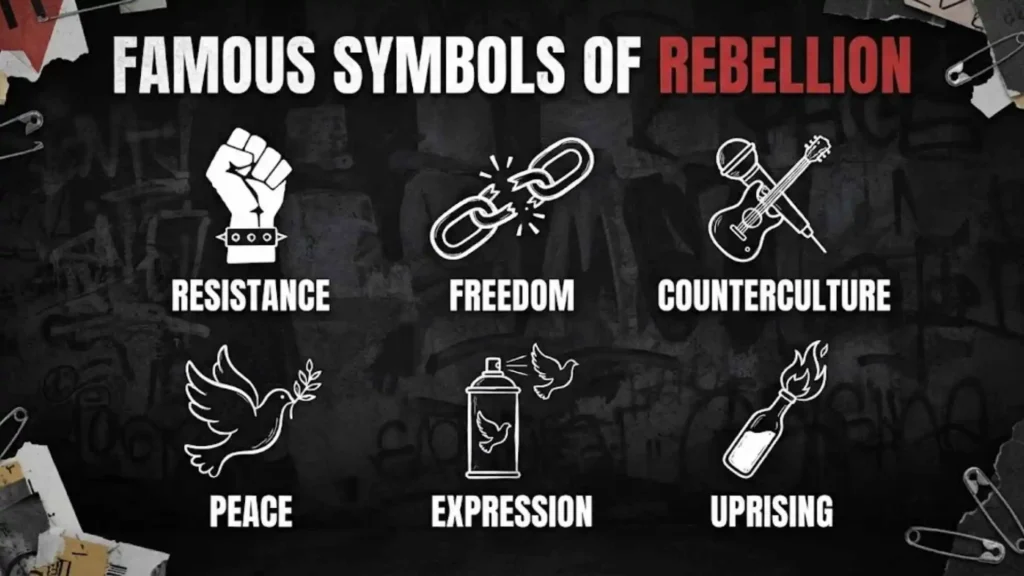
Some rebellion symbols have become widely recognizable because of their connection with historical movements and popular culture. The raised fist is often associated with solidarity and resistance, while a broken chain can represent liberation from oppression. The black flag has been used in several historical and political contexts and can symbolize resistance or rejection of established authority. Fictional symbols, such as the Rebel Alliance emblem from Star Wars, have also become famous representations of resistance.
Tattoo Symbols of Rebellion
Tattoo symbols of rebellion often focus on themes such as freedom, individuality, strength, and refusing to conform. Broken chains, barbed wire, skulls, flames, arrows, and rebellious lettering are common design ideas. Before choosing one, it is useful to research its cultural and historical associations because some symbols may have meanings beyond their visual appearance.
Ancient Symbols of Rebellion in History
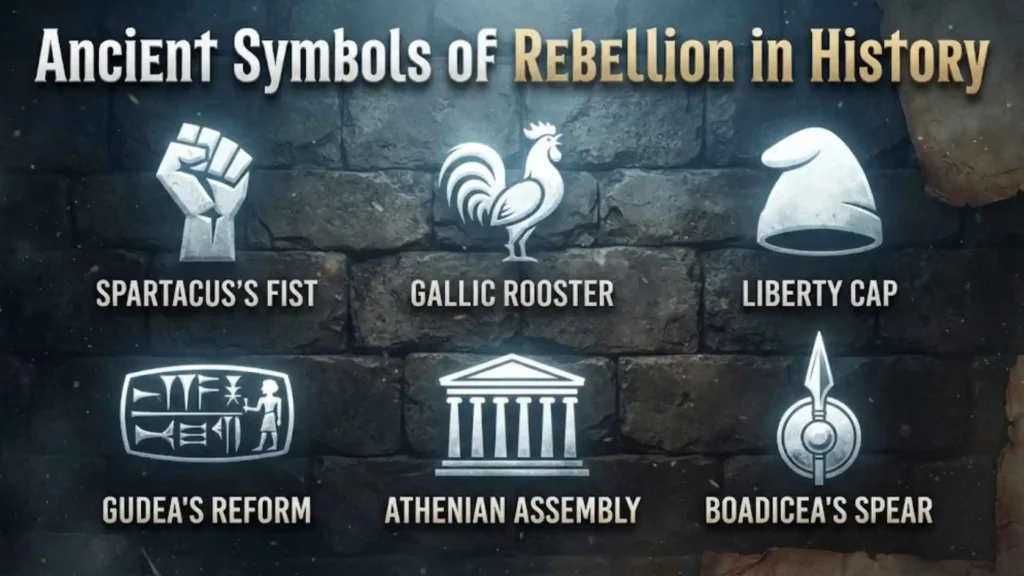
Ancient societies did not always have standardized rebellion symbols in the modern sense, but people used objects, emblems, colors, and imagery to communicate opposition, identity, or resistance. Religious and political imagery could become associated with particular groups or uprisings. In some cases, later generations have interpreted ancient symbols as rebellious even though their original meaning was different. Therefore, historical context is essential when describing an ancient symbol as one of rebellion.
Real Life Symbols of Rebellion
Real-life rebellion symbols have appeared in protests, political movements, social campaigns, and independence struggles. The raised fist is one of the most recognizable examples of a symbol associated with resistance and solidarity. Protest signs, flags, masks, colors, and specific emblems can also become symbols of particular movements. Their meanings are usually shaped by the events and communities surrounding them.
Demonic Symbol Text
Demonic symbol text usually refers to Unicode characters, decorative symbols, or stylized combinations that people use online to create a dark or mysterious appearance. Some symbols may resemble horns, flames, skulls, crosses, or occult imagery without having a specific traditional meaning. When using such characters, it is important to distinguish decorative text from historically documented religious or occult symbols.
Devil Symbols and Meanings
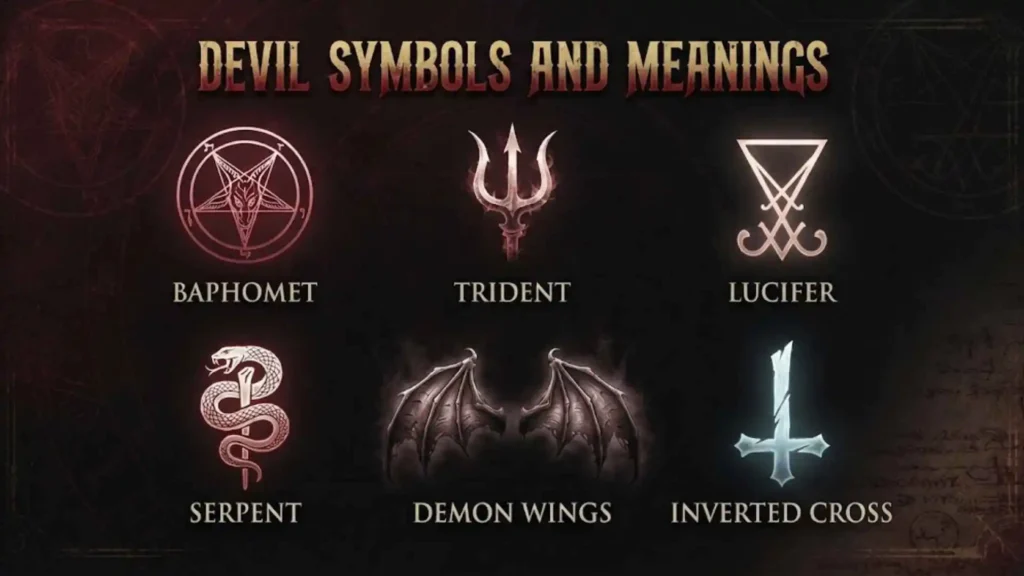
Devil-related symbols have different meanings across religions, folklore, literature, art, and modern entertainment. Horns, pitchforks, flames, and inverted imagery are commonly associated with the devil in Western popular culture. However, not every symbol described as “devilish” has a historical connection to Satan or demonic beliefs. Some are simply artistic representations that developed through folklore, paintings, films, and popular media.
Devil Symbols Copy
People searching for devil symbols to copy are often looking for Unicode characters, emoji, or decorative text that can be pasted into usernames, messages, profiles, or artwork. Examples can include symbols that suggest horns, darkness, fire, or a mischievous expression. These decorative characters should not automatically be treated as authentic occult symbols because many are modern digital designs created for visual effect.
Devil Signs with Hands
Hand signs associated with the devil or occult imagery appear frequently in music, films, photography, and popular culture. One of the most recognizable is the “sign of the horns,” in which the index and little fingers are raised. However, its meaning is not universally satanic. In different cultures and contexts, similar hand gestures can have completely different meanings, including rock music symbolism, protection, or ordinary communication.
Pictures of Satanic Symbols
Pictures labeled as satanic symbols often show imagery such as inverted pentagrams, Baphomet-related artwork, sigils, demonic figures, or other occult designs. However, visual similarity does not necessarily establish a historical connection to Satanism. If a symbol is being used for educational or historical purposes, its origin and documented meaning are more useful than simply judging its appearance.
Evil Symbols and Their Meanings with Pictures
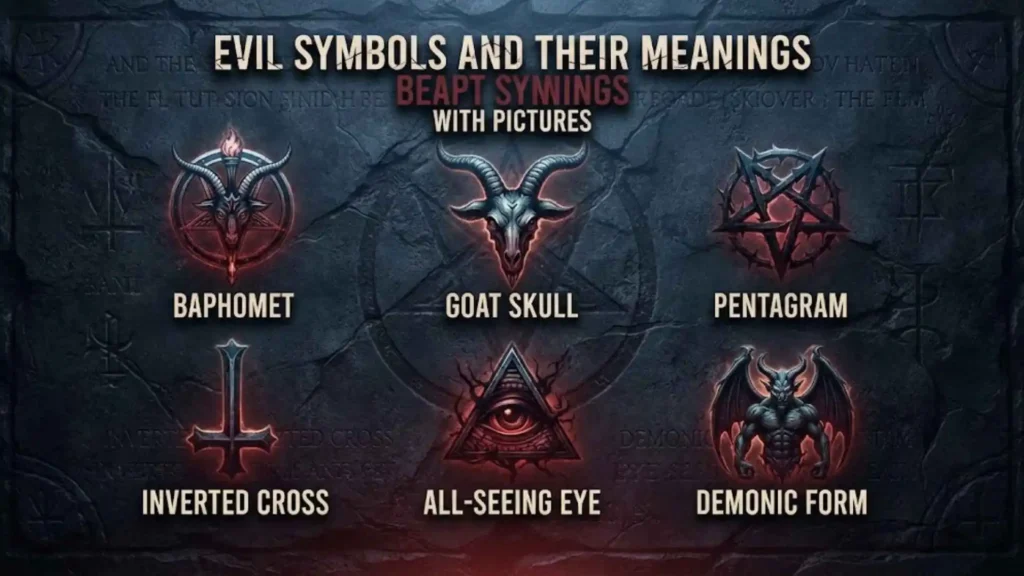
Symbols associated with evil appear throughout mythology, religion, folklore, literature, and modern entertainment. Skulls can represent death, while serpents may represent danger, temptation, or transformation depending on the tradition. Dark colors, flames, horns, and monstrous figures are also frequently used in modern visual storytelling. Their meanings should be interpreted within the culture or fictional setting where they appear.
Satanic Symbol Name
There is no single symbol that represents every form of Satanism. Different groups, traditions, artists, and historical sources have used different imagery. The inverted pentagram is commonly associated with modern Satanic imagery, while the Sigil of Baphomet is another well-known modern symbol. These symbols should not be treated as interchangeable because their histories and uses are different.
Satanic Symbol Star
The inverted pentagram is often described as a satanic star in modern popular culture. It consists of a five-pointed star positioned with one point facing downward. Its associations have developed through occult traditions, modern Satanism, horror media, and popular culture. The pentagram itself has a much broader history and has been used in various religious and cultural traditions, so orientation and context matter.
Angel and Devil Symbols
Angel and devil symbols are commonly paired to represent opposing ideas such as good and evil, virtue and temptation, innocence and rebellion, or heaven and hell. This contrast appears frequently in tattoos, artwork, fashion, cartoons, and entertainment. A person may also use the combination to express the idea of having contrasting sides to their personality.
The Devil Symbols
The phrase “devil symbols” can refer to a wide range of imagery associated with the devil in Western folklore and popular culture. Common examples include horns, a pitchfork, a tail, flames, and red or black imagery. Many of these characteristics developed through artistic traditions rather than originating from a single ancient symbol.
Procter and Gamble Devil Symbols
The Procter & Gamble logo has sometimes been the subject of an old urban legend claiming that its design contained satanic or devil-related imagery. The company has repeatedly addressed this interpretation, and the alleged connection became part of a long-running rumor surrounding the older logo. It is important to distinguish the historical design and documented explanations from claims that interpret its imagery as proof of a hidden symbol.
Devil Symbols for PUBG
Players sometimes search for devil symbols to use in PUBG usernames, clan names, profiles, or in-game identity designs. Decorative Unicode characters, horn-like symbols, skull imagery, and other dark-looking characters are popular because they create an intimidating visual style. Whether a particular symbol is accepted depends on the game’s current character and naming restrictions.
Devil Symbols Images
Images of devil symbols can include traditional folklore illustrations, religious artwork, modern occult designs, fictional characters, and decorative graphics. A visual search can therefore produce symbols with very different origins. When researching a particular image, check its historical or cultural background rather than assuming that every horned or dark-looking image represents the devil.
Devil Symbols in The Binding of Isaac
The Binding of Isaac uses religious, biblical, demonic, and occult-inspired imagery as part of its fictional world. Devil-related symbols and characters appear throughout the game’s artwork, items, rooms, and story. Because these elements belong to a fictional game universe, their meanings are primarily connected to the game’s narrative and mechanics rather than serving as direct representations of historical religious symbols.
Ancient Devil Symbols
The idea of an “ancient devil symbol” can be misleading because many ancient cultures did not have a concept of the devil identical to the later Christian figure of Satan. Ancient religions had their own gods, spirits, monsters, and figures associated with death, chaos, temptation, or the underworld. Some of these figures were later interpreted through different religious traditions, but their original meanings should be studied separately.
Devil Symbols Tattoos
Devil-themed tattoos commonly feature horns, pitchforks, flames, demonic faces, skulls, or stylized occult imagery. Depending on the wearer, such a tattoo may represent rebellion, danger, humor, personal darkness, confidence, or an interest in horror and fantasy. The meaning is highly personal, and the same design can communicate something very different from one person to another.
DND Devil Symbols
In Dungeons & Dragons, devils belong to the game’s fictional cosmology and have their own characters, factions, symbols, and visual themes. Devil-related imagery in D&D is therefore primarily part of the fantasy setting. Players may encounter symbols associated with infernal beings, contracts, magic, and different devil factions depending on the edition and campaign setting.
Angel and Devil Symbols Tattoos
Angel and devil tattoo designs often use contrast to tell a visual story. An angel may represent protection, goodness, hope, or spirituality, while a devil may symbolize temptation, rebellion, freedom, or a darker side of life. Combining both can represent internal conflict, balance, or the coexistence of opposing qualities.
Ice Spice Devil Symbols
References to devil symbols in connection with Ice Spice are generally part of discussions about music imagery, fashion, performances, internet culture, or fan interpretations. A visual element used by an artist does not automatically have a fixed religious or occult meaning. To understand a specific symbol, it is better to examine the particular image, performance, artwork, or statement in which it appeared.
Illuminati Devil Symbols
The Illuminati is frequently connected with devil and occult symbolism in conspiracy theories and internet culture. The eye-in-a-triangle, however, has a much broader history and is not inherently a “devil symbol.” The historical Bavarian Illuminati was an eighteenth-century secret society, while many modern claims about hidden Illuminati symbols come from conspiracy narratives and popular culture rather than documented evidence of a single secret symbolic system.
Devil Symbols in Devil in Ohio
Devil in Ohio is a fictional thriller series that uses disturbing religious and cult-related imagery as part of its story. Symbols appearing in the series should primarily be understood within the show’s fictional narrative. They may draw inspiration from real-world religious or occult imagery, but their role and meaning within the story are determined by the fictional world created by the writers.
Devil Iconography
Devil iconography refers to the visual characteristics traditionally used to portray the devil or demonic figures. Horns, claws, wings, tails, flames, pitchforks, and monstrous faces are common examples in Western art and popular culture. These features developed over long periods through religious art, folklore, literature, theater, and later film and television. Modern depictions can therefore differ considerably from historical representations.
Devil Symbols Across Different Cultures
Ancient Egypt
In ancient Egypt, the god Set represented chaos, deserts, storms, and foreign lands. While not a modern devil, Set was the necessary destructive force that opposed Osiris and Horus, maintaining the delicate balance of the universe.
Ancient Greece
Greek mythology featured Hades, the ruler of the underworld. Although Hades was generally fair and not inherently evil, later Christian interpretations merged his dark domain and shadowy appearance with the concept of a tormenting devil.
Roman Culture
Romans feared various underworld spirits and malicious deities, but they also borrowed the imagery of Pan and satyrs, whose goat legs and horns later became the universal blueprint for how people visualize tempters and horned tricksters.
Eastern Traditions
In Buddhism and Hinduism, figures like Mara or various demons represent illusion, temptation, and the traps of worldly desire. These entities are designed to test a person’s mindfulness and help them stay on the path to enlightenment.
Indigenous Traditions
Many indigenous traditions around the world do not have a single absolute devil figure like Western religions. Instead, they recognize trickster spirits, such as coyotes or ravens, who teach important life lessons through mischief, mistakes, and rule breaking.
Similar Symbols and Their Meanings
| Symbol | Similarities to Devil Symbols | Differences from Devil Symbols |
| The Skull | Represents mortality, danger, and taboo | Focuses on the physical reality of death rather than moral evil |
| The Serpent | Associated with temptation, cunning, and hidden knowledge | Often represents healing, rebirth, and transformation in non-Western cultures |
| The Dragon | Represents immense power, chaos, and danger | Can symbolize supreme wisdom, good fortune, and imperial majesty in Asia |
People often confuse these signs because they all deal with fear, power, and the unknown. However, while devil symbols focus specifically on moral opposition and rebellion, symbols like the skull or dragon often carry deeper messages about life cycles, protection, and transformation.
Devil Symbols in Mythology and Folklore
Ancient stories are full of tales where clever mortals try to outsmart horned tempters or tricksters. In European folklore, stories warn villagers about spirits that wear animal horns or lurk in the deep woods to lead travelers astray.
These myths served a very practical purpose in older societies. They kept children away from dangerous cliffs, taught people to respect nature, and explained why good people sometimes make bad choices. Over centuries, these oral traditions turned into rich literary works that continue to inspire modern ghost stories and fantasy epics.
Devil Symbols in Art, Literature, Movies, and Pop Culture
Artists and writers have used these signs for centuries to explore the darker side of human ambition. In classic literature, such as Milton’s Paradise Lost, the dark figure is portrayed with complex emotions, making the symbolism much deeper than simple wickedness.
Today, these signs show up everywhere in pop culture. Musicians use them to shock audiences and show independence, while tattoo artists create stunning visual designs that blend ancient mythology with modern artistic flair. They remain popular because they give people a safe way to explore themes of mystery, rebellion, and personal power.
Spiritual and Dream Meaning of Devil Symbols
Seeing these signs in dreams or during deep meditation rarely means something literal or terrifying. Instead, the human mind uses these powerful images to send messages about internal conflict.
When a person dreams of horned figures or dark signs, it often points to a situation in waking life where they feel tempted to compromise their values, or where they are suppressing their own anger and creativity. Meeting these images with curiosity rather than fear can lead to profound personal breakthroughs and emotional healing.
Positive and Negative Meanings of Devil Symbols
| Positive Meaning | Negative Meaning |
| Radical self-expression and personal freedom | Malice, cruelty, and intentional harm to others |
| Courage to question authority and tradition | Destructive obsession and moral corruption |
| Embracing the shadow self for psychological growth | Fear, paranoia, and superstitious panic |
| Creative rebellion in art and literature | Total loss of empathy and community connection |
A single symbol can carry both light and shadow depending entirely on the context and the intent of the person using it. What looks like a sign of rebellion to one person might look like a warning of danger to another.
Why Humans Are Attracted to Devil Symbols
Human beings have a natural attraction to the forbidden. Our brains are wired to pay extra attention to things that threaten us or break the rules because doing so helped our ancestors survive in dangerous environments.
Furthermore, these signs offer a sense of empowerment. In a world full of strict rules and expectations, displaying a symbol associated with cosmic rebellion allows a person to feel strong, unique, and entirely in control of their own identity.
Modern Uses of Devil Symbols
- Tattoos: People get inked with horns, pentagrams, or mythological creatures to honor their personal struggles, resilience, or love for alternative culture.
- Fashion and Jewelry: Rings, necklaces, and clothing featuring dark motifs allow individuals to express an edgy aesthetic and nonconformist attitude.
- Branding and Entertainment: Video games, heavy metal bands, and horror media use these timeless motifs to create exciting, suspenseful, and immersive experiences for fans.
- Contemporary Spirituality: Certain modern spiritual groups use traditional symbols of darkness to represent balance, self-reliance, and the rejection of dogmatic control.
Interesting Facts About Devil Symbols
- The classic pitchfork associated with modern depictions originally belonged to the Greek god Poseidon before being adopted into Christian folklore.
- The goat head symbol was not historically tied to ancient evil worship; it was largely popularized during the nineteenth century by occult authors like Eliphas Levi.
- In tarot cards, the fifteenth card represents the Devil, but it is primarily interpreted by readers as a sign of mental bondage and unhealthy attachments rather than literal evil.
- Early Christian artists often dressed foreign political rivals in the physical features of mythological demons to discredit them publicly.
- The inverted pentagram was used for centuries as a protective Christian symbol representing the five wounds of Jesus before its meaning shifted in modern occultism.
Frequently Asked Questions
What do devil symbols actually represent?
They primarily represent rebellion, chaos, the unknown, and the shadow aspects of human nature. While historically used to denote religious evil, today they frequently stand for personal independence and nonconformity.
Are all devil symbols evil?
No. Many symbols that modern people associate with darkness originally belonged to ancient nature deities who represented fertility, agriculture, and the changing seasons before cultural changes redefined them.
Why do people wear devil symbols as jewelry or tattoos?
Most people wear them for aesthetic reasons, to express countercultural identity, or to show that they embrace their own individuality and reject mainstream social pressures.
Where did the idea of horns and hooves come from?
The imagery comes from ancient pagan nature gods, such as the Greek god Pan and various satyrs, who were later reinterpreted by early religious leaders as representations of temptation and sin.
Conclusion
Devil symbols remain some of the most enduring and misunderstood images in human history, bridging the gap between ancient fears and modern self-expression. They challenge us to look beyond comfortable illusions and examine the complex nature of the world and our own minds. By understanding their true history, we learn that the darkest signs often reflect our greatest capacity for growth, freedom, and self-discovery.

Hi, I’m Sienna Brooks, and I believe that the right words can inspire, comfort, and empower people at every stage of life. For as long as I can remember, I’ve been drawn to meaningful quotes and the stories behind them. I love curating collections of inspirational, motivational, and heartfelt quotes that resonate with readers around the world.
Through my writing, I strive to help others find encouragement, whether they’re celebrating life’s happiest moments or navigating its biggest challenges. I believe that wisdom is timeless, and I’m passionate about sharing words that leave a lasting impact.
I am the author of Reflections in Words and The Journey of Inspiration, two books dedicated to exploring the beauty and power of timeless quotes.
 Rowan Sinclair Rowan Sinclair