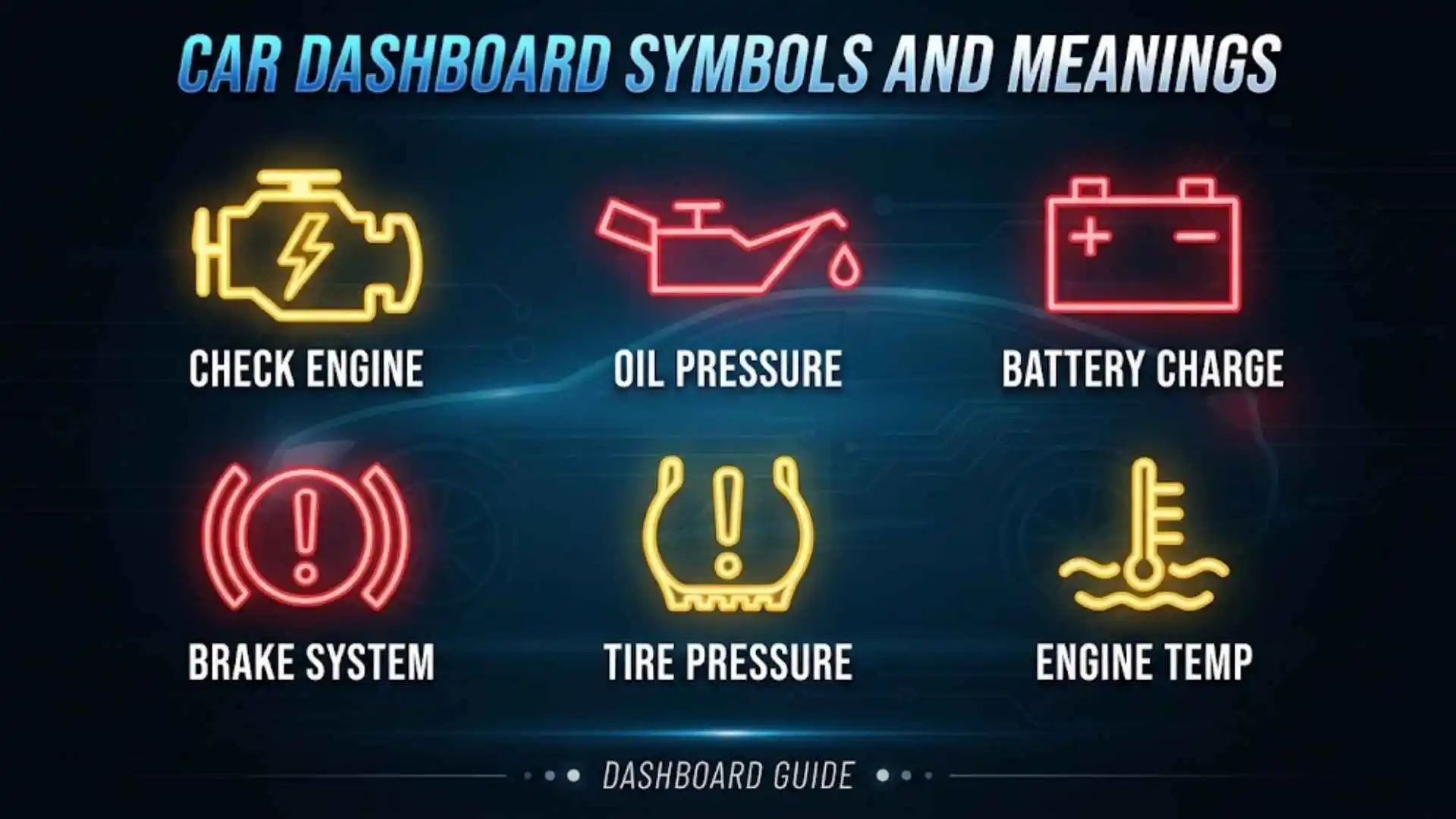
Your car dashboard communicates with you through symbols, icons, and warning lights. Some simply tell you that a feature is active, while others can indicate a problem that needs immediate attention. Knowing what these symbols mean can help you react appropriately instead of guessing when a warning appears.
A dashboard symbol may look slightly different depending on the vehicle’s make, model, year, and trim level. The color, whether the light is steady or flashing, and any accompanying message can also affect its meaning. For that reason, this guide explains the most common car dashboard symbols and meanings in practical terms while reminding you to check your vehicle’s owner’s manual for model-specific information.
The most important thing to remember is that not every dashboard light means your car is about to break down. Green and blue indicators often show that a feature is operating, while amber or yellow warnings usually indicate that something needs attention. Red warnings can indicate a more urgent condition, although the exact response depends on the particular symbol.
What Do Car Dashboard Symbols Mean?
Car dashboard symbols are visual indicators displayed in the instrument cluster or driver’s information display. They communicate information about the vehicle’s systems, operating conditions, maintenance needs, and potential faults.
Some symbols appear briefly when you start the vehicle as part of a normal system check. Others remain illuminated while a particular feature is being used. Warning lights can appear when a sensor detects a condition that requires attention.
Dashboard Symbols, Warning Lights, and Indicators
These terms are sometimes used interchangeably, but they can describe different things.
Dashboard symbols is the broad term for the icons displayed on the instrument panel.
Warning lights generally alert you to a problem, abnormal condition, or situation that may require attention.
Indicator lights usually tell you that a particular function or system is active.
For example, a green turn-signal arrow normally means the turn signal is operating. It does not indicate a mechanical fault. In contrast, a red oil-pressure symbol can indicate a potentially serious engine problem.
Why Dashboard Symbols Matter
Understanding these symbols can help you:
- Recognize potentially serious problems early.
- Avoid continuing to drive when doing so could cause damage.
- Understand when a vehicle system is simply active.
- Decide when professional inspection may be necessary.
- Communicate more clearly with a mechanic.
- Reduce unnecessary panic when a normal indicator appears.
A warning light should never be ignored simply because the vehicle continues to drive normally. Some problems may not produce noticeable symptoms immediately.
Dashboard Warning Light Colors Explained
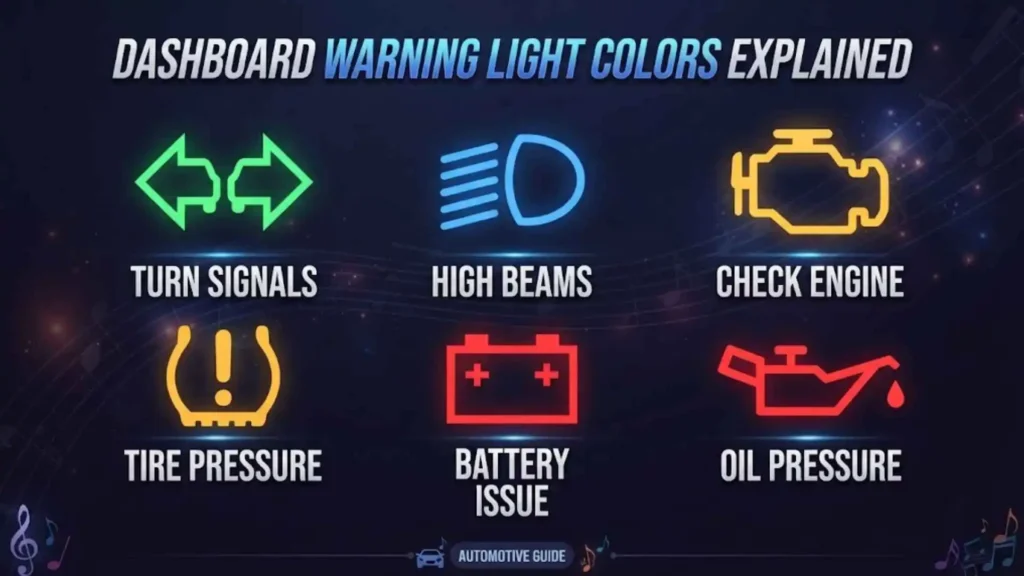
The color of a dashboard symbol provides a useful first clue about its importance. However, color meanings can vary between manufacturers, so the owner’s manual should always take priority.
Red Dashboard Lights
Red generally indicates a warning that may require prompt attention. Depending on the symbol, you may need to stop the vehicle safely and investigate the problem.
Examples can include:
- Oil pressure warning.
- Serious brake-system warning.
- Engine overheating warning.
- Certain charging-system warnings.
- Some safety-system warnings.
A red light should not automatically be interpreted as “the car must stop immediately” without identifying the symbol. A red seat-belt reminder, for example, has a very different meaning from a red oil-pressure warning.
Yellow or Amber Dashboard Lights
Yellow or amber generally indicates that a system needs attention, inspection, or service.
Examples include:
- Check engine.
- ABS.
- Tire pressure.
- Traction control.
- Stability control.
- Airbag or supplemental restraint system warnings.
- Some emissions-related warnings.
An amber warning may allow you to continue driving in some situations, but that does not mean the underlying problem should be ignored.
Green Dashboard Lights
Green usually indicates that a vehicle function is active or operating.
Common examples include:
- Turn signals.
- Cruise control.
- Some exterior lighting indicators.
- Lane-assistance status indicators.
Green generally does not mean that something is wrong.
Blue Dashboard Lights
Blue is commonly used for certain information or lighting indicators.
The most familiar example is the high-beam indicator. When the blue high-beam symbol is illuminated, it generally means the vehicle’s high beams are switched on.
White Dashboard Symbols
Some vehicles use white symbols for information, settings, or system status. These are usually informational rather than warnings, but the exact meaning depends on the vehicle.
Common Car Dashboard Symbols and Their Meanings
The following are among the most important and commonly recognized dashboard symbols. Their appearance can vary between manufacturers.
Check Engine Light
The check engine light, also called the malfunction indicator lamp, is usually represented by an engine-shaped symbol.
It indicates that the vehicle’s engine-management, emissions, or related system has detected a condition that needs attention.
A steady check engine light can be caused by many different issues, ranging from relatively minor faults to problems requiring prompt diagnosis.
A flashing check engine light is generally more concerning. It can indicate an active engine misfire or another condition that could cause damage if the vehicle continues to operate under normal conditions.
If the light appears together with severe shaking, loss of power, smoke, unusual noises, or other serious symptoms, reduce the risk of further damage by stopping safely and seeking appropriate assistance.
Do not assume that replacing a random part will solve the problem. A diagnostic scan may be needed to determine the actual cause.
Oil Pressure Warning Light
The oil-pressure warning symbol commonly looks like an oil can with a drop of oil.
This warning is associated with engine oil pressure. Low oil pressure can prevent critical engine components from receiving adequate lubrication.
This is one of the warnings that should be treated seriously.
If the oil-pressure light comes on while driving, safely pull over as soon as practical and follow your vehicle manufacturer’s instructions. Continuing to operate an engine with inadequate oil pressure can result in severe engine damage.
The oil-pressure light should not be confused with a simple reminder that the vehicle is due for an oil change. Some vehicles have separate maintenance reminders.
Battery or Charging System Warning
The battery warning symbol usually resembles a car battery with positive and negative terminals.
Despite being called the “battery light,” it often relates to the vehicle’s charging system rather than the battery alone.
Possible causes can involve the alternator, charging circuit, battery, wiring, or another electrical component.
If this warning remains illuminated while driving, electrical power may eventually become unavailable. Depending on the vehicle, important systems may stop functioning normally.
Avoid assuming that replacing the battery will automatically solve the problem. The charging system may need to be tested.
Brake Warning Light
A brake warning symbol can appear as an exclamation mark inside a circle or another brake-related icon.
It may indicate that the parking brake is engaged, but depending on the vehicle it can also indicate a brake-system problem or another condition requiring attention.
First make sure the parking brake is completely released.
If the warning remains on, especially when accompanied by unusual brake-pedal behavior, reduced braking performance, fluid loss, or another warning, treat it seriously and have the vehicle inspected.
Never continue driving normally if the brakes do not feel reliable.
ABS Warning Light
The ABS symbol usually contains the letters “ABS” inside a circle.
ABS stands for Anti-lock Braking System. If the ABS warning light stays illuminated, the system may have detected a fault.
The vehicle may still have conventional braking, but the anti-lock function may not operate as intended.
Because braking is a critical safety system, an ABS warning should be investigated rather than ignored.
If an ABS warning appears together with a red brake warning or noticeable loss of braking performance, the situation may be more urgent.
Tire Pressure Warning Light
The tire-pressure symbol generally resembles a tire cross-section with an exclamation mark in the center.
It indicates that the tire-pressure monitoring system has detected low pressure or another TPMS-related issue.
Low tire pressure can affect:
- Handling.
- Braking.
- Fuel economy.
- Tire wear.
- Tire temperature.
- Overall driving safety.
Check the tire pressures using the vehicle manufacturer’s recommended values, which may be listed on a door-jamb label or in the owner’s manual.
Do not rely solely on the appearance of the tire. A tire can be significantly underinflated without looking completely flat.
Engine Temperature Warning
The engine-temperature symbol often looks like a thermometer above waves.
It generally relates to engine coolant temperature.
If the warning indicates overheating, continuing to drive can cause serious engine damage.
Signs of overheating can include:
- Steam or vapor.
- A rising temperature gauge.
- Loss of engine performance.
- Unusual smells.
- Coolant leaking beneath the vehicle.
If the engine is overheating, safely stop and follow the manufacturer’s guidance. Do not open a hot cooling system or radiator cap because pressurized coolant can cause serious burns.
Airbag or SRS Warning Light
The airbag warning symbol commonly shows a person seated in front of an inflated airbag.
SRS refers to the Supplemental Restraint System, which can include airbags and related components.
A warning light may indicate that the system has detected a fault.
Because airbags are designed to protect occupants during a collision, this warning should not be ignored. Arrange an appropriate inspection if the light remains illuminated.
Seat Belt Warning Light
The seat-belt indicator generally shows a person wearing a seat belt.
It usually reminds the driver or passenger to fasten a seat belt. Some vehicles also provide audible warnings.
If the warning remains active after the belts are fastened, the vehicle may be detecting an unrestrained occupant or another condition. Consult the owner’s manual for the specific behavior of your vehicle.
Traction Control Light
The traction-control symbol often resembles a vehicle with curved skid marks underneath it.
The meaning can depend on whether the symbol is flashing or continuously illuminated.
A flashing traction-control indicator may mean the system is actively intervening to help manage wheel slip.
A continuously illuminated warning can indicate that the system has been switched off or that a fault has been detected.
Because traction and stability systems vary between vehicles, check the owner’s manual when the light behaves unexpectedly.
Electronic Stability Control Light
The stability-control symbol often looks similar to a car with skid marks.
Electronic stability control can help the vehicle maintain directional stability under certain driving conditions.
A flashing indicator can mean the system is actively working. A steady warning may indicate that the system has been turned off or that a fault exists.
The exact icon and behavior differ between manufacturers.
Power Steering Warning
The power-steering symbol commonly resembles a steering wheel, sometimes with an exclamation mark.
It can indicate a problem with the vehicle’s electric or hydraulic steering-assistance system, depending on the vehicle.
If steering suddenly becomes unusually heavy or difficult, do not treat the warning as a minor maintenance reminder. Safely reduce speed and stop when appropriate.
Low Fuel Warning
The low-fuel symbol usually looks like a fuel pump.
It indicates that the fuel level has reached a low point.
The exact amount of remaining fuel varies by vehicle, and the distance you can travel after the warning appears is not guaranteed.
Avoid relying on the warning as an exact measurement of remaining driving range.
Washer Fluid Warning
The windshield-washer-fluid symbol can resemble a windshield with fluid spraying onto it.
It indicates that the washer-fluid reservoir may be low.
This is generally not a mechanical emergency, but maintaining adequate washer fluid helps keep the windshield clean and visibility clear.
Door Open Warning
A door-open symbol or message indicates that one or more doors may not be fully closed.
Some vehicles also display separate warnings for the hood or trunk.
Check all doors and access panels before driving away.
Parking Brake Indicator
The parking-brake symbol is commonly represented by an exclamation mark inside a circle or a similar brake-related icon.
It may simply indicate that the parking brake is engaged.
If the warning remains on after the parking brake has been fully released, check the owner’s manual and investigate whether another brake-system condition is being reported.
Glow Plug Indicator
Diesel vehicles commonly use a coil-shaped symbol to indicate the glow-plug system.
The light may illuminate during startup as the system prepares the diesel engine for starting.
If the indicator behaves abnormally or remains illuminated after startup, consult the vehicle’s manual because the meaning can vary by model.
Diesel Particulate Filter Warning
Some diesel vehicles have a DPF-related indicator.
The diesel particulate filter captures particulate matter from exhaust gases and uses a regeneration process to manage accumulated material.
If a DPF warning appears, follow the manufacturer’s instructions. The appropriate response can depend on the vehicle and the severity of the warning.
Ignoring emissions-system warnings for extended periods can lead to more expensive problems.
Transmission Warning
Transmission-related symbols vary considerably between vehicles.
A warning may indicate a problem with the transmission, transmission temperature, fluid, or electronic control system.
If the vehicle begins slipping, refuses to select gears, makes unusual noises, or loses drive power along with a transmission warning, stop safely and seek professional assistance.
Modern Car Dashboard Symbols
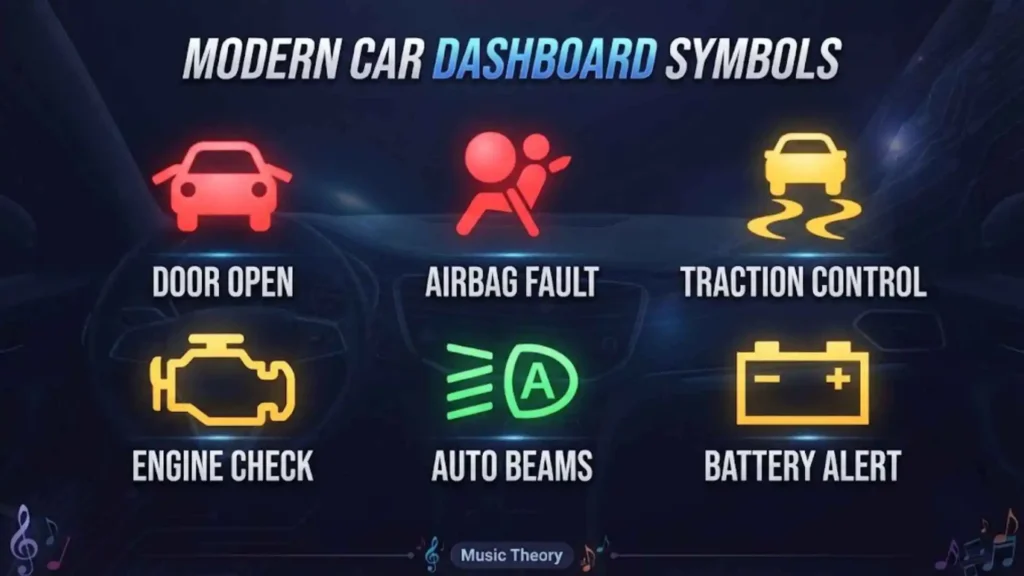
Newer vehicles can have many more symbols than older cars because they contain additional driver-assistance and electronic systems.
Lane Departure Warning
This symbol may show a vehicle between lane markings.
It can indicate that a lane-departure system is active or that the vehicle has detected an unintended lane movement.
Some systems use different colors or flashing behavior to distinguish normal operation from a warning.
Lane Keeping Assist
Lane-keeping systems can use steering input or other assistance to help keep a vehicle within its lane.
A dashboard indicator may show that the system is active, unavailable, or requiring driver attention.
The driver remains responsible for controlling the vehicle even when lane assistance is operating.
Forward Collision Warning
This symbol can indicate that a forward-facing safety system has detected a potential collision risk.
Some vehicles combine visual, audible, and braking alerts.
If the warning appears, pay attention to the road immediately rather than treating the dashboard symbol as a routine maintenance reminder.
Blind Spot Monitoring
Blind-spot systems can display indicators in the side mirrors, instrument cluster, or both.
The system may warn the driver when another vehicle is detected in an area that can be difficult to see.
The exact symbol and warning behavior vary by manufacturer.
Adaptive Cruise Control
Adaptive cruise control indicators usually show a vehicle or speed-related icon.
They can indicate that the system is available, active, or temporarily unavailable.
A driver should understand the difference between ordinary cruise control and adaptive cruise control because the latter uses additional sensors and control functions.
Parking Assistance
Modern vehicles may display symbols for parking sensors, automated parking, or parking-camera systems.
These indicators generally communicate system availability or operation rather than a mechanical fault.
If the system reports that sensors are blocked or unavailable, check for dirt, snow, ice, or another obstruction if it is safe to do so.
Driver Attention Warning
Some newer vehicles monitor driving patterns and may display a symbol or message suggesting that the driver take a break.
These systems are designed as assistance features and should not be treated as a replacement for responsible driving decisions.
Diesel Dashboard Symbols
Diesel vehicles can have symbols that gasoline-car owners may not recognize.
Glow Plug Light
The glow-plug indicator normally appears as a coil or spiral.
It commonly illuminates before starting a diesel engine. The system helps prepare the engine for starting under appropriate conditions.
If the light stays on, flashes, or behaves differently from normal, consult the vehicle-specific manual.
DPF Warning
The DPF symbol indicates that the diesel particulate filter system needs attention or that a regeneration-related condition has been detected.
The appropriate procedure differs between vehicles.
Some manufacturers provide specific driving instructions for completing a regeneration cycle, while others may require service if the warning persists.
Diesel Emissions Warnings
Modern diesel vehicles can also display warnings associated with emissions systems or diesel exhaust fluid, depending on the vehicle.
Never ignore a persistent emissions warning simply because the car still appears to drive normally.
Electric and Hybrid Car Dashboard Symbols
Electric and hybrid vehicles have additional systems that may not exist in conventional gasoline cars.
EV System Warning
An electric-drive or hybrid-system warning can indicate a fault in the vehicle’s high-voltage propulsion system or related electronics.
Because high-voltage systems can be dangerous to service without proper training, drivers should follow the manufacturer’s instructions rather than attempting repairs themselves.
High-Voltage Battery Warning
Some vehicles display a battery-related symbol or message when the high-voltage battery system needs attention.
This should not automatically be interpreted as the same thing as a conventional 12-volt battery warning.
Hybrid and electric vehicles can have multiple electrical systems.
Charging Indicator
An EV may display symbols showing whether charging is active, complete, delayed, or interrupted.
These are often status indicators rather than fault warnings.
A separate charging-fault symbol or message should be investigated according to the manufacturer’s instructions.
Regenerative Braking Indicator
Hybrid and electric vehicles may display information about regenerative braking.
Regeneration allows the vehicle to recover some kinetic energy during deceleration and convert it into electrical energy.
The exact symbols and messages differ significantly among manufacturers.
What to Do When a Dashboard Warning Light Comes On
Seeing an unfamiliar dashboard symbol can be stressful, but taking a systematic approach is better than immediately assuming the worst.
Identify the Symbol and Its Color
First, determine what icon has appeared.
Look at:
- Its shape.
- Its color.
- Whether it is steady or flashing.
- Whether another message appears beside it.
Do not guess based solely on the color.
Check How the Vehicle Is Behaving
Pay attention to symptoms such as:
- Loss of power.
- Unusual vibration.
- Strange noises.
- Smoke or steam.
- Burning smells.
- Changes in steering.
- Changes in braking.
- Abnormal temperature readings.
A dashboard warning accompanied by severe symptoms deserves more urgent attention than a warning appearing while the vehicle operates normally.
Look at the Owner’s Manual
Your vehicle’s owner’s manual is one of the most reliable sources for identifying its specific dashboard symbols.
Manufacturers can use different icons, colors, messages, and warning strategies.
If the dashboard displays a written message, look up that message as well.
Stop if the Situation Appears Unsafe
If you experience overheating, serious braking problems, loss of steering control, smoke, a strong burning smell, or another potentially dangerous condition, find a safe location to stop.
Do not put yourself or other road users at risk simply to reach your destination.
Arrange Diagnosis When Necessary
If a warning remains illuminated, have the vehicle checked by a qualified technician when appropriate.
A diagnostic scan can identify stored fault information in many modern vehicles, but a scan result should be interpreted in the context of the vehicle’s symptoms and manufacturer’s diagnostic procedures.
Can You Drive With a Dashboard Warning Light On?
There is no single answer that applies to every dashboard light.
The safest approach is to identify the exact symbol and consider its color, behavior, accompanying messages, and the way the vehicle is operating.
Warnings That May Require Immediate Attention
Potentially serious warnings can include:
- Oil-pressure warnings.
- Severe engine-temperature warnings.
- Serious brake-system warnings.
- Some charging-system warnings.
- Certain transmission or engine warnings.
If the vehicle is showing a serious warning and exhibiting dangerous symptoms, stop safely rather than continuing the journey.
Warnings That Usually Need Prompt Inspection
These can include:
- ABS.
- Airbag/SRS.
- Tire pressure.
- Stability-control faults.
- Traction-control faults.
- Steady check-engine warnings.
The urgency varies depending on the warning and vehicle behavior.
Informational Indicators
Green and blue indicators commonly tell you that a feature is active.
Examples include:
- Turn signals.
- High beams.
- Fog lights.
- Cruise control.
These usually do not indicate a mechanical problem.
Solid vs. Flashing Dashboard Warning Lights
The difference between a solid and flashing warning can be important.
What a Solid Light Usually Means
A steady warning generally indicates that the system has detected a condition that needs attention.
The urgency depends on the particular symbol.
For example, a steady check-engine light is different from a steady oil-pressure warning.
What a Flashing Light Can Mean
A flashing warning can indicate a more active or urgent condition.
One well-known example is a flashing check-engine light, which can be associated with an engine misfire or another problem that requires prompt attention.
Never assume that every flashing light has the same meaning. Always identify the actual symbol.
Why Dashboard Lights Come On When Starting the Car
It is normal for many dashboard lights to illuminate briefly when you switch on the ignition or start the vehicle.
This allows the vehicle to perform system checks and gives you an opportunity to confirm that warning indicators are functioning.
When the Light Goes Out
If a warning light appears briefly and then goes out as expected, it may simply be part of the normal startup check.
Always follow the behavior specified by your vehicle’s manufacturer.
When the Light Stays On
A light that remains illuminated after startup may indicate that the corresponding system needs attention.
Check the symbol and consult the owner’s manual instead of assuming that it is harmless.
Why Does a Dashboard Warning Light Turn Off by Itself?
A warning light may sometimes disappear after driving.
That does not necessarily mean that the underlying issue has permanently disappeared.
Temporary or Intermittent Conditions
Sensors and vehicle computers can detect conditions that are not present continuously.
A fault may therefore appear, disappear, and return later.
Why You Should Still Pay Attention
If a warning light repeatedly comes on and goes away, make a note of:
- When it appears.
- How long it stays on.
- Driving conditions when it occurs.
- Whether the vehicle behaves differently.
- Whether another warning appears at the same time.
This information can help a technician diagnose an intermittent issue.
Dashboard Symbols Drivers Commonly Confuse
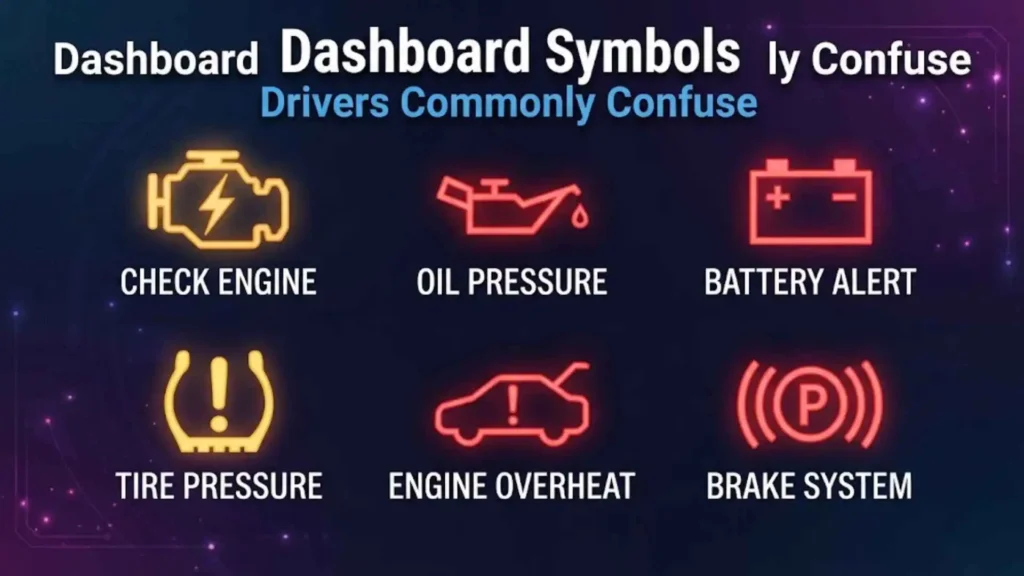
Some icons look similar enough to cause confusion.
Brake Warning vs. Parking Brake
A brake-related warning can indicate that the parking brake is engaged, but some vehicles also use similar symbols for other brake-system conditions.
Always check the exact symbol and message.
ABS vs. Brake Warning
ABS specifically relates to the anti-lock braking system, while a general brake warning can relate to other braking conditions.
Seeing both warnings together may be more concerning than seeing only one.
Oil Pressure vs. Oil Level
An oil-can symbol commonly relates to oil pressure, but not every oil-related warning means the same thing.
Some vehicles have separate oil-level or maintenance messages.
Do not assume that an oil-pressure warning is merely an oil-change reminder.
Traction Control vs. Stability Control
These systems work closely together, so their symbols can look similar.
A flashing symbol may indicate active intervention, while a steady warning can indicate that the system is disabled or has detected a fault.
When a Dashboard Light Appears With Other Symptoms
A dashboard symbol becomes more important when it appears alongside a noticeable change in vehicle behavior.
Warning Light and Smoke
Smoke, steam, or a strong burning smell should never be ignored.
Safely stop and follow appropriate emergency and manufacturer guidance.
Warning Light and Loss of Power
If the vehicle suddenly loses power, struggles to accelerate, or enters a reduced-power mode, avoid treating the dashboard light as a routine service reminder.
Find a safe place to stop if continued driving appears unsafe.
Warning Light and Unusual Noise
Knocking, grinding, loud rattling, squealing, or other unusual mechanical noises can increase the seriousness of a dashboard warning.
Do not continue driving simply because the vehicle is still moving.
Warning Light and Brake or Steering Problems
Any warning accompanied by reduced braking performance or difficult steering deserves immediate safety attention.
The ability to control and stop the vehicle should always take priority over reaching your destination.
When to Check the Owner’s Manual or See a Mechanic
The owner’s manual should be your first reference for a symbol that you cannot confidently identify.
Professional inspection is appropriate when:
- A warning remains illuminated.
- A warning repeatedly returns.
- The vehicle drives differently.
- Multiple warnings appear.
- A warning concerns brakes, steering, engine temperature, oil pressure, or another critical system.
- The vehicle enters reduced-power mode.
- You notice smoke, leaks, unusual noises, or strong smells.
- You are unsure whether it is safe to continue driving.
Do not clear or reset a warning repeatedly without investigating why it appeared. Turning off the indicator does not necessarily repair the underlying problem.
Frequently Asked Questions
What do the symbols on a car dashboard mean?
Car dashboard symbols communicate information about vehicle systems, active features, maintenance needs, and potential faults. Their exact meanings depend on the vehicle, so the owner’s manual should be used to confirm model-specific symbols.
What does a red dashboard light mean?
A red dashboard light generally indicates a condition that may require prompt attention. Some red warnings can involve serious problems, such as oil pressure, overheating, or braking. The exact symbol should be identified before deciding what action to take.
What does a yellow or amber dashboard light mean?
Yellow or amber generally indicates that a system needs attention, inspection, or service. Examples include check-engine, ABS, tire-pressure, and stability-control warnings. The urgency varies by symbol and vehicle.
Which dashboard lights mean you should stop driving?
Potentially serious warnings can include oil pressure, severe overheating, serious brake problems, and certain engine or transmission warnings. If a warning is accompanied by smoke, loss of braking, difficult steering, severe vibration, or another dangerous symptom, safely stop and seek appropriate assistance.
Can I drive with the check engine light on?
A steady check-engine light may allow limited driving in some situations, but the cause should be diagnosed rather than ignored. If the light is flashing or the vehicle is shaking, losing power, smoking, or behaving abnormally, treat the situation as more urgent.
What does a flashing check engine light mean?
A flashing check-engine light can indicate an active misfire or another serious engine-management problem. Continuing to drive normally can potentially cause additional damage, so the vehicle should be assessed promptly.
Why do dashboard lights come on when I start my car?
Many vehicles illuminate dashboard lights briefly during startup as part of a system check. If a warning disappears as expected, it may simply be part of the normal startup sequence. If it remains illuminated, identify the symbol and check the owner’s manual.
Why did my dashboard warning light disappear?
A warning can disappear when the condition that triggered it is no longer being detected. However, an intermittent warning can still indicate a problem. If the light repeatedly returns, have the vehicle inspected.
Are dashboard symbols the same on every car?
No. Dashboard symbols can differ between manufacturers, vehicle generations, trims, and powertrain types. Modern electric, hybrid, diesel, and driver-assistance systems can also have specialized indicators.
What does the battery symbol mean while driving?
The battery-shaped warning commonly relates to the charging system rather than the battery alone. Possible causes can involve the alternator, battery, wiring, or another electrical component. A persistent warning should be investigated.
What does the red oil symbol mean?
The oil-can warning commonly indicates an oil-pressure problem. Because inadequate oil pressure can cause serious engine damage, a warning that appears while driving should be treated as potentially urgent.
What does the ABS light mean?
The ABS light indicates that the anti-lock braking system has detected a fault or has been switched off, depending on the vehicle. The conventional brakes may still operate, but the anti-lock function may not work as designed.
What does the tire-pressure symbol mean?
The tire-pressure warning usually means the tire-pressure monitoring system has detected low pressure or a TPMS issue. Check the tire pressures using the manufacturer’s recommended specifications and inspect the tires for damage.
How do I turn off a dashboard warning light?
The correct way to turn off a warning light is to address the condition that caused it. Some indicators disappear automatically after a problem is corrected, while others may require a diagnostic procedure. Do not repeatedly reset a warning without determining its cause.
Conclusion
Understanding car dashboard symbols and meanings gives drivers a better idea of what their vehicle is communicating. Some icons simply indicate that a feature is active, while others can warn about problems involving the engine, brakes, tires, electrical system, steering, temperature, safety systems, or emissions.
The most useful habit is to look beyond the symbol itself. Consider its color, whether it is solid or flashing, any accompanying message, and how the vehicle is behaving. A warning combined with smoke, overheating, unusual noises, loss of power, braking problems, or difficult steering deserves greater urgency.
Because dashboard symbols are not completely standardized, your vehicle’s owner’s manual should remain the final reference for specific meanings and recommended actions. When a warning concerns a critical system or you are unsure whether the vehicle is safe to drive, it is better to take the cautious approach and seek professional assistance.

Hi, I’m Sienna Brooks, and I believe that the right words can inspire, comfort, and empower people at every stage of life. For as long as I can remember, I’ve been drawn to meaningful quotes and the stories behind them. I love curating collections of inspirational, motivational, and heartfelt quotes that resonate with readers around the world.
Through my writing, I strive to help others find encouragement, whether they’re celebrating life’s happiest moments or navigating its biggest challenges. I believe that wisdom is timeless, and I’m passionate about sharing words that leave a lasting impact.
I am the author of Reflections in Words and The Journey of Inspiration, two books dedicated to exploring the beauty and power of timeless quotes.
 Rowan Sinclair Rowan Sinclair