Symbols of rebellion have always spoken louder than words when people feel unheard. They appear on flags, walls, skin, and screens whenever ordinary people decide enough is enough. These images carry the weight of frustration, hope, and the deep human need to push back against power. Understanding them reveals how societies change and why certain signs keep rising again and again.
(Quick Answer) Symbols of Rebellion
Symbols of rebellion are visual or gestural signs used to express resistance against authority, injustice, or oppressive systems. They range from the raised fist and circle-A to the Guy Fawkes mask and red flag. These emblems create shared identity, inspire collective action, and turn private anger into public statements that can outlast generations.
Quick Facts About Symbols of Rebellion
| Aspect | Information |
| Origin | Ancient gestures and flags of uprising; modern forms largely 19th–20th century |
| Historical Significance | Used in labor strikes, civil rights struggles, revolutions, and anti-colonial movements |
| Main Meaning | Defiance, solidarity, and the demand for change |
| Spiritual Meaning | Inner liberation, breaking mental chains, awakening collective consciousness |
| Cultural Importance | Unites diverse groups under a shared visual language of resistance |
| Modern Usage | Protests, tattoos, street art, social media, fashion, and branding |
What Are Symbols of Rebellion?
Symbols of rebellion are images, gestures, colors, or objects that people adopt to challenge established power. They turn complex feelings of injustice into something simple and recognizable.
Their origins stretch back centuries. In ancient times, certain flags or hand signs marked groups rising against rulers. The modern wave grew stronger in the 1800s and 1900s as workers, colonized peoples, and civil rights activists needed clear ways to signal unity without always using words.
These symbols became important because they travel easily. A raised fist needs no translation. A black flag can be sewn from any dark cloth. Once adopted, they create belonging. People who have never met feel connected when they see the same sign. Over time the meanings evolve. What starts as a call for specific rights can later represent broader freedom or even become commercialized. Yet the core message of resistance remains.
Deep Symbolic Meaning of Symbols of Rebellion
Spiritual Level
On a spiritual level, symbols of rebellion point to inner freedom. They represent the soul’s refusal to stay bound by external control or limiting beliefs. Many traditions see the act of rising against injustice as a path to higher consciousness. Breaking chains becomes a metaphor for releasing fear, guilt, or inherited patterns. In meditation or personal practice, visualizing these symbols can help someone reclaim personal power and align with a larger sense of justice.
Psychological Level
Psychologically, these symbols tap into deep human needs. They speak to the archetype of the rebel, the part of the psyche that refuses to accept harmful authority. Carl Jung might link them to the shadow or the hero who confronts the tyrant. Emotionally they attract people who feel powerless because the symbol restores a sense of agency. Seeing others raise the same sign reduces isolation and strengthens resolve. The brain recognizes the pattern and links it to courage, making the gesture itself empowering.
Cultural Level
Culturally, symbols of rebellion build community identity. They mark belonging to a movement larger than any single person. In labor halls, civil rights marches, or street protests, the shared image creates instant recognition and trust. Traditional interpretations vary by place and time, yet the underlying message stays consistent: the existing order is not final, and people have the right to reshape it.
Symbols of Rebellion in History
Throughout history, people have used symbols to express resistance, independence, and opposition to authority. Some of these symbols became closely connected with particular revolutions or social movements. For example, the raised fist has often represented solidarity and resistance, while flags and emblems have been used by groups seeking political or social change. The liberty cap, associated with freedom from oppression, is another historical symbol that appeared in revolutionary imagery. These symbols allowed people to communicate powerful ideas without relying on lengthy speeches or written messages.
Symbols of Rebellion in Literature
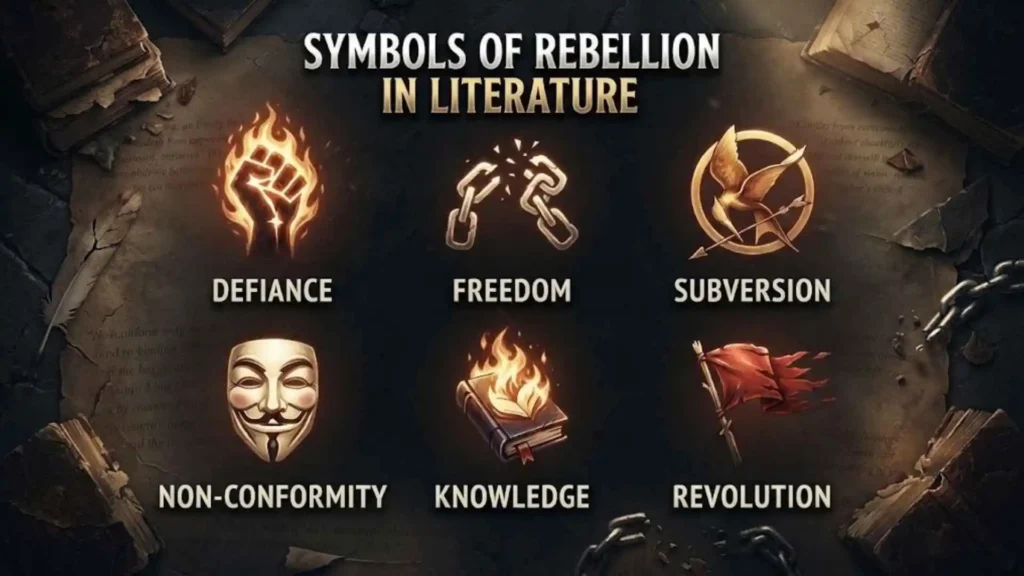
Literature frequently uses symbols to represent characters or societies challenging control and oppression. A rebellious symbol may stand for freedom, individuality, courage, or the rejection of unjust authority. In The Hunger Games, the mockingjay becomes a powerful representation of resistance against the Capitol. Similarly, the scarlet letter in Nathaniel Hawthorne’s The Scarlet Letter can be interpreted through themes of social control, identity, and resistance to judgment. Literary symbols often become memorable because they represent much more than the objects themselves.
Symbols of Rebellion Tattoo
Rebellion tattoos are often chosen to represent independence, personal freedom, or the decision to challenge expectations. Popular designs include broken chains, raised fists, rebellious skulls, lightning bolts, crossed-out symbols of authority, and birds breaking free from cages. Some people choose historical or fictional symbols, such as the mockingjay, because they connect personal identity with a larger story of resistance. The meaning ultimately depends on the person wearing the tattoo and the context behind the design.
Symbol of Rebellion Meaning
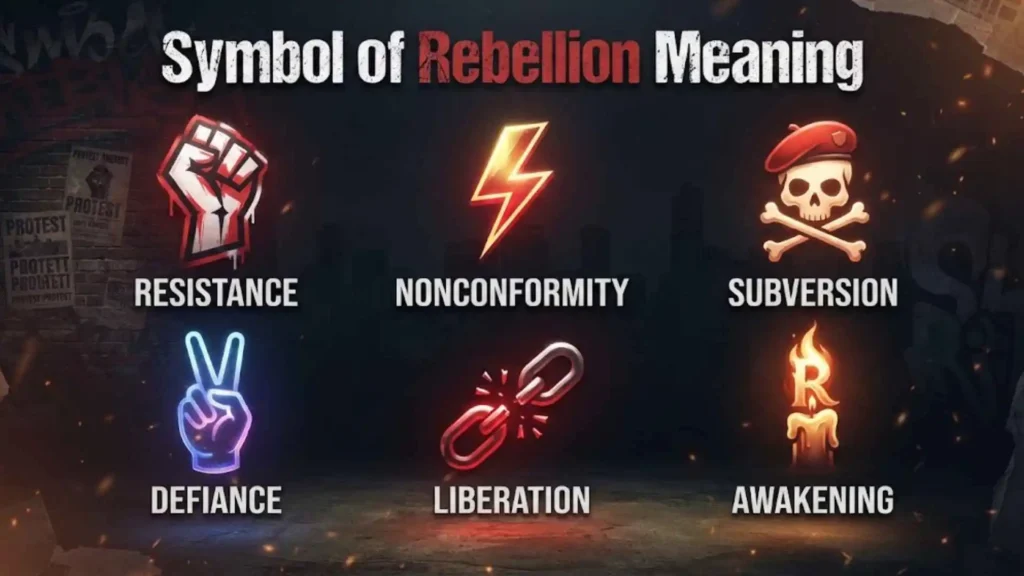
A symbol of rebellion generally represents resistance to authority, oppression, conformity, or established rules. Its meaning can range from political resistance to something much more personal, such as refusing to follow social expectations. Broken chains may suggest freedom, while a raised fist can communicate solidarity and determination. Because symbols can have different meanings across cultures and historical periods, their interpretation depends heavily on context.
Symbol of Rebellion Star Wars
In Star Wars, the most recognizable symbol of rebellion is the Rebel Alliance starbird, which represents the movement opposing the Galactic Empire. It became associated with freedom, resistance, and the struggle against imperial control. The symbol appears on Rebel uniforms, equipment, and spacecraft throughout the fictional universe. For fans, it can also represent standing against authoritarian power and supporting the idea of hope in difficult circumstances.
Rebellious Symbols
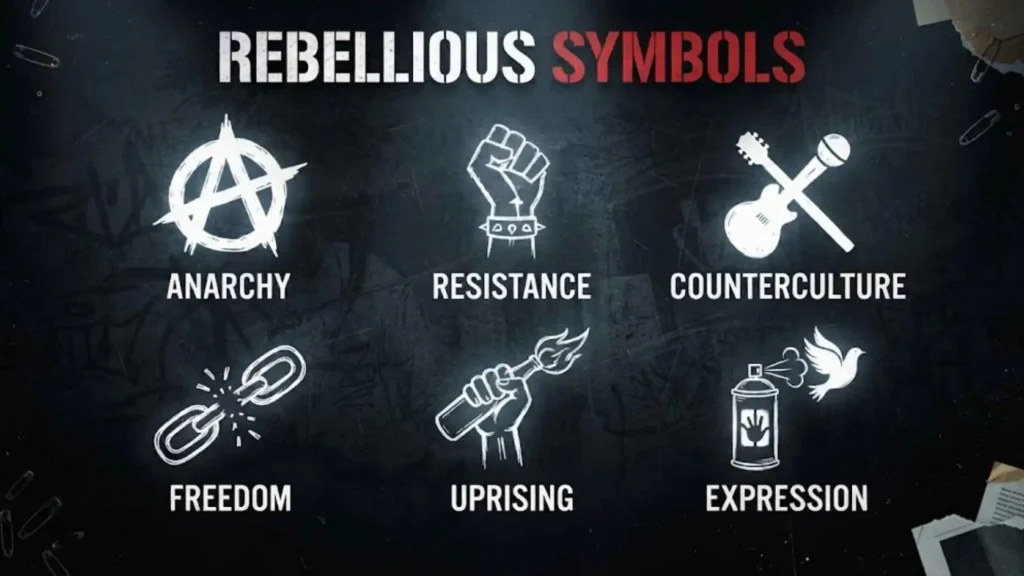
Rebellious symbols can take many forms, from historical emblems to modern artwork and fictional icons. Common examples include the raised fist, broken chains, the anarchy symbol, protest signs, rebellious flags, and imagery showing barriers being broken. These designs usually communicate ideas such as independence, nonconformity, resistance, and freedom. Their meanings can change depending on the group, culture, or situation in which they are used.
Famous Symbols of Rebellion
Some symbols of rebellion have become widely recognized because of their connection with major historical movements or popular culture. The raised fist is strongly associated with solidarity and resistance, while the broken chain commonly represents liberation from oppression. The liberty cap has also appeared in revolutionary and freedom-related imagery. In fiction, symbols such as the Star Wars Rebel Alliance emblem and the Hunger Games mockingjay have become recognizable representations of resistance.
Tattoo Symbols of Rebellion
Tattoo designs associated with rebellion often focus on freedom, individuality, and breaking away from restrictions. A broken chain can symbolize liberation, while a clenched or raised fist may represent strength and solidarity. A bird escaping from a cage can suggest freedom from limitations, and a rebellious skull can express an unwillingness to conform. People may also choose literary, historical, or fictional symbols when a particular story reflects their personal experience.
Ancient Symbols of Rebellion in History
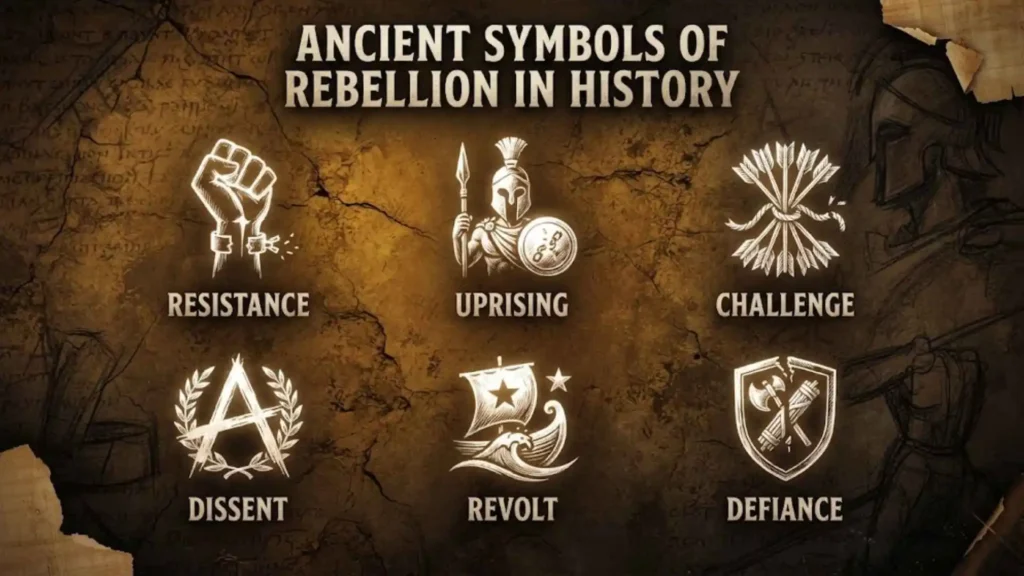
Ancient societies did not always have a single universal symbol for rebellion, but various objects, images, and emblems became connected with resistance, independence, or challenges to authority. The Roman Phrygian cap, for example, later became associated with freedom and liberation and was used in revolutionary imagery centuries afterward. Ancient military standards, religious symbols, and political emblems could also communicate loyalty to a particular cause or resistance to another power. The exact meaning of an ancient symbol should always be considered within its historical context.
Real Life Symbols of Rebellion
Real-life symbols of rebellion are often connected with protests, independence movements, labor movements, civil rights campaigns, and other forms of social resistance. The raised fist is one of the most recognizable examples and has been used in different movements to express solidarity and determination. Protest banners, distinctive flags, ribbons, and movement-specific emblems can also become symbols of resistance. Their significance usually comes from the people and events associated with them rather than from the design alone.
Celtic Symbols of Rebellion
Celtic imagery is sometimes used in modern designs to express independence, strength, heritage, or resistance. Celtic knots, spirals, warrior-inspired motifs, and certain animal designs may be incorporated into artwork or tattoos with these ideas in mind. However, it is important to distinguish historical Celtic symbolism from modern interpretations. Not every Celtic knot or ancient motif was originally intended to represent rebellion. In many cases, the rebellious meaning attached to Celtic designs today is a modern personal interpretation.
Symbols of Rebellion in The Hunger Games
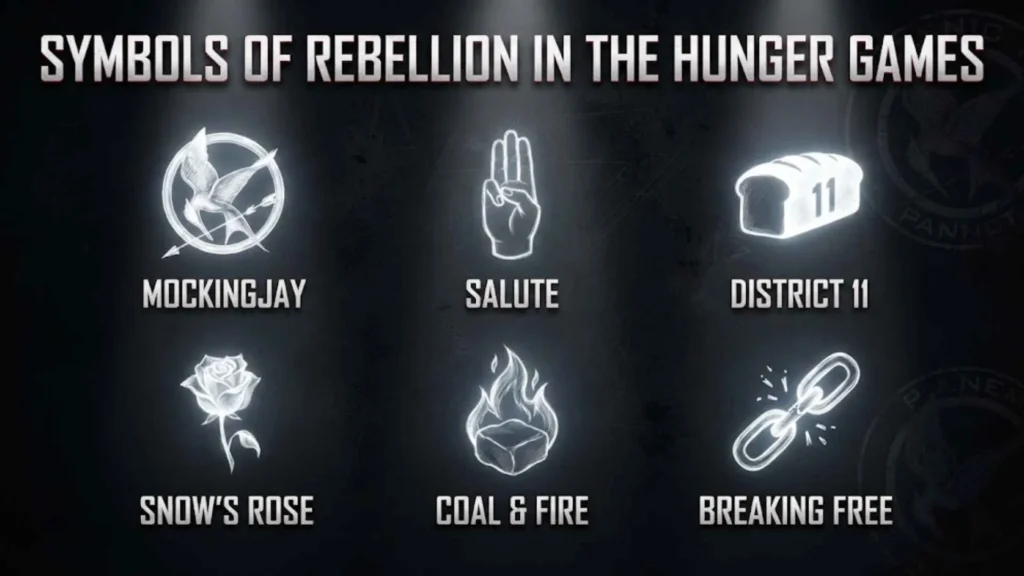
The mockingjay is the central symbol of rebellion in The Hunger Games. Initially, the bird is connected to the fictional history of mockingjays and jabberjays, but it gradually becomes associated with resistance against the Capitol. Katniss Everdeen’s connection with the mockingjay helps transform it into a powerful emblem of hope and opposition. The image eventually represents people joining together against an oppressive system, making it one of the most recognizable fictional symbols of rebellion.
Historical Symbols of Rebellion
Historical rebellion has produced many symbols that came to represent freedom, resistance, or opposition to established power. The raised fist, liberty cap, revolutionary flags, and various movement-specific emblems have all been used in different historical settings. Some symbols originally had completely different meanings before being adopted by political or social movements. This is why understanding the period and group associated with a symbol is important when interpreting its meaning.
Historical Symbols of Resistance
Historical symbols of resistance often communicate unity, courage, freedom, and opposition to oppression. The raised fist has appeared in numerous movements as an expression of solidarity, while broken chains have commonly represented liberation. Flags, badges, colors, and distinctive signs have also helped groups identify themselves and communicate their shared cause. Over time, some resistance symbols have moved beyond their original movements and become broader representations of freedom or social change.
Types and Variations of Symbols of Rebellion
Raised Fist
A clenched hand held high. It means solidarity, strength through unity, and defiance. Used in labor movements, anti-fascist struggles, Black Power, and modern protests. Appears in posters, photographs, emojis, and street art.
Circle-A (Anarchy Symbol)
A capital A inside a circle. Represents the rejection of hierarchical authority and the belief that order can exist without rulers. Created in the 1960s by French anarchist youth and spread worldwide. Common in punk culture, graffiti, and political banners.
Red Flag
A plain red banner. Symbolizes revolution, socialism, and the blood of the struggle. Adopted during the French Revolution and later by communist and labor movements. Seen in historical uprisings and contemporary left-wing protests.
Black Flag
A solid black flag. Stands for anarchism, negation of the state, and mourning for the oppressed. Used by anarchist groups since the late 19th century. Appears in demonstrations and as a statement of anti-authoritarian identity.
Guy Fawkes Mask
A stylized smiling face with mustache and goatee. Originated from the 1605 Gunpowder Plot figure and popularized by the graphic novel and film V for Vendetta. Adopted by Anonymous, Occupy Wall Street, and global protesters as a face of resistance that hides individual identity while uniting the crowd.
Broken Chains
Images of shattered links. Represent liberation from slavery, oppression, or personal bondage. Found in abolitionist art, anti-colonial movements, and modern freedom imagery.
Peace Sign
A circle with three lines descending. Designed in 1958 for nuclear disarmament. Later used in anti-war and counterculture movements as a quiet form of rebellion against militarism.
Symbols of Rebellion Across Different Cultures
Ancient Egypt
Rebellion against pharaohs sometimes used the image of the chaos serpent Apophis or broken royal symbols. Uprisings invoked the idea of restoring ma’at (order) through challenging corrupt rule.
Ancient Greece
The Phrygian cap, a soft conical hat, became linked with freed slaves and later with liberty during democratic struggles. Hand gestures of defiance appear in vase paintings of heroes challenging gods or kings.
Roman Culture
Fasces (bundled rods with an axe) originally symbolized authority but were later reinterpreted in revolutionary contexts. Early Christian fish symbols served as secret signs of resistance under persecution.
Eastern Traditions
In China, the color red and certain peasant banners marked uprisings. In India, the spinning wheel and hand-spun cloth became symbols of nonviolent rebellion against colonial rule under Gandhi.
Indigenous Traditions
Many Native American groups used specific arrow configurations or animal totems to signal readiness for defense of land and way of life. In various African cultures, drums, masks, and certain colors carried messages of resistance during colonial periods.
Modern Interpretations
Today the same symbols appear globally, adapted by local movements. The raised fist crossed continents. The Guy Fawkes mask shows up from Hong Kong to Latin America. Digital culture spreads them faster than ever.
Similar Symbols and Their Meanings
| Symbol | Similarity to Rebellion Symbols | Key Difference |
| Peace Dove | Appears in anti-war protests | Emphasizes nonviolence over confrontation |
| Olive Branch | Offers truce | Seeks reconciliation rather than challenge |
| Scale of Justice | Demands fairness | Works within systems rather than against them |
| Torch of Liberty | Represents enlightenment | Often official rather than grassroots |
Common misconception: not every raised fist or black flag signals the same ideology. Context and accompanying slogans matter. Some symbols start as tools of the powerful and are later reclaimed by the oppressed.
Symbols of Rebellion in Mythology and Folklore
Myths often feature rebels who challenge gods or kings. Prometheus steals fire for humanity and suffers for it. The story frames defiance as a gift to people despite the cost. In Norse tales, Loki’s tricks and the giants’ wars against the gods carry themes of upsetting order. Folklore heroes who outwit tyrants or escape bondage reinforce the idea that resistance can be clever as well as forceful. These stories shape modern meanings by giving rebellion a heroic and sometimes tragic depth.
Symbols of Rebellion in Art, Literature, Movies and Pop Culture
In paintings, artists such as Honoré Daumier captured clenched fists during 19th-century uprisings. Literature uses them through characters who refuse unjust laws. Poetry turns the raised hand into a lasting image of solidarity.
Movies and television brought the Guy Fawkes mask into living rooms through V for Vendetta. Street art and tattoos keep the symbols personal and permanent. Fashion houses sometimes borrow the imagery, turning protest into style. In branding and social media, simplified versions travel as profile pictures and hashtags, keeping the visual language alive for new generations.
Spiritual and Dream Meaning of Symbols of Rebellion
Dreaming of a raised fist or broken chains often points to a need for personal liberation. It may signal readiness to confront an authority figure or limiting belief. In meditation, focusing on these images can strengthen resolve and clarity. Positive messages include empowerment and connection to a greater cause. Cautionary notes appear when the symbol feels aggressive or isolating, suggesting the dreamer examine motives and methods.
Positive and Negative Meanings of Symbols of Rebellion
| Positive Meaning | Negative Meaning |
| Solidarity and collective strength | Violence or chaos without purpose |
| Courage to challenge injustice | Rejection of all structure, including helpful ones |
| Hope for a fairer future | Division and polarization |
| Personal and spiritual liberation | Co-optation by harmful ideologies |
Context decides the tone. The same raised fist can inspire justice or justify harm depending on who holds it and why.
Why Humans Are Attracted to Symbols of Rebellion
Humans are pattern-seeking creatures. A simple, strong image cuts through noise and sticks in memory. Emotionally, these symbols satisfy the need to belong while asserting individuality. They connect personal frustration to a larger story of struggle that spans history. Cultural memory keeps the images alive. When people feel unheard by institutions, the symbols offer a way to speak without waiting for permission. Storytelling around them turns private pain into shared purpose.
Modern Uses of Symbols of Rebellion
Today these symbols appear on tattoos as permanent declarations of values. Jewelry and fashion make quiet statements. Branding sometimes softens them for commercial appeal. Social media spreads them instantly during protests. Contemporary spirituality incorporates them into practices of empowerment. Home decor and personal objects keep the message close. Digital artists remix classic forms for new causes, proving the language stays flexible.
Interesting Facts About Symbols of Rebellion
- The raised fist appeared in labor art as early as 1917 and reached global fame at the 1968 Olympics.
- The circle-A was designed in Paris in 1964 by young anarchists seeking a simple unifying mark.
- The Guy Fawkes mask generates royalties for the company that owns the film design, even while used in anti-corporate protests.
- Red flags once belonged to elite authority before revolutionaries claimed the color.
- The peace sign began as a specific anti-nuclear emblem before becoming a broader counterculture icon.
- Some ancient symbols of rebellion were later adopted by the very powers they once opposed.
- Digital emojis of the raised fist keep the gesture alive for generations who may never attend a physical march.
- Indigenous resistance symbols often blend spiritual and political meaning in ways modern political icons rarely match.
Frequently Asked Questions
What is the most famous symbol of rebellion?
The raised fist ranks among the most widely recognized. It has appeared in labor struggles, civil rights movements, anti-fascist actions, and recent global protests, making it a near-universal sign of defiance and solidarity.
Why do people use the Guy Fawkes mask in protests?
The mask hides individual identity while creating a shared face of resistance. Popularized by V for Vendetta and adopted by groups like Anonymous and Occupy, it signals opposition to perceived tyranny without revealing personal details.
Are symbols of rebellion always political?
They often start political but can become personal. Many people wear them as tattoos or jewelry to express private values of independence or resistance to limiting beliefs, even without joining organized movements.
Can symbols of rebellion change meaning over time?
Yes. The red flag shifted from elite use to revolutionary use. The peace sign expanded from nuclear disarmament to broader anti-war and counterculture meanings. Context and community continually reshape what the image conveys.
What does the anarchy symbol really mean?
The circle-A represents the idea that society can find order without hierarchical rulers. It is a call for voluntary cooperation and mutual aid rather than chaos, though critics sometimes interpret it as pure disorder.
How have symbols of rebellion appeared in recent years?
They show up in street protests, online campaigns, and youth movements worldwide. Anime-inspired flags, classic raised fists, and digital adaptations continue to evolve with each new generation of activists.
Conclusion
Symbols of rebellion remain powerful because they give shape to the human refusal to accept injustice as permanent. From ancient gestures to modern masks and digital icons, they connect individuals across time and place. They remind us that change often begins with a simple, shared sign that says the current order is not the only possible one. In a world that still produces both oppression and the courage to challenge it, these emblems will keep rising.

Hello, I’m Rowan Sinclair, a passionate writer and lifelong admirer of the wisdom found in great quotes. I believe that words have the ability to inspire change, spark creativity, and connect people across cultures and generations.
I enjoy writing about motivational quotes, famous sayings, and lessons from history’s most influential thinkers. Every article I create is driven by my desire to help readers discover meaningful insights that they can apply to their own lives.
When I’m not writing, I spend my time reading biographies, exploring classic literature, and collecting memorable quotes that deserve to be shared with the world.
I am the author of Voices That Inspire and A Collection of Timeless Thoughts, two books that celebrate the enduring power of words and the stories behind them.
 Sienna Brooks