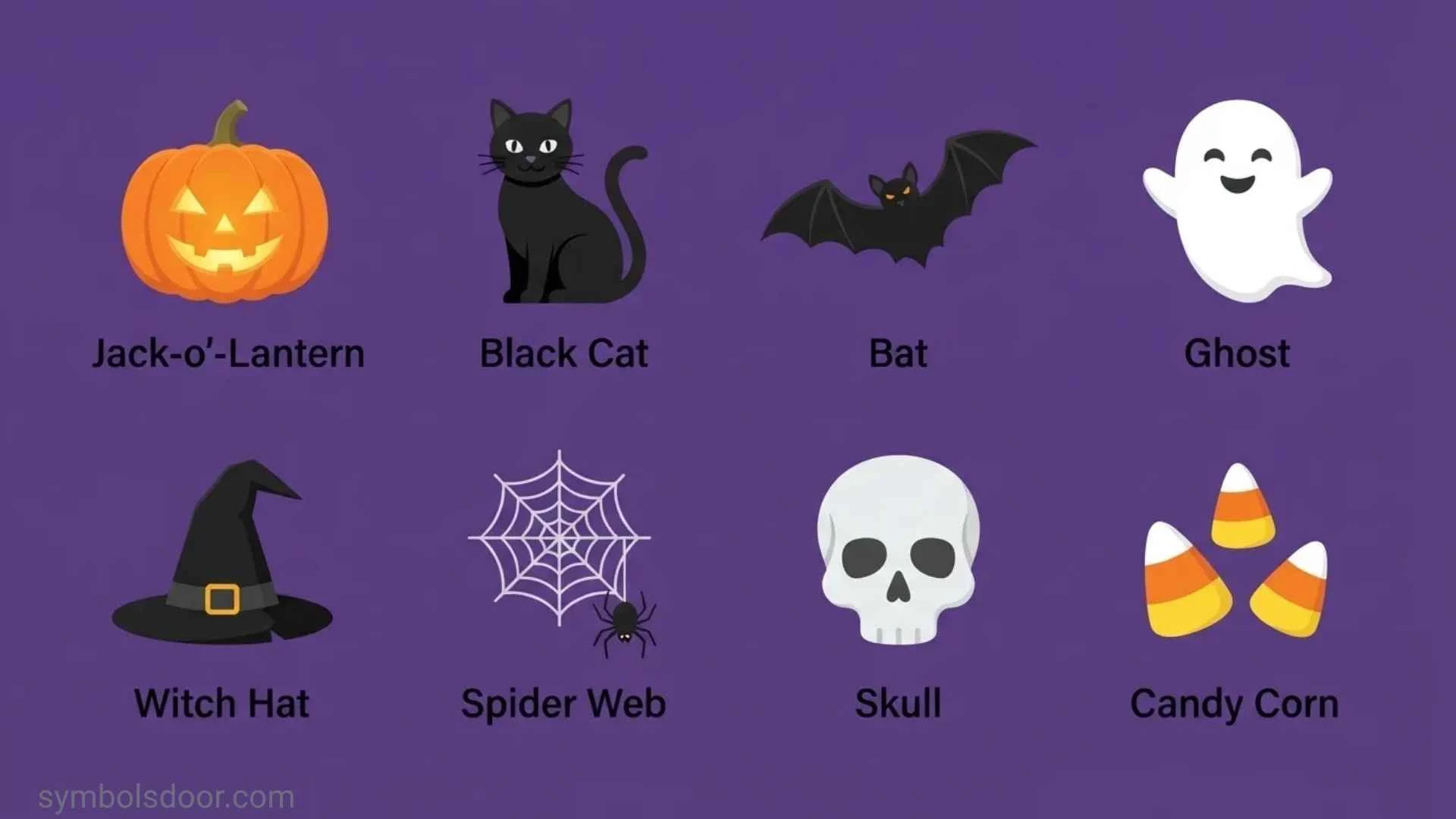
Halloween is filled with mysterious images, from glowing jack-o’-lanterns and black cats to flying bats, witches, ghosts, and skeletons. Every October, these familiar decorations appear on front porches, in shop windows, at parties, and throughout neighborhoods. However, many of these images carry stories that reach far beyond modern Halloween celebrations.
The Halloween symbols we recognize today come from different sources, including ancient Celtic traditions, Irish and Scottish folklore, European witchcraft beliefs, religious observances, and American popular culture. Some represent the changing seasons and autumn harvest, while others reflect historical ideas about death, spirits, magic, and the supernatural.
For example, carved pumpkins connect to the Irish legend of Stingy Jack, while black cats became associated with witchcraft through European superstitions. Ghosts represent beliefs about the dead, and skeletons remind people of human mortality. Meanwhile, orange and black reflect the seasonal atmosphere that defines modern Halloween.
Understanding these Halloween symbols and meanings gives you a better appreciation of the holiday’s history and cultural significance. Let’s explore the most popular symbols, their origins, and the traditions that made them essential parts of Halloween.
What Are Halloween Symbols?
Halloween symbols are images, objects, animals, and characters associated with Halloween’s history, traditions, and celebrations. They help communicate the holiday’s familiar themes, including mystery, death, harvest, darkness, magic, and supernatural folklore.
Some symbols have historical connections to ancient seasonal celebrations. Others developed through European legends, religious customs, literature, and modern entertainment.
For instance, a carved pumpkin represents the jack-o’-lantern tradition, while a witch’s broom connects to European witchcraft folklore. Similarly, ghosts and skeletons reflect longstanding cultural ideas about death and the afterlife.
Traditional and popular Halloween symbols include:
- Jack-o’-lanterns: Represent Halloween folklore, wandering spirits, and pumpkin-carving traditions.
- Witches: Symbolize magic, witchcraft, supernatural beliefs, and European folklore.
- Black cats: Represent mystery and historical superstitions about witchcraft and bad luck.
- Bats: Connect Halloween imagery with nighttime, darkness, and vampire mythology.
- Spiders: Represent eerie environments, mystery, and traditional supernatural imagery.
- Ghosts: Represent spirits of the dead and beliefs about the afterlife.
- Skeletons and skulls: Symbolize death, mortality, and remembrance.
- Full moons: Create associations with nighttime, mystery, and supernatural stories.
Although these images often appear together, they don’t all share the same historical origins. Each has developed through different cultural traditions.
History and Origins of Halloween Symbols
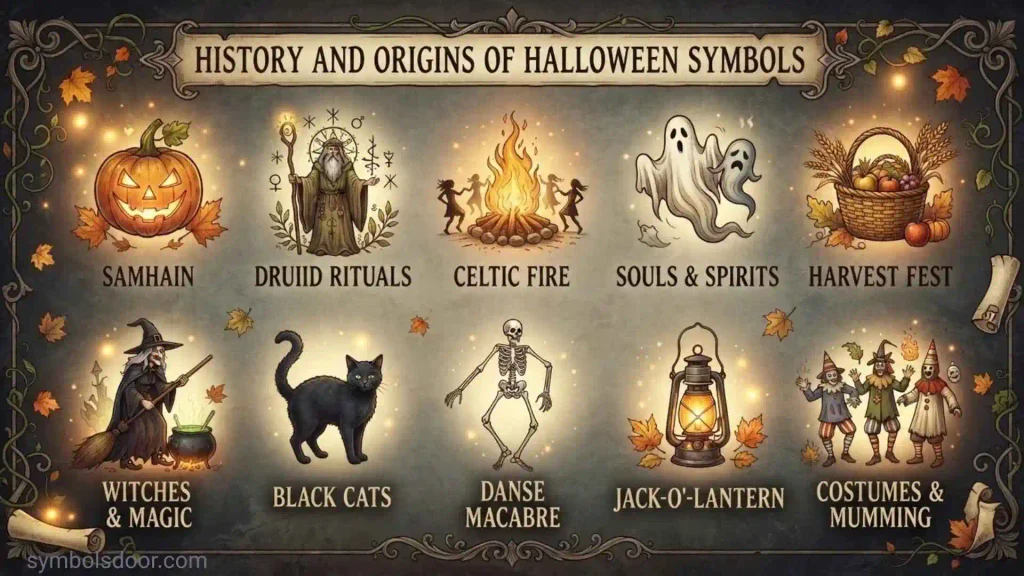
To understand Halloween symbolism, you first need to explore how Halloween developed. Its history includes ancient seasonal celebrations, Christian observances, European folklore, and traditions introduced to America by immigrants.
Samhain and Ancient Celtic Traditions
One of the most important historical influences on Halloween is Samhain, an ancient Gaelic festival associated with the end of the harvest and the beginning of winter.
The festival was observed around November 1, marking a seasonal transition from the brighter months into the darker part of the year. Communities prepared for winter, brought livestock in from summer pastures, and celebrated the completion of agricultural work.
Samhain also carried spiritual significance. Traditional beliefs connected this seasonal transition with the supernatural world. Folklore described it as a time when spirits and otherworldly beings could move more freely between their world and the human world.
Several customs became associated with this period:
- Bonfires: Large communal fires formed part of seasonal celebrations.
- Feasting: Communities gathered to share food and mark the changing season.
- Disguises: Some traditional customs involved dressing in unusual clothing or disguising oneself.
- Protective practices: Certain customs aimed to protect households from harmful supernatural beings.
- Seasonal gatherings: People came together as agricultural work ended and winter approached.
These traditions helped shape later Halloween imagery, especially its associations with spirits, darkness, fire, and disguises.
However, not every modern Halloween custom comes directly from Samhain. Many developed centuries later through separate European and American traditions.
Christian Traditions and All Hallows’ Eve
Christian observances also played an important role in Halloween’s development.
All Saints’ Day, celebrated on November 1, honors saints and other holy people. All Souls’ Day, observed on November 2 in Western Christianity, traditionally focuses on remembering the faithful departed.
The evening before All Saints’ Day became known as All Hallows’ Eve. Over time, the name shortened to Halloween.
These religious observances existed alongside older seasonal customs in parts of Europe. Their interaction helped shape the traditions surrounding late October and early November.
During the medieval period, people also practiced souling. Poor individuals visited homes and received small cakes in exchange for prayers for deceased family members. This custom is often discussed as one historical influence on modern trick-or-treating.
How Halloween Symbols Reached America
Halloween traditions crossed the Atlantic through European immigration, particularly during the nineteenth century.
Irish immigrants arriving in America brought their folklore, seasonal customs, and vegetable-carving traditions. Their practices helped popularize Halloween celebrations throughout the country.
American communities gradually developed new customs, including:
- Carving pumpkins into illuminated faces.
- Wearing costumes representing ghosts, witches, and monsters.
- Organizing neighborhood Halloween gatherings.
- Decorating houses with bats, skeletons, and black cats.
- Going door to door for treats.
Pumpkins became especially important because they were widely available in North America and easier to carve than many traditional root vegetables.
By the twentieth century, Halloween had developed into a widely recognized celebration involving costumes, candy, decorations, and community activities.
Seven Most Popular Halloween Symbols and Their Meanings
The seven most recognizable traditional Halloween symbols are jack-o’-lanterns, witches, black cats, bats, spiders, ghosts, and skeletons. Each has its own folklore, historical background, and cultural associations.
Jack-o’-Lanterns and Pumpkins
A glowing jack-o’-lantern is perhaps the most recognizable image of Halloween. Its carved face, flickering candle, and bright orange color make it a familiar decoration throughout October.
The jack-o’-lantern meaning comes partly from Irish folklore and the legend of a mysterious character called Stingy Jack.
The Legend of Stingy Jack
According to a popular Irish folktale, Stingy Jack was a dishonest man who repeatedly tricked the Devil.
In one version, Jack invited the Devil for a drink but didn’t want to pay. He convinced the Devil to transform into a coin so he could purchase their drinks. Jack then placed the coin beside a silver cross, preventing the Devil from returning to his original form.
Jack eventually released the Devil after making him promise not to claim his soul for a certain period.
Later, Jack tricked the Devil again and secured another promise that prevented him from taking his soul.
When Jack eventually died, the story says that heaven refused him because of his dishonest life. The Devil also refused him because of their earlier agreement.
Left without a place in either heaven or hell, Jack supposedly wandered through darkness carrying a burning coal inside a hollowed-out turnip.
This wandering figure became known as Jack of the Lantern, eventually shortened to jack-o’-lantern.
The story exists in different versions, and its familiar written forms appeared in the nineteenth century.
Why Do People Carve Pumpkins for Halloween?
The tradition of carving vegetables into frightening faces developed in Ireland and other parts of the British Isles.
People traditionally carved large turnips, potatoes, and sometimes other root vegetables. They placed illuminated lanterns near doors and windows, partly to frighten away wandering spirits in folklore.
When Irish immigrants brought the custom to North America, they found pumpkins more suitable for carving.
Pumpkins were larger, easier to hollow out, and had a softer interior. Their bright orange color also matched the autumn harvest season.
Today, pumpkin carving remains one of Halloween’s most popular activities.
Common jack-o’-lantern designs include:
- Traditional smiling or frightening faces.
- Sharp triangular eyes and crooked mouths.
- Witch and ghost silhouettes.
- Black cat and bat patterns.
- Haunted house designs.
- Intricate decorative patterns made with pumpkin carving stencils.
What jack-o’-lanterns symbolize: Their traditional associations include wandering spirits, protection against evil, and the mysterious atmosphere of Halloween. Modern celebrations also connect pumpkins with autumn, creativity, and seasonal festivities.
Witches
Witches are among the most familiar characters in Halloween folklore. Their pointed hats, broomsticks, cauldrons, and mysterious spells have become standard features of Halloween decorations.
However, the history of witches extends far beyond October celebrations.
Why Are Witches Associated With Halloween?
European folklore contains centuries of stories about people believed to practice magic or communicate with supernatural forces.
In different historical periods, communities associated witches with healing, herbal knowledge, divination, curses, and mysterious supernatural powers.
However, witchcraft also became connected with fear and religious persecution. During the European witch hunts, accusations of witchcraft sometimes resulted in imprisonment, torture, and executions.
Religious authorities and popular beliefs frequently associated alleged witches with the Devil and evil supernatural forces.
These historical fears helped establish the frightening witch imagery that later became popular in Halloween culture.
Common Witch Symbols and Their Meanings
Several familiar objects help identify witches in Halloween decorations.
- Witch hats: Pointed hats became a recognizable feature of traditional witch illustrations and costumes.
- Witch’s broom: European folklore connected flying broomsticks with witches and magical travel.
- Cauldrons: These cooking vessels became associated with magical mixtures, spells, and witch’s brew.
- Magical spells: Represent supernatural powers and traditional witchcraft stories.
- Black cats: Frequently appear beside witches because of historical associations between cats and witchcraft.
Witches also appear in popular Halloween costumes, movies, children’s stories, and haunted attractions.
What witches symbolize: In Halloween imagery, witches represent magic, mystery, supernatural beliefs, and the darker side of European folklore. Modern representations also include friendly and humorous witches.
Black Cats
Black cats are another classic feature of Halloween decorations. Their dark fur, bright eyes, and mysterious appearance make them popular in spooky illustrations.
However, their association with Halloween comes primarily from historical superstition rather than anything unusual about the animals themselves.
Why Are Black Cats Associated With Halloween?
During different periods of European history, people connected black cats with witchcraft and supernatural activity.
Some communities believed witches could transform into cats or use them as animal companions. These stories strengthened the association between black cats and mysterious nighttime activities.
Black cats also became connected with bad luck and curses in certain European traditions.
However, these beliefs weren’t universal. Different cultures have associated black cats with protection, prosperity, and good fortune.
The Cat Sith in Scottish Folklore
One interesting example comes from Cat Sith mythology.
The Cat Sith, also spelled Cat Sìth, appears in Scottish folklore as a supernatural creature resembling a large black cat with a white patch on its chest.
Some traditional stories describe it as a fairy creature capable of stealing a person’s soul before burial.
Other versions associate the Cat Sith with nine transformations or changes of form.
Folklore also describes customs involving milk offerings to attract or appease the creature.
These stories helped establish the supernatural image of large black cats in Scottish and Irish traditions.
What black cats symbolize: In Halloween culture, black cats represent mystery, witchcraft, superstition, and the unknown. Depending on the tradition, they may also symbolize good fortune or protection.
Importantly, black cats aren’t unlucky. Their reputation comes from cultural beliefs, not evidence about their behavior or nature.
Bats
Bats appear throughout Halloween imagery, often flying across an orange moon or hanging upside down inside haunted houses.
These nocturnal mammals naturally connect with nighttime settings. Their unusual appearance and nighttime activity also made them suitable characters in supernatural stories.
Why Are Bats Associated With Halloween?
Bats have long appeared in European folklore and supernatural imagery. Their association with Halloween developed through several overlapping influences.
One connection involves traditional harvest-season gatherings and outdoor fires. Insects attracted to bonfires could also attract bats looking for food.
As a result, bats sometimes appeared around nighttime gatherings during the autumn season.
Another important influence came from vampire mythology.
Bats, Vampires, and Dracula
Vampire stories became especially popular through Gothic literature during the nineteenth century.
One of the most influential works was Dracula, written by Bram Stoker and published in 1897.
The novel helped popularize the image of a mysterious vampire connected with darkness, supernatural powers, and blood.
Although only a small number of bat species feed on blood, vampire bats became strongly associated with fictional vampires.
This connection grew through later books, films, and illustrations.
What bats symbolize: Bats represent nighttime, mystery, darkness, and vampire folklore in Halloween imagery. Their appearance in decorations also reflects their nocturnal nature.
Spiders and Spiderwebs
Few decorations create an abandoned, haunted atmosphere as quickly as a spiderweb stretched across a dark corner.
Spiders and their webs have become familiar Halloween symbols because they suggest neglected spaces, hidden creatures, and eerie surroundings.
Why Are Spiders Associated With Halloween?
Spiders appear in different cultural stories and superstitions. Some traditions connect them with witches, magical practices, or supernatural activity.
Their web-spinning behavior also contributes to their symbolic meaning.
A web covering an old doorway or dusty corner creates an impression that nobody has visited the place for a long time. This makes spiderwebs especially effective in haunted house decorations.
Traditional superstitions sometimes assign special meanings to spiders appearing inside homes or near candle flames. However, these interpretations differ between regions and shouldn’t be treated as established facts.
Real spiders also become more noticeable during certain periods because of seasonal changes in their activity and movement. Some species mature during late summer and fall, while mating behavior can make adult spiders more visible.
Common Halloween spider decorations include:
- Large artificial black spiders.
- Stretchable white spiderwebs.
- Hanging spiders near doorways.
- Plastic spiders on walls and ceilings.
- Spiderweb table decorations.
- Fake spiders used in Halloween party displays.
What spiders symbolize: Spiders generally represent mystery, fear, hidden danger, and eerie environments in Halloween imagery.
Ghosts and Spirits
Ghosts are among the oldest and most recognizable supernatural figures in Halloween traditions.
A typical Halloween ghost appears as a white floating figure, often with dark eyes and a simple expression. However, beliefs about ghosts differ greatly across cultures.
Why Are Ghosts Associated With Halloween?
The association between Halloween and ghosts connects with historical beliefs about the dead and the afterlife.
Samhain folklore described a period when the boundary between the living and the spirit world became less distinct. Some traditional stories suggested that departed souls could visit the human world during this seasonal transition.
Later European customs also included religious observances dedicated to remembering deceased people.
These traditions helped strengthen Halloween’s association with spirits and supernatural beings.
What Does a Ghost Symbolize?
Ghosts can represent several ideas:
- Departed souls: Spirits believed to remain connected with the living world.
- Dead ancestors: People who passed away and remain part of family traditions.
- Unresolved mysteries: Stories involving unfinished business or unexplained events.
- The afterlife: Cultural beliefs about existence after death.
- Remembrance: Memories of people who have passed away.
Some Halloween stories portray ghosts as malevolent spirits, while others describe them as harmless or protective.
The familiar white-sheet ghost costume became popular because it offered a simple way to represent a supernatural figure.
What ghosts symbolize: Ghosts represent death, remembrance, the spirit world, and the mystery surrounding the afterlife.
Skeletons and Skulls
Skeletons and skulls are powerful Halloween images because they represent the human body after death.
You can find them in haunted houses, graveyard decorations, costumes, artwork, and Halloween illustrations.
What Do Skeletons Symbolize on Halloween?
Skeletons represent mortality and the physical reality of death.
Their association with Halloween also connects with European artistic traditions that explored the temporary nature of human life.
One important example is the Danse Macabre, or Dance of Death.
This medieval artistic theme depicted death as a force that eventually reaches people from every social class. Kings, merchants, religious figures, and ordinary workers all face the same final fate.
Another related concept is memento mori, a Latin expression meaning remember that you must die.
Artists used skulls, bones, and other objects to remind viewers that life is temporary.
These ideas influenced later artistic representations of death and helped establish skeletons as familiar symbols of mortality.
Difference Between Halloween Skulls and Sugar Skulls
Halloween skulls and Mexican sugar skulls may look similar at first. However, their cultural meanings differ.
| Halloween skulls | Día de los Muertos sugar skulls |
| Commonly represent death and mortality. | Represent remembrance and celebration of deceased loved ones. |
| Often appear in spooky decorations. | Traditionally appear on Day of the Dead altars and displays. |
| Frequently use dark or frightening designs. | Often feature bright colors and decorative patterns. |
| Connect with Halloween and Gothic imagery. | Connect with Mexican cultural traditions. |
What skeletons and skulls symbolize: Halloween skeletons represent death and mortality, while skull imagery can also represent remembrance and cultural traditions.
Other Traditional Halloween Symbols and Their Meanings
Beyond the seven main symbols, several other images contribute to Halloween’s recognizable atmosphere.
Full Moon
The full moon often appears in Halloween illustrations alongside bats, haunted houses, and dark forests.
It represents nighttime, mystery, and the unknown. Its connection with werewolf stories also makes it a familiar feature of supernatural folklore.
However, the idea that a full moon causes supernatural transformations belongs to mythology rather than scientific evidence.
Broomsticks
Broomsticks are closely connected with traditional witch imagery.
European folklore associated witches with flying through the air on enchanted brooms. Stories about magical flight became popular in illustrations, literature, and later Halloween costumes.
Today, broomsticks remain recognizable symbols of witchcraft and Halloween traditions.
Haunted Houses
Haunted houses represent fear, mystery, and supernatural activity.
Their imagery often includes abandoned buildings, dark hallways, strange noises, and ghostly apparitions.
Modern haunted attractions use these elements to create frightening experiences for Halloween visitors.
Graveyards and Tombstones
Graveyards represent burial, remembrance, and the relationship between the living and the dead.
Tombstones, cemetery gates, and artificial graves have become popular Halloween decorations because they create an atmosphere associated with death and supernatural stories.
Historically, cemeteries also played an important role in cultural and religious practices involving remembrance.
Vampires
Vampires are supernatural creatures traditionally associated with drinking blood and returning from the dead.
European folklore contains many stories about vampire-like beings. However, the modern image of a sophisticated vampire owes much to nineteenth-century Gothic literature.
Bram Stoker’s Dracula helped establish many familiar vampire characteristics.
Today, vampires remain popular Halloween characters alongside witches, ghosts, and skeletons.
Candles and Lanterns
Candles and lanterns represent light, remembrance, and guidance.
Their connection with Halloween includes the tradition of illuminating carved vegetables and pumpkins.
In different religious and cultural observances, candles also serve as reminders of deceased loved ones or symbols of spiritual devotion.
Halloween Colors and Their Meanings
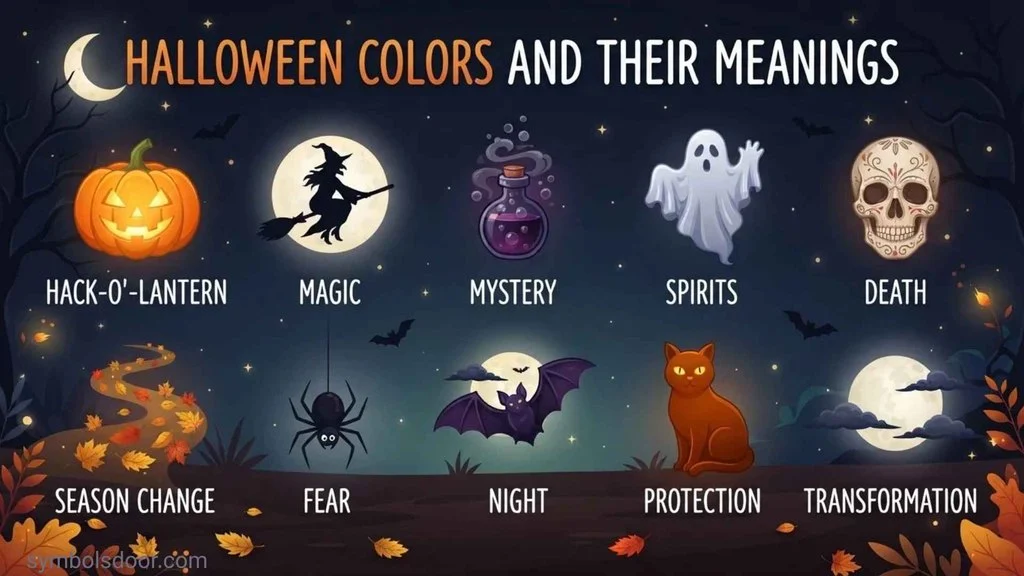
Halloween’s familiar color scheme helps create the holiday’s recognizable appearance.
Orange and black dominate traditional decorations, while purple, green, and white add different visual themes.
Each color has its own associations in modern Halloween imagery.
Orange: Autumn, Pumpkins, and Harvest
Orange is strongly connected with the autumn season.
Its association with Halloween comes from pumpkins, falling leaves, and the harvest season.
The color also represents warmth, seasonal abundance, and the changing natural environment.
Common orange Halloween decorations include:
- Carved pumpkins.
- Orange candles.
- Autumn wreaths.
- Pumpkin-shaped lanterns.
- Orange party lights.
Black: Darkness, Death, and Mystery
Black represents nighttime, darkness, and the unknown in traditional Halloween imagery.
Its associations with black cats, bats, haunted houses, and graveyards make it one of the holiday’s most recognizable colors.
Black decorations also create contrast with bright orange pumpkins and illuminated candles.
Purple: Magic and Mystery
Purple has become a popular modern Halloween color.
It often appears in witch-themed decorations, magical illustrations, and fantasy-inspired party displays.
The color helps create a mysterious atmosphere without relying entirely on traditional black and orange decorations.
Green: Witchcraft and Monsters
Green frequently appears in Halloween imagery involving witches, monsters, and supernatural creatures.
Its association with fictional witches and strange magical mixtures makes it a popular choice for Halloween costumes and decorations.
Green lighting can also give haunted house displays an eerie appearance.
White: Ghosts and Spirits
White is commonly associated with ghosts and spirits.
The traditional white-sheet ghost costume helped establish this connection in modern Halloween culture.
White also contrasts with darker decorations, making ghost figures easier to recognize.
Why Are Orange and Black Traditional Halloween Colors?
Orange and black became closely associated with Halloween through their seasonal and nighttime imagery.
Orange connects with pumpkins and the autumn harvest, while black represents darkness and nighttime.
Together, these colors capture two major features of Halloween: the autumn season and its supernatural atmosphere.
The Spiritual and Cultural Meaning of Halloween
Halloween has a complicated cultural history because its traditions developed through different religious, seasonal, and social influences.
Some historical customs focused on harvest celebrations, while others involved remembering the dead or protecting households from supernatural forces.
The spiritual meaning of Halloween therefore depends on the cultural tradition being discussed.
The Connection Between Halloween and the Spirit World
Traditional Samhain folklore associated the seasonal transition with the supernatural world.
Some beliefs suggested that spirits could cross into the human world during this period. Stories about wandering souls, fairies, and otherworldly beings became part of the folklore surrounding the festival.
These beliefs contributed to Halloween’s association with ghosts, spirits, and mysterious nighttime activities.
Death, Remembrance, and the Afterlife
Death symbolism appears throughout Halloween decorations.
Skeletons, skulls, graveyards, and ghosts all represent different cultural ideas about mortality and life after death.
However, not every symbol carries a frightening meaning.
For example, some traditions use candles, flowers, and offerings to remember deceased relatives. These practices focus on family connections and remembrance rather than fear.
Superstitions and Protective Customs
European folklore includes numerous Halloween-related superstitions.
Some communities believed certain objects or practices could protect people from harmful spirits.
These included:
- Lighting fires or candles.
- Wearing disguises.
- Placing carved lanterns near entrances.
- Avoiding certain supernatural beings in traditional stories.
- Following household customs associated with protection.
Such practices reflect historical beliefs and folklore. They aren’t evidence that supernatural forces actually exist.
Halloween Symbols Around the World
Halloween’s imagery has international influences, but different cultures celebrate the season in different ways.
Understanding these differences helps explain why certain symbols shouldn’t automatically be treated as universal Halloween traditions.
Ireland and Scotland
Ireland and Scotland have strong historical connections with Halloween folklore.
Their traditional customs include Samhain celebrations, vegetable lanterns, supernatural stories, and seasonal gatherings.
The legend of Stingy Jack is especially important to the history of jack-o’-lanterns.
Scottish folklore also includes supernatural creatures such as the Cat Sith, which helped shape stories about mysterious black cats.
These traditions contributed several familiar Halloween symbols to modern celebrations.
United States
The United States helped popularize many of the Halloween traditions recognized today.
Pumpkin carving, trick-or-treating, Halloween costumes, and elaborate home decorations became major parts of American celebrations.
Popular symbols include:
- Jack-o’-lanterns.
- Witches and broomsticks.
- Black cats.
- Bats and spiders.
- Ghosts and skeletons.
- Haunted houses and graveyards.
American movies, television programs, advertising, and seasonal entertainment further expanded Halloween’s visual identity.
Mexico: Día de los Muertos
Día de los Muertos, or Day of the Dead, is a Mexican cultural celebration that honors deceased loved ones.
It takes place primarily on November 1 and 2, although local observances and preparations can vary.
The holiday has roots in Indigenous Mesoamerican traditions and developed through interactions with Spanish Catholic observances.
Its symbols include:
- Sugar skulls: Decorative skulls representing deceased loved ones.
- Marigolds: Flowers traditionally used to decorate altars and guide the spirits in cultural beliefs.
- Ofrendas: Altars containing photographs, candles, food, and personal offerings.
- Papel picado: Decorative paper banners used during celebrations.
- Candles: Lights placed on altars as part of remembrance traditions.
Sugar skulls are especially recognizable. Their bright colors and decorative patterns contrast with the darker skull imagery commonly used in Halloween decorations.
Although Halloween and Día de los Muertos occur close together, they are different celebrations with distinct histories and cultural meanings.
Why Do People Wear Halloween Costumes?
Halloween costumes have historical connections with disguises, seasonal folklore, and supernatural beliefs.
Some European traditions involved dressing in unusual clothing during celebrations associated with the dead and otherworldly beings.
In certain customs, people wore disguises to confuse or avoid spirits. Historical descriptions also mention animal-skin disguises in some European traditions.
Over time, costumes developed into an important part of Halloween celebrations.
Popular choices include:
- Witches and wizards.
- Ghosts and skeletons.
- Vampires and monsters.
- Black cats and bats.
- Historical and fictional characters.
- Superheroes and popular movie characters.
Modern Halloween costumes aren’t limited to frightening figures. Many people choose funny, creative, or family-friendly outfits.
How Halloween Symbols Are Used in Modern Celebrations

Today, Halloween symbols appear in decorations, costumes, crafts, parties, and seasonal entertainment.
Their traditional meanings remain recognizable, but people also use them creatively.
Halloween Home and Outdoor Decorations
Many households decorate their homes with traditional Halloween imagery.
Popular choices include:
- Illuminated jack-o’-lanterns near front doors.
- Artificial spiderwebs across windows and walls.
- Hanging bats and floating ghost decorations.
- Skeleton figures in gardens.
- Witch hats and cauldrons.
- Black cat ornaments.
- Haunted house props and tombstones.
These decorations combine traditional symbolism with modern seasonal design.
Halloween Costumes and Accessories
Halloween costumes allow people to represent familiar characters and supernatural figures.
Witches, vampires, ghosts, skeletons, and black cats remain popular choices.
Accessories such as broomsticks, pointed hats, masks, artificial fangs, and skeleton makeup help complete these costumes.
Halloween Parties and Crafts
Halloween symbols also inspire seasonal activities.
Popular examples include:
- Pumpkin carving competitions.
- DIY ghost decorations.
- Spiderweb crafts.
- Halloween-themed baking.
- Costume contests.
- Haunted house activities.
- Halloween scavenger hunts.
These activities make traditional Halloween imagery part of modern family and community celebrations.
Frequently Asked Questions About Halloween Symbols
What Are the Seven Symbols of Halloween?
The seven most recognizable Halloween symbols are jack-o’-lanterns, witches, black cats, bats, spiders, ghosts, and skeletons.
Each represents a different part of Halloween folklore. Together, they communicate themes of mystery, darkness, death, magic, and the supernatural.
What Do Halloween Symbols Represent?
Halloween symbols represent several historical and cultural themes, including:
- Autumn and the harvest season.
- Death and mortality.
- Spirits and the afterlife.
- Witchcraft and supernatural folklore.
- Darkness and mystery.
- Protection and traditional superstitions.
- Remembrance of deceased people.
Their meanings vary depending on their historical and cultural background.
What Is the Most Recognized Symbol of Halloween?
The jack-o’-lantern is widely recognized as one of Halloween’s most iconic symbols.
Its origins connect with Irish folklore and the legend of Stingy Jack. The modern pumpkin version developed after the tradition reached North America.
Why Are Pumpkins Associated With Halloween?
Pumpkins became associated with Halloween through Irish and Scottish vegetable-carving traditions.
People originally carved turnips and other root vegetables into lanterns. Irish immigrants introduced the practice to America, where pumpkins became a popular replacement because they were larger and easier to carve.
What Does a Jack-o’-Lantern Symbolize?
A jack-o’-lantern traditionally connects with the legend of Stingy Jack and the folklore surrounding wandering spirits.
In modern Halloween celebrations, it represents autumn, pumpkin carving, seasonal decorations, and the mysterious atmosphere of October 31.
Why Are Witches Associated With Halloween?
Witches became associated with Halloween through European folklore, historical witchcraft beliefs, and stories about supernatural powers.
Their traditional imagery includes pointed hats, broomsticks, cauldrons, and magical spells.
Why Are Black Cats Associated With Halloween?
Black cats became associated with Halloween through European superstitions connecting them with witches and supernatural activity.
Scottish folklore also includes the Cat Sith, a mysterious supernatural cat.
However, black cats aren’t inherently unlucky. Their reputation comes from cultural beliefs rather than actual animal behavior.
What Do Bats Symbolize on Halloween?
Bats symbolize nighttime, mystery, darkness, and vampire mythology in Halloween imagery.
Their nocturnal behavior and association with Gothic stories helped make them familiar Halloween decorations.
Why Are Spiders Associated With Halloween?
Spiders and spiderwebs create an atmosphere of mystery and neglect.
Their appearance in traditional witchcraft imagery and supernatural folklore also helped establish them as popular Halloween symbols.
What Does Seeing a Spider on Halloween Mean?
Seeing a spider on Halloween doesn’t have an established supernatural meaning.
Some traditional superstitions attach symbolic interpretations to spiders, but these beliefs vary by culture. In reality, spiders are simply animals following their natural behavior.
What Does a Ghost Symbolize?
A ghost commonly represents a spirit of someone who has died.
In Halloween traditions, ghosts symbolize the afterlife, wandering souls, remembrance, and supernatural mystery.
Why Are Skeletons Associated With Halloween?
Skeletons represent death and human mortality.
Their connection with Halloween also reflects European artistic traditions, including the Danse Macabre and memento mori imagery.
What Do Skulls Represent on Halloween?
Skulls generally symbolize death, mortality, and the temporary nature of human life.
However, their meanings depend on cultural context. In Día de los Muertos traditions, decorated sugar skulls represent remembrance and honor deceased loved ones.
What Is the Difference Between Halloween Skulls and Sugar Skulls?
Halloween skulls commonly represent death, fear, and mortality in spooky decorations.
Sugar skulls, called calaveras de azúcar, belong to Mexican Día de los Muertos traditions. They feature colorful designs and help honor deceased family members.
What Is the Connection Between Samhain and Halloween?
Samhain was an ancient Gaelic festival marking the end of the harvest and beginning of winter.
Its seasonal customs and supernatural folklore influenced later Halloween traditions. However, modern Halloween also developed through Christian observances, European customs, and American cultural influences.
What Is the Meaning of Samhain?
Samhain is traditionally associated with the end of summer and the beginning of the darker half of the year.
It marked an important seasonal transition in Gaelic traditions and became associated with harvest celebrations and folklore about the supernatural world.
Why Do People Wear Costumes on Halloween?
Halloween costumes developed through European traditions involving disguises and supernatural folklore.
People later adopted costumes representing ghosts, witches, monsters, and other characters. Today, costumes also include fictional characters, superheroes, and humorous outfits.
What Is the Spiritual Meaning of Halloween?
Halloween’s spiritual meaning varies across cultures.
Historical traditions connect it with seasonal change, remembrance of the dead, and beliefs about the spirit world. Modern celebrations often focus more on costumes, decorations, entertainment, and community activities.
What Are the Traditional Colors of Halloween?
The traditional Halloween colors are orange and black.
Purple, green, and white are also common in modern decorations. Orange represents autumn and harvest, while black suggests darkness and mystery.
What Do Orange and Black Represent on Halloween?
Orange represents pumpkins, autumn leaves, and the harvest season.
Black represents nighttime, darkness, and mystery. Together, these colors create Halloween’s familiar seasonal appearance.
What Is the History of Halloween Traditions?
Halloween traditions developed through several historical influences.
Samhain contributed seasonal and supernatural folklore, while Christian observances influenced the holiday’s name and religious context. Irish and Scottish immigrants introduced customs to North America, where pumpkin carving, costumes, and trick-or-treating became popular.
Final Thoughts on Halloween Symbols and Their Meanings
The symbols of Halloween carry stories from different periods and cultures. Jack-o’-lanterns connect with Irish folklore, witches reflect European beliefs about magic, and black cats represent centuries of superstition.
Bats, spiders, ghosts, and skeletons contribute to the holiday’s mysterious atmosphere. Meanwhile, orange and black capture its connection with autumn and nighttime.
Some symbols also have meanings beyond Halloween. Sugar skulls, for example, belong to Día de los Muertos, a celebration centered on remembering and honoring deceased loved ones.
Understanding the history behind these images makes Halloween more than a collection of spooky decorations. Each symbol offers a glimpse into the folklore, traditions, and cultural beliefs that shaped the holiday over time.

Hi, I’m Asher Monroe, a writer who believes that meaningful words have the power to inspire change and bring people closer to their dreams. I have always been fascinated by the beauty of quotes and the way a simple message can provide motivation, hope, and comfort.
I enjoy creating content around inspirational quotes, life lessons, success stories, and positive thoughts that help readers find encouragement in their everyday lives. My goal is to share words that connect with people and remind them of their inner strength.
Through my writing, I explore the ideas of personal growth, confidence, and the importance of staying inspired through every chapter of life.
I am the author of Words That Move the Soul and The Path of Endless Inspiration, two books focused on the power of wisdom, positivity, and meaningful thoughts.
 Sienna Brooks
 Rowan Sinclair Rowan Sinclair