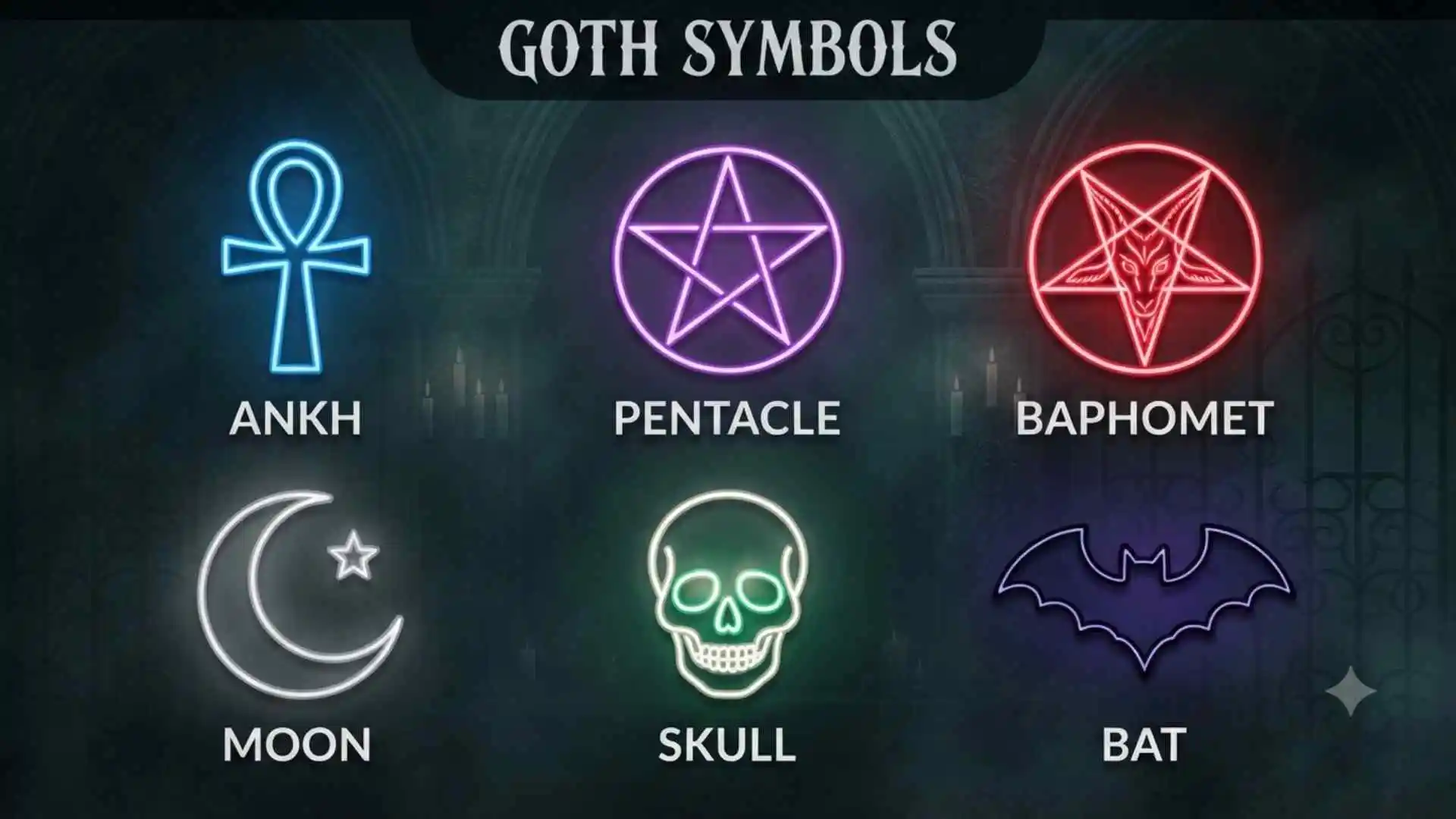
Goth symbols copy and paste characters let you express mystery, beauty, rebellion, grief, spirituality, and individuality through simple digital signs.
A cross, crescent moon, raven, rose, or tiny black heart can communicate emotions that ordinary words cannot fully capture.
Many of these symbols have roots in ancient religion, mythology, medieval art, Romantic literature, and modern Gothic culture.
By exploring their history and meaning, you can choose symbols that reflect your identity rather than using them only as decoration.
(Quick Answer) goth symbols copy and paste
Goth symbols copy and paste are Unicode characters, decorative signs, emojis, and text combinations linked with Gothic culture and dark aesthetics. Popular examples include crosses, moons, stars, ravens, roses, coffins, skulls, bats, chains, and black hearts. People use them in usernames, bios, captions, tattoos, artwork, and messages.
Goth Symbols Copy and Paste Collection
Copy any symbol below and paste it into your social media bio, username, caption, message, profile, document, or digital artwork.
Popular Goth Symbols
- ☥
- †
- ‡
- ✞
- ✟
- ✠
- ☦
- ☾
- ☽
- ★
- ☆
- ✦
- ✧
- ♱
- ⚰
- ⚱
- ☠
- 🖤
- 🥀
- 🌙
- 🦇
- 🕷
- 🕸
- 🐦⬛
- ⛓
- 🗡
- 🕯
- 🪦
- 🩸
- 🪶
Gothic Cross Symbols
- †
- ‡
- ✝
- ✞
- ✟
- ✠
- ✙
- ✚
- ☦
- ♰
- ♱
- ☩
- ☨
- ☥
Moon and Night Symbols
- ☾
- ☽
- 🌙
- 🌑
- 🌒
- 🌓
- 🌔
- 🌕
- 🌖
- 🌗
- 🌘
- ✦
- ✧
- ★
- ☆
- ✩
- ✪
- ✫
- ✬
Dark Love Symbols
- 🖤
- ♥
- ♡
- ❥
- ❣
- ღ
- 🥀
- 🩶
- 🩸
- ⛓
- ♱
- ☾
- 🕯
- 🦇
- 🖤🥀
- ☾♡
- †🖤†
- 🥀⛓🖤
- ♱ dark love ♱
Death and Mortality Symbols
- ☠
- 💀
- ⚰
- ⚱
- 🪦
- 🦴
- 🕯
- ⌛
- 🩸
- 🥀
- †
- ♱
- 🗡
- 🪶
Witchy Goth Symbols
- ☾
- ☽
- 🔮
- 🕯
- 🧿
- 🪬
- 🪄
- ✦
- ✧
- ★
- ☆
- 🐈⬛
- 🦉
- 🦇
- 🕷
- 🌿
- ♆
- ☿
- ♄
- ⚸
Gothic Nature Symbols
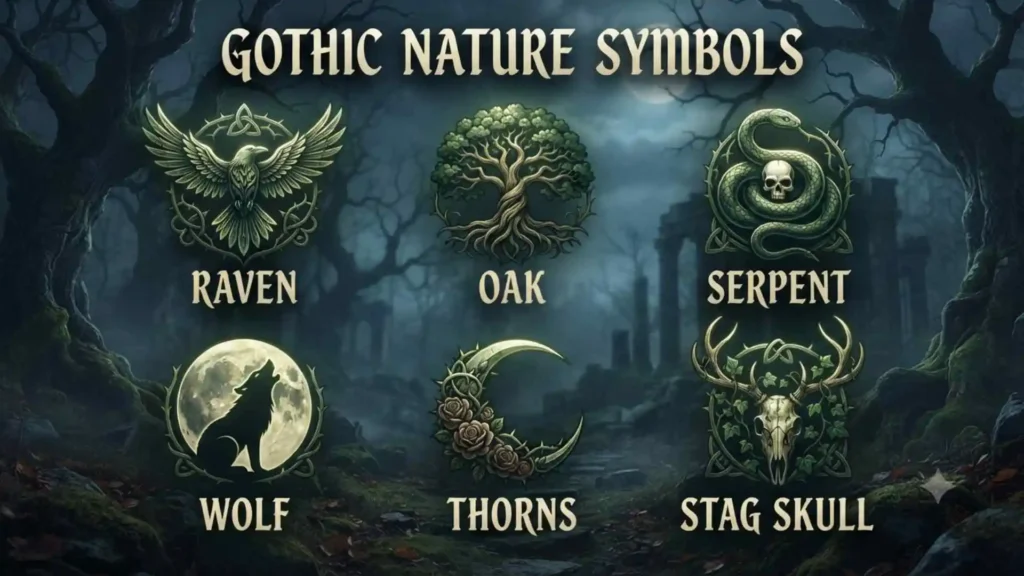
- 🥀
- 🌹
- 🍂
- 🌑
- 🌙
- 🌲
- 🪶
- 🐦⬛
- 🦇
- 🕷
- 🕸
- 🐍
- 🐈⬛
- 🐺
- 🍄
- 🪵
Decorative Gothic Text Symbols
- ꧁
- ꧂
- ༺
- ༻
- ༒
- 𖤐
- 𖤍
- 𖣂
- 𓆩
- 𓆪
- ୨୧
- 𓂀
- 𓋹
- 𓁹
- ⛧
- ⸸
- ࿇
- ࿖
- ⛥
- ᛉ
Goth Symbol Combinations
- † 🖤 †
- ☾ 🥀 ☽
- ♱ 𖤐 ♱
- 🦇⋆。°✩
- ☠︎︎༒︎
- 🕯️🖤🥀
- ⛓️†⛓️
- ☾⋆⁺₊✧
- 🕸️🕷️🕸️
- 🪦🥀🕯️
- 𓆩🖤𓆪
- ༺♱༻
- ꧁𖤐꧂
- † lost soul †
- ☾ child of night ☽
- 🥀 beautiful decay 🥀
- ♱ eternal darkness ♱
- 🦇 midnight heart 🦇
- ⛓ broken but breathing ⛓
- 🕯 light within darkness 🕯
Quick Facts About Goth Symbols Copy and Paste
| Aspect | Information |
| Origin | Ancient religions, medieval Christianity, mythology, folklore, occult traditions, Gothic literature, and modern subcultures |
| Historical Significance | Many symbols represented mortality, faith, protection, transformation, grief, power, or the unknown |
| Main Meaning | Dark beauty, individuality, mystery, emotional depth, rebellion, and acceptance of life’s shadow side |
| Spiritual Meaning | Transformation, protection, remembrance, inner awakening, death and rebirth, or connection with unseen forces |
| Cultural Importance | Goth symbols help communities express shared interests while allowing personal interpretation |
| Modern Usage | Social media bios, usernames, tattoos, jewelry, clothing, album art, digital design, captions, and home decor |
What Are Goth Symbols Copy and Paste?
Goth symbols are visual signs associated with Gothic aesthetics, Gothic literature, alternative fashion, dark spirituality, and the goth music subculture. Copy-and-paste versions are digital Unicode characters or emojis that can be placed directly into online text.
Not every symbol used by goths began within goth culture. In fact, most have much older histories.
Crosses come from religious traditions. Skulls appeared in medieval reminders of mortality. Ravens played important roles in mythology. Black roses became poetic symbols of tragic beauty. Moons were connected with time, mystery, femininity, and changing cycles long before modern Gothic fashion existed.
Origins of Gothic Symbolism
The word “Gothic” has changed meaning several times.
The ancient Goths were Germanic peoples who played a role in the transformation of the Roman Empire. Centuries later, Renaissance writers used the word “Gothic” to describe medieval architecture, especially buildings with pointed arches, stone carvings, towers, and dramatic stained glass.
During the late eighteenth century, Gothic fiction emerged. Horace Walpole’s 1764 novel The Castle of Otranto is often identified as the first Gothic novel. Writers such as Mary Shelley, Edgar Allan Poe, Bram Stoker, and the Brontë sisters later explored fear, isolation, death, madness, forbidden desire, and supernatural mystery.
Modern goth culture developed from the post-punk music scene of the late 1970s and early 1980s. Bands such as Bauhaus, Siouxsie and the Banshees, The Cure, and Sisters of Mercy helped shape its sound and visual identity.
As a result, modern goth symbols combine religious imagery, medieval design, Romantic emotion, cemetery art, horror, mythology, and personal creativity.
Why Goth Symbols Became Important
Symbols allow complicated feelings to become visible.
A black heart may represent sorrow, loyalty, or unconventional love. A dying rose can suggest beauty that remains meaningful even when it fades. A moon may reflect secrecy, emotional cycles, or comfort found at night.
For many people, Gothic imagery does not celebrate suffering. Instead, it creates a safe language for discussing experiences society often avoids, including loneliness, grief, fear, mortality, and emotional vulnerability.
Deep Symbolic Meaning of Goth Symbols
Spiritual Meaning
On a spiritual level, many goth symbols represent transformation.
The coffin, grave, skull, and black rose remind people that life is temporary. This idea resembles the old memento mori tradition, a Latin phrase meaning “remember that you must die.” Medieval and Renaissance art often used skulls, extinguished candles, clocks, and fading flowers to encourage reflection on mortality.
The meaning is not always hopeless. Awareness of death can make life feel more precious.
Moons symbolize cycles, intuition, hidden knowledge, and change. Candles represent light within darkness. Snakes may symbolize rebirth because they shed their skin. Ravens can act as messengers between ordinary life and the mysterious unknown.
For some people, these symbols support meditation or personal spiritual practices. For others, they remain poetic images without religious meaning.
Psychological Meaning
Psychologically, goth symbols often help people explore what Carl Jung called the “shadow,” the hidden or rejected parts of the personality.
The shadow can contain fear, anger, grief, desire, creativity, and traits a person has been taught to suppress. Gothic art gives these emotions a visible form. Instead of pretending darkness does not exist, it invites people to understand it.
A skull can reduce fear by turning death into a familiar image. A black heart can express painful love without a long explanation. A bat can represent comfort with difference because it lives in darkness and navigates the world in an unusual way.
This does not mean that everyone who uses Gothic imagery is unhappy. Many are simply drawn to emotional honesty, visual drama, history, music, or unusual beauty.
Cultural Meaning
Culturally, goth symbols can communicate identity and belonging.
A person wearing a black cross necklace or using a moon-and-bat symbol in a profile may be signaling interest in goth music, dark fashion, horror, poetry, fantasy, or alternative culture.
However, symbols do not have one universal meaning. A cross may be sacred to one person, fashionable to another, and historically meaningful to someone else. Context, culture, and personal intention matter.
The strongest Gothic symbols work because they hold several meanings at once.
Types and Variations of Goth Symbols
The Gothic Cross
Visual description: A cross with simple, pointed, ornate, or medieval details.
Meaning: Faith, mortality, sacrifice, protection, remembrance, or Gothic architecture.
Symbolism: The meeting of life and death, earthly suffering and spiritual hope.
Cultural connection: Christianity, medieval Europe, cemetery art, architecture, fashion, and music imagery.
Where it appears: Churches, gravestones, necklaces, tattoos, album covers, clothing, and social media profiles.
Copy and paste:
† ‡ ✞ ✟ ✠ ☦ ♱
A cross should be used thoughtfully because it remains sacred within Christian traditions.
The Ankh
Visual description: A loop resting above a T-shaped cross.
Meaning: Life, vitality, divine power, and immortality.
Symbolism: Eternal life and the union of complementary forces.
Cultural connection: Ancient Egypt.
Where it appears: Egyptian temple art, funerary objects, jewelry, tattoos, goth fashion, and modern spiritual design.
Copy and paste:
☥ 𓋹
Although popular in Gothic styling, the ankh is not originally a goth symbol. Its cultural roots should be respected.
The Skull
Visual description: A human skull, sometimes paired with bones.
Meaning: Death, mortality, danger, equality, rebellion, or remembrance.
Symbolism: Every person shares the same final destiny, regardless of wealth or social status.
Cultural connection: Medieval art, pirate imagery, religious paintings, cemetery art, military insignia, and modern subcultures.
Where it appears: Tattoos, jewelry, fashion, films, music art, and warning signs.
Copy and paste:
☠ 💀
The Black Rose
Visual description: A dark or wilted rose.
Meaning: Tragic love, grief, farewell, mystery, rebirth, or rare beauty.
Symbolism: Beauty can survive within sorrow, and endings may lead to transformation.
Cultural connection: Romantic poetry, funeral symbolism, Gothic fiction, tattoo art, and dark fashion.
Where it appears: Poetry, jewelry, memorial designs, clothing, captions, and tattoos.
Copy and paste:
🥀 🌹 🖤🥀
True black roses are extremely rare in nature. Most so-called black roses are very dark shades of red or purple.
The Raven
Visual description: A large black bird with a strong beak and dark feathers.
Meaning: Intelligence, prophecy, grief, memory, magic, or mystery.
Symbolism: Knowledge gained from confronting the unknown.
Cultural connection: Norse mythology, Celtic traditions, Indigenous stories, biblical narratives, and Edgar Allan Poe’s poetry.
Where it appears: Literature, tattoos, film, jewelry, paintings, and modern Gothic design.
Copy and paste:
🐦⬛ 🪶
The Bat
Visual description: A winged nocturnal mammal.
Meaning: Night, transformation, hidden perception, rebirth, and unconventional identity.
Symbolism: The ability to move through darkness without losing direction.
Cultural connection: European vampire folklore, Chinese symbolism, Mesoamerican mythology, horror films, and goth culture.
Where it appears: Halloween art, Gothic fashion, tattoos, architecture, jewelry, and usernames.
Copy and paste:
🦇
The Crescent Moon
Visual description: A curved sliver of the moon.
Meaning: Change, intuition, dreams, femininity, night, and hidden knowledge.
Symbolism: Life moves through phases rather than remaining fixed.
Cultural connection: Ancient lunar religions, Greek and Roman mythology, Islamic culture, astrology, witchcraft traditions, and modern spiritual imagery.
Where it appears: Jewelry, flags, religious art, tattoos, poetry, fantasy design, and social media.
Copy and paste:
☾ ☽ 🌙
The crescent has sacred meanings in several living traditions, so cultural context matters.
The Coffin
Visual description: A burial container, often drawn with angled sides.
Meaning: Mortality, endings, remembrance, rest, or transformation.
Symbolism: The closing of one stage and passage into another.
Cultural connection: Funeral traditions, vampire stories, horror fiction, cemetery culture, and Gothic fashion.
Where it appears: Jewelry, purses, tattoos, artwork, horror films, and decorative text.
Copy and paste:
⚰
The Candle
Visual description: A flame burning above a wax candle.
Meaning: Hope, remembrance, spiritual presence, knowledge, or life.
Symbolism: Even a small light can challenge great darkness.
Cultural connection: Religious ritual, mourning customs, folklore, magic practices, meditation, and memorial ceremonies.
Where it appears: Shrines, churches, homes, séances in fiction, Gothic photography, and social media.
Copy and paste:
🕯
The Spider and Web
Visual description: A spider beside or within a woven web.
Meaning: Creativity, patience, fate, danger, entrapment, or feminine power.
Symbolism: Every choice becomes part of a larger pattern.
Cultural connection: Greek mythology, African folklore, Indigenous storytelling, horror, and Gothic design.
Where it appears: Jewelry, tattoos, clothing, architecture, films, and digital decorations.
Copy and paste:
🕷 🕸
Chains
Visual description: Connected metal links.
Meaning: Restriction, loyalty, emotional bonds, oppression, endurance, or release.
Symbolism: A chain may show captivity, but a broken chain can represent freedom.
Cultural connection: Prison imagery, slavery and liberation symbolism, punk fashion, Gothic accessories, and religious art.
Where it appears: Necklaces, belts, clothing, tattoos, lyrics, and usernames.
Copy and paste:
⛓
Goth Symbols Across Different Cultures
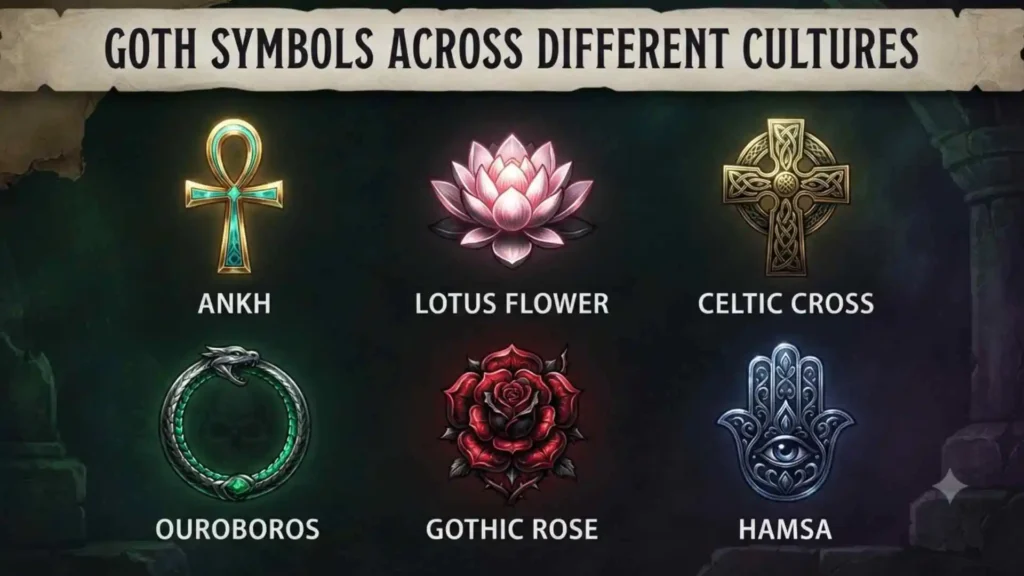
Gothic culture borrows visual language from many historical sources. These symbols should not be treated as if they all came from one tradition.
Ancient Egypt
Ancient Egyptian symbolism strongly influenced modern alternative jewelry and art.
The ankh represented life. The Eye of Horus was associated with protection, healing, and restoration. Scarabs symbolized renewal and the rising sun. Funerary art focused heavily on the journey after death.
Modern Gothic fashion often uses Egyptian imagery because it combines death, beauty, mystery, and immortality. However, these were sacred religious signs before they became fashion elements.
Copy and paste examples:
☥ 𓋹 𓂀 𓁹
Ancient Greece
Greek mythology offers many symbols connected with the underworld, fate, sorrow, and transformation.
Hades ruled the realm of the dead. Persephone’s yearly return from the underworld became a symbol of seasonal death and rebirth. The Fates controlled the thread of life. Hecate became associated with crossroads, torches, night, and magic.
The pomegranate, torch, serpent, and cypress tree still appear in dark art inspired by Greek mythology.
Roman Culture
Roman artists used skulls, skeletons, extinguished lamps, and fading flowers to remind viewers of mortality.
The phrase memento mori became closely connected with later Christian and European art. Romans also honored ancestors and created elaborate funerary monuments.
Modern Gothic imagery continues this tradition by using death symbols not only to create fear, but also to encourage awareness of time.
Eastern Traditions
Eastern cultures contain many symbols that may appear Gothic to modern viewers, although their original meanings are often different.
In Chinese culture, bats traditionally symbolize good fortune because the Chinese words for bat and blessing sound similar. The lotus can represent purity rising from difficult conditions. Yin and yang symbolize interdependence between opposing forces, not a battle in which one side must defeat the other.
In Japanese art, skulls and spirits may reflect impermanence, moral warning, tragedy, or supernatural folklore. Yūrei, often translated as ghosts, appear in stories involving unresolved emotion and broken social bonds.
These traditions should be understood on their own terms rather than reduced to dark decoration.
Indigenous Traditions
There is no single Indigenous interpretation of ravens, wolves, feathers, snakes, or moons. Meanings vary widely among nations, communities, regions, and stories.
In some Northwest Coast traditions, Raven is a creator, transformer, or trickster. In other cultures, birds, animals, and natural forces have completely different roles.
Sacred tribal designs should not be copied casually. General nature emojis are different from specific ceremonial patterns, clan symbols, or protected cultural imagery.
Medieval European Culture
Medieval churches, manuscripts, cemeteries, and carvings contain many images now linked with Gothic design.
Gargoyles directed rainwater away from buildings, while grotesques served decorative, moral, or protective purposes. Crosses represented Christian faith. Skulls and skeletons reminded viewers of death.
The late medieval danse macabre, or Dance of Death, showed skeletons leading people from every social class toward the grave. Its message was clear: death makes earthly rank meaningless.
Modern Goth Culture
Modern goth culture developed primarily around music, fashion, clubs, magazines, and creative communities.
Black clothing became a strong visual feature, but goth identity has never depended on one color or one symbol. Crosses, bats, ravens, lace, cemetery imagery, dramatic makeup, and silver jewelry became popular because they supported an atmosphere of mystery and emotional intensity.
Today, online culture has expanded this visual language through Unicode signs, emojis, kaomoji, decorative fonts, and copyable text combinations.
Similar Symbols and Their Meanings
| Symbol | Main Meaning | Goth Connection | Common Misconception |
| † Cross | Faith, sacrifice, remembrance | Churches, cemeteries, medieval imagery | It is not automatically an occult symbol |
| ☥ Ankh | Life and immortality | Dark jewelry and Egyptian-inspired fashion | It does not mean death |
| ☠ Skull | Mortality, danger, remembrance | Memento mori, horror, rebellion | It does not always promote violence |
| ☾ Moon | Change, intuition, night | Mystery, emotion, witchy aesthetics | It has no single universal spiritual meaning |
| 🦇 Bat | Night, transformation, perception | Vampire fiction and Gothic culture | Bats are not evil animals |
| 🐦⬛ Raven | Intelligence, prophecy, mystery | Poe, mythology, dark art | Ravens are not always signs of death |
| 🥀 Wilted rose | Grief, fading beauty, farewell | Romantic sorrow and tragic love | It can also symbolize acceptance and renewal |
| 🕷 Spider | Creativity, patience, fate | Horror, dark femininity, web imagery | It does not only symbolize danger |
| 🕯 Candle | Hope, memory, spirit | Ritual, mourning, atmospheric design | It is not limited to occult practices |
| ⛓ Chain | Bondage, loyalty, endurance | Fashion, emotional symbolism | Chains can mean connection as well as captivity |
Goth Symbols in Mythology and Folklore
Ravens as Messengers
In Norse mythology, Odin was accompanied by two ravens, Huginn and Muninn. Their names are often translated as Thought and Memory. They flew across the world and returned with information.
This association helped shape the raven’s modern image as a creature of intelligence, mystery, and secret knowledge.
In Edgar Allan Poe’s 1845 poem “The Raven,” the bird becomes connected with memory, grief, and the painful inability to let go.
Bats and Vampire Legends
European folklore connected bats with darkness long before vampire fiction became popular. However, the strong relationship between bats and vampires grew through literature and film.
Bram Stoker’s 1897 novel Dracula helped establish the vampire as a central Gothic figure. Later stage plays and movies strengthened the visual link between vampires, castles, coffins, night, and bats.
Spiders and the Weaving of Fate
In Greek mythology, Arachne was a skilled weaver who challenged the goddess Athena. After their conflict, Arachne was transformed into a spider.
The story linked spiders with creativity, pride, punishment, and the power of artistic skill. Other cultures also tell stories about clever spider figures who create, teach, trick, or connect worlds.
Black Dogs and Ghostly Animals
British folklore includes stories of mysterious black dogs appearing near roads, churches, moors, and graveyards. Some were viewed as warnings, while others acted as guardians.
These legends influenced Gothic fiction and modern horror. Yet black animals are not naturally unlucky or dangerous. Their dark color simply made them powerful figures in nighttime storytelling.
Roses and Tragic Love
Roses have long represented love, beauty, secrecy, and mortality.
In Gothic storytelling, the rose is often damaged, darkened, frozen, or placed beside a grave. This changes its message from simple romance to love shaped by grief, memory, or sacrifice.
Goth Symbols in Art, Literature, Movies, and Pop Culture
Paintings and Visual Art
Artists have used skulls, candles, mirrors, clocks, flowers, and fruit to show that pleasure and beauty do not last forever.
Seventeenth-century Dutch vanitas paintings are famous examples. A beautiful arrangement might include a skull or dying flower to remind viewers that wealth, youth, and achievement are temporary.
Modern dark artists continue this tradition through photography, digital art, tattooing, illustration, and surreal design.
Gothic Literature
Gothic literature created many of the images still used today, including ruined castles, storms, locked rooms, hidden portraits, ghosts, family secrets, and forbidden knowledge.
Mary Shelley’s Frankenstein explored creation, rejection, responsibility, and isolation. Bram Stoker’s Dracula used blood, night, crosses, coffins, and transformation. Edgar Allan Poe repeatedly returned to grief, madness, burial, memory, and doomed love.
These works gave emotional depth to symbols that might otherwise seem merely frightening.
Poetry
Poets use ravens, moons, graves, wilted flowers, winter landscapes, and darkness as metaphors.
Darkness may represent depression, secrecy, rest, desire, the unconscious mind, or the unknown. Moonlight may suggest hope, distance, change, or emotional clarity.
The meaning depends on the poem, not only on the symbol.
Movies and Television
Gothic films often use visual signs to establish mood before a character speaks.
A flickering candle suggests uncertainty. A raven signals observation. A cracked mirror may represent a divided identity. A locked door implies hidden truth. A decaying mansion turns the past into a physical presence.
Modern fantasy, horror, supernatural drama, and animated films regularly adapt these visual traditions.
Tattoos
Gothic tattoos often combine several symbols to create a personal story.
A skull with flowers may represent beauty and mortality. A bat with a crescent moon may express comfort with the night. A raven carrying a key can suggest access to hidden knowledge. A broken chain may symbolize survival or freedom.
Before choosing a tattoo, research the cultural and religious meaning of every symbol. A permanent design deserves more than a quick aesthetic choice.
Fashion
Gothic fashion may include crosses, cameos, moons, bats, chains, lace, roses, cathedral windows, mourning veils, and antique-inspired jewelry.
Different goth styles use symbols differently. Romantic goth fashion may favor roses, velvet, and ornate crosses. Trad goth style often reflects post-punk music and dramatic makeup. Gothic Lolita draws from Victorian-inspired silhouettes and Japanese street fashion.
No single accessory defines whether someone belongs to goth culture.
Spiritual and Dream Meaning of Goth Symbols
Dream interpretation is personal. No symbol has one scientifically proven dream meaning. Still, symbols can help people reflect on emotions, memories, and current experiences.
Dreaming of a Skull
A skull may represent fear of change, awareness of time, hidden truth, or the ending of an old identity.
It does not necessarily predict physical death. More often, it reflects transition or a need to face something honestly.
Dreaming of a Raven
A raven may symbolize intelligence, a message, grief, observation, or a part of the mind that notices what others ignore.
Your emotional reaction matters. A calm raven may feel protective, while an attacking bird may represent anxiety or conflict.
Dreaming of a Black Rose
A black or dying rose may reflect lost love, emotional closure, disappointment, or beauty found in sadness.
It can also symbolize the end of one relationship phase and the beginning of another.
Dreaming of a Coffin
A coffin may represent closure, suppressed emotions, or something in life that needs to be released.
Sometimes it suggests that an old habit, role, or belief no longer fits the dreamer.
Dreaming of a Moon
A moon can represent intuition, emotional cycles, secrecy, femininity, creativity, or changing circumstances.
A new moon may suggest beginnings. A full moon may symbolize completion or emotional intensity. A fading moon may indicate release.
Meditation and Spiritual Encounters
Some people focus on candles, moons, skulls, or ancestral symbols during meditation. The goal may be remembrance, acceptance of mortality, shadow work, or emotional healing.
Such practices should be approached with self-awareness. Symbols can support reflection, but they do not replace professional mental health care when grief, fear, or distress becomes overwhelming.
Positive and Negative Meanings of Goth Symbols
| Positive Meaning | Negative or Cautionary Meaning |
| Acceptance of mortality | Fear of death |
| Emotional honesty | Obsession with suffering |
| Individuality | Social isolation |
| Transformation | Painful endings |
| Protection | Suspicion or defensiveness |
| Mystery | Confusion or secrecy |
| Remembrance | Difficulty letting go |
| Rebellion against unfair norms | Rebellion without direction |
| Beauty within imperfection | Romanticizing harm |
| Community and belonging | Pressure to fit a subculture |
| Inner strength | Emotional withdrawal |
| Freedom of expression | Misunderstanding by others |
The same symbol can hold light and shadow.
A coffin can represent terrifying finality or peaceful closure. A black rose may express grief or the strength to love after loss. A chain can show captivity or an unbreakable bond.
Context gives the symbol its final meaning.
Why Humans Are Attracted to Goth Symbols
We Are Curious About the Unknown
Human beings naturally pay attention to darkness, hidden spaces, abandoned buildings, and unfamiliar shapes. The unknown can signal danger, but it can also promise discovery.
Gothic symbols give the unknown a visible form.
We Need Ways to Understand Death
Most societies create rituals, stories, art, and symbols around death. These practices help people process something that cannot be fully controlled.
A skull, grave, candle, or fading flower can make mortality easier to think about. The image creates emotional distance while still allowing reflection.
Dark Beauty Feels Honest
Perfect beauty can feel artificial. A cracked statue, ruined cathedral, wilted rose, or weathered gravestone shows the passage of time.
Many people find this more emotionally honest than polished perfection. Gothic beauty accepts damage, age, sorrow, and impermanence.
Symbols Create Belonging
A small moon, bat, black heart, or Gothic cross can help people recognize shared interests.
This visual connection may be especially meaningful for people who have felt misunderstood. The symbol quietly says, “Someone else sees the world this way too.”
The Mind Searches for Patterns
Humans naturally connect images with memories and emotions.
A candle may remind one person of a peaceful church and another of a horror movie. A raven may recall mythology, a poem, or a childhood experience.
The symbol becomes powerful because the mind adds personal history to it.
They Support Personal Storytelling
Gothic symbols allow people to create visual stories without explaining every detail.
A person might combine a broken chain, crescent moon, and rose to represent freedom, change, and healing after grief. The meaning is personal even when the symbols are widely recognized.
Modern Uses of Goth Symbols
Social Media Bios
Goth symbols can frame names, quotes, pronouns, song lyrics, or short personal descriptions.
Examples:
- † midnight soul †
- ☾ dreamer after dark ☽
- 🦇 music • art • night
- 𓆩🖤𓆪 beautifully strange
- ♱ poetry in the shadows ♱
Avoid adding too many decorative characters. Some screen readers may not pronounce unusual Unicode symbols clearly.
Usernames
A simple symbol can make a username feel more distinctive.
Examples:
- moonlit†heart
- raven☾song
- velvet♱grave
- nocturne𖤐
- blackrose🥀
- batwing🦇
- hollow☽star
Some platforms do not allow every Unicode character in usernames, although they may still work in display names.
Captions
Dark symbols can create atmosphere around poetry, photographs, music, or fashion posts.
Examples:
- Beauty survives even in the shadows. 🥀
- The moon knows every version of me. ☾
- Not lost, just walking after dark. 🦇
- Some endings become entrances. ⚰
- I kept one candle burning. 🕯
- Soft heart, sharp edges. 🖤⛓
Tattoos
People use Gothic symbols in memorial tattoos, literary designs, spiritual art, and personal identity pieces.
Always confirm the symbol’s background before tattooing it. Religious, Indigenous, occult, and historical symbols may carry meanings that are not obvious from appearance alone.
Jewelry
Crosses, ankhs, moons, cameos, skulls, bats, snakes, lockets, and chains are common in Gothic jewelry.
Materials such as silver, blackened metal, velvet, glass, onyx, garnet, and dark enamel strengthen the visual mood.
Fashion
Goth symbols appear on jackets, boots, chokers, rings, corsets, dresses, band shirts, bags, and makeup packaging.
Their meaning may be personal, musical, literary, religious, or simply aesthetic.
Branding
Music artists, fashion labels, tattoo studios, game creators, and alternative beauty brands use Gothic imagery to create a dramatic identity.
However, overused symbols can make a brand look generic. Strong design usually connects the symbol with a clear story.
Home Decor
Candles, antique mirrors, dark floral prints, celestial designs, cathedral shapes, ravens, and vintage frames can create a Gothic interior.
A room does not need to look like a haunted castle. One or two meaningful elements often feel more powerful than a crowded collection.
Contemporary Spirituality
Some people use moons, candles, crystals, planetary signs, and protective symbols within personal spiritual practices.
Meanings vary greatly. It is wise to distinguish between modern personal interpretation and the original meaning of a historical tradition.
How to Choose the Right Goth Symbol
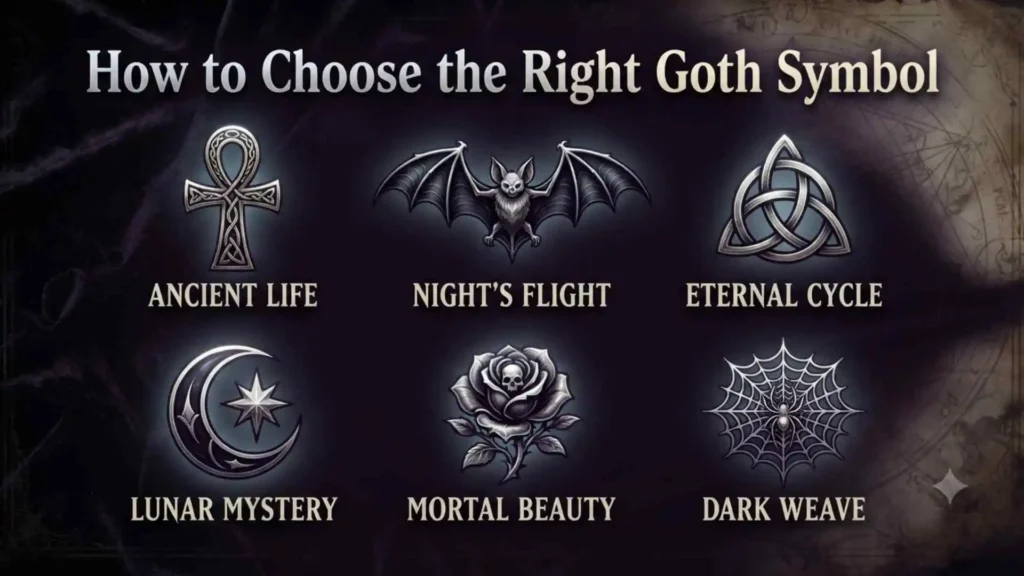
Start with meaning rather than appearance.
Ask what you want the symbol to communicate. Is it remembrance, transformation, protection, grief, love, mystery, faith, or rebellion?
Next, research its origin. A symbol can belong to a religion, nation, community, or sacred practice. Using it respectfully requires understanding more than its visual style.
Finally, consider the setting. A symbol that works in a private journal may not be suitable for a workplace username or public memorial.
Good Symbols for Mystery
- ☾ Crescent moon
- 🐦⬛ Raven
- 🕯 Candle
- ✦ Star
- 🗝 Key
Good Symbols for Dark Love
- 🖤 Black heart
- 🥀 Wilted rose
- ⛓ Chain
- ☾ Moon
- ♱ Ornate cross
Good Symbols for Transformation
- 🐍 Snake
- 🦇 Bat
- ☥ Ankh
- 🌑 New moon
- 🦋 Dark butterfly imagery
Good Symbols for Remembrance
- 🕯 Candle
- † Cross
- 🪦 Gravestone
- 🥀 Rose
- 🪶 Feather
Good Symbols for Rebellion
- ⛓ Broken chain
- ☠ Skull
- 🗡 Dagger
- 🖤 Black heart
- ⚡ Lightning
Common Misconceptions About Goth Symbols
Every Goth Symbol Is Satanic
This is false.
Most common Gothic symbols come from Christianity, ancient cultures, folklore, literature, nature, funeral art, or modern music. A skull, moon, raven, cross, or black rose is not automatically connected with Satanism.
Goth Culture Worships Death
Goth culture often explores mortality, but exploration is not worship.
Art about death can express grief, acceptance, curiosity, beauty, history, or criticism of society. Many Gothic works use death to ask how people should live.
Wearing Black Makes Someone Goth
Black clothing alone does not define goth identity.
Goth is primarily a music-based subculture with many fashion styles, creative influences, and personal interpretations.
Every Symbol Has One Fixed Meaning
Symbols change across time and culture.
A bat can mean fear in one context and good fortune in another. A snake can represent danger, healing, rebirth, temptation, or wisdom. The surrounding culture and personal intention shape interpretation.
Decorative Symbols Work Everywhere
Some Unicode symbols may appear as empty boxes on older devices. Complex combinations can also reduce readability or create accessibility problems.
Use a simple version when clarity matters.
Interesting Facts About Goth Symbols Copy and Paste
- The word “Gothic” did not originally describe a music subculture. It was connected first with the ancient Goths and later with medieval architecture.
- The skull was used as a moral symbol long before modern horror. In memento mori art, it reminded viewers to live wisely.
- Bats can symbolize good luck. In traditional Chinese symbolism, bats are connected with blessings and happiness.
- Ravens are highly intelligent birds. Their problem-solving ability may have strengthened their mythological association with wisdom and secret knowledge.
- Gargoyles have a practical architectural purpose. Many function as waterspouts that move rainwater away from stone walls.
- A black rose is usually not truly black. Most dark roses are deep red, maroon, or purple.
- The ankh means life rather than death. Its association with funerary art reflects Egyptian beliefs about continued existence.
- Goth culture began as a music-centered movement. Fashion and symbols grew around the scene but did not create it.
- The crescent moon has many unrelated meanings. It appears in religious, national, astronomical, mythological, and decorative contexts.
- Not every ornate Unicode sign has a historical Gothic meaning. Some symbols are used today because their shapes fit a dark or medieval aesthetic.
Frequently Asked Questions
What are the most popular goth symbols to copy and paste?
Popular choices include †, ♱, ☾, ☽, ☥, ☠, ⚰, 🖤, 🥀, 🦇, 🕷, 🕸, 🐦⬛, ⛓, and 🕯. Their meanings often involve mystery, mortality, love, transformation, night, memory, or rebellion.
What symbol represents goth culture?
There is no single official goth symbol. Bats, ankhs, crosses, black roses, ravens, skulls, moons, and spiderwebs are common, but goth identity is more closely connected with music and culture than with one visual sign.
What is a good goth symbol for a bio?
The crescent moon ☾, ornate cross ♱, black heart 🖤, bat 🦇, and wilted rose 🥀 work well because they are recognizable and easy to combine. Choose one that fits your intended meaning.
Are goth symbols religious?
Some are religious, while others come from mythology, nature, literature, funeral art, or modern popular culture. Crosses, ankhs, crescents, and certain occult signs may carry sacred meanings, so they should be used with awareness.
What does the Gothic cross mean?
A Gothic cross may symbolize Christian faith, sacrifice, remembrance, mortality, protection, or admiration for medieval design. Its exact meaning depends on the cross style, cultural setting, and wearer’s intention.
Can I use goth symbols in usernames?
Yes, many platforms support Unicode symbols in display names, bios, and captions. However, some may reject special characters in account usernames. Too many symbols can also make a name difficult to search, read, or type.
Conclusion
Goth symbols copy and paste characters are more than dark decorations. They carry stories of faith, mortality, transformation, grief, beauty, rebellion, and human curiosity about the unknown.
From ancient ankhs and medieval crosses to ravens, moons, bats, and black roses, each sign has a history worth understanding.
Choose symbols that reflect your personal story, and respect the cultures or traditions from which they came.
The most meaningful Gothic symbol is not simply the darkest one, but the one that gives honest shape to something within you.

Hi, I’m Asher Monroe, a writer who believes that meaningful words have the power to inspire change and bring people closer to their dreams. I have always been fascinated by the beauty of quotes and the way a simple message can provide motivation, hope, and comfort.
I enjoy creating content around inspirational quotes, life lessons, success stories, and positive thoughts that help readers find encouragement in their everyday lives. My goal is to share words that connect with people and remind them of their inner strength.
Through my writing, I explore the ideas of personal growth, confidence, and the importance of staying inspired through every chapter of life.
I am the author of Words That Move the Soul and The Path of Endless Inspiration, two books focused on the power of wisdom, positivity, and meaningful thoughts.
 Sienna Brooks
 Rowan Sinclair Rowan Sinclair