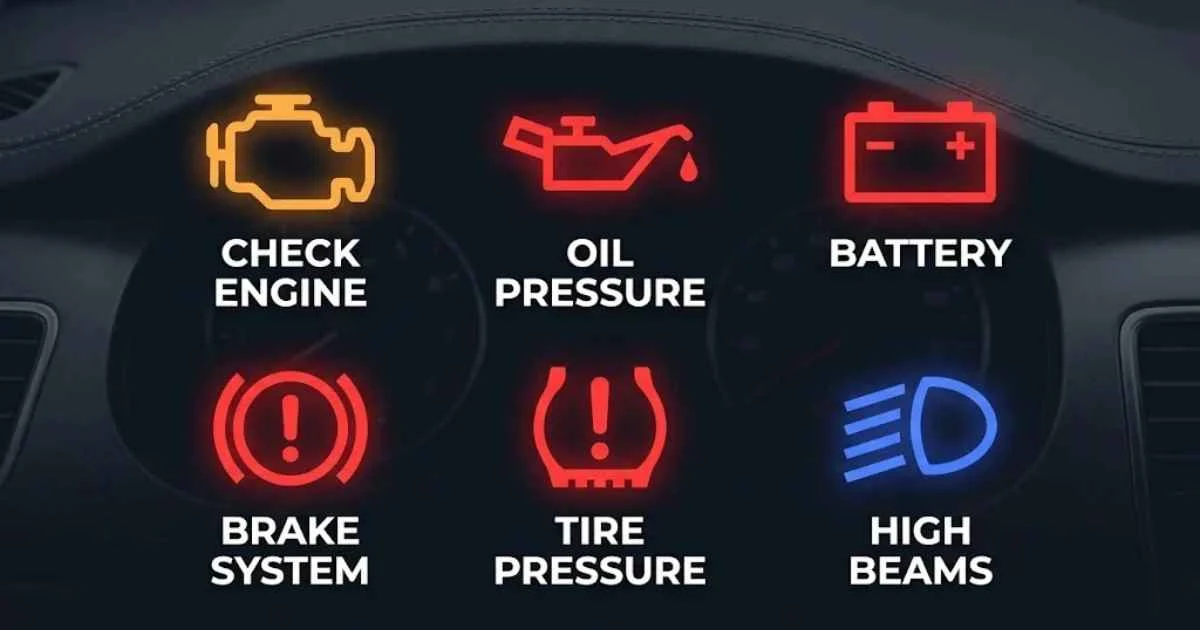
Your car’s dashboard does more than display speed, fuel level, and engine temperature. It also communicates important information about your vehicle’s condition through symbols, warning lights, and indicators. Some tell you that a feature is working normally. Others warn you about problems that could affect your safety or damage your vehicle.
Understanding car dashboard symbols helps you recognize problems early and make better decisions while driving. For example, a red oil pressure warning may mean your engine is not receiving enough lubrication. A yellow tire pressure warning usually means one or more tires need attention. Meanwhile, a green turn signal simply confirms that your indicator is operating.
Modern vehicles use hundreds of possible dashboard indicators, depending on their features and equipment. Their appearance and meaning can also differ between manufacturers, models, and model years.
This complete guide to dashboard symbols explains common warning lights, critical safety indicators, car lighting symbols, advanced driving features, and diesel-powered vehicle symbols. You’ll also learn what to do when a warning appears, when you should stop driving, and when to visit a mechanic.
What Are Dashboard Symbols?
Dashboard symbols are visual indicators displayed on a vehicle’s instrument cluster or information screen. They communicate information about the engine, brakes, battery, tires, lighting, safety equipment, and other vehicle systems.
Some symbols appear when you activate a feature. Others illuminate when a sensor detects a problem or when the vehicle needs maintenance.
For example, a blue high beam symbol indicates that your high beam headlights are active. A red thermometer symbol may warn that the engine coolant temperature is too high.
Modern vehicles use sensors, electronic control units, and onboard diagnostic systems to monitor different components. When a system detects an unusual condition, it can display a warning light or message.
What Do Dashboard Warning Lights Mean?
Dashboard warning lights alert you when a vehicle system needs attention. They can indicate anything from a routine maintenance reminder to a serious mechanical or electrical problem.
Common examples include:
- Engine temperature warning light.
- Battery charge warning light.
- Oil pressure warning light.
- Brake warning light.
- Check engine light.
- Tire pressure warning light.
- ABS warning light.
- Airbag warning light.
Not every illuminated symbol means something has failed. Some lights appear briefly when you start the engine as part of the vehicle’s normal self-check.
Others remain illuminated because a feature is active, such as cruise control, headlights, or traction control.
Difference Between Warning Lights and Dashboard Indicators
Drivers often use the terms warning lights and indicator lights interchangeably. However, they do not always communicate the same information.
| Dashboard light type | Purpose | Examples |
| Warning lights | Alert you to a possible problem or unsafe condition | Oil pressure, brake system, engine temperature |
| Status indicators | Show that a feature is operating | High beams, turn signals, cruise control |
| Maintenance reminders | Tell you that scheduled service is due | Oil change, service reminder |
| Information indicators | Display vehicle conditions or operating messages | Outside temperature, winter mode |
Understanding this difference prevents unnecessary concern when a normal feature indicator appears.
Why Dashboard Symbols Differ Between Vehicles
A dashboard symbol can look different depending on the vehicle manufacturer and model. Some cars use traditional icons, while newer vehicles display detailed messages on digital instrument screens.
The same symbol can also communicate different conditions depending on the vehicle.
For example, a steering wheel symbol might indicate an electric power steering fault, an electronic steering lock issue, or a system that needs attention.
Dashboard symbols can also differ between:
- Petrol and diesel vehicles.
- Hybrid and electric vehicles.
- Manual and automatic transmissions.
- Cars, trucks, buses, and motorcycles.
- Different model years and equipment packages.
Always check the owner’s manual for the exact meaning of an unfamiliar symbol.
Dashboard Warning Light Colors and Their Meanings
Dashboard light colors help you understand how urgently you need to respond. However, colors are general guidelines, not universal rules. A vehicle’s owner’s manual takes priority.
<escape> </escape>
| Color | General meaning | Examples |
| Red | Serious warning or condition requiring immediate attention | Oil pressure, overheating, brake system |
| Amber or yellow | Fault, caution, or condition requiring inspection | Check engine, ABS, tire pressure |
| Green | A feature or system is active | Turn signals, cruise control |
| Blue | A specific operating condition or feature is active | High beam headlights |
| White | Information or system status | Some cruise control and driver-assistance indicators |
Red Dashboard Warning Lights
Red dashboard lights generally indicate a serious condition. Some require you to stop as soon as it is safe.
Examples include:
- Low engine oil pressure.
- High engine coolant temperature.
- Serious brake system problems.
- Charging system warnings on vehicles that specify stopping.
- Certain steering system faults.
If a red warning appears, read the instrument display and follow the owner’s manual. Do not assume you can continue driving simply because the vehicle still moves normally.
Amber and Yellow Dashboard Warning Lights
Amber and yellow lights usually indicate a problem that needs attention. They do not always require an immediate stop, but you should not ignore them.
Common examples include:
- Check engine light.
- ABS warning light.
- Tire pressure warning.
- Traction control fault.
- Airbag system warning.
- Diesel particulate filter warning.
Some amber warnings allow cautious driving to a repair facility. Others may require you to stop if the vehicle loses power, behaves unusually, or displays an additional warning.
Green Dashboard Indicator Lights
Green indicators usually confirm that a feature is switched on or operating.
Examples include:
- Left and right turn signals.
- Cruise control on some vehicles.
- Position or side lights.
- Certain lane-assistance indicators.
- Some active driving modes.
A green light does not normally mean that a component has failed.
Blue Dashboard Indicator Lights
Blue indicators commonly identify a specific operating condition.
The most familiar example is the high beam indicator. It tells you that your high beam headlights are switched on.
Some manufacturers also use blue or other colors for temperature-related information. Always check the symbol and accompanying message.
Flashing vs. Steady Dashboard Warning Lights
A flashing warning light can communicate a different condition from a steady light.
For example, a flashing check engine light may indicate an active engine misfire that could damage the catalytic converter. A steady check engine light can indicate a stored engine or emissions fault that still needs diagnosis.
Other examples include:
- A flashing traction control light may mean the system is actively correcting wheel slip.
- A flashing tire pressure indicator may indicate a TPMS system fault on some vehicles.
- A flashing glow plug light while a diesel engine is running may indicate an engine management problem.
Never assume that flashing always means the same thing. Check your vehicle manual for the correct response.
Critical Dashboard Warning Lights You Should Never Ignore
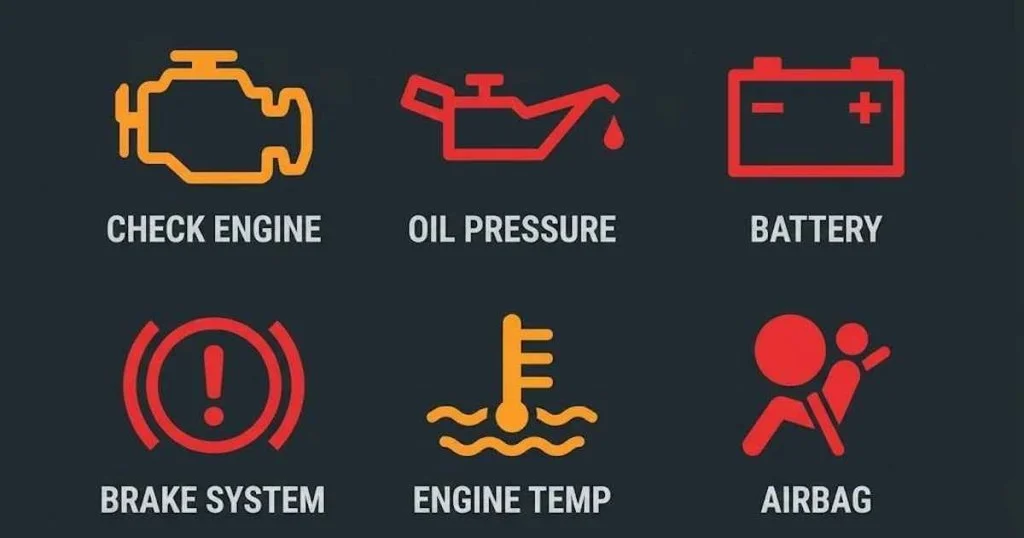
Some car warning light symbols indicate problems that can cause immediate vehicle failure or create serious safety risks. These deserve attention before less urgent information indicators.
Engine Temperature Warning Light
<escape> </escape>
<text> </text>
The engine temperature warning light usually looks like a thermometer above wavy lines. It warns you that the engine coolant temperature is too high or that the cooling system has detected a problem.
An overheating engine can suffer serious damage if you continue driving.
Common causes include:
- Low coolant level.
- Coolant leaks from hoses or connections.
- A faulty cooling fan.
- A damaged thermostat.
- A failing water pump.
- Radiator blockage or damage.
- A problem with the cooling system sensor.
What should you do?
- Reduce engine load and move to a safe stopping place.
- Switch off the engine when the vehicle manual recommends it.
- Allow the engine to cool before inspecting the cooling system.
- Check the coolant level only when it is safe to do so.
- Arrange professional inspection if the warning returns or coolant is leaking.
Never remove a hot radiator cap. Pressurized coolant can escape and cause serious burns.
Battery Charge Warning Light
The battery charge warning light usually looks like a rectangular battery with positive and negative signs.
It often indicates a problem with the vehicle’s charging system, rather than simply telling you that the battery is old.
Possible causes include:
- Alternator failure.
- Loose or damaged battery connections.
- A broken or slipping drive belt.
- Damaged charging-system wiring.
- A faulty voltage regulator.
- A weak or failing car battery.
If the battery warning light appears while driving, the alternator may not be charging the battery properly. The vehicle could eventually lose electrical power.
Turn off unnecessary electrical accessories when safe, avoid switching off the engine in an unsafe location, and arrange assistance or inspection according to your manual.
Oil Pressure Warning Light
The oil pressure warning light usually looks like an oil can with a drop.
It indicates that engine oil pressure may be too low. This is different from a routine low oil level warning or an oil change reminder.
Engine oil reduces friction, carries heat away from moving parts, and protects internal components. Without sufficient pressure, important engine parts may not receive proper lubrication.
Possible causes:
- Low engine oil level.
- Oil leaks.
- A failing oil pump.
- A blocked oil pickup or filter.
- Incorrect or degraded engine oil.
- An oil pressure sensor or wiring fault.
What should you do?
Stop safely and switch off the engine as soon as possible. Check the oil level using the manufacturer’s recommended procedure after the vehicle is safely parked.
If the oil level is correct but the warning remains, do not continue driving. Arrange professional inspection or towing.
Brake Warning Light
The brake warning light often appears as an exclamation mark inside a circle or the word BRAKE.
It can indicate that the parking brake is engaged. It can also warn about low brake fluid or a brake system malfunction.
Possible causes include:
- Handbrake or parking brake engagement.
- Low brake fluid.
- Hydraulic brake pressure problems.
- A brake fluid leak.
- Master cylinder problems.
- A fault in the electronic parking brake system.
First, check whether the parking brake is fully released. If the warning remains, or the brake pedal feels unusual, stop safely.
Do not continue driving with a suspected brake system failure. Brakes are essential safety equipment, and even a short journey can be dangerous when hydraulic pressure is compromised.
Check Engine Light (Malfunction Indicator Light)
The check engine light usually looks like an outline of an engine. It is also called the Malfunction Indicator Light (MIL).
The light is connected to the engine computer and emissions monitoring system. It can illuminate when the vehicle detects a problem affecting engine operation or emissions.
Common causes include:
- Faulty oxygen sensor.
- Ignition coil or spark plug problems.
- Fuel system faults.
- Loose or damaged fuel cap.
- Exhaust system problems.
- Catalytic converter issues.
- Airflow sensor faults.
- Engine misfires.
A steady check engine light generally means the system has detected a fault that needs diagnosis. A flashing light can indicate a more urgent problem, such as an active misfire.
If the light flashes, reduce engine load and stop safely if the engine runs roughly or the vehicle behaves abnormally. Arrange professional diagnosis promptly.
An OBD-II scanner can retrieve diagnostic trouble codes, but a code does not automatically identify the exact part that needs replacement.
Transmission Temperature Warning Light
The transmission temperature symbol warns that the transmission fluid or transmission system is too hot.
Excessive heat can damage transmission components and shorten the life of the gearbox.
Possible causes include:
- Heavy towing.
- Repeated hard acceleration.
- Driving in demanding conditions.
- Low or degraded transmission fluid.
- Transmission cooling system problems.
- Internal gearbox faults.
Follow the vehicle’s instructions. Some vehicles recommend stopping and allowing the transmission to cool. Others display specific operating instructions.
If the warning returns, arrange an inspection rather than continuing to operate the vehicle under heavy load.
Common Car Dashboard Warning Lights and Their Meanings
The following vehicle dashboard symbols and their meanings cover many of the warnings drivers encounter during everyday use.
Tire Pressure Warning Light (TPMS)
The tire pressure warning light usually looks like a flat tire with an exclamation mark inside it.
It is connected to the Tire Pressure Monitoring System (TPMS), which monitors tire inflation pressure.
The warning may appear because:
- One or more tires have low pressure.
- A tire has developed a slow leak.
- A tire has been damaged.
- Temperature changes have reduced tire pressure.
- The TPMS sensor or system has a fault.
Check all tires with a suitable pressure gauge and inflate them to the recommended cold pressure listed on the vehicle’s tire information label.
Do not rely only on visual inspection. A tire can be underinflated without looking flat.
Traction Control Warning Light
The traction control symbol often shows a car with wavy lines underneath.
The Traction Control System (TCS) helps reduce wheel spin when the vehicle accelerates on slippery or loose surfaces.
There are two common situations:
- A flashing symbol may mean traction control is actively reducing wheel slip.
- A steady warning may indicate that traction control is switched off or has detected a fault.
The traction control off symbol may appear when the driver disables the system intentionally.
If the warning remains on unexpectedly, have the system checked. Faulty wheel-speed sensors and related electronic problems can affect traction control.
Anti-lock Braking System (ABS) Warning Light
The ABS warning light usually displays the letters ABS inside a circle.
The Anti-lock Braking System helps prevent the wheels from locking during hard braking. This allows the driver to maintain more steering control during certain emergency braking situations.
Possible causes of an ABS malfunction include:
- Faulty wheel-speed sensors.
- Damaged wiring.
- ABS control module problems.
- Sensor ring damage.
- Electrical faults.
A vehicle may still have conventional braking when the ABS light is on, but the anti-lock function may not work correctly.
If the red brake warning light also appears, stop safely and seek assistance. The combination may indicate a more serious brake system problem.
Airbag Warning Light
The airbag indicator usually shows a seated person with a circle in front of them.
It monitors the supplemental restraint system, which can include airbags and seat-belt pretensioners.
Possible causes include:
- Faulty crash sensors.
- Damaged wiring.
- Seat-belt pretensioner problems.
- Airbag control module faults.
- Connector problems under a seat.
An illuminated airbag warning may mean that one or more airbags or related safety systems will not operate as intended during a collision.
Arrange a professional inspection promptly. Do not attempt to repair or disconnect airbag components yourself.
Power Steering Warning Light
The power steering warning light often displays a steering wheel with an exclamation mark.
It can indicate a fault in the electric power steering system or, on some vehicles, a hydraulic steering system.
Possible causes include:
- Electrical power steering faults.
- Steering angle sensor problems.
- Low hydraulic steering fluid.
- Damaged wiring.
- Steering control module problems.
If steering becomes unusually heavy, slow down carefully and stop in a safe location. A steering fault can make the vehicle difficult to control.
Reduced Power Warning
A reduced power warning tells you that the engine computer has limited engine performance.
Some vehicles enter a protective operating mode, sometimes called limp mode, when they detect a fault that could cause further damage.
Possible causes include:
- Throttle body problems.
- Accelerator pedal sensor faults.
- Engine sensor failures.
- Fuel delivery problems.
- Powertrain control issues.
- Overheating or other protective conditions.
You may notice slow acceleration, limited engine speed, or reduced throttle response.
Avoid high-speed driving and arrange a diagnostic inspection. If the vehicle becomes unsafe to operate, stop and request assistance.
Powertrain Fault Warning
The powertrain includes the engine, transmission, and related components that deliver power to the wheels.
A powertrain fault warning can involve engine management, gearbox electronics, or other drivetrain systems.
Possible symptoms include:
- Reduced acceleration.
- Unusual shifting.
- Rough engine operation.
- Limited vehicle speed.
- Unusual noises or vibrations.
The warning is not specific enough to identify the failed component by itself. A diagnostic scan and mechanical inspection may be necessary.
AWD and 4WD Warning Lights
AWD and 4WD indicators show the status of the vehicle’s drivetrain.
All-Wheel Drive (AWD) systems distribute power to multiple wheels automatically or according to driving conditions. Four-Wheel Drive (4WD) systems are commonly found in off-road vehicles and may offer selectable operating modes.
The 4WD LOCK indicator generally confirms that a particular four-wheel-drive locking mode is active.
An AWD or 4WD fault warning can indicate:
- Transfer case problems.
- Drivetrain sensor faults.
- Differential issues.
- Actuator or electrical faults.
- Overheating in the drivetrain system.
Do not confuse an active 4WD mode with a malfunction warning. Check the vehicle display and manual for the exact meaning.
Electric Parking Brake Warning Light
The electric park brake symbol often displays a letter P inside a circle.
It may simply confirm that the parking brake is applied. A separate warning or fault message can indicate a problem with the electric parking brake.
Possible faults include a failed actuator, electrical issue, control switch problem, or system malfunction.
If the parking brake will not release, follow the emergency release instructions in the owner’s manual. Do not force the vehicle to move against an engaged parking brake.
Brake Pad and Brake Fluid Warning Lights
Some vehicles have a separate brake pad wear indicator.
It warns when brake pads have worn to a specified level. The exact symbol varies by manufacturer.
The brake fluid warning is different. It can indicate low fluid or a brake hydraulic system problem.
| Warning | What it may indicate | Recommended action |
| Brake pad warning | Brake pads are worn | Arrange brake inspection |
| Brake fluid warning | Low fluid or hydraulic fault | Stop safely if the brake warning is serious |
| Parking brake light | Parking brake is engaged | Release it fully |
| ABS warning | Anti-lock braking fault | Arrange prompt inspection |
Low brake fluid can result from worn pads, but it can also indicate a leak. Never assume that topping up the reservoir solves the underlying problem.
Vehicle Safety and Security Dashboard Symbols
Car safety symbols monitor equipment designed to protect drivers, passengers, and other road users.
Seat Belt Indicator
The seat belt indicator shows a person wearing a seat belt.
It reminds the driver or passenger to fasten their seat belt. Some vehicles also use an audible warning.
If the light stays on after everyone has buckled up, check whether a seat or seat-belt sensor has detected an issue.
Steering Wheel Lock Warning
The steering wheel lock symbol can indicate an electronic steering lock issue.
Some vehicles also display a steering lock message when the steering wheel is under pressure while the ignition is switched off.
Try following the starting instructions in the owner’s manual. If the warning remains or the vehicle will not start, arrange professional assistance.
Security Alert and Immobilizer Warning
A security indicator can show that the vehicle’s anti-theft system is active.
Many modern vehicles use a transponder-equipped key. The key contains an electronic chip that communicates with the vehicle’s immobilizer.
If the vehicle does not recognize the key, the engine may not start.
Possible causes include:
- Incorrect or unregistered key.
- Weak key fob battery.
- Immobilizer fault.
- Damaged key transponder.
- Ignition system or antenna problem.
Use a registered key and follow the vehicle’s starting instructions.
Airbag Deactivated Indicator
The passenger airbag deactivated symbol usually displays the words PASSENGER AIR BAG OFF or a seated passenger symbol.
It may appear when the passenger airbag has been intentionally switched off or when the seat occupancy system determines that deployment is not appropriate.
Check the owner’s manual for the correct passenger seating conditions. If the indicator appears unexpectedly, have the airbag system inspected.
Child Safety Lock Indicator
The child safety lock indicator may show whether a rear door safety lock is active.
Child safety locks help prevent rear passengers from opening doors from inside the vehicle.
Some vehicles display a status indicator, while others use a physical switch or manual lock.
Door Ajar and Hood Open Warning
Door and hood warnings tell you that a door, hood, or trunk may not be properly closed.
Before driving, check:
- Front doors.
- Rear doors.
- Hood or bonnet.
- Trunk or tailgate.
A faulty latch or sensor can also trigger the warning when everything appears closed.
Trailer Tow Hitch Warning
A trailer or tow hitch indicator may show that a trailer is connected or that the towing system needs attention.
Its exact meaning depends on the vehicle.
Check the trailer electrical connection, hitch attachment, and instrument display before towing. Never assume the warning only indicates that a trailer is attached.
Car Lighting Symbols and Their Meanings
Car lighting symbols tell you which exterior lights are active and alert you to lighting system problems.
These indicators are important because headlights, brake lights, and turn signals help you see and communicate with other road users.
Low Beam or Dipped Beam Indicator
The low beam indicator usually shows a headlamp with light rays pointing downward.
Low beams provide forward visibility without shining directly into the eyes of approaching drivers.
They are commonly used at night, in poor visibility, and whenever road conditions require headlights.
High Beam Indicator
The high beam light indicator is usually blue and shows a headlamp with straight horizontal rays.
High beam headlights provide stronger illumination over a longer distance.
Switch to low beams when approaching other vehicles or following another driver closely. This prevents glare that could reduce another driver’s visibility.
Front Fog Light Indicator
The front fog light symbol usually shows a headlamp with downward-slanting rays and a wavy line.
Front fog lights help improve visibility in certain foggy conditions.
Use them according to local traffic laws and weather conditions. They are not a substitute for normal headlights.
Rear Fog Light Indicator
The rear fog light symbol resembles a headlamp with horizontal rays pointing in the opposite direction.
Rear fog lights are brighter than ordinary rear lights and help drivers behind you see your vehicle in seriously reduced visibility.
Turn them off when visibility improves. Leaving them on unnecessarily can dazzle drivers behind you.
Side Light and Parking Light Indicator
The side light indicator usually shows two small lamps facing opposite directions.
It confirms that the vehicle’s position or parking lights are active.
These lights help make a parked or moving vehicle more visible in appropriate conditions.
Auto High Beam Indicator
Automatic high beam systems use a camera or sensor to detect surrounding traffic and adjust the headlights.
The indicator may show that the system is enabled or that high beams are currently active.
Drivers must still monitor road conditions because the system may not recognize every situation correctly.
Adaptive Headlight and Headlight Range Control
Adaptive headlights can change the direction or distribution of light according to steering input, speed, or driving conditions.
Headlight range control adjusts the beam height to help keep the road illuminated without unnecessarily dazzling other drivers.
An exterior light fault or adaptive lighting warning may indicate a sensor, motor, wiring, or control system problem.
Exterior Light Fault and Lamp Out Warning
A lamp-out warning can indicate that one or more exterior lights are not working.
Check the following:
- Headlights.
- Brake lights.
- Tail lights.
- Turn signals.
- Fog lights.
- License plate lights.
Replace faulty bulbs with the correct type. If the warning remains, the problem may involve wiring, connectors, or an electronic lighting module.
Rain and Light Sensor Warning
The rain and light sensor supports automatic headlights and rain-sensing wipers.
A warning can indicate that the sensor is dirty, blocked, disconnected, or malfunctioning.
Clean the sensor area according to the manufacturer’s instructions. If automatic lighting or wiping continues to behave incorrectly, arrange an inspection.
Vehicle Information and Maintenance Dashboard Symbols
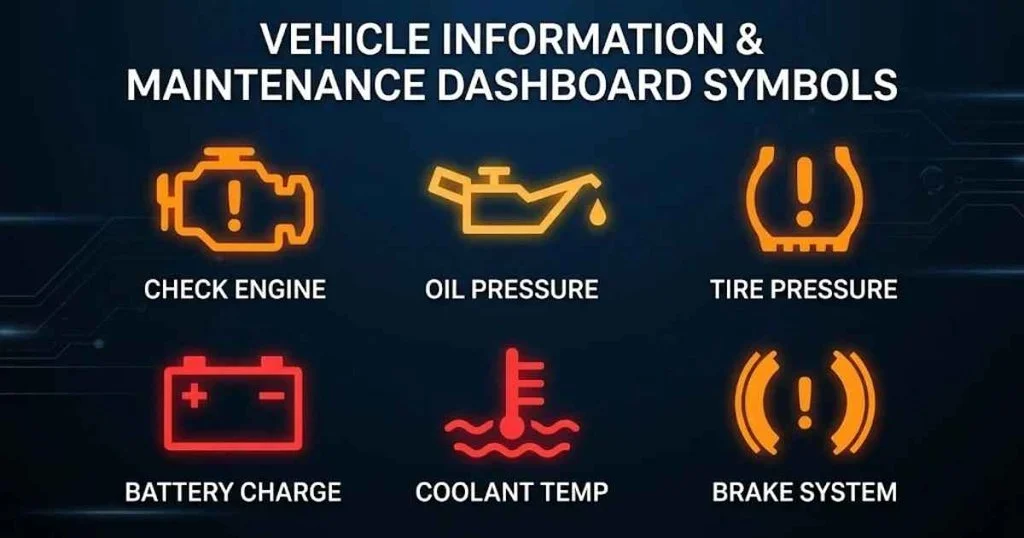
Some common dashboard symbols do not indicate an immediate mechanical emergency. They provide information about fuel, maintenance, temperature, or vehicle settings.
Low Fuel Warning Light
The low fuel symbol usually looks like a fuel pump.
It illuminates when the fuel level reaches the vehicle’s reserve threshold.
The remaining driving range depends on fuel capacity, road conditions, speed, traffic, and driving style. Do not assume that every car has the same reserve amount.
Refuel as soon as practical to avoid running out of fuel.
Oil Change Reminder
An oil change reminder tells you that scheduled engine oil service is due or approaching.
It is different from the oil pressure warning light.
| Oil change reminder | Oil pressure warning |
| Indicates scheduled maintenance | Indicates potentially unsafe oil pressure |
| Usually based on time, mileage, or monitoring | Based on oil pressure monitoring |
| Arrange service according to schedule | Stop safely and switch off the engine |
Never treat an oil pressure warning as an ordinary service reminder.
Service Vehicle Soon Warning
The service vehicle soon indicator tells you that the vehicle may need maintenance or inspection.
Depending on the manufacturer, it can relate to an electronic system fault or a service requirement.
Read any accompanying message and check the owner’s manual before deciding whether the vehicle is safe to drive.
Master Warning Light
The master warning light often appears as a triangle with an exclamation mark.
It is a general alert that another vehicle condition needs attention.
The symbol may appear with a message on the information display. Read that message to identify the actual problem.
Information Warning Light
An information indicator provides additional vehicle status information.
It may relate to maintenance, operating conditions, or a feature setting.
The symbol alone may not provide enough detail. Check the instrument cluster message for the full explanation.
Gas or Fuel Cap Warning
A fuel cap warning indicates that the cap may be loose, missing, or incorrectly fitted.
A poor seal can affect the evaporative emissions system.
Stop safely, check the cap, and tighten it according to the vehicle instructions. If the warning remains, the system may need diagnosis.
Washer Fluid Warning
The washer fluid reminder usually shows a windshield with spray lines.
It means the washer fluid reservoir needs attention.
Refill it with suitable windshield washer fluid. Do not confuse washer fluid with engine coolant or brake fluid.
Icy Road and Freezing Temperature Warning
A snowflake symbol or low-temperature alert may appear when outside temperatures approach freezing.
Some vehicles use a warning threshold around 4°C (39°F), but the exact setting varies.
The warning indicates that icy road conditions may be possible. It does not prove that the road surface is frozen.
Reduce speed and allow extra stopping distance when temperatures are low.
Key Not in Vehicle and Key Fob Battery Warning
A key-not-in-vehicle warning appears when the vehicle cannot detect its authorized key.
A separate key fob battery warning indicates that the remote battery may need replacement.
Try holding the key near the designated backup detection area if the vehicle provides one. Check the owner’s manual for its location and starting procedure.
Advanced Feature and Driver Assistance Dashboard Symbols
Modern vehicles use advanced feature symbols to display the status of driver assistance, parking, comfort, and vehicle control systems.
Many rely on cameras, radar sensors, ultrasonic sensors, or other electronic equipment.
Lane Departure Warning and Lane Assist
Lane departure warning alerts drivers when the vehicle begins moving out of its lane without an apparent signal.
Lane assist may provide steering support to help the vehicle remain within visible road markings.
These systems use cameras to detect lane lines. They may become unavailable when:
- Road markings are faded.
- Snow or rain blocks the camera.
- Direct sunlight affects visibility.
- The windshield area near the camera is dirty.
- The vehicle is travelling outside the system’s operating range.
Lane assistance does not replace driver attention or safe steering.
Blind Spot Monitoring Indicator
The blind spot indicator usually appears in a side mirror or on the dashboard.
It warns you when another vehicle is detected in an area beside or slightly behind your car.
Many systems use radar sensors installed near the rear corners of the vehicle.
A warning light may indicate that the system is unavailable because a sensor is blocked or faulty.
Forward Collision Warning
Forward collision warning alerts you when the vehicle detects a possible collision with an object ahead.
Depending on the system, it may use radar, cameras, or a combination of sensors.
The warning gives you time to brake or steer. It does not guarantee that the vehicle will avoid a collision.
Automatic Emergency Braking (AEB)
Automatic Emergency Braking can apply the brakes when the system detects a possible collision and the driver does not respond sufficiently.
A dashboard warning may indicate that AEB is active, unavailable, or experiencing a fault.
Dirty sensors, blocked cameras, severe weather, and system malfunctions can affect operation.
Adaptive Cruise Control (ACC)
The Adaptive Cruise Control (ACC) symbol indicates the status of a system that maintains a selected speed and adjusts following distance when traffic conditions change.
Unlike conventional cruise control, ACC can automatically slow the vehicle when it detects a slower vehicle ahead.
The driver remains responsible for steering, monitoring traffic, and braking when needed.
Cruise Control and Speed Limiter
Cruise control maintains a selected driving speed without requiring continuous accelerator input.
A speed limiter works differently. It helps prevent the vehicle from exceeding a selected maximum speed through normal acceleration.
Some vehicles display separate symbols for standby, active operation, and temporary cancellation.
Distance Warning Indicator
The distance warning symbol alerts drivers when the gap between their vehicle and another vehicle may be too small.
Some systems display a colored distance bar or a car icon with warning marks.
The system may use radar or camera-based obstacle detection.
Keep a safe following distance even when the indicator shows that the gap is acceptable.
Park Assist Pilot and Parking Sensors
Park Assist Pilot (PAP) is a parking assistance feature available on certain vehicles.
It can help identify suitable parking spaces and may control steering during a parking maneuver.
Parking sensors detect nearby obstacles and provide visual or audible warnings.
A fault indicator may appear when sensors are dirty, blocked, damaged, or malfunctioning.
Hill Descent Control
Hill descent control helps maintain a controlled speed when driving down steep slopes.
It can manage braking at individual wheels to help the driver maintain control.
The indicator may show that the feature is active or that the system has detected a fault.
Brake Hold Indicator
The brake hold indicator shows that the brake hold system is active or ready.
Brake hold keeps the vehicle stationary after the driver stops, allowing them to release the brake pedal under the system’s operating conditions.
It differs from the parking brake, which is designed to secure the vehicle when parked.
Start-Stop System Indicator
The Intelligent Stop/Start system temporarily switches off the engine when the vehicle stops under suitable conditions.
It restarts the engine when the driver is ready to move.
The system may remain unavailable because of:
- Low battery charge.
- Extreme cabin temperature demands.
- Engine temperature conditions.
- Seat belt or door status.
- Other manufacturer-specific operating requirements.
A disabled start-stop indicator does not automatically mean the engine has a fault.
Eco Driving and Winter Mode Indicators
The Eco Driving Indicator shows that an economy-oriented driving mode or feature is active.
Depending on the vehicle, Eco mode may adjust throttle response, transmission behavior, climate control, or other settings.
Winter mode may modify acceleration or transmission behavior to improve traction on slippery surfaces.
The exact functions vary by manufacturer.
Convertible Roof Warning
The convertible roof symbol indicates that the roof is moving, open, unsecured, or experiencing a system fault.
Before driving, confirm that the roof is fully closed and locked when required.
Do not operate the roof outside the manufacturer’s permitted speed or weather conditions.
Rear Spoiler Warning
Some vehicles use an active rear spoiler to improve aerodynamic performance.
A rear spoiler warning may indicate that the system cannot move into its required position.
Possible causes include actuator faults, electrical problems, or a blocked mechanism.
Seat Temperature and Airflow Indicators
These symbols control comfort features rather than indicating mechanical faults.
Common examples include:
- Heated seat.
- Ventilated seat.
- Cabin fan speed.
- Airflow distribution.
- Windshield demisting.
- Cabin air recirculation.
The cabin air recirculation symbol usually shows a vehicle outline with a curved arrow inside. It indicates that the ventilation system is reusing cabin air rather than drawing in outside air.
Use fresh air when needed to prevent excessive window fogging.
Diesel Dashboard Warning Lights and Their Meanings
Diesel dashboard warning lights include several symbols that do not appear on every petrol vehicle.
They relate to diesel engine starting, emissions control, fuel systems, and exhaust treatment.
Glow Plug Warning Light
The glow plug indicator usually looks like a small coil or spring.
Diesel engines use compression ignition. Glow plugs help heat the combustion chamber during cold starts, making ignition easier when the engine is cold.
When you switch on the ignition, the glow plug light may illuminate briefly while the system preheats the engine.
On many vehicles, you should wait for the indicator to switch off before starting, following the owner’s manual.
Glow Plug Malfunction
A glow plug warning that remains on or flashes while the engine is running may indicate an engine management problem.
Possible causes include:
- Faulty glow plugs.
- Glow plug relay problems.
- Wiring faults.
- Engine control system issues.
- Other diesel engine management problems.
A flashing glow plug light should not be confused with normal preheating. Arrange a diagnostic inspection promptly.
Diesel Particulate Filter Warning
The Diesel Particulate Filter (DPF) captures soot particles from diesel exhaust gases.
Over time, soot accumulates in the filter. The vehicle periodically raises exhaust temperatures to burn off the collected soot through a process called regeneration.
Short journeys, frequent low-speed driving, and repeated interruptions to regeneration can contribute to filter blockage.
A DPF warning may mean the vehicle needs a regeneration procedure or professional attention.
Follow the exact instructions in your vehicle manual. Some manufacturers provide a specific driving procedure, while others require a repair facility to perform the regeneration.
Diesel Engine Management Warning
A diesel engine management warning can relate to several systems, including:
- Fuel injection.
- Engine sensors.
- Exhaust emissions controls.
- Glow plug operation.
- Air intake.
- Engine computer faults.
The warning does not identify the failed component by itself. A diagnostic scan can help narrow down the problem.
Dashboard Symbols Related to Suspension and Vehicle Chassis Systems
Some vehicles use advanced suspension systems to adjust ride height, stiffness, and handling.
Their indicators help drivers monitor these systems.
Electronic Suspension Warning
The electronic suspension system symbol indicates a fault or operating condition in the vehicle’s electronically controlled suspension.
Possible causes include sensor problems, wiring faults, control module issues, or damaged suspension components.
A malfunction may affect ride comfort, vehicle height, or handling.
Adaptive Suspension Dampers
Adaptive suspension dampers adjust how the suspension responds to road conditions and driving style.
Some vehicles allow drivers to select Comfort, Normal, or Sport modes.
A warning may indicate that the dampers or their electronic controls are not working correctly.
Air Suspension Warning
Air suspension uses air springs or suspension bags instead of conventional steel springs.
The system can raise or lower the vehicle and adjust its ride height.
Possible problems include:
- Air leaks.
- Damaged air springs.
- Compressor failure.
- Height sensor faults.
- Air line damage.
If one side of the vehicle sits lower than the other, arrange inspection promptly.
Vehicle Chassis System Warning
A chassis warning can relate to suspension, steering, stability control, or other vehicle dynamics systems.
Read the accompanying dashboard message. A general chassis warning does not always identify the exact component causing the problem.
What to Do When a Dashboard Warning Light Comes On
Knowing how to respond to car dashboard warning lights and meanings is just as important as recognizing the symbols.
Use the following steps when an unfamiliar warning appears.
Check the Warning Light Color
Start by identifying whether the light is red, amber, yellow, green, blue, or another color.
Red generally requires greater urgency. Amber or yellow often means that the system needs inspection.
However, never rely on color alone. Read the warning message and check the owner’s manual.
Read the Instrument Cluster Message
Many modern vehicles display a written explanation alongside a warning symbol.
For example, a general engine warning may appear with a message about coolant temperature, oil pressure, or reduced power.
Read the message carefully before deciding what to do.
Check the Owner’s Manual
The owner’s manual is the best source for identifying an unfamiliar dashboard symbol in your exact vehicle.
Look for the warning and indicator lights section. It usually explains:
- What the symbol means.
- Why it may appear.
- Whether you can continue driving.
- Whether you should stop the engine.
- What inspection or service is required.
Stop Driving When Necessary
Some warnings require you to stop as soon as it is safe.
These include:
- Low engine oil pressure.
- Severe engine overheating.
- Serious brake system warnings.
- Certain steering system failures.
- Other warnings accompanied by loss of control or unsafe vehicle behavior.
Move away from traffic before stopping. Use hazard lights when appropriate, and request roadside assistance if the vehicle cannot be driven safely.
Use an OBD-II Scanner or Diagnostic App
An OBD-II scanner connects to the vehicle’s diagnostic port and retrieves trouble codes stored by the engine computer and other supported systems.
A compatible diagnostic app can display those codes on a smartphone or tablet.
Some systems, including the GOFAR adaptor, are designed to connect vehicle diagnostic information with an app.
These tools can help you:
- Read diagnostic trouble codes.
- Identify the system reporting a fault.
- Review certain vehicle data.
- Monitor selected vehicle conditions.
- Prepare useful information before visiting a mechanic.
However, a trouble code does not always identify the exact failed part. For example, an oxygen sensor-related code may result from a sensor problem, wiring fault, exhaust leak, or another underlying issue.
Use diagnostic tools as a starting point, not as a substitute for proper testing.
When to Visit a Local Mechanic
Arrange professional inspection when:
- A warning light stays on after restarting the vehicle.
- The check engine light flashes.
- The ABS or airbag warning remains illuminated.
- The steering or braking system behaves unusually.
- The engine overheats.
- You notice fluid leaks.
- The vehicle loses power or shifts abnormally.
- A diesel DPF warning does not clear according to the manual.
For serious brake, steering, oil pressure, or overheating warnings, towing may be safer than driving to a repair shop.
Common Causes of Dashboard Warning Lights
Different warning lights can result from similar underlying problems. Understanding these causes helps you recognize why a vehicle may need diagnosis.
Sensor and Wiring Problems
Modern vehicles depend on many sensors to monitor operating conditions.
Common examples include:
- Oxygen sensors.
- Wheel-speed sensors.
- Coolant temperature sensors.
- Tire pressure sensors.
- Steering angle sensors.
- Airflow sensors.
Damaged wiring, loose connectors, corrosion, or failed sensors can trigger warning lights.
Low Fluid Levels and Leaks
Low fluid levels can affect several vehicle systems.
| Fluid | Related warning or problem |
| Engine oil | Low oil level or oil pressure |
| Engine coolant | Overheating |
| Brake fluid | Brake system warning |
| Power steering fluid | Hydraulic steering problems |
| Washer fluid | Washer fluid reminder |
A low level may result from normal consumption, a leak, or another mechanical problem. Identify the cause rather than repeatedly topping up the fluid.
Battery and Charging System Problems
A weak battery, failing alternator, loose terminal, or damaged wiring can cause charging warnings and unusual electrical behavior.
If multiple electrical indicators appear together, the charging system may need testing.
Engine and Transmission Problems
Engine misfires, fuel delivery faults, overheating, exhaust problems, and gearbox issues can all trigger warning lights.
A diagnostic scan helps identify the affected system. A mechanic may then perform additional tests to confirm the actual cause.
Maintenance and Wear
Some warning lights appear because a component has reached its service limit.
Examples include:
- Worn brake pads.
- Incorrect tire pressure.
- Overdue oil changes.
- Dirty filters.
- Low washer fluid.
- Scheduled vehicle servicing.
Following the manufacturer’s maintenance schedule helps reduce avoidable problems.
How to Monitor Vehicle Health and Prevent Dashboard Warnings
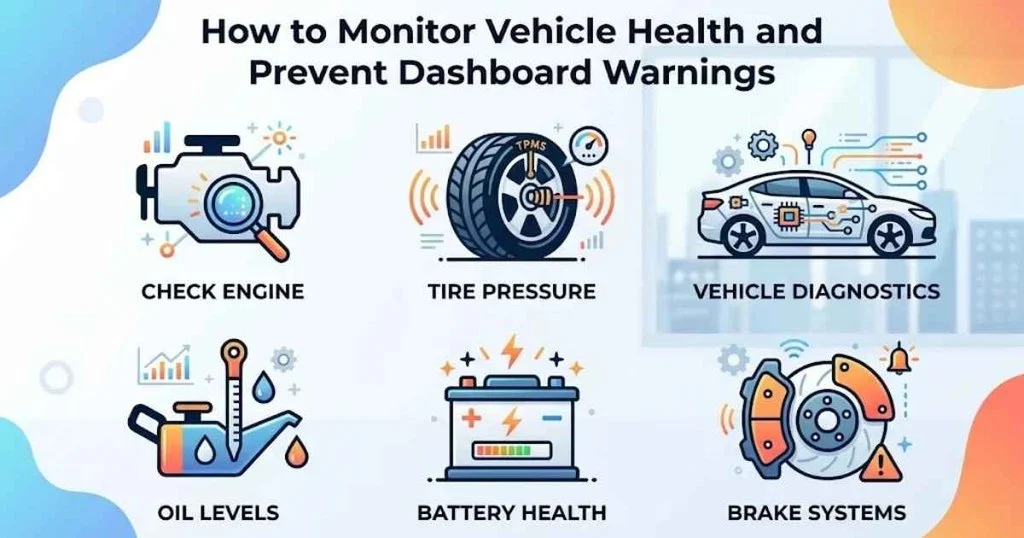
You cannot prevent every warning light. Sensors and mechanical components can fail without warning. However, regular maintenance can reduce many common problems.
Follow the Vehicle Maintenance Schedule
Use the manufacturer’s recommended schedule for oil changes, filter replacements, inspections, and fluid servicing.
Do not rely only on the dashboard service reminder. Some maintenance tasks require separate attention.
Check Tire Pressure Regularly
Check tire pressure with a suitable gauge and use the recommended pressure listed on the vehicle’s tire information label.
Check tires when they are cold whenever practical.
Also inspect the tread and sidewalls for cuts, bulges, and uneven wear.
Monitor Engine Oil and Coolant
Check engine oil and coolant using the procedure in the owner’s manual.
Look for:
- Unusual fluid loss.
- Oil stains under the vehicle.
- Coolant leaks.
- Overheating.
- Unusual engine noises.
Never open a hot cooling system.
Maintain the Battery and Charging System
Keep battery terminals clean and secure. Have the battery and alternator tested if you notice slow starting, dim lights, or charging warnings.
Replace a weak battery before it leaves you stranded.
Keep Safety Systems in Good Condition
Inspect tires, brakes, lights, steering, and suspension regularly.
Do not ignore ABS, airbag, traction control, or steering warnings. These systems can affect how the vehicle responds during an emergency.
Use Diagnostic Tools Responsibly
A diagnostic scanner or app can help monitor vehicle health and identify stored trouble codes.
However, clearing a warning code does not repair the underlying problem.
Record the code, note when the warning appeared, and arrange proper diagnosis when needed.
Frequently Asked Questions About Dashboard Symbols
What Do Dashboard Warning Lights Mean?
Dashboard warning lights alert you to vehicle problems, safety concerns, maintenance needs, and system conditions. Some require immediate attention, while others simply confirm that a feature is active.
What Are the Most Common Car Dashboard Symbols?
Common symbols include the check engine light, oil pressure warning, battery warning, engine temperature warning, brake warning, tire pressure warning, ABS indicator, airbag warning, fuel warning, and turn signal indicators.
Which Dashboard Warning Lights Mean Stop Immediately?
Oil pressure, severe engine overheating, and serious brake system warnings generally require you to stop safely. Steering faults and other warnings may also require an immediate stop depending on the vehicle’s behavior and instructions.
What Does a Red Warning Light Mean on a Dashboard?
A red dashboard light generally indicates a serious warning or condition requiring prompt attention. Examples include low oil pressure, high engine temperature, and brake system problems.
What Does an Amber or Yellow Dashboard Light Mean?
An amber or yellow light usually indicates a fault, caution, or maintenance requirement. Common examples include the check engine light, ABS warning, tire pressure warning, and diesel DPF indicator.
Can I Drive With a Yellow Dashboard Warning Light On?
It depends on the warning. Some yellow indicators allow cautious driving to a repair facility, while others require you to stop if the vehicle behaves unusually. Check the owner’s manual before continuing.
Why Is My Check Engine Light Flashing?
A flashing check engine light can indicate an active engine misfire. This may allow unburned fuel into the exhaust and damage the catalytic converter. Reduce engine load and arrange prompt diagnosis.
What Does the Battery Warning Light Mean While Driving?
It commonly indicates a charging system problem. The alternator may not be charging the battery correctly, or there may be an electrical connection or wiring fault.
What Does the Oil Pressure Warning Light Look Like?
It usually resembles an oil can with a drop coming from its spout. If it appears while the engine is running, stop safely and switch off the engine as soon as possible.
What Does the Car With Wavy Lines Symbol Mean?
It usually represents the traction control or electronic stability control system. A flashing symbol may mean the system is actively correcting wheel slip. A steady light may indicate that the system is switched off or has a fault.
What Does the Exclamation Mark on the Dashboard Mean?
Its meaning depends on the symbol surrounding it. Inside a tire shape, it commonly indicates a tire pressure problem. Inside a brake circle, it may indicate an engaged parking brake or brake system warning. Inside a triangle, it may be a general master warning.
Why Are Multiple Dashboard Warning Lights On at Once?
Multiple warnings can appear because of a shared electrical problem, weak battery, charging system fault, or a problem affecting several connected systems. A diagnostic inspection can help identify the underlying cause.
Do Dashboard Symbols Mean the Same Thing in Every Car?
No. Manufacturers can use different symbols, colors, and warning procedures. Some indicators also depend on optional equipment. Always use the owner’s manual for your vehicle’s exact model and year.
How Can I Identify an Unknown Dashboard Symbol?
Check the owner’s manual or the manufacturer’s official warning-light guide. You can also use a vehicle-specific diagnostic resource or ask a qualified mechanic to identify it.
Can an OBD-II Scanner Identify Dashboard Warning Lights?
An OBD-II scanner can retrieve diagnostic trouble codes from supported vehicle systems. These codes help identify where a fault has been detected, but additional testing may be necessary to find the exact cause.
What Do Diesel Dashboard Warning Lights Mean?
Diesel dashboard lights can indicate glow plug preheating, engine management faults, diesel particulate filter blockage, or other fuel and emissions system problems. Their meaning depends on the symbol and when it appears.
Conclusion: Understand Your Car Dashboard Symbols Before a Warning Becomes a Problem
Car dashboard symbols help you monitor your vehicle’s condition and recognize problems before they become more serious. Some indicators simply show that a feature is active, while others warn about engine, braking, electrical, tire, or safety system faults.
Learn the difference between critical warning lights, routine maintenance reminders, and normal operating indicators. Pay particular attention to oil pressure, engine temperature, brake, and steering warnings because these can affect vehicle safety or cause serious mechanical damage.
When an unfamiliar symbol appears, read the instrument cluster message and consult your owner’s manual. Use a diagnostic scanner when appropriate, but do not rely on a trouble code alone to identify a failed component.
Most importantly, never ignore a warning that affects braking, steering, engine lubrication, or cooling. Responding early can help protect your vehicle, reduce repair costs, and keep you and your passengers safer on the road.

Hi, I’m Asher Monroe, a writer who believes that meaningful words have the power to inspire change and bring people closer to their dreams. I have always been fascinated by the beauty of quotes and the way a simple message can provide motivation, hope, and comfort.
I enjoy creating content around inspirational quotes, life lessons, success stories, and positive thoughts that help readers find encouragement in their everyday lives. My goal is to share words that connect with people and remind them of their inner strength.
Through my writing, I explore the ideas of personal growth, confidence, and the importance of staying inspired through every chapter of life.
I am the author of Words That Move the Soul and The Path of Endless Inspiration, two books focused on the power of wisdom, positivity, and meaningful thoughts.
 Sienna Brooks
 Rowan Sinclair Rowan Sinclair