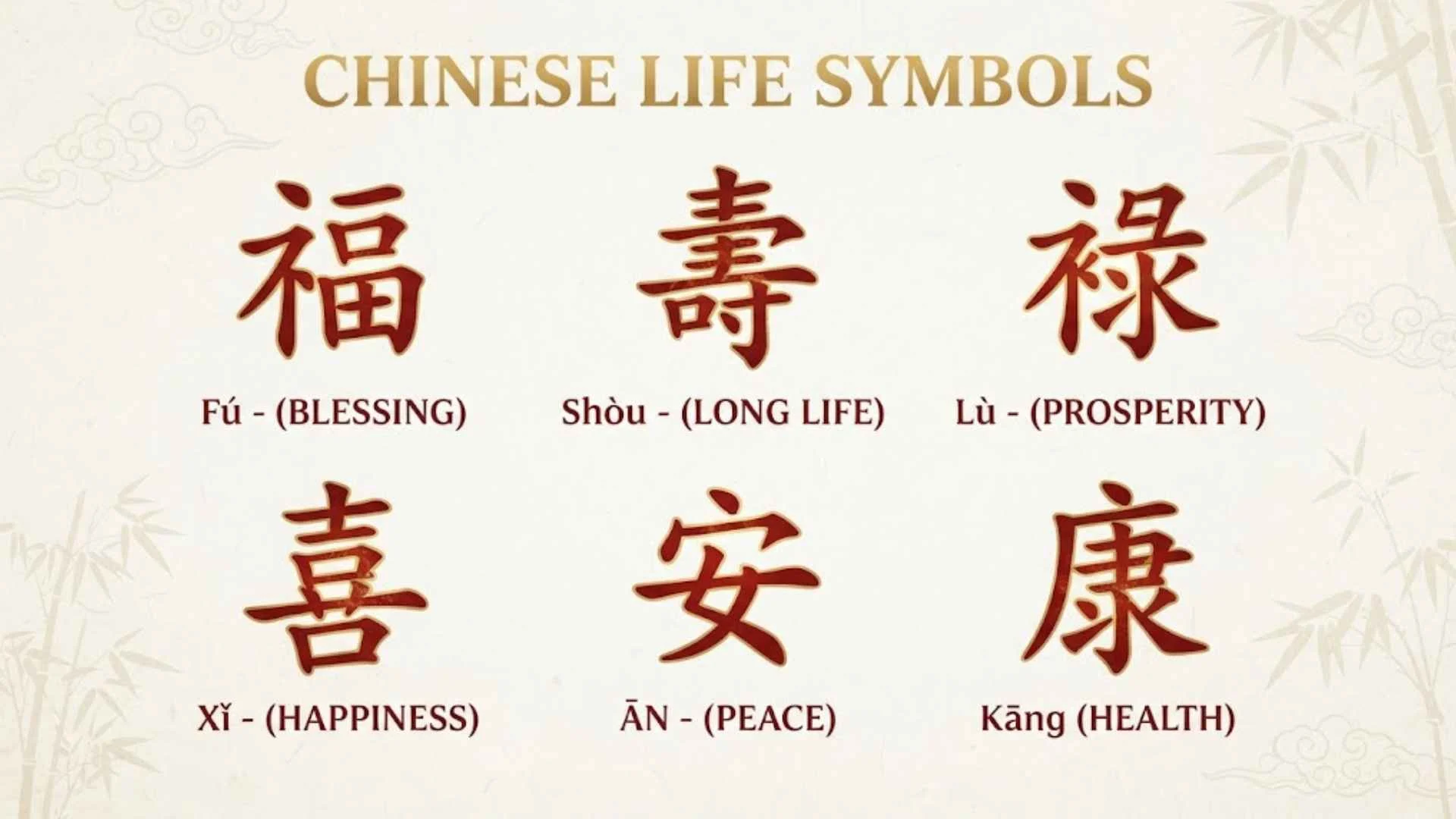
Chinese symbols attract attention because they can express ideas such as love, peace, luck, happiness, strength, and wisdom through a single character. Many people search for Chinese symbols to copy and paste into social media bios, usernames, messages, artwork, and tattoo designs. However, a character’s actual meaning depends on its Chinese pronunciation, context, and use.
This guide brings together traditional Chinese characters, popular symbols, ancient cultural motifs, and aesthetic characters you can copy directly. You will also find English translations, Chinese numbers, beginner-friendly characters, and examples associated with love, peace, and good fortune.
If you are looking for a meaningful character for a tattoo or simply want a beautiful symbol for your profile, understanding its meaning before using it can help you choose wisely. The collections below explain common interpretations while distinguishing written Chinese characters from decorative symbols and cultural motifs.
Chinese symbols and meanings
Chinese characters, known as Hànzì (汉字), represent words, meaningful parts of words, or morphemes. Some are used in everyday writing, while others have special cultural associations. Here are popular characters and their common meanings.
| Chinese symbol | Pinyin | Meaning |
| 爱 | ài | Love |
| 福 | fú | Good fortune, blessings |
| 和 | hé | Harmony, peace |
| 美 | měi | Beauty |
| 善 | shàn | Kindness, goodness |
| 勇 | yǒng | Courage |
| 智 | zhì | Wisdom |
| 信 | xìn | Trust, faith |
| 梦 | mèng | Dream |
| 家 | jiā | Home, family |
| 龙 | lóng | Dragon |
| 寿 | shòu | Longevity |
These are simplified Chinese forms. Some traditional forms differ, such as 愛 for 爱, 龍 for 龙, and 壽 for 寿. The correct choice depends on the writing system and the context in which you want to use the character.
Chinese symbols copy and paste
Here is a quick collection of Chinese characters you can copy and use in compatible apps, documents, and websites.
爱
Love
Copy
福
Fortune
Copy
喜
Happiness
Copy
和
Harmony
Copy
美
Beauty
Copy
龙
Dragon
Copy
梦
Dream
Copy
心
Heart
Copy
安
Peace and safety
Copy
勇
Courage
Copy
禅
Zen
Copy
寿
Longevity
Copy
These characters can work well in captions, personal notes, graphics, or decorative text. Copying a character does not automatically translate the surrounding text, so check its meaning before combining it with other characters.
Chinese symbols to English
When people search for Chinese symbols to English, they usually want to know what a character means in English. Chinese characters do not always match a single English word, and the translation can change depending on how a character is used in a phrase.
| Chinese | English meaning | Example |
| 水 | Water | 水果 means fruit |
| 火 | Fire | 火车 means train |
| 山 | Mountain | 山水 refers to mountains and water |
| 月 | Moon, month | 月亮 means moon |
| 日 | Sun, day | 日子 means days or a period of time |
| 木 | Wood, tree | 木头 means wood |
| 人 | Person | 人们 means people |
| 女 | Woman, female | 女孩 means girl |
| 男 | Man, male | 男孩 means boy |
| 金 | Gold, metal | 金色 means golden |
| 雨 | Rain | 下雨 means to rain |
| 花 | Flower | 花朵 means flower |
Treat these as starting points rather than complete translations. For accurate translation, use the full word or sentence, since individual characters can have several related meanings.
Chinese symbols copy and paste meaning
A character’s appearance may catch your eye, but its meaning is what makes it useful. This collection combines copyable characters with their common interpretations.
| Copyable symbol | Meaning | Common use |
| 爱 | Love | Romantic messages and designs |
| 福 | Fortune and blessings | New Year decorations |
| 乐 | Joy, happiness | Names and positive messages |
| 安 | Peace, safety | Names and expressions of well-being |
| 心 | Heart, mind | Emotional or personal themes |
| 梦 | Dream | Creative profiles and artwork |
| 光 | Light | Names, poetry, and design |
| 自由 | Freedom | Personal expression |
| 希望 | Hope | Encouraging messages |
| 永远 | Forever, always | Romantic or sentimental phrases |
Some entries contain two characters rather than one. For example, 自由 means freedom as a word, while 永远 means forever or always. Their meanings are more complete than those of isolated characters used on their own.
Chinese symbols pictures
Chinese characters have distinctive visual forms that can be used in calligraphy, graphic design, posters, and digital artwork. Traditional Chinese calligraphy often emphasizes brush movement, balance, spacing, and the visual relationship between strokes.
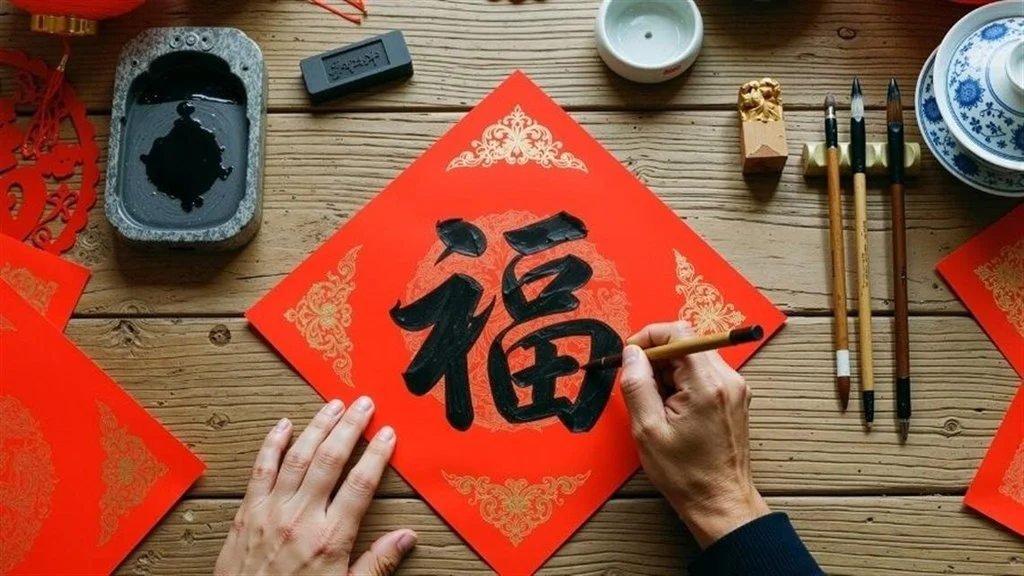
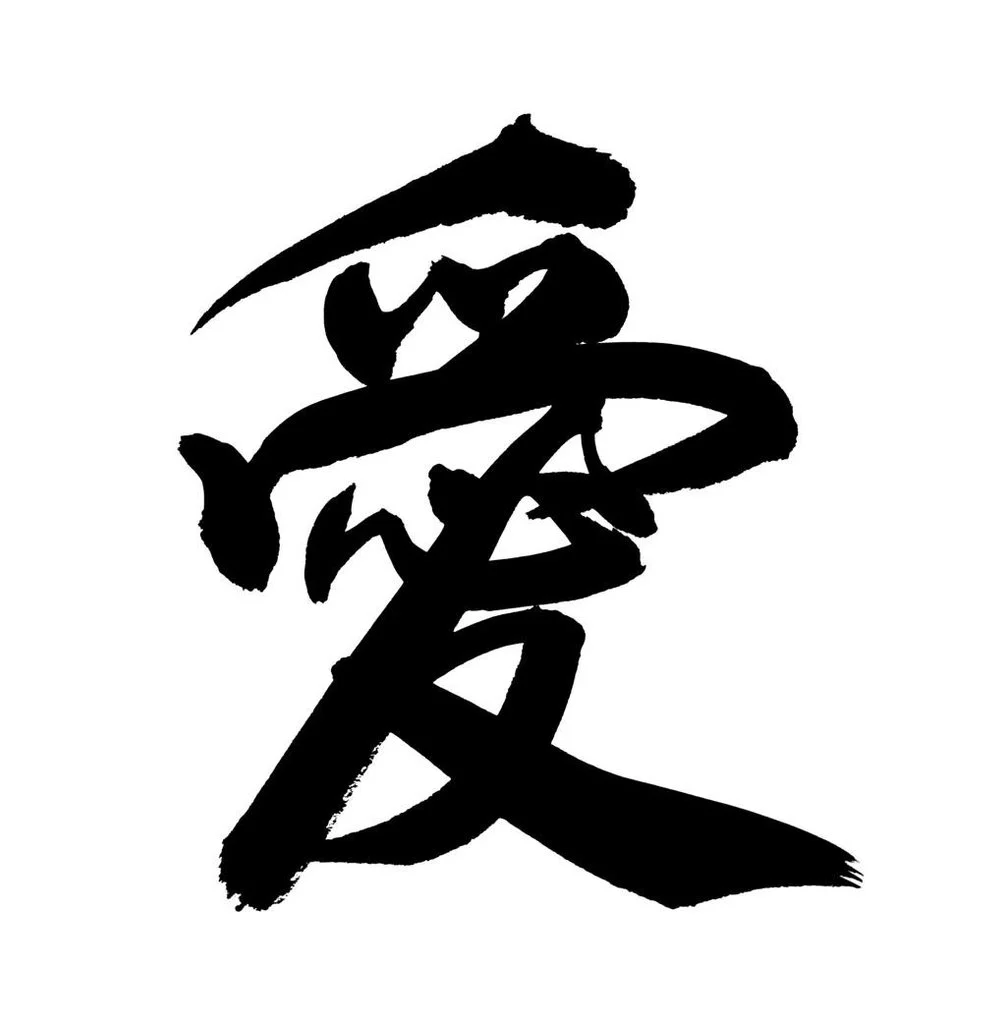
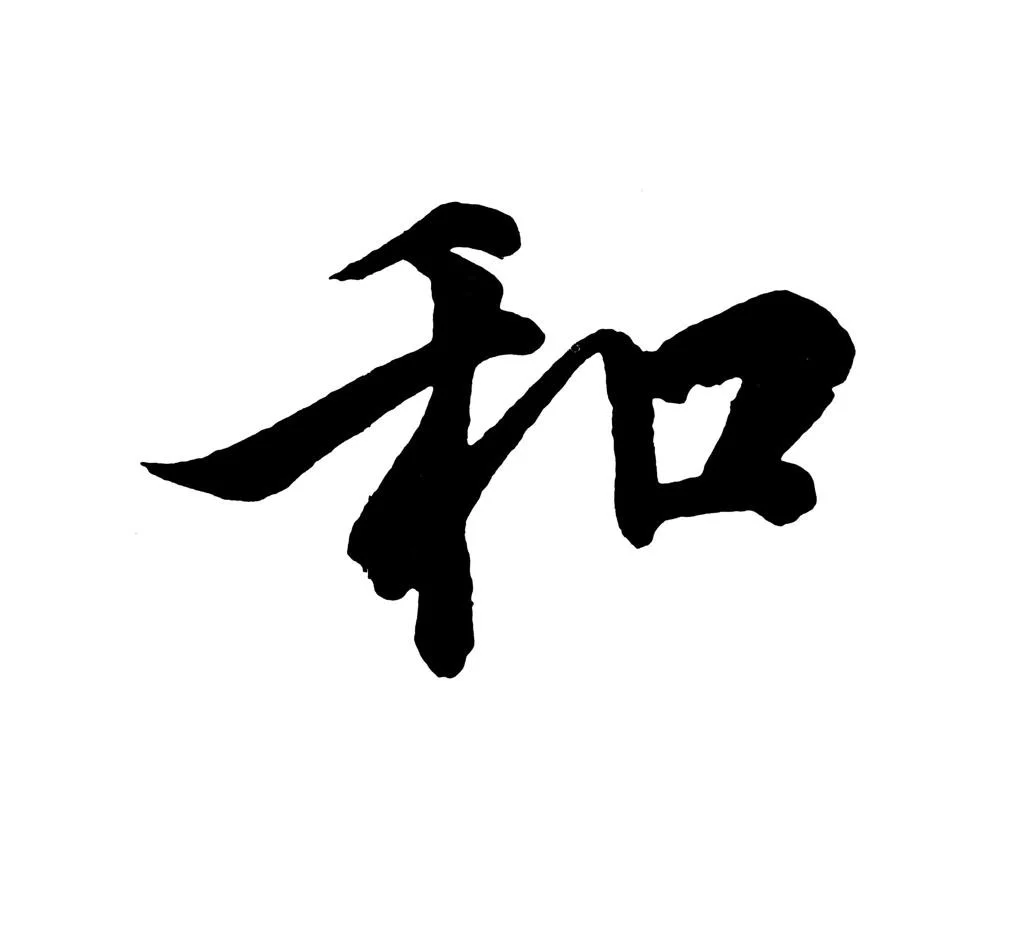
When searching for Chinese symbol pictures, choose images that show the actual character clearly. Some decorative fonts change the appearance of strokes, and stylized artwork may be difficult to read. If you plan to reproduce a character in a logo, engraving, or tattoo, compare the design with a reliable written form first.
Chinese symbols numbers
Chinese numbers are written using ordinary characters. They appear in prices, dates, addresses, formal documents, and traditional celebrations.
| Number | Chinese | Pinyin |
| 0 | 零 | líng |
| 1 | 一 | yī |
| 2 | 二 | èr |
| 3 | 三 | sān |
| 4 | 四 | sì |
| 5 | 五 | wǔ |
| 6 | 六 | liù |
| 7 | 七 | qī |
| 8 | 八 | bā |
| 9 | 九 | jiǔ |
| 10 | 十 | shí |
| 100 | 百 | bǎi |
| 1,000 | 千 | qiān |
| 10,000 | 万 | wàn |
Traditional Chinese writing uses 萬 for 万. Larger numbers are generally grouped around units such as 万, meaning ten thousand, rather than following English grouping exactly.
Chinese numerals also have formal financial forms, including 壹, 贰, 叁, and 肆 in simplified formal usage. These are designed to reduce the risk of altering amounts in financial records.
Chinese Symbols name
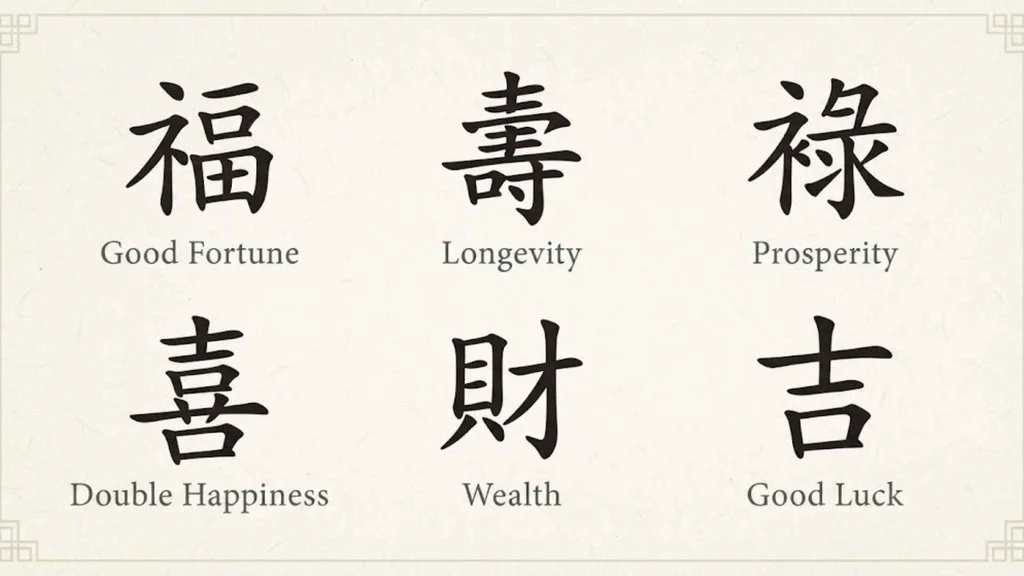
Chinese characters can appear in personal names, but their selection involves more than choosing a character with an attractive meaning. Parents may consider pronunciation, family traditions, the combination of characters, and cultural associations.
Some characters often encountered in Chinese names include:
- 美 — beauty
- 明 — bright or clear
- 智 — wisdom
- 俊 — talented or handsome
- 婷 — graceful
- 伟 — great
- 静 — quiet or calm
- 宇 — universe or space
- 文 — writing, culture, or learning
- 玲 — often associated with the clear sound of jade
A character’s suitability depends on the complete name and its pronunciation. If you want a Chinese name rather than a single decorative character, ask a fluent Chinese speaker to review the combination so it sounds natural and conveys the intended meaning.
Aesthetic Chinese symbols copy and paste
Aesthetic Chinese characters are popular in social media bios, usernames, digital art, mood boards, and minimalist designs. Their visual appeal comes from the character’s structure as well as its meaning.
月
Moon
Copyable Chinese text
Copy
星
Star
Copyable Chinese text
Copy
雪
Snow
Copyable Chinese text
Copy
花
Flower
Copyable Chinese text
Copy
雲
Cloud (traditional)
Copyable Chinese text
Copy
風
Wind (traditional)
Copyable Chinese text
Copy
夢
Dream (traditional)
Copyable Chinese text
Copy
愛
Love (traditional)
Copyable Chinese text
Copy
静
Stillness (simplified)
Copyable Chinese text
Copy
山海
Mountains and seas
Copyable Chinese text
Copy
You can pair a character with stars, hearts, or other decorative marks for a personalized design. Remember that traditional and simplified forms may look different, and an attractive combination is not necessarily a natural Chinese phrase.
chinese symbols tattoo
Chinese character tattoos are often chosen to represent a personal value, memory, or aspiration. Popular themes include love, strength, courage, peace, and wisdom. Since tattoos are permanent, verify the intended meaning and writing form before committing to a design.
| Character | Meaning | Tattoo consideration |
| 爱 / 愛 | Love | 爱 is simplified; 愛 is traditional |
| 力 | Strength or force | A simple character with several contextual uses |
| 勇 | Courage | Often associated with bravery |
| 和 | Harmony | Can suggest peace and balance |
| 忍 | Endurance or forbearance | Meaning depends on context |
| 智 | Wisdom | Suitable for an intellectual or reflective theme |
| 自由 | Freedom | A two-character word |
| 平安 | Peace and safety | A common expression of well-being |
Do not rely on a tattoo chart alone. A character may have a different nuance when used in a phrase, and some combinations can sound unnatural. Ask a fluent Chinese reader to check the exact design, spacing, and intended interpretation before getting it tattooed.
Cool Chinese symbols
Cool Chinese symbols are often chosen for their bold shapes, cultural associations, and concise meanings. They can be used in profile names, artwork, gaming usernames, and personal designs.
| Symbol | Meaning | Style |
| 龙 | Dragon | Power and mythology |
| 虎 | Tiger | Courage and strength |
| 魂 | Soul | Spiritual or artistic |
| 影 | Shadow | Mysterious or dramatic |
| 刃 | Blade | Sharpness and determination |
| 雷 | Thunder | Energy and force |
| 火 | Fire | Passion and intensity |
| 夜 | Night | Dark, minimalist aesthetics |
| 霸 | Domination or supremacy | Bold, forceful expression |
| 玄 | Mysterious or profound | Philosophical and traditional |
Meanings depend on context, so these characters should not automatically be treated as symbols with one universal interpretation. For example, 龙 means dragon, but its cultural associations may include power, good fortune, and authority.
Beginner Easy Chinese symbols
If you are new to Chinese characters, begin with simple forms that are easy to recognize and remember. Several basic characters are built from a small number of strokes.
一
One
1 stroke
Copy
二
Two
2 strokes
Copy
三
Three
3 strokes
Copy
人
Person
2 strokes
Copy
口
Mouth
3 strokes
Copy
山
Mountain
3 strokes
Copy
木
Tree or wood
4 strokes
Copy
日
Sun or day
4 strokes
Copy
月
Moon or month
4 strokes
Copy
These are useful starting points for learning how Chinese characters are formed. However, fewer strokes do not always mean a character is easier to write correctly. Practice the stroke order as well as the shape if you want to learn Chinese rather than use characters decoratively.
Chinese symbols for
Chinese characters can represent different ideas depending on what you want to express. The following options help you find a character or phrase for a particular purpose.
| Purpose | Character or phrase | Meaning |
| Love | 爱 | Love |
| Luck | 福 | Blessings and good fortune |
| Peace | 和平 | Peace |
| Strength | 力量 | Strength or power |
| Friendship | 友谊 | Friendship |
| Family | 家庭 | Family or household |
| Happiness | 快乐 | Happiness or joy |
| Hope | 希望 | Hope |
| Freedom | 自由 | Freedom |
| Wisdom | 智慧 | Wisdom |
| Success | 成功 | Success |
| Health | 健康 | Health |
Some entries are complete words consisting of two characters, rather than single symbols. Use the full phrase when you want to communicate the English concept accurately.
English to Chinese symbols
English-to-Chinese conversion depends on what you want to translate. An English word can be translated by meaning, represented phonetically using Chinese characters, or rendered as part of a longer sentence. These methods are not interchangeable.
Here are examples of meaning-based translations:
| English | Chinese | Pinyin |
| Love | 爱 | ài |
| Peace | 和平 | hépíng |
| Luck | 运气 | yùnqi |
| Happiness | 快乐 | kuàilè |
| Strength | 力量 | lìliàng |
| Hope | 希望 | xīwàng |
| Freedom | 自由 | zìyóu |
| Friendship | 友谊 | yǒuyì |
| Beauty | 美丽 | měilì |
| Family | 家庭 | jiātíng |
If you want your English name written in Chinese, the usual approach is a phonetic transliteration using characters chosen for their sounds. It is not generally correct to translate a person’s name by replacing each English letter with an unrelated Chinese character.
For a sentence, translate the whole sentence rather than translating each word separately. Chinese word order and grammar differ from English, so a collection of individually translated characters may not form a natural expression.
Chinese symbols for luck
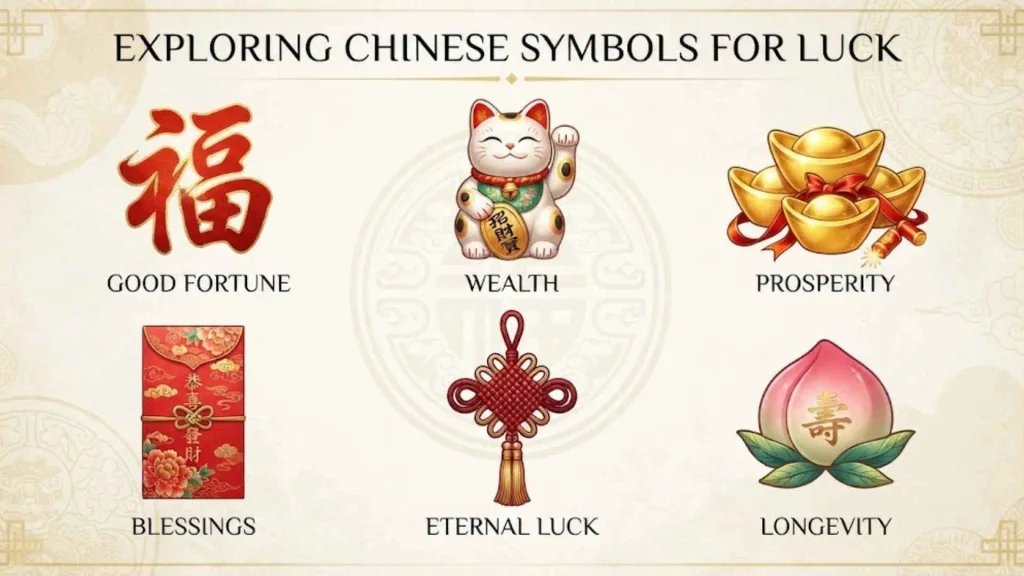
Luck and good fortune are important themes in many Chinese celebrations and traditions. Certain characters appear on red decorations, gifts, door ornaments, and festive artwork.
福
Blessings and good fortune
Copy
吉
Auspicious or lucky
Copy
祥
Auspiciousness
Copy
喜
Joy or happiness
Copy
财
Wealth or money
Copy
禄
Prosperity or official emoluments
Copy
寿
Longevity
Copy
The character 福 is especially associated with blessings and good fortune during Lunar New Year. In some Chinese households, it is displayed upside down because the Chinese expression for “upside down” sounds like the word for “arrive,” creating a wordplay interpretation that good fortune has arrived.
These associations are cultural traditions rather than guarantees of luck. Their significance can also vary between regions, families, and decorative contexts.
Easy Chinese symbols
Easy Chinese symbols are useful for beginners, simple artwork, handwriting practice, and minimalist designs. The characters below are common and relatively straightforward to recognize.
- 人 — Person.
- 大 — Big or large.
- 小 — Small or little.
- 上 — Up or above.
- 下 — Down or below.
- 中 — Middle or center.
- 天 — Sky or heaven.
- 口 — Mouth or opening.
- 手 — Hand.
- 心 — Heart or mind.
A useful learning method is to connect each character with a familiar word. For example, 中国 means China, and 中 appears in that word with the sense of middle or center as part of its historical construction and use. Learning characters within words gives you a better understanding than memorizing isolated English equivalents.
Chinese symbols meaning
A Chinese character may have more than one meaning, and the surrounding words help determine which interpretation fits. This is particularly important for characters used in poetry, names, historical texts, and tattoos.
Consider these examples:
- 心 — Heart or mind. It can relate to feelings, thoughts, or intentions.
- 道 — Way, path, or principle. Its meaning depends on the phrase or philosophical context.
- 德 — Virtue or moral character.
- 仁 — Benevolence or humaneness, especially in Confucian thought.
- 义 — Righteousness, justice, or moral duty.
- 气 — Breath, air, or vital energy, depending on context.
- 灵 — Spirit, cleverness, or responsiveness in different expressions.
- 静 — Quietness or stillness.
- 真 — True, real, or genuine.
- 善 — Goodness, kindness, or doing good.
A dictionary can provide several meanings for the same character. To choose the right interpretation, check the complete word, its pronunciation, and the setting in which it is used.
Popular Chinese symbols
Some Chinese characters are especially recognizable because they appear frequently in everyday language, cultural celebrations, calligraphy, and decorative designs.
| Symbol | Pinyin | Meaning |
| 中 | zhōng | Middle, center |
| 国 | guó | Country or state |
| 人 | rén | Person |
| 爱 | ài | Love |
| 福 | fú | Fortune or blessings |
| 龙 | lóng | Dragon |
| 家 | jiā | Home or family |
| 水 | shuǐ | Water |
| 山 | shān | Mountain |
| 天 | tiān | Sky or heaven |
| 喜 | xǐ | Joy or happiness |
| 和 | hé | Harmony |
The most suitable character depends on how you intend to use it. A character common in everyday writing may be less suitable as a standalone symbol for a specific feeling, so consider its complete meaning rather than popularity alone.
Traditional Chinese symbols
Traditional Chinese characters are used in places such as Taiwan, Hong Kong, and Macau, and they also appear in historical writing, calligraphy, and cultural artwork. Simplified characters are widely used in mainland China and Singapore. Actual usage can vary by community and context.
Here are examples of traditional and simplified forms:
| Simplified | Traditional | Meaning |
| 爱 | 愛 | Love |
| 龙 | 龍 | Dragon |
| 门 | 門 | Door or gate |
| 国 | 國 | Country |
| 书 | 書 | Book |
| 车 | 車 | Vehicle |
| 云 | 雲 | Cloud |
| 风 | 風 | Wind |
| 乐 | 樂 | Joy or music |
| 长 | 長 | Long or to grow |
Traditional Chinese is not a separate language; it is a writing system. Many words and grammatical structures are shared across both systems, although some characters differ in shape and stroke count.
For a traditional-style design, make sure all the characters follow the same writing system. Mixing forms is not always incorrect, but it may look inconsistent in a piece intended to represent traditional Chinese writing.
Common Chinese symbols
Common Chinese characters appear in signs, books, names, conversations, and everyday expressions. Learning a few frequently used characters can help you recognize basic written Chinese.
| Character | Meaning | Example word |
| 我 | I or me | 我们 — we |
| 你 | You | 你好 — hello |
| 他 | He or him | 他们 — they |
| 是 | To be; yes in some contexts | 不是 — is not |
| 不 | Not | 不好 — not good |
| 好 | Good | 好人 — good person |
| 有 | Have or there is | 没有 — do not have |
| 在 | At, in, or be located | 在家 — at home |
| 来 | Come | 来了 — has come |
| 去 | Go | 去学校 — go to school |
These examples show why context matters. For example, 是 is commonly used to connect a subject with a noun or identify something, but it does not function exactly like every English form of “to be.”
Ancient Chinese symbols and meanings
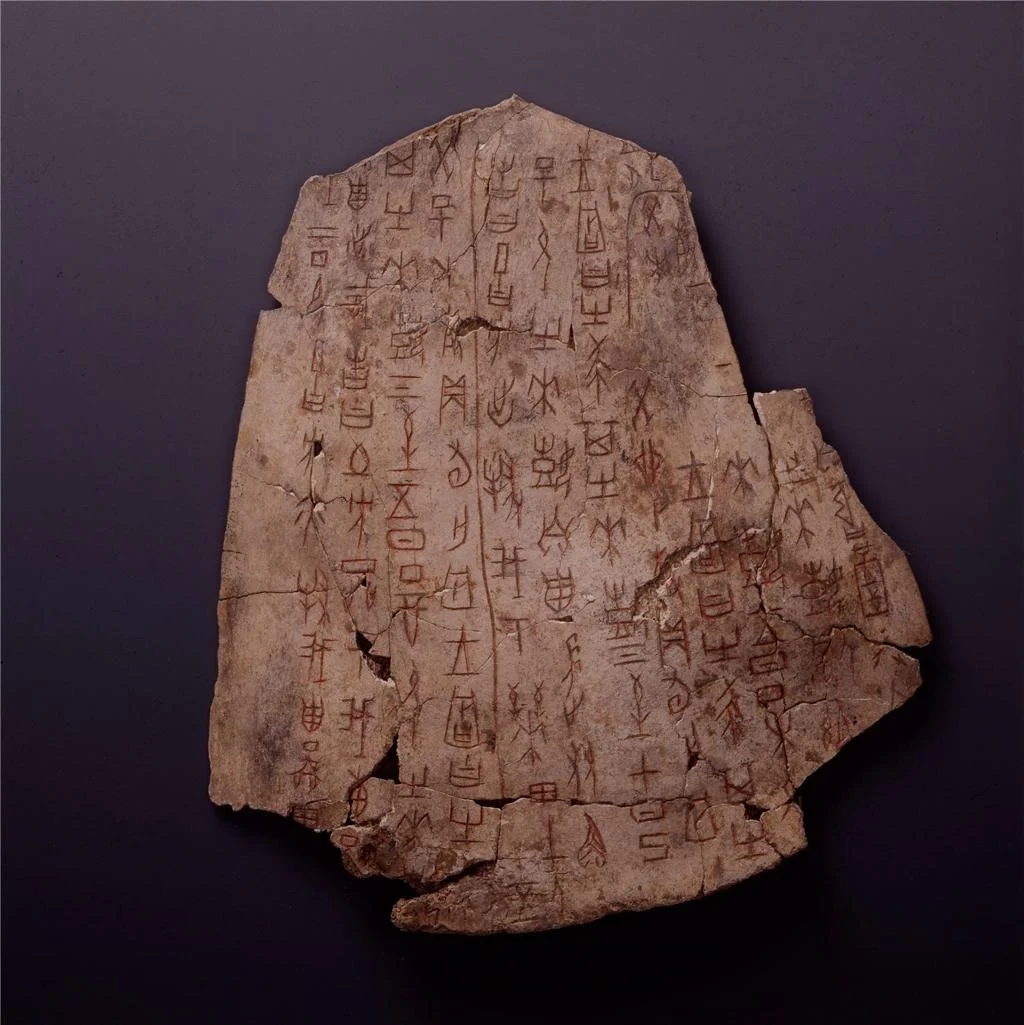
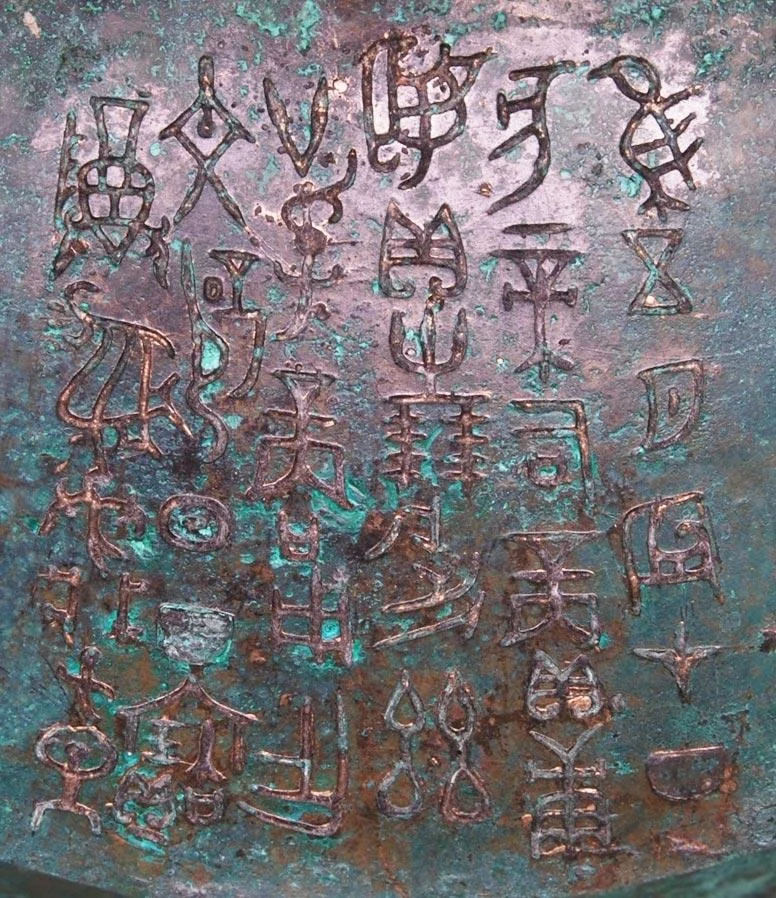
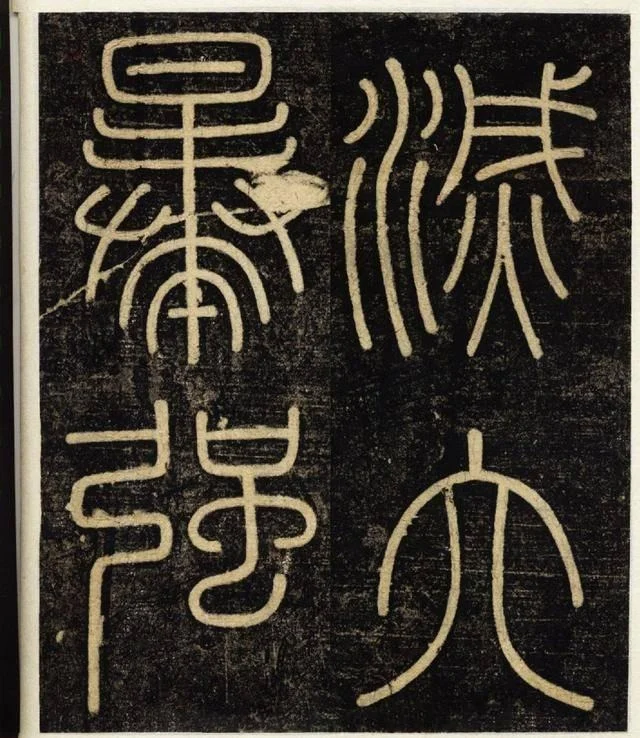
Ancient Chinese writing developed over thousands of years. Some early forms appeared on oracle bones used during the Shang dynasty, while later writing evolved through bronze inscriptions, seal script, and other styles.
7
Several familiar characters have historical forms or long-standing cultural associations:
- 日 — Sun or day. Early forms were pictorial representations associated with the sun.
- 月 — Moon or month. Its early shape is associated with a crescent-like form.
- 山 — Mountain. Its form resembles peaks.
- 水 — Water. Early versions used flowing or branching strokes.
- 木 — Tree or wood. The character’s structure suggests a tree with branches and roots.
- 火 — Fire. Its early forms were associated with flames.
- 人 — Person. Early forms resemble a human figure.
- 田 — Field. Its structure resembles a divided plot of land.
These explanations describe broad historical associations, not necessarily the complete origin of every modern character. Character forms changed over time, and some popular online explanations simplify complex histories.
Ancient Chinese symbols can also refer to cultural emblems, ritual objects, dragons, the yin-yang concept, and motifs used in traditional art. Those are not all written characters; each belongs to a different historical or cultural category.
Chinese symbols with meaning
If you want a symbol that represents a personal value, start by choosing the idea and then checking the Chinese word or character that expresses it naturally.
| Idea | Chinese | Pinyin | Meaning |
| Courage | 勇气 | yǒngqì | Courage or bravery |
| Patience | 耐心 | nàixīn | Patience |
| Kindness | 善良 | shànliáng | Kindness |
| Wisdom | 智慧 | zhìhuì | Wisdom |
| Success | 成功 | chénggōng | Success |
| Balance | 平衡 | pínghéng | Balance |
| Trust | 信任 | xìnrèn | Trust |
| Gratitude | 感恩 | gǎn’ēn | Gratitude |
| Peaceful life | 平安 | píng’ān | Peace and safety |
| Perseverance | 坚持 | jiānchí | Persistence |
Some meanings are best expressed through a complete word rather than a single character. For example, 勇气 means courage more directly than 勇 alone in many everyday contexts. Choosing the natural expression helps prevent misunderstandings.
Chinese symbols for peace
Peace can refer to harmony between people, freedom from conflict, inner calm, or safety. Chinese uses different words for these related ideas.
| Chinese | Pinyin | Meaning |
| 和平 | hépíng | Peace, especially absence of conflict |
| 和 | hé | Harmony |
| 安 | ān | Peace, safety, or calm |
| 平安 | píng’ān | Safety and well-being |
| 宁静 | níngjìng | Tranquility or quietness |
| 平静 | píngjìng | Calmness or stillness |
| 安宁 | ānníng | Peacefulness or serenity |
For a simple design, 和 is compact and associated with harmony, while 和平 expresses peace more explicitly. 平安 is often used in wishes for someone’s safety and well-being.
The best option depends on the intended message. A character meaning calmness may suit a personal design, while a phrase about peace may be more appropriate for a message, dedication, or artwork.
Chinese symbols and meanings
Chinese symbols can be understood through several categories: written characters, numbers, cultural emblems, and visual motifs. Each category communicates meaning in a different way.
For example, the written character 龙 means dragon. In Chinese culture, dragons have long been associated with imperial authority, power, and auspicious qualities. The yin-yang symbol, ☯, represents complementary forces in Chinese philosophical traditions; it is a graphic symbol rather than a Chinese character. The character 福, meanwhile, is commonly associated with blessings and good fortune.
When researching a symbol, check three things:
- Its form: Is it a written character, a traditional emblem, or a modern decorative design?
- Its context: Is it used in ordinary language, religion, philosophy, art, or a celebration?
- Its interpretation: Is the meaning established in a reliable source, or is it a modern interpretation shared online?
These distinctions help you choose symbols with meanings that are both attractive and culturally appropriate.
Chinese symbols copy and paste
Here is another useful collection arranged by theme so you can find a character quickly. These are actual Chinese characters rather than invented decorative glyphs.
Nature
山
Copy
水
Copy
木
Copy
火
Copy
月
Copy
日
Copy
Feelings
爱
Copy
心
Copy
喜
Copy
乐
Copy
思
Copy
念
Copy
Positive ideas
福
Copy
安
Copy
善
Copy
美
Copy
吉
Copy
祥
Copy
Personal values
勇
Copy
信
Copy
智
Copy
诚
Copy
义
Copy
德
Copy
Tap a character to copy it where the interface supports copying. The same character may have several meanings in longer words, so use the collections as a quick reference rather than as a substitute for translation.
Ancient Chinese symbols
Ancient Chinese symbols include both early writing and visual motifs from traditional culture. Their meanings vary by historical period, so it is useful to separate old writing systems from cultural symbols.
- Oracle bone script: Early Chinese writing preserved on animal bones and turtle shells, used for divination during the Shang dynasty.
- Bronze inscriptions: Writing cast or engraved on ritual vessels and other bronze objects.
- Seal script: An old writing style associated with seals and formal inscriptions.
- Chinese dragon: A cultural motif associated with power, auspiciousness, and imperial imagery.
- Yin-yang (☯): A symbol associated with complementary aspects of the cosmos in Chinese philosophy.
- Bagua (八卦): The eight trigrams used in traditional Chinese cosmology and related practices.
- Taiji (太极): A philosophical concept concerning the supreme ultimate; it is associated with yin-yang thought.
The dragon, yin-yang, and bagua are not all Chinese written characters in the same sense as 山 or 水. They are cultural or philosophical motifs, while oracle bone script and seal script are historical forms of writing.
If you use an ancient motif in artwork, research the tradition behind it. An image copied from a modern website may be a stylized recreation rather than an accurate historical artifact.
Chinese symbols for love
Love is expressed through several Chinese characters and phrases, depending on whether you mean romantic love, affection, family bonds, or a caring attitude.
| Chinese | Pinyin | Meaning |
| 爱 | ài | Love |
| 愛 | ài | Traditional form of love |
| 爱情 | àiqíng | Romantic love |
| 亲爱 | qīn’ài | Dear or beloved, depending on use |
| 心 | xīn | Heart or mind |
| 友爱 | yǒu’ài | Friendly affection |
| 关爱 | guān’ài | Care and concern |
| 永爱 | yǒng’ài | A poetic or name-like expression suggesting lasting love; not a universal set phrase |
| 相爱 | xiāng’ài | To love one another |
| 真爱 | zhēn’ài | True love |
For a simple romantic design, 爱 is a familiar choice. If you prefer traditional characters, use 愛. For a message expressing mutual love, 相爱 is more specific than a single character.
Be careful with combinations created solely for their appearance. A phrase can be grammatically possible without being the most natural expression for a native Chinese speaker. Have a fluent speaker review any permanent or prominent design.
Frequently Asked Questions
What is the most popular Chinese symbol?
福 is one of the most recognizable symbols associated with good fortune and blessings, especially in Lunar New Year decorations. 爱, meaning love, is also widely recognized.
Can I use Chinese symbols in my Instagram bio?
Yes. Most modern social platforms support many Chinese Unicode characters. Their appearance may vary by device, font, or app, so check your profile after pasting the character.
Are Chinese symbols and Japanese symbols the same?
Chinese characters are called 汉字 in Chinese and kanji in Japanese. Japanese uses kanji alongside hiragana and katakana, and some characters have different pronunciations or meanings depending on the language.
How can I translate an English word into a Chinese character?
Find a reliable Chinese translation of the complete word first. Some English concepts require two or more Chinese characters, so translating letter by letter or choosing a character based only on appearance can produce an incorrect result.
Which Chinese symbol is best for a tattoo?
The best choice depends on the meaning you want to express. 爱 represents love, 勇 is associated with courage, 和 with harmony, and 智 with wisdom. Confirm the character, writing style, and intended meaning with a fluent Chinese speaker before getting tattooed.
Conclusion
Chinese symbols offer a simple way to explore language, culture, and personal expression. From everyday characters such as 人, 山, and 水 to meaningful words such as 爱, 福, 和平, and 自由, each character or phrase can communicate a different idea. Learning the context behind a symbol makes it easier to choose one that genuinely matches your intention.
For quick use, copy the characters from the collections above and paste them into your social media bio, messages, artwork, or other compatible applications. If you prefer traditional Chinese writing, remember that forms such as 愛, 龍, and 福 may differ from or match their simplified counterparts depending on the character.
Before using a Chinese character in a tattoo, business logo, or permanent design, verify its meaning and natural usage with a reliable Chinese-language source or fluent speaker. A little research helps you avoid confusing similar characters and ensures that your chosen design communicates the message you want.

Hi, I’m Sienna Brooks, and I believe that the right words can inspire, comfort, and empower people at every stage of life. For as long as I can remember, I’ve been drawn to meaningful quotes and the stories behind them. I love curating collections of inspirational, motivational, and heartfelt quotes that resonate with readers around the world.
Through my writing, I strive to help others find encouragement, whether they’re celebrating life’s happiest moments or navigating its biggest challenges. I believe that wisdom is timeless, and I’m passionate about sharing words that leave a lasting impact.
I am the author of Reflections in Words and The Journey of Inspiration, two books dedicated to exploring the beauty and power of timeless quotes.
 Rowan Sinclair Rowan Sinclair